
Mold Remediation in Old Field, NY
When Sound Air and Tidal Moisture Follow You Indoors
Hear from Our Customers
Certified Mold Remediation Old Field, NY
Most mold problems come back because the company that handled them never found out why the mold was there in the first place. They treated the surface, handed over an invoice, and left. Six months later, you’re back to square one except now the damage is deeper and the repair is more expensive.
In Old Field, that cycle is more common than it should be. The village sits between Long Island Sound, Stony Brook Harbor, and Flax Pond, which means ambient humidity stays elevated year-round not just in August. Salt air off the Sound works its way into building envelopes over time. Ground moisture near tidal areas like Flax Pond keeps soil saturation high even in dry stretches. For a large, older estate home the kind that defines Old Field that’s a persistent pressure on every crawl space, basement wall, and attic cavity in the structure.
When mold remediation is done right, you get more than clean air. You get a documented clearance report, a corrected moisture source, and the confidence that your home and the investment it represents isn’t quietly deteriorating behind the walls. For properties in Old Field where values regularly exceed a million dollars, that peace of mind isn’t optional. It’s the whole point.
Mold Remediation Companies in Old Field, NY
We’ve been working on Long Island for approximately 31 years, including the full range of North Shore properties large, older homes on multi-acre lots in Old Field, waterfront estates near Stony Brook Harbor, and the kind of complex structures that require more than a surface-level assessment.
Our owner, Richard Peterson, holds personal New York State licenses in both mold assessment and mold remediation, issued under Article 32 of the Labor Law. That’s not a company credential buried in a file it’s his license, his name, and his accountability on every project. You can verify his license number directly through the NYS Department of Labor’s online database. In a village like Old Field, where residents include physicians, researchers, and legal professionals who check credentials before they sign anything, that transparency matters.
Our team is IICRC-certified, available 24 hours a day, and equipped to handle both the remediation and the full post-remediation cleaning start to finish, one company.
Professional Mold Remediation Process Old Field, NY
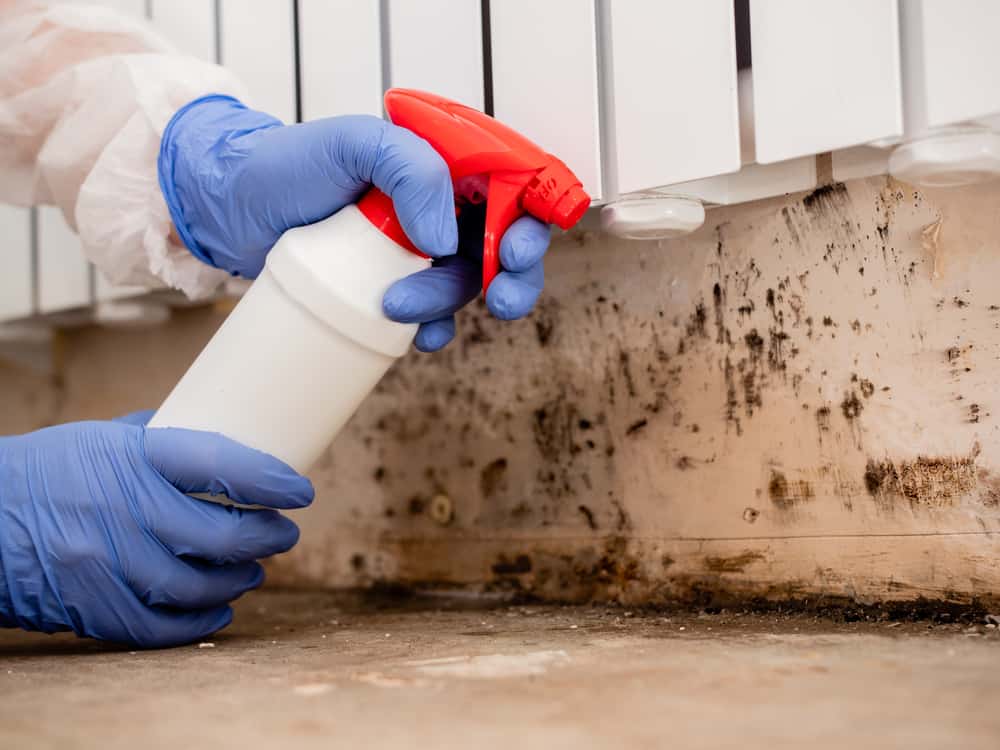
The first thing that happens is a thorough assessment not a quick visual scan, but a full moisture mapping of the affected areas throughout the property. In Old Field, where many homes are large, older structures with basements, crawl spaces, and multi-story attics, mold is rarely limited to the one spot you can see. Moisture migrates through building envelopes, and in a coastal environment surrounded by tidal ponds and Long Island Sound, it has more entry points than most homeowners realize.
Once the moisture source is identified and a correction plan is in place, containment goes up. We establish negative air pressure to prevent spore migration into unaffected areas of the home. Contaminated materials are removed and disposed of according to NYS Article 32 requirements which apply fully within the Village of Old Field and carry real legal weight. The village maintains its own code enforcement structure separate from the Town of Brookhaven, so the work has to meet both levels of compliance.
After remediation is complete, we perform post-remediation air quality verification. This isn’t an optional step it’s how you confirm the job was done correctly. The clearance report produced at this stage is what your insurance company needs to close a claim, what a buyer’s attorney will ask for in a real estate transaction, and what gives you actual confidence that the problem is resolved.
Ready to get started?
Black Mold Remediation Services Old Field, NY
Mold remediation in Old Field isn’t a one-size-fits-all job. The homes here are larger, older, and more complex than the typical Long Island suburban build. Crawl spaces in properties near Flax Pond deal with ground moisture year-round. Attics in homes with mature tree canopy overhead which limits solar drying and keeps roof surfaces damp longer develop condensation-driven mold during the temperature swings of spring and fall. Basements in pre-1960 construction often lack the vapor barriers and mechanical ventilation that newer homes rely on to manage moisture.
Every remediation starts with identifying what type of mold is present and where moisture is entering the structure. From there, we build the scope around the actual conditions of your specific property not a standard package applied to every job. Containment, negative air pressure, material removal, surface treatment, and post-remediation verification are all part of the process. And because we include a full cleaning division, the job doesn’t end with structural remediation affected surfaces, contents, and spaces are cleaned thoroughly before we leave.
Emergency mold remediation is available around the clock. If a nor’easter pushes water into your basement at midnight, or if you discover a moisture problem during a pre-sale inspection that needs to be resolved before closing, we’re reachable and ready to respond not booking appointments a week out.
How much does mold remediation cost for a large home in Old Field, NY?
The honest answer is that cost depends heavily on the scope how many areas are affected, what type of mold is present, and how far moisture has penetrated the structure. For most residential projects nationally, professional mold remediation runs between $1,223 and $3,754. But Old Field is not a typical residential market. The homes here are large, often older, and frequently have multiple vulnerable areas: basements, crawl spaces, attics, and interior wall cavities that can all be affected simultaneously, especially in properties adjacent to Flax Pond or Stony Brook Harbor where ground moisture stays elevated year-round.
A thorough assessment is the only way to give you an accurate number, because the scope of work in a 4,000-square-foot estate on a waterfront lot is genuinely different from a smaller suburban home. What you should be cautious of is any company that quotes you a price before they’ve actually looked at the property. A low quote based on a surface inspection often leads to a much larger invoice once the real scope becomes clear or worse, a job that doesn’t address everything and allows the mold to return.
Does homeowner's insurance cover mold remediation in New York?
It depends on the cause, and insurance companies apply that distinction strictly. Mold that results from a sudden and accidental event a burst pipe, a storm-driven water intrusion, an appliance failure is typically covered under standard homeowner’s policies. Mold that developed gradually from long-term moisture exposure, deferred maintenance, or inadequate ventilation is usually excluded.
For Old Field homeowners, this distinction matters because the village’s coastal environment creates conditions where mold can develop slowly over time ground moisture from tidal areas, salt air working into building envelopes, condensation in inadequately ventilated attics. If you’re filing a claim, documentation is everything. The way the damage is characterized, the timeline established, and the evidence presented all affect whether a claim is approved and for how much. We help homeowners document damage in the format insurers require, which can make a real difference in how a claim is handled on a high-value property.
Is mold remediation different from mold removal, and does the difference matter?
Yes, and the difference matters more than most people realize. Mold removal is exactly what it sounds like physically removing visible mold from a surface. Mold remediation is a broader, more complete process that includes identifying the moisture source, containing the affected area to prevent spore spread, removing contaminated materials, treating surfaces, and verifying through post-remediation air quality testing that spore counts have returned to safe levels.
In a home on Long Island’s North Shore particularly in a coastal village like Old Field where humidity stays high and moisture has multiple entry points mold removal without remediation is a temporary fix. You’re cleaning the symptom without correcting the condition that caused it. Remediation addresses the full picture: what grew, where it grew, why it grew, and what needs to change so it doesn’t come back. For a property worth what Old Field homes are worth, the difference between removal and remediation is the difference between a short-term patch and a permanent solution.
What are the signs of mold in an older waterfront-adjacent home in Old Field?
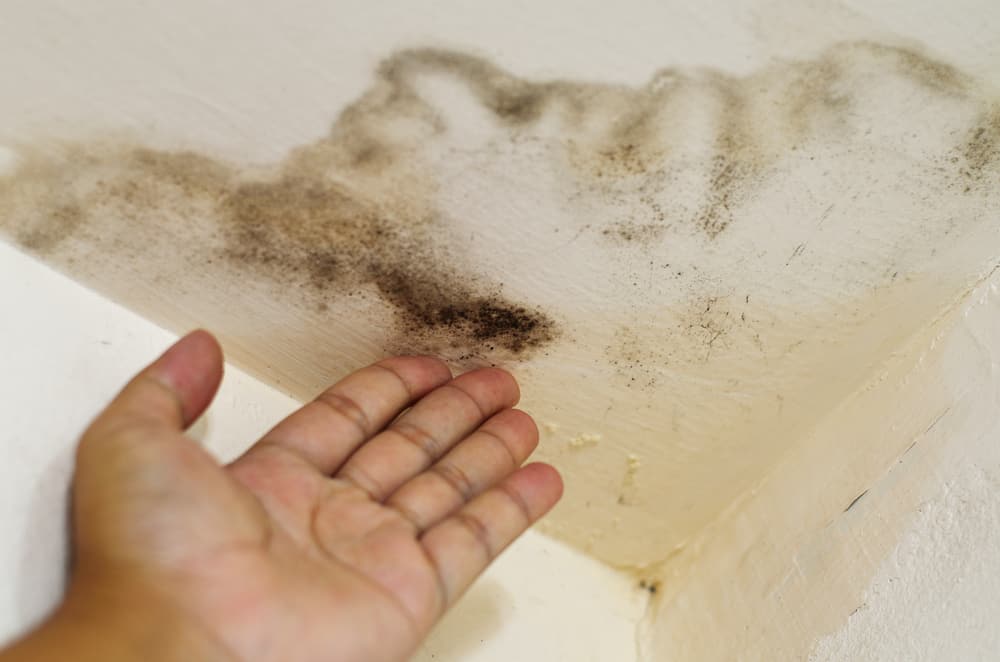
The most obvious signs are visible growth dark spots or discoloration on walls, ceilings, or around window frames and a persistent musty odor that doesn’t go away with ventilation. But in older estate homes, mold often develops in areas that aren’t regularly inspected: inside crawl spaces, behind finished basement walls, in attic spaces with inadequate ridge or soffit ventilation, and within HVAC ductwork.
In Old Field specifically, the combination of older construction and proximity to water creates conditions where mold can establish itself quietly over a long period before it becomes visible. If you’re noticing condensation on interior surfaces, peeling paint near the foundation, soft spots in flooring near exterior walls, or if household members are experiencing unexplained respiratory symptoms, those are all reasons to have the property assessed even if you can’t see mold directly. A moisture mapping assessment can identify elevated moisture levels behind walls and under floors before visible mold growth becomes a larger structural problem.
How long does mold remediation take for an estate-sized home in Old Field, NY?
For a straightforward, contained mold issue in a single area a bathroom, a section of basement wall remediation can often be completed in one to three days. For larger, more complex properties like the estate homes common in Old Field, where affected areas may span multiple floors, include crawl spaces, attics, and interior wall cavities, the timeline extends accordingly. A thorough job on a large property with multiple affected areas can take anywhere from three days to a week or more, depending on the scope.
What adds time to a job isn’t the remediation itself it’s the steps that make the remediation permanent. Moisture mapping takes time. Proper containment takes time. Allowing treated surfaces to dry fully before post-remediation verification takes time. Rushing any of those steps increases the likelihood that mold returns, which means you’re paying for the same job twice. The goal is to do it correctly once, document it thoroughly, and move on not to finish fast and leave you with an unresolved problem.
Mold was found during a home inspection in Old Field what do I do next?
This is one of the most time-sensitive situations in real estate, and it comes up regularly in Old Field because buyers and their attorneys are thorough. When mold is discovered during a pre-purchase inspection, the transaction typically pauses until the issue is assessed, remediated, and verified by a licensed contractor. The clearance report produced after remediation is what allows the deal to move forward without it, most buyers and their counsel won’t proceed.
The first step is getting a licensed mold assessor to evaluate the full scope of what’s present not just the spot the inspector flagged, but the entire property. In older homes near tidal areas like Flax Pond or Stony Brook Harbor, a single visible issue often has related moisture problems elsewhere in the structure. Once the assessment is complete and the scope is clear, remediation can begin. We hold the required NYS Article 32 licenses for both assessment and remediation, produce the documentation lenders and attorneys need, and can respond quickly when a closing timeline is at stake. In a market where Old Field properties transact at prices where delays cost real money, having a licensed team that can move efficiently and document everything correctly is the practical priority.
Useful Links
Other Services we provide in Old Field