
Hear from Our Customers
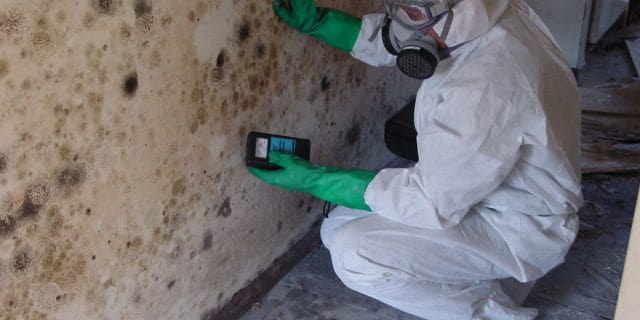
Most homeowners in Plandome Heights don’t find mold because something went obviously wrong. They find it during a renovation, a home inspection before a sale, or when a family member starts having unexplained respiratory issues. By that point, it’s already been growing quietly — behind drywall, under flooring, in an attic corner that hasn’t seen daylight since the Eisenhower administration.
When mold remediation is done right, you’re not just clearing a visible patch. You’re eliminating the contamination, identifying what let moisture in, and making sure the conditions that fed the growth are gone too. That matters especially in Plandome Heights, where most homes were built in the 1930s and 1940s — construction that predates modern vapor barriers, modern insulation standards, and modern plumbing. These homes are beautiful and built to last, but they have vulnerabilities that newer construction simply doesn’t.
Plandome Heights sits directly adjacent to Manhasset Bay, and that proximity keeps ambient humidity elevated for more of the year than most inland Nassau County communities experience. When your home’s older foundation or aging attic ventilation meets that persistent coastal humidity, mold doesn’t need a dramatic flood event to take hold. It just needs time. A proper remediation — one that addresses the source, not just the surface — gives you back a home that’s clean, documented, and protected.
We’ve been serving Nassau County homeowners for nearly 30 years. That’s not a marketing number — it means our team has worked inside the same pre-war housing stock, the same bay-adjacent neighborhoods, and the same North Shore conditions that define Plandome Heights. When we arrive at a home off Plandome Road or in the Chester Hill section east of the village, we’re not guessing at what we’ll find.
What separates us from most mold remediation companies isn’t just experience — it’s that every individual technician holds IICRC certification, not just the company. That distinction matters when someone is working inside your home. You can ask for credentials. They exist at the individual level, not just on a company certificate hanging in an office.
Our Nassau County phone line — 516-541-0500 — connects you directly to a team that knows this area. Not a national call center. Not a franchise territory. A Long Island company that has been accountable to this community since the late 1990s.
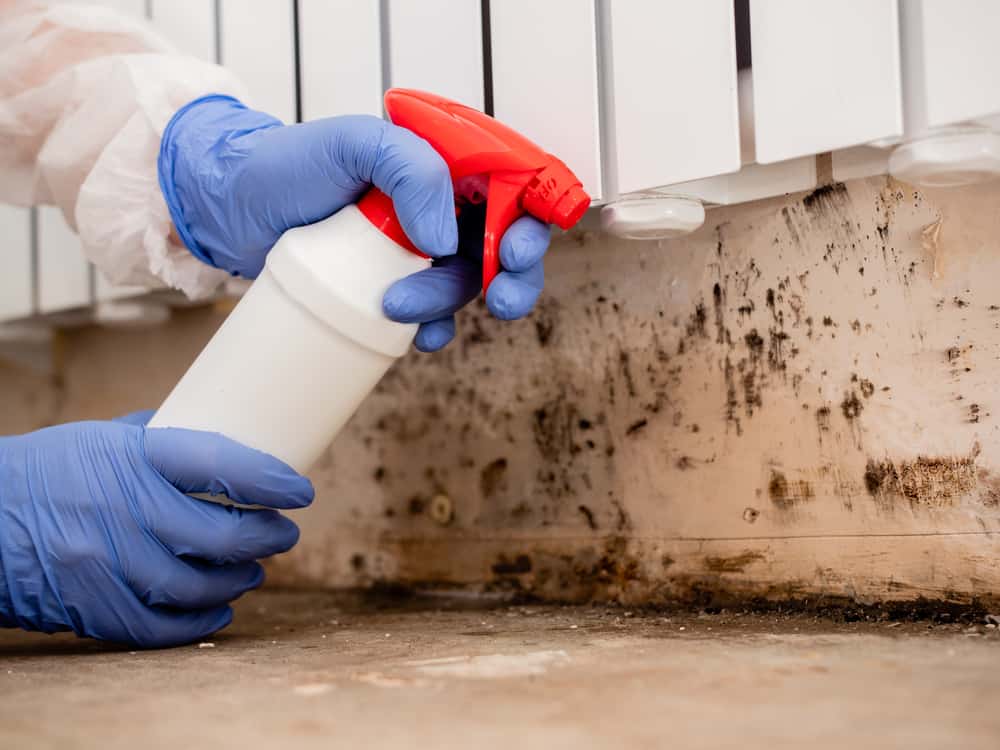
The first step is a thorough inspection — not a flashlight walkthrough and a verbal opinion. We conduct a 13-point mold inspection that includes air testing, surface swab sampling, moisture level measurements, infrared imaging to detect hidden mold behind walls and ceilings, and a comparison of indoor and outdoor mold particle levels. The written report, backed by laboratory analysis, is delivered within two to three business days. That documentation matters whether you’re dealing with a health concern, managing a home sale, or filing an insurance claim.
One thing worth knowing before you call: New York State law prohibits the same company that assesses a mold problem from also performing the remediation on the same property. That law exists to protect homeowners from a well-documented industry practice of inflating or fabricating findings during a “free inspection” to sell unnecessary work. We operate in full compliance with this law and will explain it to you plainly so you can make an informed decision — not a pressured one.
Once remediation begins, we contain the affected area to prevent cross-contamination, safely remove compromised materials, and treat and dry the space to industry standards. In Plandome Heights, where village code prohibits construction work on Sundays and federal holidays, we coordinate scheduling accordingly. If building materials need to be replaced — drywall, insulation, subflooring — we handle reconstruction too, so you’re not left coordinating a second contractor after we leave.
Ready to get started?
Mold remediation in a Plandome Heights home isn’t one-size-fits-all. A 1930s Colonial with a stone foundation and an unfinished basement presents a different set of conditions than a mid-century home in the Chester Hill section with a crawl space and aging attic ventilation. We build our service around what’s actually happening in your specific home — not a standard package applied to every job.
That said, every remediation we perform includes the same non-negotiables: containment of the affected area, safe removal of contaminated materials, treatment of the underlying surfaces, moisture source identification, and post-remediation clearance testing to confirm the space is clean before the job is closed. That clearance documentation is something you’ll want in writing — especially if you’re preparing to sell. At Plandome Heights’ median home sale price of approximately $2.4 to $2.9 million, a mold problem without proper documentation of resolution can derail a transaction or trigger a significant price renegotiation.
For homes near Manhasset Bay where basement moisture intrusion is a recurring issue — not a one-time event — we can also assess what structural or drainage improvements might reduce the risk going forward. We offer emergency mold remediation 24 hours a day, seven days a week, including after coastal storm events that can push water into basements and crawl spaces faster than any standard business-hours response window allows.
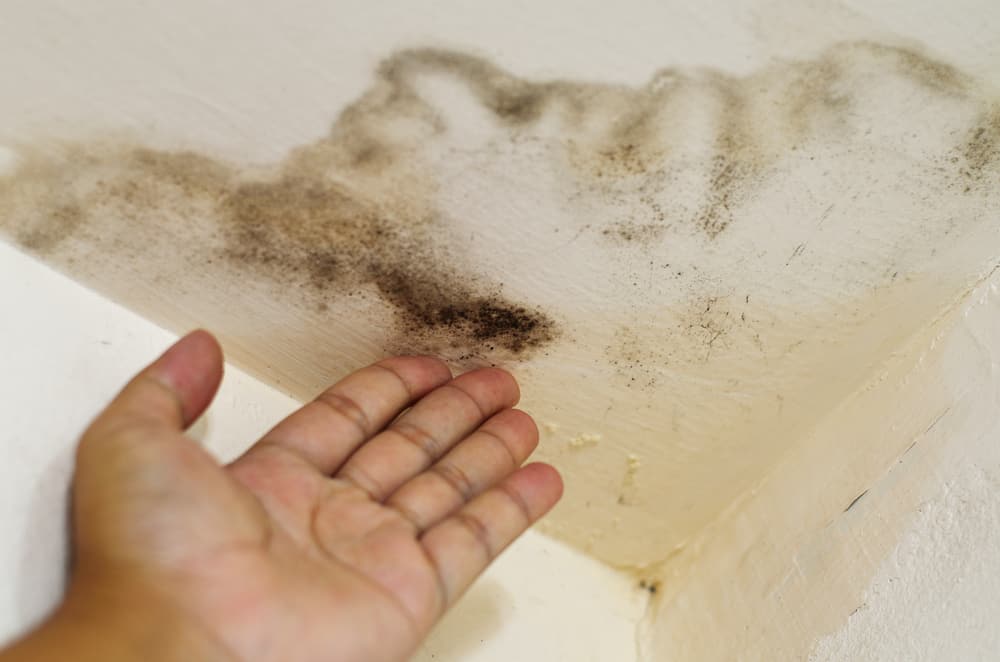
Yes — and the reason it keeps coming back is almost always the same. The mold was cleaned, but the moisture source wasn’t fixed. In Plandome Heights, where most homes were built in the 1930s and 1940s, the structural conditions that allow moisture to enter are built into the home’s original construction. Older concrete block and stone foundations develop small cracks and pores over decades. Attic ventilation systems from that era weren’t designed to handle today’s humidity levels. Plumbing that’s been in place for 60 or 70 years develops slow leaks behind walls that go undetected for months.
The village’s proximity to Manhasset Bay adds another layer — coastal humidity stays elevated for a longer portion of the year than inland Nassau County communities experience, which means moisture conditions that might be seasonal elsewhere are closer to year-round here. A proper remediation addresses the source. If a company cleans the mold without identifying and resolving the moisture entry point, you’ll be having the same conversation again in 12 to 18 months.
The national average for mold remediation runs around $2,300, but that number covers a wide range of situations. A contained basement mold issue in a single room will cost meaningfully less than a whole-house remediation involving multiple areas, structural material removal, and reconstruction. For Plandome Heights homeowners dealing with mold in a pre-war home — where walls may contain older insulation, where subflooring may need to come up, and where the moisture source may require additional investigation — the scope can expand beyond what a simple surface cleaning would cost.
The more useful way to think about cost in this context is relative to what’s at stake. On a home valued between $1.3 million and $4 million, a mold problem that goes unresolved — or that’s resolved improperly and returns — can reduce resale value by 20% or more and cause half of prospective buyers to walk away from the sale entirely. The cost of professional remediation, even at the higher end, is a fraction of that exposure. A written estimate based on an actual inspection is the only reliable way to get a number specific to your home.
No — and this is something every homeowner in Plandome Heights should know before calling anyone. New York State passed a law in 2016 that explicitly prohibits the same company from both assessing a mold problem and performing the remediation on the same property. The law was put in place to address a real problem: companies conducting “free inspections” and then exaggerating or fabricating findings to sell remediation services the homeowner didn’t actually need.
What this means practically is that you should be skeptical of any company that offers to inspect your home and immediately quote you for removal in the same visit. We operate in full compliance with this law. Our inspection process is conducted and documented independently, and the results are delivered to you in writing with lab analysis so you can make an informed decision — including the decision to get a second opinion — before any remediation work begins. Compliance with this law isn’t a bureaucratic inconvenience. It’s a consumer protection measure that works in your favor.
It matters more than most people realize. Mold removal implies physically taking the mold away — cleaning or wiping a surface. Mold remediation is a broader process that includes containment of the affected area, removal of contaminated materials, treatment of underlying surfaces, identification of the moisture source, and post-remediation testing to confirm the space is clean. Remediation is the standard that the IICRC’s S520 protocol — the industry benchmark — is built around.
For a Plandome Heights home with pre-war construction, the distinction is especially relevant. Mold in a 1930s or 1940s home often penetrates porous building materials — older drywall, wood framing, stone or concrete block foundation walls — in ways that surface cleaning can’t address. Remediation means going deeper: removing compromised materials, treating the substrate, and verifying through clearance testing that the contamination is actually gone. A company that offers “mold removal” without a post-remediation clearance test hasn’t finished the job.
Coastal proximity creates persistently elevated ambient humidity — and humidity is the primary environmental driver of mold growth. When indoor humidity exceeds 60%, mold conditions are met. In a bay-adjacent community like Plandome Heights, that threshold is crossed more frequently and for more months of the year than in inland Nassau County towns. Air conditioning systems cycling on and off during summer can create condensation in wall cavities and attic spaces. Basements in older homes near the bay may experience hydrostatic pressure from groundwater, forcing moisture through foundation walls even without a visible leak or flood event.
The village’s own municipal code includes a dedicated chapter on flood damage prevention — a direct acknowledgment by the local government that water intrusion is a recognized and ongoing risk for residents. That’s accurate. Homes in Plandome Heights that have gone through nor’easters or coastal storm events — and most have, over decades of ownership — may have moisture that entered once and never fully dried. That’s exactly the kind of hidden condition a proper mold inspection is designed to find.
Mold remediation itself typically doesn’t require a building permit. The inspection, containment, material removal, and treatment process is generally not permit-triggered under standard building codes. However, if the remediation requires structural repairs or reconstruction — replacing drywall, repairing roof sheathing, rebuilding portions of a basement — that work may require a permit issued through the Town of North Hempstead’s Department of Building, Safety, Inspection & Enforcement, which handles permitting for the area.
There’s also a village-specific rule worth knowing: Plandome Heights prohibits construction work on Sundays and federal holidays. Any contractor working in the village needs to schedule accordingly — and any company that books Sunday work without knowing this is signaling unfamiliarity with local code. We coordinate scheduling in compliance with village requirements, so you’re not dealing with neighbor complaints or code violations on top of an already stressful remediation process. If reconstruction is needed after remediation, we can walk you through the permitting process directly.
Useful Links
Other Services we provide in Plandome Heights