
Hear from Our Customers
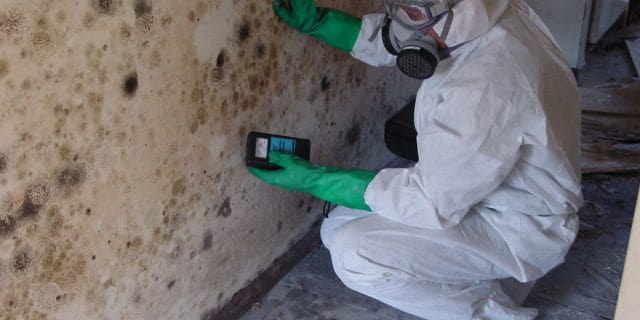
Most people don’t call about mold until something is already wrong — a smell they can’t place, a spot behind the washer, an inspector’s report that stops a home sale cold. By that point, the question isn’t whether to deal with it. It’s whether the company you hire is going to fix it or just cover it up long enough to hand you a bill.
We perform proper mold remediation in Ridge, NY by ensuring the mold is gone, the source of moisture is identified, and your home is independently verified clean before we walk away. You’re not left guessing. You get a clearance report that documents the outcome — something that matters whether you’re staying in the home or eventually putting it on the market, where mold history alone can drop a sale price by 20% or kill the deal entirely.
For Ridge residents — especially those in Leisure Village or Leisure Glen, where attached construction means a problem in one unit can quietly spread through a shared wall cavity to the next — that kind of documentation isn’t optional. It’s protection. And for anyone in a home that’s been sitting near Brookhaven State Park for decades, absorbing the humidity that comes off those woods every summer, knowing the moisture source has been corrected is the difference between a one-time fix and a problem that comes back every season.
First Response Restoration and Cleaning Inc. has been working in Suffolk County homes for over three decades. That includes communities throughout the Town of Brookhaven — places with the same Pine Barrens groundwater dynamics, the same aging housing stock, and the same seasonal moisture patterns that Ridge homeowners face every year. We didn’t learn Long Island from a training manual.
Owner Richard Peterson holds personal New York State licenses in both mold assessment and mold remediation — issued individually under Article 32 of the Labor Law, and verifiable through the NYS Department of Labor. Every technician on our team carries IICRC certification, which means the people physically working in your home have been formally trained and tested, not just handed a shirt and a spray bottle.
We also handle the full scope — from emergency response through final cleaning — so you’re not coordinating multiple contractors after the remediation is done. One call, one team, one outcome.
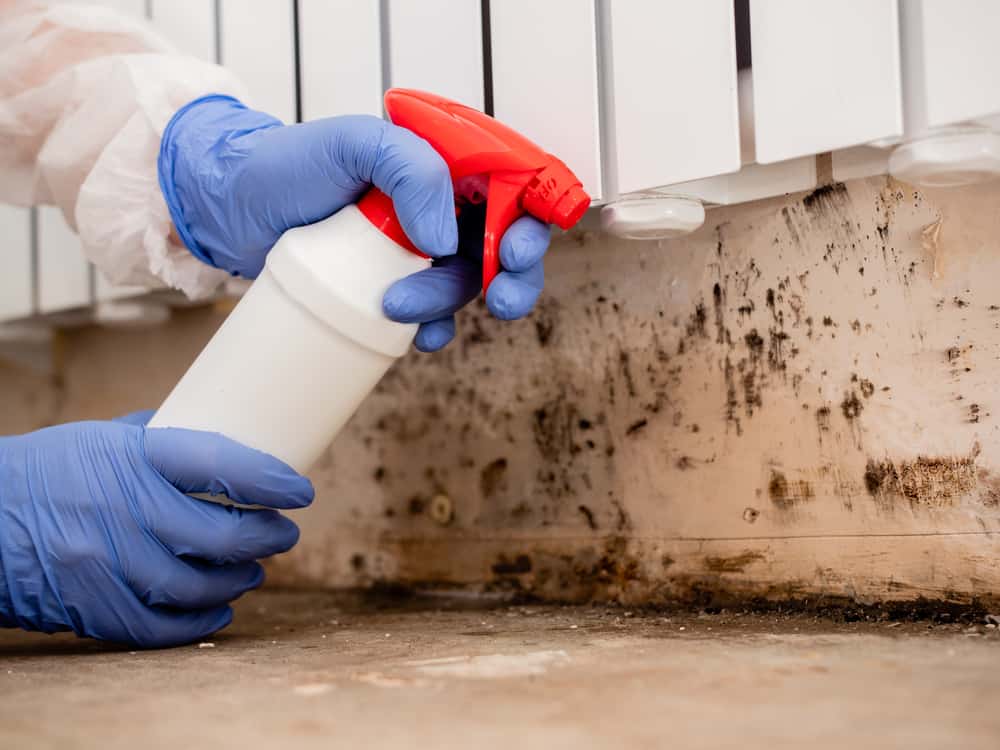
It starts with moisture mapping. Before anything is removed or treated, we identify where moisture is entering the structure and why. In Ridge, that often means checking crawl spaces for groundwater intrusion through aging foundations, inspecting HVAC systems in older attached homes where condensate drain pans can overflow into wall cavities, and assessing attic spaces where summer humidity from the surrounding Pine Barrens forest gets trapped without adequate ventilation. Finding the source isn’t extra — it’s the step that determines whether the fix holds.
Once the source is confirmed, containment goes up. This is how mold spores are kept from spreading to unaffected areas of your home during the removal process. Contaminated materials are safely removed, affected surfaces are treated with antimicrobial agents, and the work area is kept isolated throughout. Under New York State’s Article 32 law, all of this must be performed by a licensed remediation contractor — and that license is something you should ask to verify before anyone starts work.
After remediation is complete, we perform post-remediation verification. Independent air quality testing confirms that spore counts have returned to normal levels. You receive a clearance report. That document is what insurance companies want, what real estate attorneys ask for at closing, and what Ridge homeowners in HOA-governed communities may need to present to their association. The job isn’t done until that report is in your hands.
Ready to get started?
Basement mold remediation in Ridge, NY typically comes down to one thing: groundwater. The Central Pine Barrens aquifer system keeps the water table elevated beneath this hamlet, and homes built in the 1960s through 1980s — which make up a significant portion of Ridge’s residential stock — weren’t constructed with modern waterproofing standards. When spring rains recharge the aquifer or a nor’easter pushes water into a crawl space, mold can establish itself within 24 to 48 hours. Crawl space mold remediation here often includes vapor barrier installation as part of the correction, not just surface treatment.
Attic mold remediation in Ridge is most common in the late summer and fall, when months of trapped humidity from the surrounding woodland finally show up as growth on roof sheathing or framing. Older homes with inadequate ridge venting are especially vulnerable. For attached homes in communities like Leisure Village — where the housing stock dates back to the late 1960s and HVAC systems are aging — black mold remediation may also involve ductwork inspection and treatment, since contaminated air handlers can redistribute spores throughout the living space.
Every remediation we perform includes containment, licensed removal, antimicrobial treatment, and post-remediation verification with a written clearance report. We also assist with insurance documentation for covered claims, which is particularly relevant when mold damage follows a sudden water event like a burst pipe or storm flooding. We offer emergency mold remediation in Ridge, NY 24 hours a day, seven days a week — because the 48-hour window doesn’t adjust for weekends.
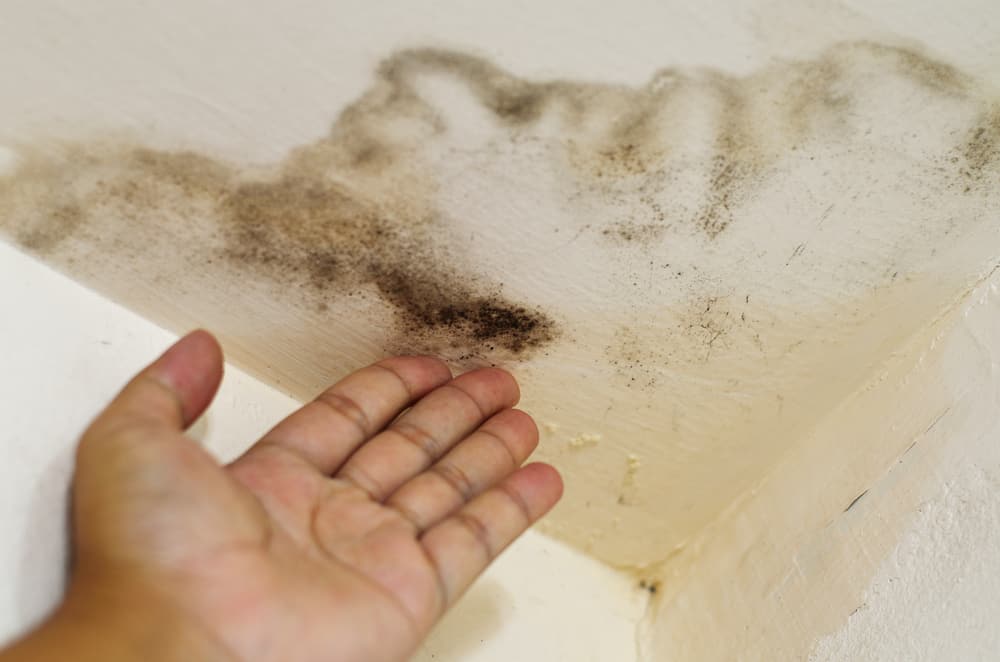
It can, and it’s one of the more important questions to ask if you live in an attached home in Ridge. Shared wall cavities, common attic spaces, and aging HVAC systems that connect units can all provide pathways for mold spores to migrate from one unit to an adjacent one — often without either homeowner being aware it’s happening. Leisure Village’s housing stock dates to the late 1960s, which means the insulation, vapor barriers, and building materials separating units have been in place for over 50 years.
If mold is found in your unit, a thorough remediation includes moisture mapping of the shared wall areas to determine whether the problem is contained to your space or has already moved beyond it. This matters both for your health and for your relationship with your HOA, which may have its own notification and remediation requirements. Getting a clearance report after the work is done gives you documented proof that the issue has been resolved — something most HOAs will want to see before closing the file.
The honest answer is that cost depends on where the mold is, how far it’s spread, and whether structural materials need to be removed. For most residential projects in Ridge, professional mold remediation runs somewhere between $1,200 and $3,800. Basement and crawl space remediation — which is common here given Ridge’s elevated groundwater table — tends to fall in the middle of that range, though crawl space encapsulation with a vapor barrier can push costs higher, sometimes into the $4,000 to $6,000 range depending on the size of the space. Attic remediation averages between $1,500 and $9,000 depending on how much of the framing and sheathing is affected.
What drives cost up most consistently is delayed action. Mold that’s been growing for months covers more surface area, requires more material removal, and takes longer to remediate than mold caught early. If you’re on a fixed income or working within a budget, the most cost-effective thing you can do is get a licensed assessment done as soon as you notice signs — musty odor, visible discoloration, or unexplained allergy symptoms — rather than waiting to see if it gets worse. In many cases, homeowner’s insurance covers mold remediation when it results from a sudden, covered water event like a burst pipe.
Mold removal is a term that gets used loosely, and it can mean almost anything — including wiping a surface with bleach and calling it done. Mold remediation is a defined process that includes containment, safe removal of contaminated materials, antimicrobial treatment, moisture source correction, and post-remediation verification. The distinction matters because mold that is “removed” without addressing the underlying moisture source will come back. In Ridge, where Pine Barrens groundwater creates persistent moisture pressure on crawl spaces and older foundations, surface-only treatment is almost always a temporary fix.
New York State’s Article 32 law requires that anyone performing mold remediation hold a valid state-issued license. The law also prohibits the same company from performing both the assessment and the remediation — a consumer protection measure designed to prevent conflicts of interest. When you’re evaluating companies, ask specifically whether they are licensed under Article 32 and ask to see the license number. That one question filters out a significant portion of the unlicensed operators working in the Suffolk County market.
Visually, you can’t tell with certainty. Black mold — the species most people are worried about, Stachybotrys chartarum — is dark green to black in color and has a slimy texture, but other mold species can look similar. The only way to confirm what species you’re dealing with is through laboratory testing of a physical sample, which is part of a licensed mold assessment. What matters more than the species, practically speaking, is the extent of the growth and where it is — because that determines the scope and cost of remediation, regardless of whether it tests as Stachybotrys or something else.
That said, black mold remediation in Ridge, NY is a legitimate concern, particularly in basements and crawl spaces where chronic moisture from the Pine Barrens groundwater system creates the sustained wet conditions Stachybotrys needs to establish. If you’re seeing dark growth in a consistently damp area of your home, treat it as a serious issue that warrants a licensed assessment — not a DIY bleach treatment. The health risks associated with prolonged mold exposure are real, and they’re amplified for older adults and anyone with respiratory conditions, both of which are common in Ridge’s population.
It depends on what caused the mold. New York homeowner’s insurance policies generally cover mold remediation when it results directly from a sudden, accidental covered event — a burst pipe, an appliance leak, or storm-related water intrusion that you reported and addressed promptly. Mold that developed gradually over time due to a maintenance issue, chronic leaking, or high humidity is typically excluded from coverage. The line between the two isn’t always obvious, and insurance adjusters don’t always interpret it in the homeowner’s favor.
Where documentation becomes critical is in making that case to your insurer. A licensed remediation contractor who photographs the damage, documents the moisture source, and provides a detailed scope of work gives you the evidence you need to support a claim. We assist customers with this documentation process, which matters especially when mold follows a storm event — something Ridge homeowners deal with after nor’easters and heavy rain seasons that can push water into basements and crawl spaces faster than the sandy Pine Barrens soil can drain it. If you’re unsure whether your situation is covered, call before you start any cleanup, because disturbing the mold before an adjuster sees it can complicate your claim.
The mold remediation itself — containment, removal, treatment — does not typically require a building permit. However, if the remediation involves removing and replacing structural materials like drywall, framing, or flooring, the Town of Brookhaven’s Building Division may require a permit for that reconstruction work. This is more likely to come up in larger remediation projects where significant portions of a wall or floor system need to be rebuilt after contaminated materials are removed.
New York State’s Article 32 law is the primary regulatory framework governing mold remediation in Ridge and throughout Suffolk County. It requires all mold assessors and remediation contractors to hold valid state-issued licenses, and it prohibits the same company from performing both functions on the same project. Beyond that, if your home is in a community governed by an HOA — as many Ridge properties are, particularly in Leisure Village and Leisure Glen — your association may have its own notification and documentation requirements for remediation work. It’s worth checking your HOA rules before work begins, and getting a written clearance report at the end of the project gives you what you’ll likely need to satisfy both your insurer and your association that the issue has been fully resolved.
Useful Links
Other Services we provide in Ridge