
Mold Remediation in Roosevelt, NY
Roosevelt's Older Homes Don't Hide Mold Well But It Hides From You
Hear from Our Customers
Certified Mold Remediation, Nassau County
The most immediate thing you notice is the smell or rather, the absence of it. That musty, stale odor that you’ve been blaming on the basement or the old walls finally lifts. But the bigger change is what you stop worrying about. No more wondering whether the air your family is breathing is clean. No more watching a water stain on the ceiling and hoping it’s nothing.
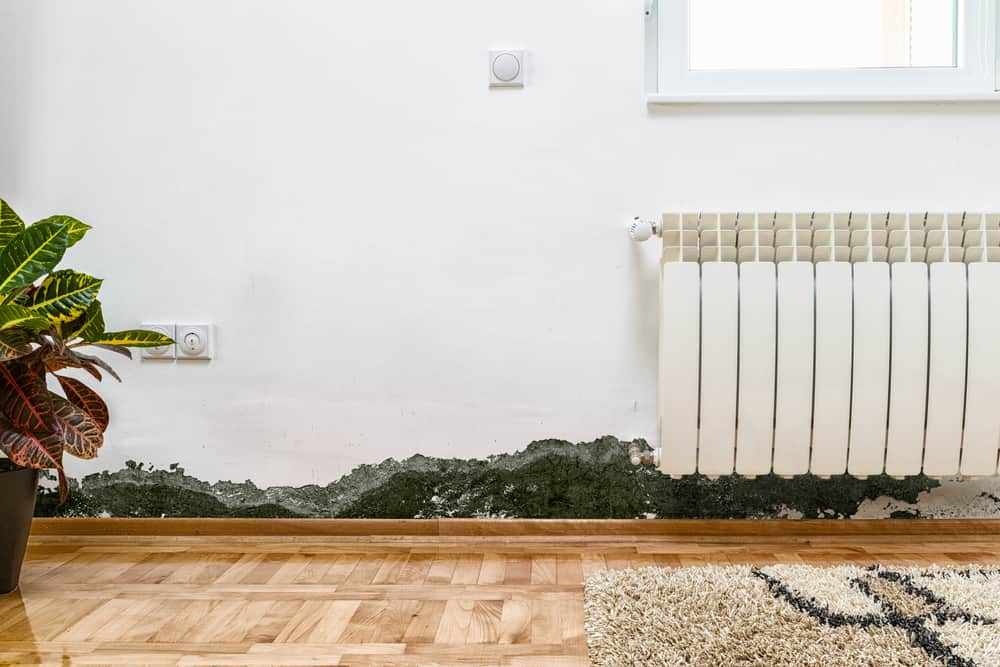
Roosevelt’s housing stock is almost entirely mid-century construction Cape Cods, split-levels, ranch homes and those structures age in specific ways. Older plaster walls absorb moisture. Attic spaces in dormered Cape Cods trap condensation. Crawl spaces in homes without modern vapor barriers become slow-motion mold factories, especially given the high water table that runs through this part of Nassau County’s South Shore. These aren’t abstract risks. They’re what’s happening right now in homes on streets like Nassau Road and throughout the neighborhoods between the Southern State and the Meadowbrook.
When we identify the source of the moisture and fully clear the contamination not just wiping it down, but actually remediating it your home becomes a different place. The air quality improves. The structural integrity of the affected areas is restored. And if you’re thinking about selling, you’re no longer looking at a 20–37% hit to your property value because of a disclosed mold history.
Experienced Mold Remediation Company, Roosevelt NY
We’ve been working in Nassau County since the late 1990s, and that means we’ve been inside hundreds of homes that look exactly like yours. The Cape Cods off Nassau Road. The split-levels near the Meadowbrook corridor. The ranch homes with unfinished basements that have been quietly absorbing groundwater for decades. Roosevelt’s building patterns are familiar to us in a way that matters when you’re trying to solve a moisture problem that’s specific to mid-century construction on the South Shore.
Every technician who shows up to your door is individually IICRC certified not just our company, but the actual person doing the work. That distinction matters more than most people realize. We also carry full equipment on every truck, so the job starts the moment we arrive. No second trip, no waiting on gear.
We handle the full scope: inspection, remediation, and reconstruction after the fact. That means you’re not left coordinating a separate contractor once the mold is cleared. One company, one point of accountability, from discovery to finished walls.
Mold Cleanup and Remediation Process, Roosevelt NY
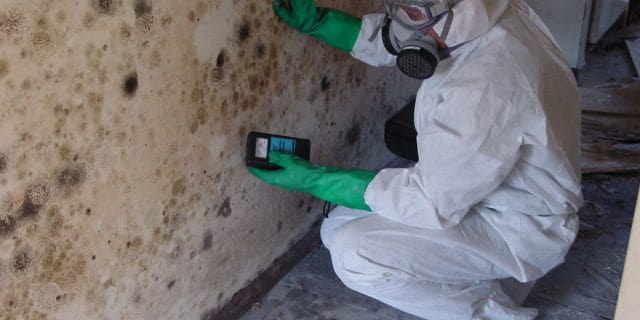
It starts with the inspection and this one is thorough. We run a 13-point assessment that includes air testing, swab sampling, infrared imaging to find mold behind walls and under floors, and moisture level readings throughout the structure. Lab results come back within 2–3 business days, and you get a full written report before any remediation begins. That matters under New York State’s 2016 mold law, which requires a documented assessment before work starts and it protects you from any company that tries to skip that step and go straight to a big quote.
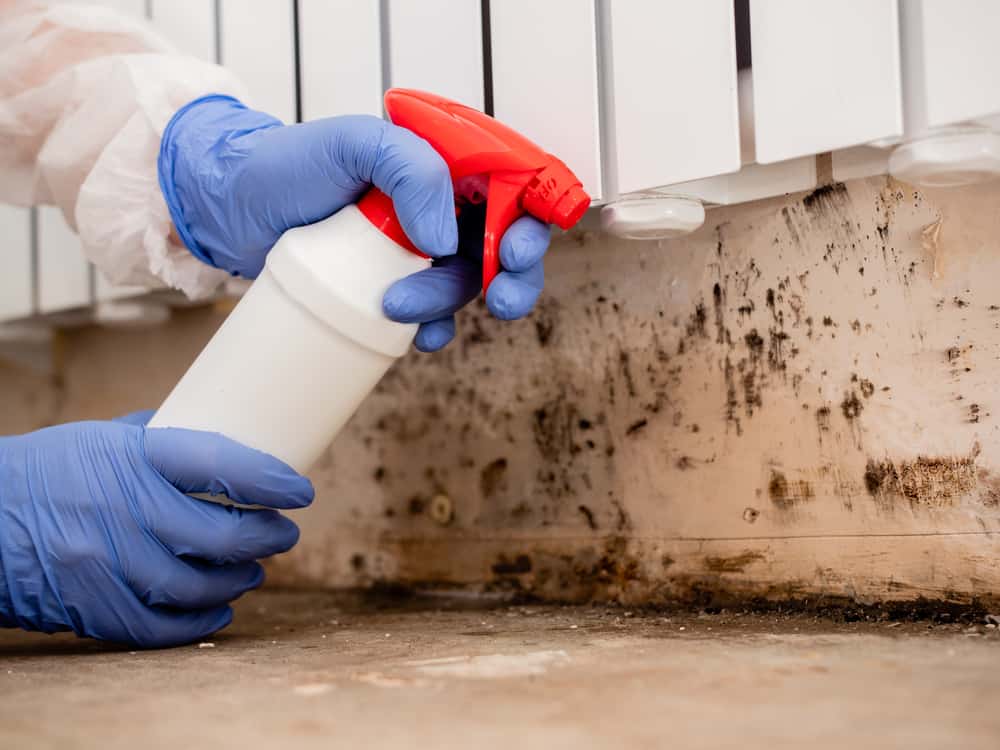
Once the scope is confirmed, we set up containment to prevent spores from spreading to unaffected areas of the home. Affected materials are removed drywall, insulation, whatever the contamination has reached and the area is treated and dried down to verified moisture levels. Air scrubbers run throughout the process. Nothing gets closed back up until clearance testing confirms the space is clean.
For Roosevelt homes specifically, the inspection almost always includes the basement and crawl space, the attic if it’s a Cape Cod, and any areas near exterior walls where groundwater pressure can drive moisture inward. After remediation, if reconstruction is needed new drywall, insulation, framing we handle that too. The Town of Hempstead may require permits for structural work, and we’ll walk you through what applies to your job.
Ready to get started?
Black Mold Remediation and Restoration, Roosevelt NY
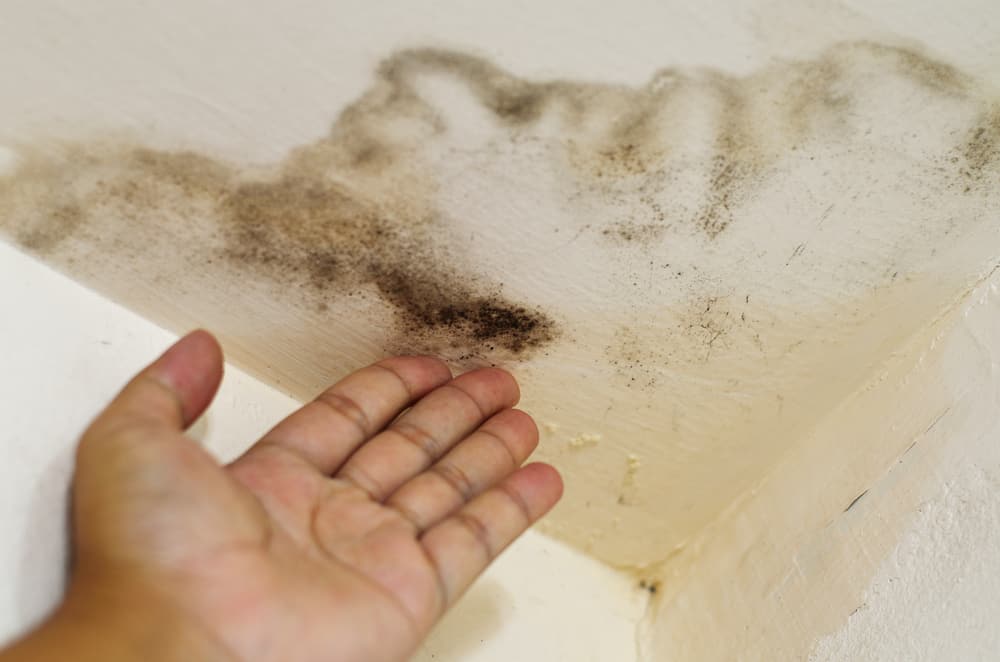
Mold remediation in Roosevelt isn’t a one-size situation. A small patch of surface mold in a bathroom is a different job than black mold remediation in a basement that’s been taking on groundwater every time it rains. We assess the full picture before recommending anything and because New York State law requires the assessment and remediation to be handled separately, you’re protected from the conflict of interest that used to be common in this industry.
What’s included in the remediation scope depends on what the inspection finds, but the standard process covers containment, removal of contaminated materials, antimicrobial treatment, air filtration, and post-remediation clearance testing by an independent party. For attic mold remediation in Roosevelt’s Cape Cod homes where inadequate ventilation causes condensation to build up against the roof deck we also address the airflow problem that caused it, not just the mold itself. Crawl space mold remediation in older ranch homes here often requires vapor barrier work as part of the fix.
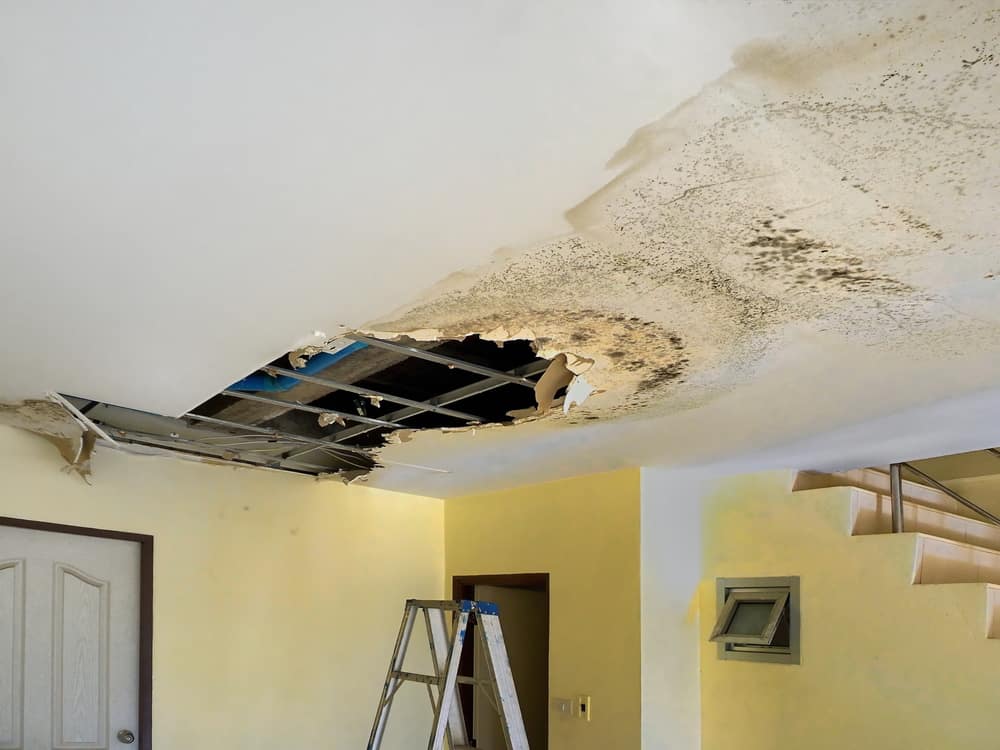
Emergency mold remediation is available 24 hours a day. If a pipe bursts or a basement floods after a South Shore storm, mold can begin growing within 48 hours and that window closes fast. You can reach us at 516-698-1776 for Nassau County, any time of day or night.
How much does mold remediation cost for a home in Roosevelt, NY?
The honest answer is that it depends on what the inspection finds and that’s exactly why the inspection has to come first. A localized mold issue in a bathroom or around a single pipe might fall in the $500–$1,500 range. A basement with widespread contamination, or an attic in a Cape Cod where mold has spread across the roof deck, can run $3,000–$7,000 or more depending on how much material needs to come out and what reconstruction follows.
The national average for mold remediation sits around $2,300, and Roosevelt homes given their age and the South Shore’s high water table tend to fall at or above that midpoint more often than not. The important thing is getting a written scope of work before you agree to anything. We provide lab-verified inspection results and a documented assessment before remediation begins, so you know exactly what you’re paying for and why. If your homeowner’s insurance covers any part of the job, we can also help you navigate that process.
What is the difference between mold remediation and mold removal?
Mold removal usually refers to cleaning visible mold off a surface wiping it down with bleach, scrubbing tile grout, that kind of thing. It deals with what you can see. Mold remediation goes further. It addresses the contamination at its source, removes affected materials that can’t be cleaned (like drywall and insulation), treats the area to prevent regrowth, and critically identifies and corrects the moisture problem that caused the mold in the first place.
In Roosevelt’s older homes, surface cleaning almost never solves the problem long-term. Mold in a basement that’s absorbing groundwater will come back within months if the moisture source isn’t addressed. Mold behind a plaster wall in a 1950s Cape Cod isn’t visible until you open the wall and bleaching the surface does nothing for what’s growing inside. Remediation is the process that actually ends the problem. Removal is just managing the symptom.
Can I stay in my house during mold remediation in Roosevelt?
In most cases, yes but it depends on the size and location of the contamination. For smaller, contained jobs like a single bathroom or a localized section of basement wall, most families can stay in the home while work is being done. We set up containment barriers and air scrubbers to keep the rest of the house clean and livable during the process.
For larger jobs extensive black mold remediation covering multiple rooms, or attic mold remediation that requires opening up large sections of the ceiling temporary relocation is sometimes the more practical call, especially if you have children or anyone with respiratory sensitivities. Roosevelt’s South Shore humidity in the summer months also means that air quality during a large remediation can be more uncomfortable than usual if the home isn’t well-ventilated. We’ll give you a straight answer on what makes sense for your specific situation after the inspection is complete.
Does homeowner's insurance cover mold remediation in New York?
It depends on the cause. Most standard homeowner’s insurance policies in New York will cover mold remediation if the mold resulted from a covered peril like a burst pipe, an appliance leak, or storm-related water intrusion. What they typically won’t cover is mold that developed due to long-term neglect, chronic humidity, or a slow leak that wasn’t reported and addressed promptly.
For Roosevelt homeowners, the most common insurance-covered scenario involves water damage from a storm or a plumbing failure that wasn’t caught quickly. Given that Nassau County’s South Shore took significant flooding during Hurricane Sandy and continues to see nor’easter activity, storm-related mold claims do come through in this area. The key is documentation having a written inspection report, lab results, and a clear timeline of when the water intrusion occurred. We help with exactly that, giving you the paperwork your adjuster needs to process the claim.
Why does mold keep coming back in my Roosevelt basement after I clean it?
Because the moisture is still there. This is the most common reason mold returns after a DIY cleaning or even an incomplete professional job the surface gets treated, but the underlying water source never gets resolved. In Roosevelt specifically, basement moisture often isn’t coming from a single leak. It’s coming from groundwater pressure pushing through the foundation walls and floor of homes that were built before modern waterproofing standards existed.
The South Shore of Nassau County sits above a shallow aquifer system, and the water table in parts of this area is close enough to the surface that basements take on moisture even without a visible plumbing problem especially after heavy rainfall. If your basement mold keeps returning, the inspection needs to go beyond the mold itself and look at where the water is actually entering the structure. That’s the part most surface-level cleaning approaches skip entirely, and it’s the part that determines whether you’re solving the problem or just delaying it.
How do I know if I need professional mold remediation or can handle it myself?
The EPA’s general guideline is straightforward: if the contaminated area is larger than 10 square feet, professional remediation is recommended. That’s roughly a 3×3 foot patch smaller than most people picture when they think of a “serious” mold problem. If you’re dealing with anything larger than that, or if the mold is inside a wall, in an HVAC system, or in a crawl space or attic, DIY approaches aren’t going to cut it.
For Roosevelt homeowners in particular, the age of the housing stock adds another layer. Older homes have porous building materials plaster, older drywall, untreated wood framing that absorb mold deeper than modern materials do. Bleach on the surface doesn’t reach what’s growing inside the material itself. Beyond the size and material questions, if anyone in your household has asthma, allergies, or respiratory issues, the risk of disturbing mold without proper containment and air filtration is real. A professional inspection will tell you exactly what you’re dealing with before you make any decisions and that clarity alone is worth the call.
Useful Links
Other Services we provide in Roosevelt