
Hear from Our Customers
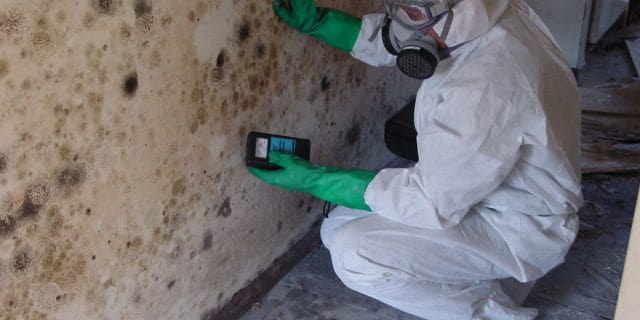
Mold doesn’t just look bad. In a Seaford Harbor home sitting in a FEMA flood zone, it moves fast — inside wall cavities, under subflooring, through crawl spaces that were never properly sealed to begin with. The visible stuff is rarely the whole story. When the job is done right, you’re not just looking at clean walls. You’re looking at air that doesn’t smell, a crawl space that’s actually dry, and documentation that holds up with your insurance adjuster and any future buyer who walks through your door.
Seaford’s post-war housing stock — the Cape Cods in Seaford Manor, the expanded ranches throughout the community — was built in an era before anyone thought seriously about vapor barriers or coastal humidity. That combination of older construction and South Shore moisture is exactly why mold remediation here isn’t a simple clean-and-go job. It requires finding where the water is coming from, stopping it, and then addressing every inch of growth it left behind.
The difference between a company that removes what’s visible and one that resolves what’s actually causing the problem is the difference between a fix that lasts and a call you’ll be making again in six months.
We’ve been serving Nassau and Suffolk County homeowners since the mid-1990s. That’s not a number thrown in to sound impressive — it means we were here when Sandy hit the South Shore in 2012, working in Seaford and surrounding communities when the water came in and the clock started ticking on mold growth. That kind of experience doesn’t come from a franchise manual.
Every technician who comes to your home is individually IICRC certified — not just our company at a corporate level, but the actual person doing the work. They arrive with everything they need on the truck: air movers, dehumidifiers, HEPA equipment, moisture monitors. There’s no “we’ll bring the equipment tomorrow.” The job starts when they walk through your door.
When you call our Nassau County line at 516-698-1776, you’re reaching a local company with local knowledge — not a national dispatch center routing your emergency to whoever’s available.
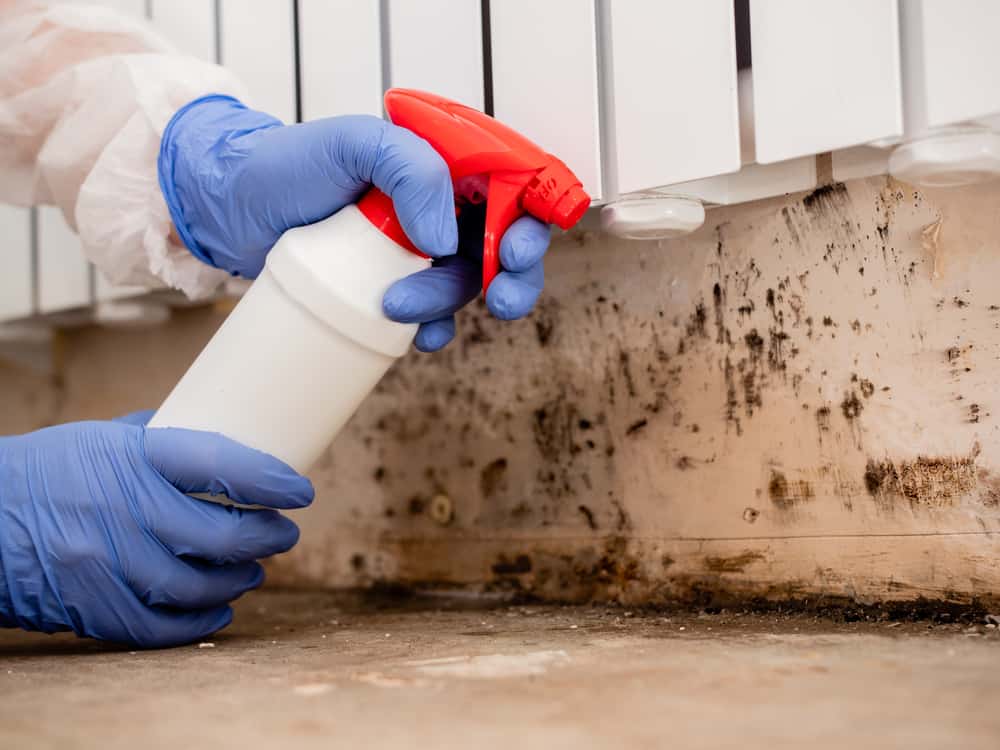
It starts with a 13-point inspection. That means air testing, swab sampling, infrared imaging to detect mold hiding behind walls and under floors, and moisture level readings throughout the affected areas. For Seaford Harbor properties that have dealt with recurring coastal flooding — or homes where Sandy-era repairs may have left hidden growth behind — the infrared component alone can change everything you thought you knew about the scope of the problem. Lab results come back within two to three business days, in writing.
From there, containment goes up before anything gets touched. That’s not optional — it’s the ANSI/IICRC S520 standard, and it’s what separates a professional remediation from someone with a bottle of bleach and a shop vac. Affected materials are removed, the space is treated, and air quality is verified before containment comes down.
What makes us different from most companies in the Seaford area is what comes after. Once the mold is gone and the damaged materials are out, the rebuild happens under the same roof — same company, same accountability. You’re not left coordinating a separate contractor to put your walls back together while you’re still dealing with the aftermath of a flood or a major discovery during a home inspection.
Ready to get started?
Mold remediation in Seaford covers a lot of ground depending on where the growth is and how far it’s spread. Basement mold remediation and crawl space mold remediation are the most common calls in this area — largely because of the older housing stock and the flood exposure that comes with living on the South Shore. Attic mold remediation is a close second, especially in Seaford Manor where Cape Cod-style homes with inadequate ventilation create the exact conditions mold needs to take hold quietly over years.
Every job we complete includes the full inspection scope, containment setup, HEPA air filtration, removal of affected materials, antimicrobial treatment, and post-remediation air quality testing to confirm clearance. If your home has sustained water damage that’s connected to the mold — a common situation in Seaford Harbor properties after a storm event — the water damage component is addressed as part of the same scope. New York State’s 2016 mold law requires that assessment and remediation be handled by separate licensed entities, which protects you as a homeowner from the kind of conflict of interest that used to be common in this industry. We operate in full compliance with that law.
For Seaford homeowners with a median home value around $775,000, the documentation that comes with a properly completed remediation — written reports, lab results, clearance testing — isn’t just paperwork. It’s protection for an asset worth protecting.
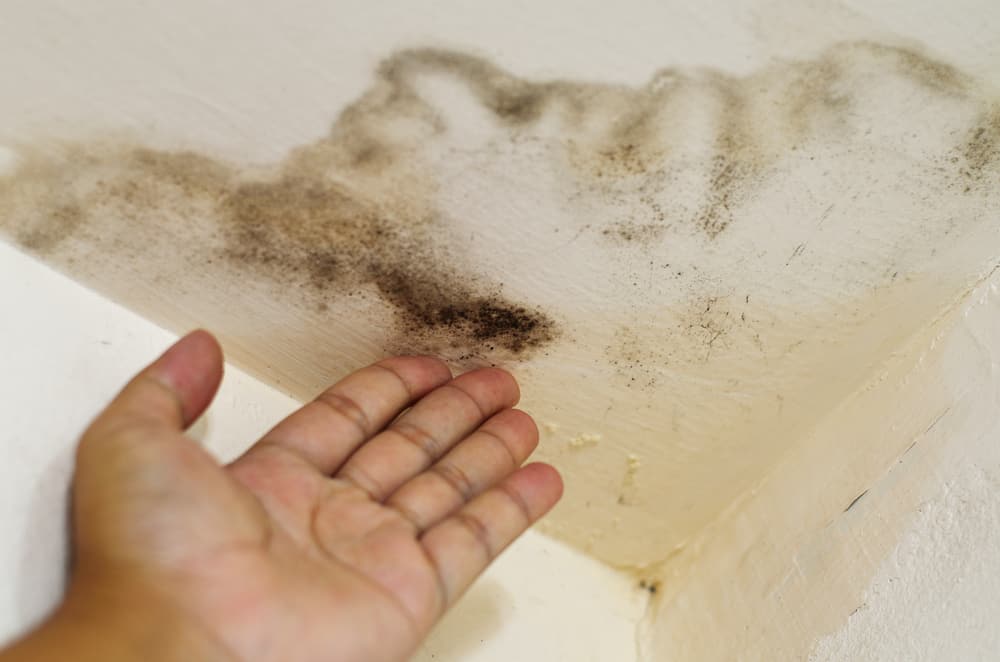
The honest answer is that you often can’t tell just by looking. Mold starts growing within 48 hours of water intrusion, and in Seaford Harbor homes — where coastal flooding can push water into basements, crawl spaces, and wall cavities — a lot of the growth happens in places you can’t see without testing. A musty smell that lingers after the water is gone is one of the clearest indicators, but it’s not the only one.
The right move after any significant water event is a professional inspection that includes infrared imaging and air testing — not just a visual walkthrough. Infrared can detect moisture behind drywall and under flooring that looks completely dry on the surface. If your Seaford home flooded during Sandy and was repaired at the time, that’s also worth having checked. A number of properties in our area had remediation done quickly in the aftermath, and not all of it was thorough enough to prevent long-term growth.
The range most homeowners encounter for a standard mold remediation is somewhere between $1,500 and $6,000, with the national average sitting around $2,300. Whole-house remediations — which do happen in South Shore homes that have had repeated water intrusion — can run significantly higher, sometimes into the $15,000 to $30,000 range depending on the scope.
What drives cost in Seaford specifically is the combination of older construction and flood exposure. A crawl space in a 1950s Cape Cod that has never been properly sealed is a different job than a single wall in a newer build. So is a basement that flooded twice in five years. The best way to get an accurate number is a proper inspection first — not a ballpark over the phone. Given that mold can reduce your home’s resale value by 20% to 37%, the cost of professional remediation is rarely the bigger risk.
Mold removal is a term that technically doesn’t hold up — you can’t remove every mold spore from a home because mold spores exist naturally in the air. What you can do is bring levels back to normal, eliminate active growth, remove contaminated materials, and address the moisture source that allowed mold to establish in the first place. That’s what remediation means.
The distinction matters because companies that promise “complete mold removal” are either misinformed or being misleading. Remediation done to IICRC S520 standards — which includes containment, source correction, material removal, treatment, and post-clearance air testing — is what actually resolves the problem. In a coastal community like Seaford where humidity and flood exposure create ongoing moisture risk, skipping the source correction step means the mold comes back. It’s not a question of if, it’s a question of when.
It depends on the cause. Most standard homeowners insurance policies cover mold remediation when it results from a sudden and accidental water event — a burst pipe, an appliance failure, or storm-related water intrusion that was reported and addressed promptly. What they typically don’t cover is mold that developed over time from a slow leak or deferred maintenance.
For Seaford Harbor homeowners who also carry flood insurance through NFIP, there may be additional coverage available for mold that results directly from a covered flood event. The key in either case is documentation — written inspection reports, lab results, and a clear timeline connecting the mold to the water event. That’s exactly what a properly conducted remediation produces, and it’s what insurance adjusters need to process a claim. Trying to navigate a claim without that paper trail is where homeowners run into trouble.
Yes, and it happens more than most people expect. Crawl spaces operate under something called the stack effect — air moves upward through a home, which means whatever is in your crawl space, including mold spores, gets drawn into the living areas above it. In Seaford’s older post-war homes, many crawl spaces were built without vapor barriers or with barriers that have since deteriorated. That creates a direct pathway for mold to affect air quality throughout the house, not just in the crawl space itself.
Crawl space mold remediation involves more than treating the visible growth. It means assessing the vapor barrier situation, addressing any standing water or persistent moisture, and ensuring the space is properly sealed and ventilated going forward. In some cases, encapsulation is the right long-term answer. The goal is to break the cycle — not just clean what’s there today and leave the conditions that produced it completely unchanged.
For a contained area — a single basement wall, one section of a crawl space, a localized attic problem — the active remediation work typically takes one to three days. Larger jobs, or situations where mold has spread through multiple areas of a home, can run five to seven days or longer. The inspection and lab results happen before the remediation work begins, which adds two to three business days on the front end but also means the crew knows exactly what they’re dealing with before they start.
In Seaford, the timing of discovery matters. If you find mold after a storm event, getting an inspection scheduled quickly limits how far the growth spreads before work begins. Post-remediation clearance testing adds a step at the end, but it’s also what gives you a documented confirmation that the job is done — something that matters significantly if you’re preparing to sell a home in a market where buyers and their inspectors are paying close attention.
Useful Links
Other Services we provide in Seaford