
Mold Remediation in Setauket, NY
When Historic Homes Meet Coastal Humidity, Mold Doesn't Wait
Hear from Our Customers
Certified Mold Remediation Setauket, NY
Mold remediation isn’t about spraying something on a wall and calling it done. It’s about understanding why the mold showed up in the first place and making sure it doesn’t come back six months later when the humidity climbs again off Conscience Bay. That’s the difference between a real fix and a temporary one.
For Setauket homeowners, that distinction matters more than most. A significant portion of the housing stock here was built between the 1940s and 1960s ranch homes, Cape Cods, colonials with unfinished basements and crawl spaces that were never designed with today’s moisture standards in mind. Add in the ambient humidity that rolls in from Setauket Harbor and Little Bay from May through September, and you have conditions that will find any weak point in an older structure. When those conditions combine with water intrusion like the record rainfall in August 2024 that hit Setauket-East Setauket among the hardest communities in Suffolk County mold can establish itself within 24 to 48 hours.
What you get on the other side of a proper remediation is straightforward: air that tests clean, materials that are actually removed rather than painted over, and documentation that holds up whether you’re staying in your home or selling it. In a market where homes are valued close to or above $860,000, that clearance report isn’t just peace of mind it’s protection for one of the most significant investments you’ll ever make.
Licensed Mold Remediation Company Setauket, NY
We’ve been working in Suffolk County homes for approximately 31 years, which means we were serving the Three Village area long before most of our current competitors existed. We understand what older North Shore construction in Setauket actually looks like from the inside the foundation vulnerabilities, the crawl space conditions, the attic ventilation gaps that plague homes built in the 1950s and 1960s.
What sets us apart in the Setauket market specifically is the licensing. Our owner Richard Peterson holds both a New York State Mold Assessor license and a Mold Remediation Contractor license in his personal name verifiable through the NYS Department of Labor. That’s not a company-level claim. That’s the person running the business being individually accountable to the state for every job that goes out the door. Every technician on our team is IICRC-certified, meaning the people entering your home have been formally trained and tested to the industry’s recognized standard.
We also run an integrated cleaning division, which means we handle the full cycle from emergency containment through final cleaning without handing you off to someone else. One company, one invoice, one point of contact from start to finish.
Professional Mold Remediation Process Setauket, NY
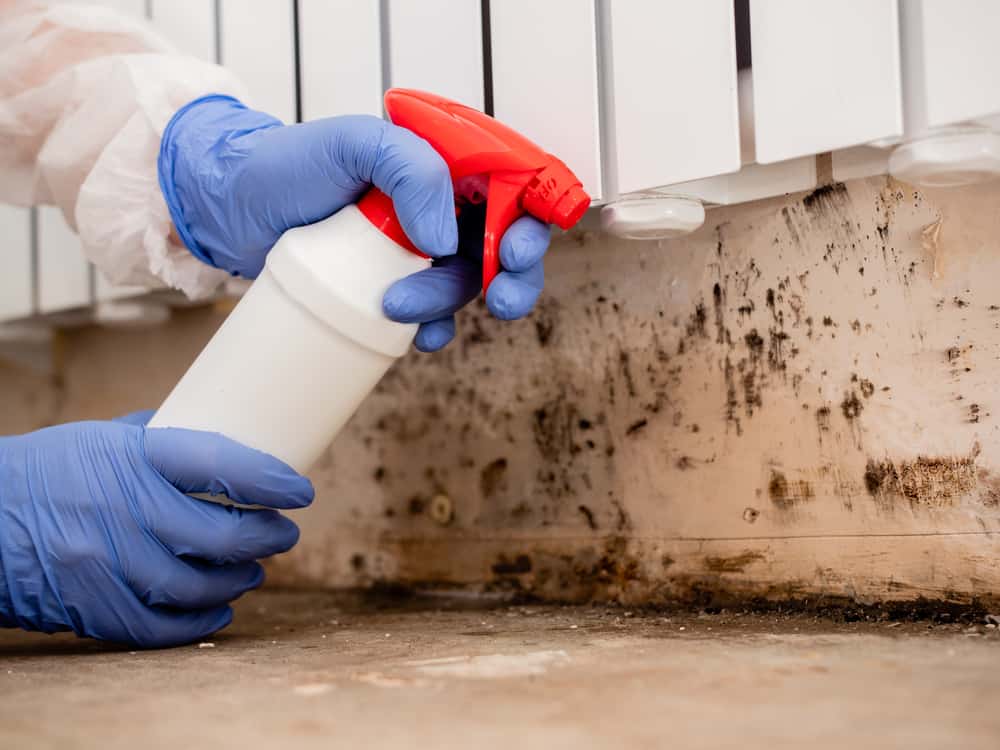
It starts with a thorough assessment. Before anything is removed or treated, we map moisture levels throughout the affected area to find where the problem is actually coming from. In Setauket’s older housing stock especially homes with basements near the water table or crawl spaces that have never been encapsulated the visible mold is often not the whole story. Identifying the moisture source is what determines whether the remediation lasts.
Once the scope is clear, containment goes up. This means negative air pressure barriers that prevent mold spores from spreading to unaffected areas of your home during the removal process. Affected materials drywall, insulation, framing are removed to the extent necessary, not beyond it. Antimicrobial treatments are applied to the cleaned surfaces, and structural drying brings moisture levels back to where they need to be. Any work that involves structural repairs may require a permit through the Town of Brookhaven Building Department, and we’re familiar with navigating that process so it doesn’t fall on you to figure out.
When the physical work is complete, post-remediation verification is conducted independent air quality testing that confirms mold spore counts have returned to normal levels. That clearance documentation is what you’ll need if you’re managing a real estate transaction, filing an insurance claim, or simply want confirmation that the job was actually done right. Nothing is declared finished until the numbers back it up.
Ready to get started?
Mold Damage Repair and Cleanup Setauket, NY
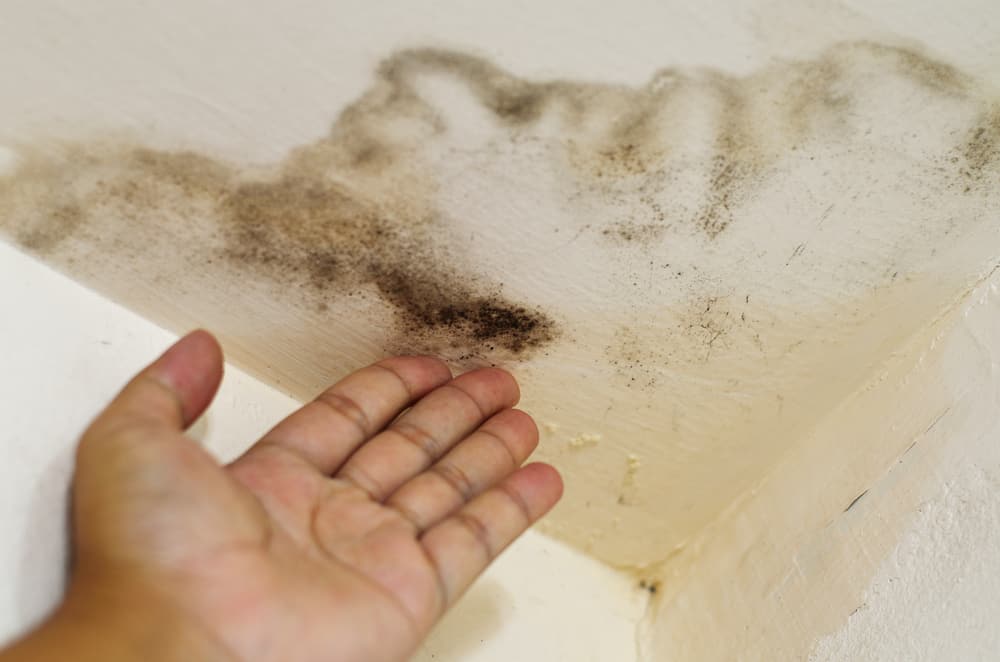
The most common mold problems in Setauket homes tend to cluster in three areas: basements, crawl spaces, and attics. Basements in older construction here are frequently unfinished with aging concrete foundations that allow moisture to seep in over time especially after heavy rain events or the kind of catastrophic flooding the area saw in August 2024. Crawl spaces without modern vapor barriers are a close second, and attics with inadequate ventilation are a persistent issue in mid-century homes throughout the Three Village area. Each of these environments requires a different approach, and the scope of work is determined by what’s actually found not a pre-packaged estimate.
For homeowners in Strongs Neck, Old Field, or anywhere near Conscience Bay and Setauket Harbor, coastal humidity is a compounding factor that doesn’t go away after one remediation if the underlying moisture control issues aren’t addressed. We identify those conditions as part of the process, not as an upsell.
Costs for residential mold remediation in the Long Island market generally range from roughly $1,200 to $3,800 for most projects, though attic remediation can run higher depending on the size and severity, and crawl space work varies based on access and extent of contamination. You’ll receive a written estimate before any work begins. If your situation involves a homeowner’s insurance claim which many Setauket residents navigate given the documented flood insurance gap in northern Suffolk County we can help you document the damage in the format insurers require.
What should I do if mold was found during a home inspection in Setauket?
A mold discovery during a home inspection in Setauket’s real estate market is a high-pressure situation. With median home values approaching $860,000 in this area, the stakes of a delayed or mishandled response are real for both buyers and sellers. The first thing to understand is that a mold finding doesn’t automatically kill a deal, but it does create a timeline. Mold remediation needs to be completed and verified before most lenders and attorneys will allow a closing to proceed.
What you need is a licensed remediation contractor who can assess the scope quickly, provide a written estimate, complete the work, and issue a post-remediation clearance report that satisfies all parties. Under New York State’s Article 32 mold licensing law, the same company cannot perform both the mold assessment and the remediation on the same project so if you’ve already had an assessment done, you’re cleared to move directly into remediation. The clearance report produced after the work is complete is the documentation your real estate attorney, lender, and the buyer’s agent will ask for. Make sure whoever you hire can actually produce one.
What is the difference between mold remediation and mold removal?
You’ll see both terms used online, sometimes interchangeably, but they don’t mean the same thing. Mold removal implies that mold can be completely eliminated from an environment which isn’t accurate. Mold spores exist naturally in the air both indoors and outdoors. The goal of professional mold remediation is to bring indoor mold levels back to normal, naturally occurring levels, remove the source of active growth, and prevent conditions that would allow it to return.
Remediation is the more accurate and more complete term because it includes the full process: containment to prevent spore spread, physical removal of contaminated materials, treatment of affected surfaces, structural drying, and post-remediation verification through air quality testing. A company that only “removes” visible mold without addressing moisture sources, without containment protocols, and without clearance testing isn’t doing remediation they’re doing surface cleaning. In Setauket’s older housing stock, where moisture intrusion often has multiple contributing factors, the distinction between a surface fix and a real remediation is the difference between a problem that stays solved and one that comes back.
How do I verify that a mold remediation contractor in New York is actually licensed?
New York State enacted Article 32 of the Labor Law effective January 1, 2016, making it a legal requirement for anyone performing mold remediation to hold a valid license issued by the NYS Commissioner of Labor. The law applies statewide including every contractor working in Setauket and the broader Town of Brookhaven. Despite this, compliance in the Long Island market is not universal. There are operators advertising mold remediation services who do not hold the required licenses.
Verifying a contractor’s license is straightforward. The NYS Department of Labor maintains a public license lookup tool where you can search by company name or license number. You’re looking for two separate credentials: a Mold Remediation Contractor license and, if the same individual holds it, a Mold Assessor license. Keep in mind that Article 32 prohibits the same entity from performing both assessment and remediation on the same project that’s a consumer protection built into the law. If a contractor can’t provide a license number for you to verify before work begins, that’s a clear signal to keep looking.
Can mold grow in a crawl space in a Setauket home, and how serious is it?
Yes and crawl spaces in Setauket’s older housing stock are one of the more common locations where mold is found and often overlooked the longest. Many homes in the Three Village area were built in the 1950s and 1960s with crawl spaces that have no vapor barrier, little ventilation, and direct soil contact underneath. Combine that with the elevated ambient humidity that comes with living close to Conscience Bay, Setauket Harbor, or Little Bay, and you have conditions that are almost designed to grow mold.
The seriousness depends on what’s there and how long it’s been developing. Surface mold on wood framing in a crawl space can often be remediated without major structural intervention if it’s caught early. If the wood has been compromised structurally, the scope expands. The bigger concern is that crawl space mold doesn’t stay in the crawl space air movement through a home naturally draws air up from below, which means mold spores can circulate into living areas over time. If your home has a crawl space and you haven’t had it inspected, especially after any water intrusion event, it’s worth knowing what’s down there.
How much does mold remediation typically cost for a home in Setauket, NY?
For most residential projects in the Long Island market, mold remediation costs fall somewhere between $1,200 and $3,800. That range covers the majority of basement, crawl space, and contained room scenarios where the mold hasn’t spread extensively and structural materials don’t require significant replacement. Attic mold remediation tends to run higher often between $1,500 and $9,000 depending on the size of the attic and how deeply the mold has penetrated the sheathing and framing.
The variables that push cost up in Setauket specifically are the age of the housing stock and the frequency of moisture intrusion. Older homes with multiple past water events including the August 2024 flooding that hit this area can have mold in more than one location, which expands the scope. Homes with structural materials that need to be removed and replaced rather than just treated will cost more than surface-only situations. The most reliable way to get an accurate number is a proper assessment first, followed by a written estimate before any work begins. Any contractor who gives you a firm price without looking at the actual conditions isn’t giving you a real number.
What happens if mold comes back after remediation is that normal?
Mold returning after remediation is not normal when the job was done correctly but it does happen when the underlying moisture source was never fully identified or addressed. This is the most common reason for recurrence, and it’s a particular risk in Setauket’s older homes where moisture problems can have more than one contributing factor: a foundation that allows seepage, an unencapsulated crawl space, an attic with inadequate ventilation, or an HVAC system that’s been cycling humid air through the house for years.
A properly executed remediation includes moisture mapping before any mold is removed, so we understand where the moisture is actually coming from not just where the mold is visible. If the source isn’t corrected as part of the process, you’re removing the symptom and leaving the cause in place. Post-remediation verification through independent air quality testing is the checkpoint that confirms the job reached the right outcome. If a contractor finishes the work and doesn’t recommend or perform clearance testing, that’s a gap worth questioning. Mold that returns is also a sign that the clearance testing either wasn’t done or wasn’t passed which is why that final step isn’t optional on any job we do.
Useful Links
Other Services we provide in Setauket