
Mold Remediation in Springs, NY
When Accabonac's Moisture Gets Into Your Walls, It Doesn't Wait
Hear from Our Customers
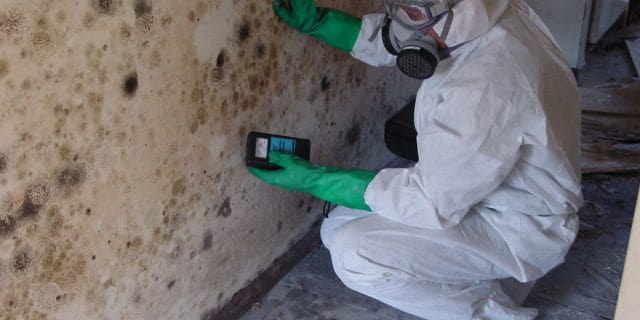
Black Mold Remediation Springs, NY
There’s a version of this where the mold gets wiped down, a coat of primer goes over it, and you don’t think about it again until the smell comes back six months later. That’s not remediation that’s a delay. Real mold remediation in Springs, NY means finding what caused the growth, removing it completely, and making sure the conditions that allowed it to exist in the first place are corrected.
For homes near Accabonac Harbor and Three Mile Harbor, that moisture source is often the ground itself. The water table in Springs is high unusually high for Long Island and older crawl space homes built before modern vapor barriers were standard are constantly fighting upward moisture migration. When that’s addressed properly, you stop treating the symptom and start solving the problem.
The difference shows up in the air quality, in how the space smells, and in a post-remediation clearance report that actually confirms the job was done right. Whether you’re protecting your family’s health, preparing a Springs property for sale, or just trying to stop a recurring problem that keeps coming back documented, verified remediation is the only version worth paying for.
Certified Mold Remediation Companies Springs, NY
We’ve been working on Long Island for over 31 years. Our owner, Richard Peterson, holds personal New York State licenses in both mold assessment and mold remediation which means the person running the company is the one legally accountable for every job performed under that license. That’s not common. Most operators either carry one license, not both, or the credential belongs to a corporate entity with no individual accountability attached to it.
Every technician on our team is IICRC-certified, which is the industry’s recognized standard for mold remediation training and practice. You’re not getting a crew that learned on the job you’re getting people who have been formally trained and tested on the S520 Standard for Professional Mold Remediation.
Springs sits in one of the more demanding environments on the South Fork between the harbor flooding risk on Gerard Drive, the seasonal property cycle, and the older housing stock north of Montauk Highway. We’ve seen all of it, and we know how to work through it.
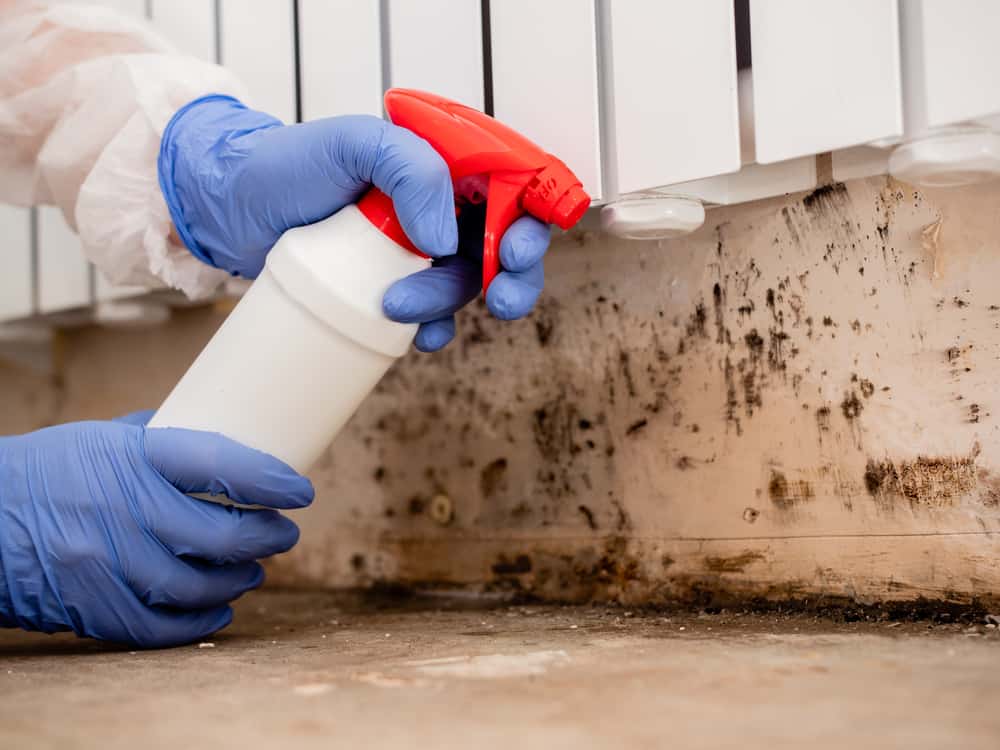
Professional Mold Remediation Process Springs, NY
The first thing that happens is an assessment not a sales pitch. Our goal is to find out where the mold is, how far it’s spread, and what’s feeding it. In Springs, that usually means checking crawl spaces, attic framing, and any areas that have seen water intrusion from storm events or ground moisture. If your home is near Louse Point or along the lower stretches of Gerard Drive, flood-related moisture is often a factor, and that changes how the scope is built.
Once the source is identified, containment goes up to stop spores from spreading to unaffected areas of the home. Then the actual remediation begins removal of contaminated materials, HEPA vacuuming, antimicrobial treatment of affected surfaces, and proper disposal in accordance with New York State Article 32 requirements. Every step follows the IICRC S520 standard, and nothing gets skipped because it’s inconvenient.
After the work is complete, post-remediation verification is conducted independent air quality testing that confirms spore counts have returned to normal. You get a written clearance report. If you’re in the middle of a real estate transaction, that document is often what keeps the closing on track. If you’re just a homeowner who wants to know the job was done right, it gives you exactly that.
Ready to get started?
Crawl Space and Attic Mold Remediation Springs, NY
Mold remediation in Springs, NY covers the full range of what this environment produces. Crawl space mold remediation is one of the most common calls we handle in this area the glacial outwash terrain that Springs sits on creates natural drainage problems, and older homes without proper vapor barriers are constantly pulling ground moisture upward. Attic mold remediation is the other frequent issue, driven by the coastal humidity that builds up during summer months when warm, salt-air-heavy exterior air meets cooler attic surfaces and condensation forms on the framing.
Basement mold remediation, emergency mold remediation after storm flooding, and post-water-damage mold cleanup are all part of what we handle here. For second-home owners who open a Springs property in April or May and find a winter’s worth of mold growth waiting for them, we also include full interior cleaning through our integrated cleaning division so the property is genuinely ready for occupancy, not just technically remediated.
All work is performed in full compliance with New York State Article 32 licensing requirements. We prepare insurance documentation in the format carriers require, and we can help you navigate what your homeowner’s policy does and doesn’t cover which matters in a community where storm-related mold claims are not uncommon. From the first call to the final clearance report, it’s one company handling the entire process.
Why do Springs homes near Accabonac Harbor have recurring mold problems?
The short answer is geography. Springs sits on low-lying glacial outwash terrain, nearly surrounded by water on three sides Accabonac Harbor, Three Mile Harbor, and Gardiner’s Bay. That means the water table throughout much of the hamlet is exceptionally high, and properties near the harbor shoreline are sitting on ground that is close to saturation for much of the year. Moisture migrates upward through crawl space foundations constantly, and in homes built in the 1950s and 1960s without modern vapor barriers, there’s very little stopping it.
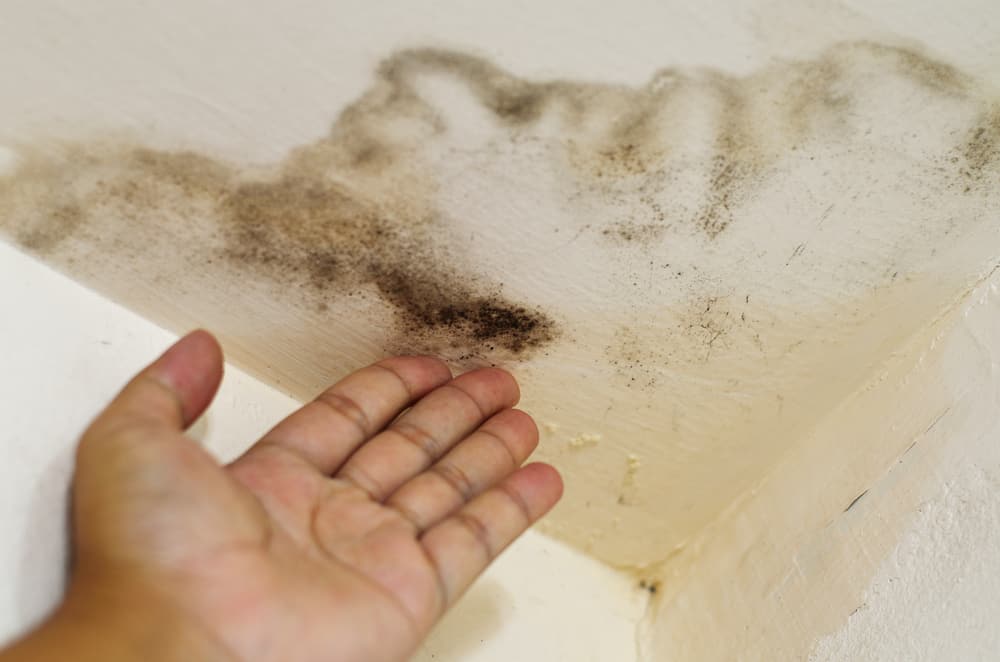
The recurring pattern usually looks like this: visible mold gets cleaned or painted over, but the moisture source ground infiltration through the crawl space floor never gets addressed. Within a season or two, the growth is back. Proper remediation in Springs means encapsulating the crawl space or correcting the vapor barrier situation, not just treating the surface. Until the moisture pathway is closed, the mold will keep finding a way back.
How much does mold remediation cost in Springs, NY?
For most residential mold remediation jobs in Springs, you’re looking at a range between roughly $1,200 and $3,800 depending on the size of the affected area, the type of materials involved, and how accessible the space is. Crawl space mold remediation in Springs tends to run toward the middle to higher end of that range crawl spaces require containment, careful removal of contaminated insulation or framing, and often some form of vapor barrier correction to prevent recurrence. Attic mold remediation can range from $1,500 to over $9,000 depending on the extent of the growth and whether structural materials need to be replaced.
What affects cost most significantly in this area is the condition of the home. Older Springs cottages with unencapsulated crawl spaces and no existing vapor control often require more material removal and corrective work than newer construction. The post-remediation clearance report which is a standard part of the process here is also factored into the overall scope. You’ll get a written estimate before any work begins, so there are no surprises once the job is underway.
Does homeowner's insurance cover mold remediation after a storm floods my Springs home?
It depends on the cause and how your policy is written, but the general rule is this: if the mold resulted from a sudden, covered water event like storm flooding that entered the home there’s a reasonable chance your policy covers at least part of the remediation. If the mold developed slowly over time from a moisture problem the insurer considers a maintenance issue, coverage is less likely. Flood damage specifically is often excluded from standard homeowner’s policies and requires separate flood insurance, which matters in Springs given that areas like Gerard Drive and Louse Point are in documented flood zones.
The documentation piece is critical. Insurance companies need damage to be recorded in a specific format, and if the work was performed by an unlicensed contractor, some carriers will deny the claim entirely. Having a New York State-licensed mold remediation contractor perform the work and provide a proper damage report gives your claim the best possible footing. We help customers understand what their policy covers and prepare documentation in the format their insurer requires.
What is the difference between mold remediation and mold removal?
Mold removal implies that mold gets taken out physically cleaned or scraped away. Remediation is a broader process that includes removal but goes further: it addresses the conditions that allowed mold to grow, contains the affected area to prevent cross-contamination, treats surfaces with antimicrobial agents, disposes of contaminated materials properly, and verifies through post-remediation air testing that the environment is back to normal. Removal without remediation is essentially cosmetic you’re cleaning what you can see without solving what caused it.
In a place like Springs, where the moisture drivers are environmental and persistent high water tables, coastal humidity, storm flooding removal alone almost always leads to recurrence. Remediation, done properly under the IICRC S520 standard, treats the root cause. That’s the distinction that matters when you’re deciding what kind of company to hire and what kind of outcome you’re actually paying for.
How quickly does mold start growing after my Springs home floods?
Mold can begin growing within 24 to 48 hours of water intrusion under the right conditions and Springs homes after a significant storm event have exactly those conditions. Warm temperatures, organic materials like wood framing and drywall, and standing or absorbed moisture create an environment where mold colonizes fast. By the time you can see visible growth, spores have already been airborne for some time.
This is why our 24/7 availability is not just a convenience it’s a practical necessity in a community where a nor’easter can flood low-lying streets overnight and leave crawl spaces saturated before morning. The faster water extraction and drying begins after a flooding event, the smaller the remediation scope becomes. Waiting until the following Monday to call a contractor after a Friday night storm is often the difference between a manageable crawl space cleanup and a full remediation with structural material removal.
Do I need a licensed mold remediation contractor in Springs, NY, or can anyone do this work?
New York State’s Article 32 mold licensing law, which has been in effect since January 1, 2016, requires anyone performing mold remediation on a project above a certain threshold to hold a valid state-issued license. This applies fully in Springs and throughout Suffolk County. Hiring an unlicensed contractor isn’t just a quality risk it creates real financial exposure. If your remediation was performed without a proper license, your insurance company can deny the related claim. A real estate buyer’s attorney can reject a clearance report from an unlicensed operator, which can derail a closing.
Beyond the legal piece, the practical reality is that licensed contractors are accountable in a way unlicensed ones are not. Richard Peterson holds personal NYS licenses in both mold assessment and mold remediation meaning he is individually accountable under state law for every job we perform. You can verify that license through the New York State Department of Labor before you ever make a call. In a market where Springs property values are significant and the stakes of a botched remediation are high, that level of verifiable accountability is worth confirming before work begins.
Useful Links
Other Services we provide in Springs