
Hear from Our Customers
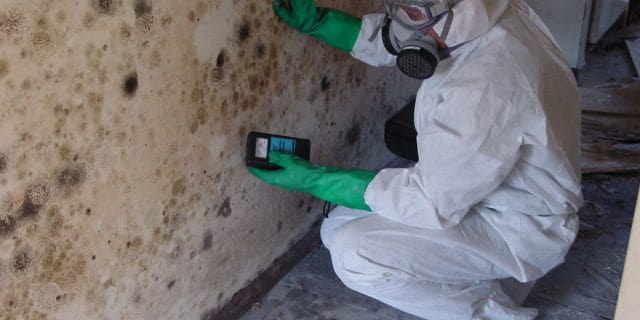
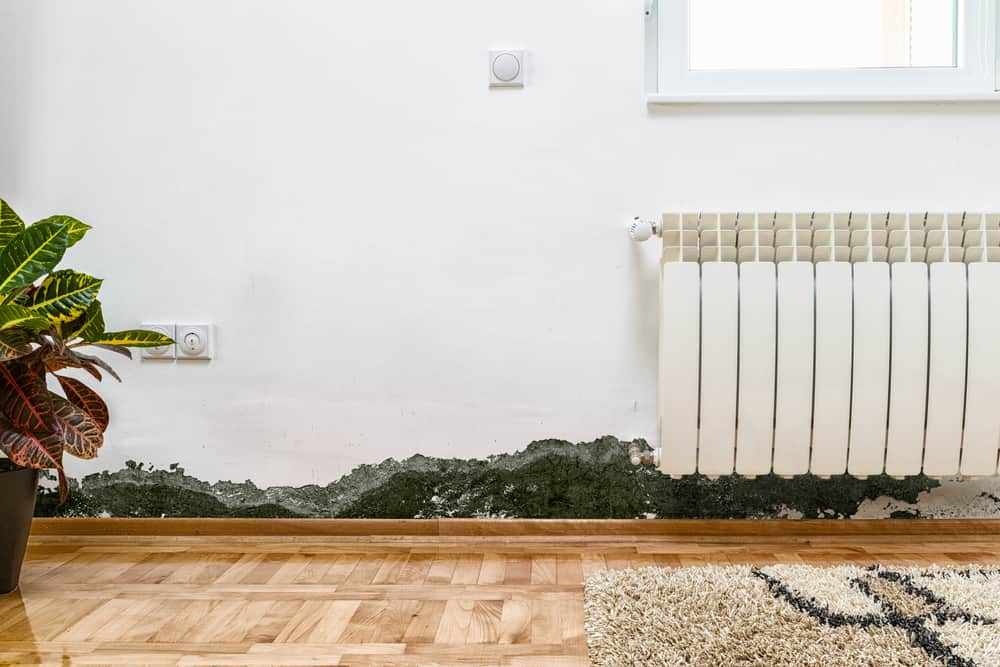
Most homeowners in St. James don’t find mold on the surface. They find it in the basement after a wet spring, in the attic after a brutal August, or behind drywall during a renovation on a home that’s been standing since the 1960s. The discovery itself isn’t the problem — what happens next is what matters.
When mold remediation is done correctly, you stop worrying about what’s growing inside your walls. Your family is breathing clean air again. The musty smell is gone. And if you’re heading into a real estate transaction — which in St. James often means a home valued well above $700,000 — you have documented proof that the problem was handled by a licensed contractor, not patched over.
The older housing stock throughout St. James, particularly the Cape Cods and bi-levels off the side streets near Lake Avenue and the wooded properties approaching Head of the Harbor, is more vulnerable to hidden moisture than most homeowners realize. These homes weren’t built with modern vapor barriers or mold-resistant materials. The ambient humidity from Stony Brook Harbor to the north doesn’t help. When moisture finds its way in — and in this area, it will — the question is whether it gets addressed before it becomes a structural and health problem. That’s what professional mold remediation in St. James, NY is actually about.
We’ve been working across Long Island for approximately 31 years, including throughout St. James and the surrounding North Shore communities. That’s not a number pulled from a brochure — it means we’ve worked through every major storm event this region has thrown at homeowners, including the August 2024 flooding that hit the Town of Smithtown hard enough to require water rescues in St. James and a Federal Emergency Declaration.
Richard Peterson, our owner, holds personal New York State licenses in both mold assessment and mold remediation. Not a company-level credential sitting in a filing cabinet — his license, in his name, verifiable through the NYS Department of Labor. Every technician on our team is IICRC-certified, meaning the people who actually show up at your home have been formally trained and tested on remediation protocols, not just handed a respirator and a checklist.
We also operate an integrated cleaning division, which matters more than it sounds. When remediation is complete, the surfaces, contents, and air systems in your home still need professional attention. We handle that too — one company, one point of contact, start to finish.
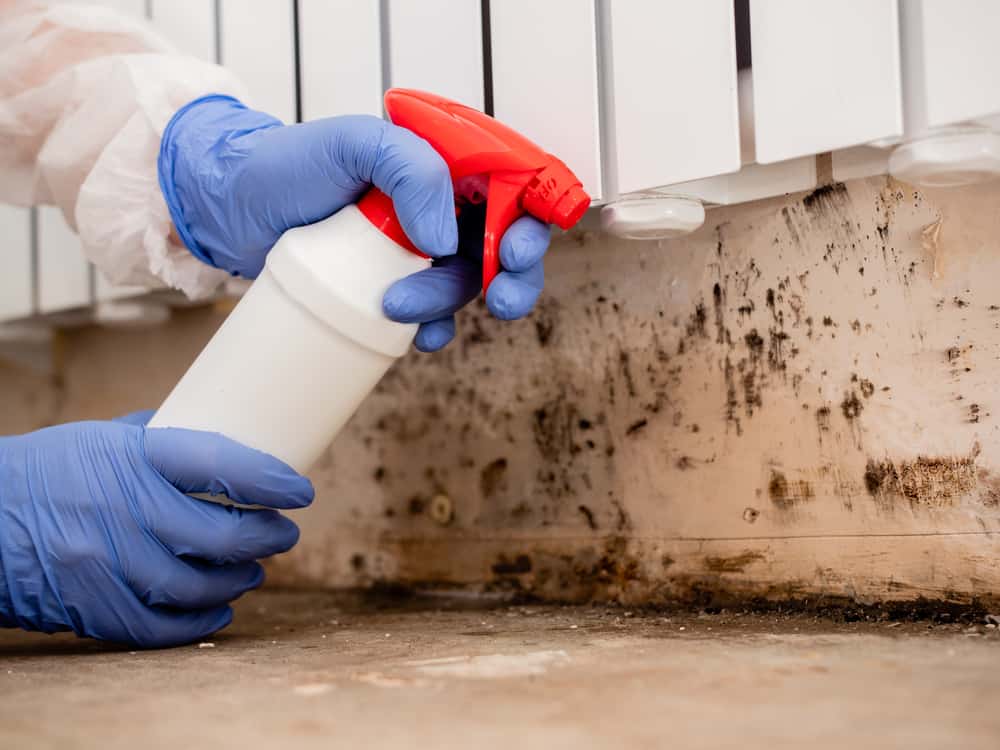
It starts with finding the moisture source — not the mold itself, but what’s feeding it. In St. James homes, that could be groundwater seeping through an older block foundation, condensation building up in an attic with inadequate ventilation, or a crawl space that’s been slowly accumulating humidity for years without a proper vapor barrier. Skipping this step is the reason mold comes back after so many paid remediation jobs. We don’t skip it.
Once the source is identified and controlled, the affected area is contained to prevent spores from spreading to clean parts of the home. Contaminated materials are removed following New York State Article 32 protocols — the state law that’s governed licensed mold remediation work since January 1, 2016. This isn’t optional compliance. It’s the legal standard, and it’s the standard that protects you if your insurance company or a buyer’s attorney ever asks for documentation.
After remediation, post-remediation verification is performed — independent air quality testing that confirms mold spore counts have returned to acceptable levels. You get a clearance report. Not a handshake and a promise, but written documentation. In the St. James real estate market, where transactions regularly exceed $1 million, that report isn’t just peace of mind — it’s often what keeps a closing on track.
Ready to get started?
Mold problems in St. James tend to show up in predictable places — and they’re almost always connected to the specific way moisture moves through this area’s housing stock and climate. Basement mold remediation in St. James, NY is one of the most common calls we receive, particularly after wet springs when groundwater rises against older foundations, or in the weeks following a significant storm event like the flooding that hit the Smithtown area in August 2024. Attic mold remediation in St. James, NY is the other frequent scenario — North Shore summers are humid, roofs absorb heat, and when warm, moist air meets the cooler underside of roof sheathing, the conditions for mold are almost ideal.
Crawl space mold remediation in St. James, NY is a quieter problem, but often a larger one. Many of the homes in this hamlet were built without adequate vapor barriers or crawl space ventilation. Moisture accumulates slowly and invisibly until it’s been there long enough to cause real structural damage. By the time a homeowner notices a smell or sees discoloration, the scope is usually bigger than they expected.
For properties in or near the Saint James Historic District along Route 25A — where some structures date back to the 19th century — remediation requires a more careful approach. Original wood framing and plaster walls can’t always be treated the same way as modern construction materials. Experience with Long Island’s full range of building types matters here, and we bring three decades of it.
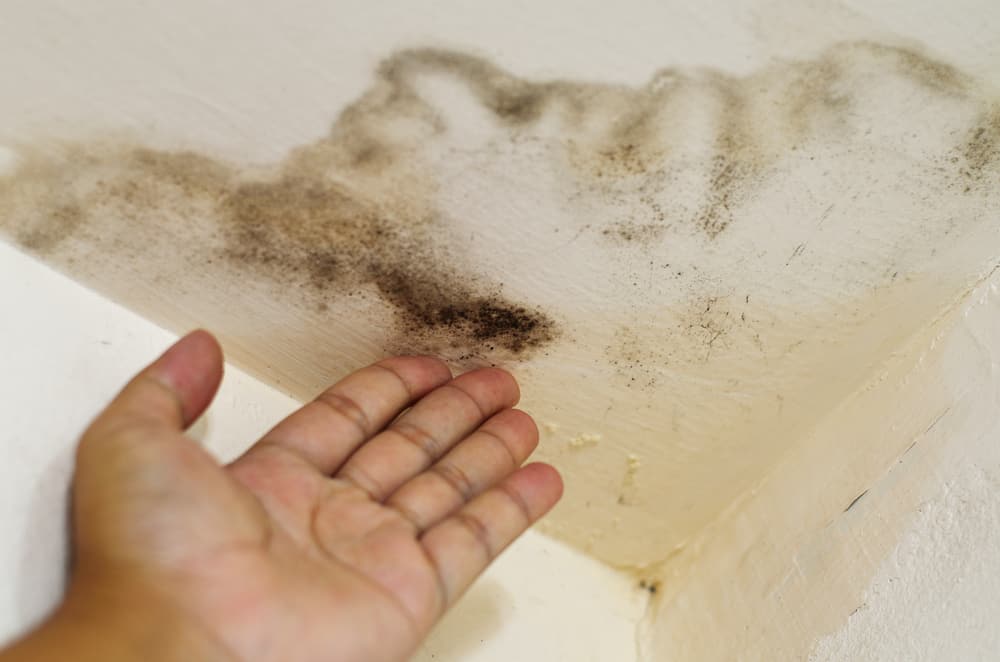
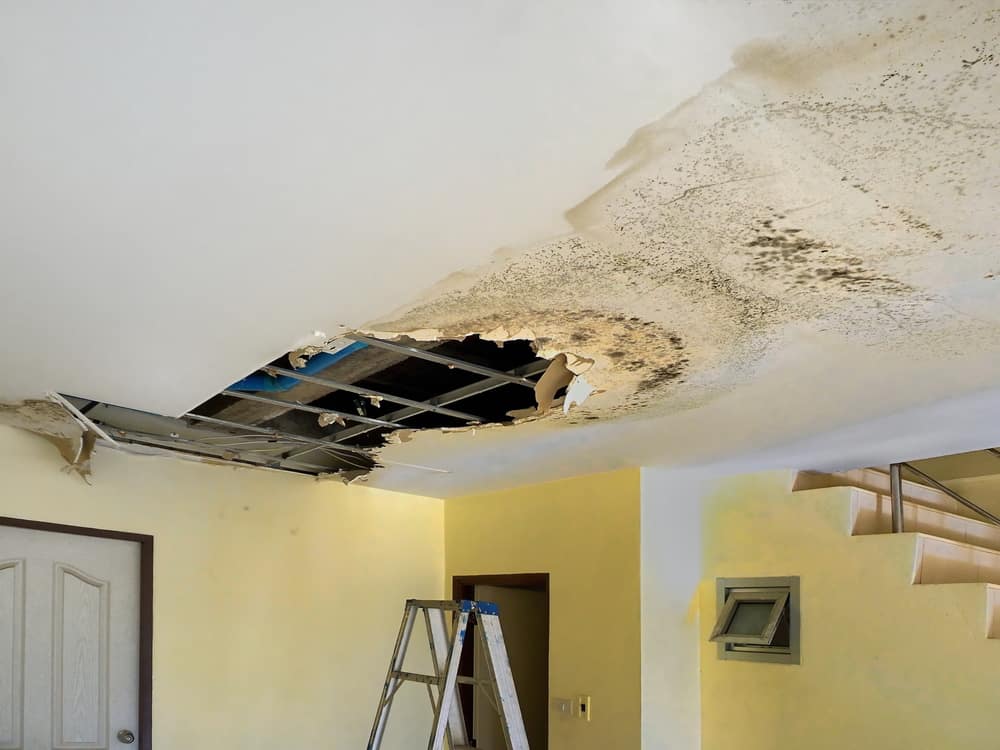
If your home experienced any basement or crawl space flooding during the August 2024 storm event — when approximately 10 inches of rain fell on the Smithtown area in 24 hours — and you didn’t have professional water extraction and structural drying performed within the first 48 hours, there’s a real possibility that mold has developed in areas you can’t see. Mold begins growing within 24 to 48 hours of water intrusion. It doesn’t wait for you to notice it.
The most common hidden locations in St. James homes after a flooding event are wall cavities where water wicked up behind drywall, the underside of subfloor framing in finished basements, and crawl space joist bays that stayed damp long after the standing water was removed. A professional mold assessment — performed by a licensed NYS mold assessor — is the only way to know for certain what’s there. If you had water in your home during that storm and haven’t had it checked, that’s the right first step.
The honest answer is that cost depends heavily on where the mold is, how far it’s spread, and what materials are affected. A surface-level basement mold situation might fall in the $1,200 to $3,500 range. Attic mold remediation, which is common in North Shore homes with ventilation issues, typically runs $1,500 to $9,000 depending on the square footage and whether roof sheathing needs to be treated or replaced. Crawl space remediation can start around $500 for minor surface treatment and climb significantly if structural framing is involved.
In the Long Island market, labor costs are above the national average, so you should expect the higher end of those ranges more often than not. What affects cost most is scope — and scope is almost always larger when the moisture source wasn’t addressed the first time. A contractor who quotes you a low number without doing a thorough moisture assessment first is likely giving you a number that will grow once the job is underway. Transparency about cost ranges upfront, based on a real assessment, is what you should expect from any mold remediation company in St. James, NY.
Mold removal is a marketing term. It implies that mold can simply be taken out of a home and the problem is solved. Mold remediation in St. James, NY — done properly — is a process, not a single action. It involves identifying the moisture source, containing the affected area, removing contaminated materials according to NYS Article 32 protocols, treating remaining surfaces with antimicrobial agents, and verifying through post-remediation air testing that spore counts are back to normal levels.
The reason this distinction matters is practical. If you remove visible mold without addressing what caused it, you’re going to be dealing with the same problem again in six to twelve months. In a St. James home where the underlying issue might be a failing crawl space vapor barrier, inadequate attic ventilation, or a foundation drainage problem that’s been present for years, treating the symptom without fixing the cause is an expensive way to not solve anything. Remediation means the problem is actually resolved — not just made invisible for a season.
Yes, and this is one of the most important things to verify before hiring anyone. Under New York State Labor Law Article 32, which took effect January 1, 2016, anyone performing mold assessment, sampling, or remediation work in New York must hold a valid state-issued license. It is illegal for an unlicensed individual or company to perform this work — and more importantly for you, it creates real financial risk if you hire one.
If your insurance company discovers that remediation was performed by an unlicensed contractor, your claim documentation may not hold up. If you’re selling your St. James home and the buyer’s attorney requests proof of remediation, an unlicensed contractor’s work won’t satisfy that request. You can verify any contractor’s license through the NYS Department of Labor’s online lookup. Richard Peterson, the owner of First Response Restoration and Cleaning Inc., holds personal NYS licenses in both mold assessment and mold remediation — that’s verifiable, not just claimed.
It can, and in the type of homes common throughout St. James, the pathways for that spread are often already built into the structure. Older Cape Cods and bi-levels — which make up a significant portion of the hamlet’s housing stock — typically have open connections between the basement and the living areas above through HVAC ductwork, utility chases, and stairwells. Mold spores are microscopic and airborne. Once a colony is established and disturbed — by foot traffic, air movement, or the humidity cycling that happens naturally through Long Island’s seasons — spores travel.
HVAC systems are a particularly common spread vector. If your air handler is in a basement where mold is present, or if there’s mold growth on or near ductwork, the system can distribute spores throughout every room in the house every time it runs. This is one reason why professional containment during remediation matters — and why post-remediation air quality verification isn’t optional. It’s the only way to confirm that what started in the basement hasn’t moved upstairs.
This is one of the most time-sensitive situations in the mold remediation world, and it comes up regularly in St. James given how active the local real estate market is. When a buyer’s inspector flags mold — whether in a basement, attic, or crawl space — the clock starts immediately. Most purchase contracts in New York give buyers a defined window to request remediation or renegotiate, and that window moves fast.
What you need at that point is a licensed remediation contractor who can assess the scope quickly, mobilize without delay, complete the work to a standard that will satisfy a re-inspection, and provide a written clearance report from post-remediation air quality testing. That documentation is what the buyer’s attorney will ask for before closing. A verbal assurance from the contractor isn’t enough in a transaction involving a St. James home — the paperwork has to be there. We provide 24/7 emergency response and the full documentation process that real estate transactions require, which is exactly what makes the difference between a deal that closes and one that falls apart.
Useful Links
Other Services we provide in St. James