
Mold Remediation in University Gardens, NY
Older Homes, Coastal Air, and Mold That Hides Well
Hear from Our Customers
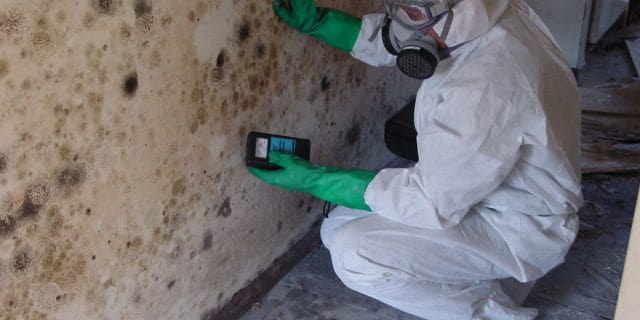
Basement Mold Remediation University Gardens NY
When mold is handled correctly, you’re not just getting rid of a problem you’re protecting everything you’ve built in this neighborhood. For University Gardens homeowners, that means a lot. Homes here carry real value, and Great Neck school district properties don’t stay on the market long. A mold issue that’s properly remediated and documented keeps that value intact. One that’s ignored or half-fixed can cost you 20% or more when it’s time to sell.
The older housing stock in University Gardens much of it built between the 1940s and 1960s, with some original 1927 homes still standing means the moisture risks are real and often hidden. Aging foundations, original plumbing, and decades of seasonal freeze-thaw cycles give water plenty of ways in. Add the coastal humidity off Manhasset Bay and Long Island Sound, and the roughly 2,000 trees within the subdivision creating their own moisture-trapping microclimate, and you have conditions that are genuinely more mold-prone than most of Nassau County.
Getting the remediation right the first time means you have lab-verified clearance documentation, a clear record for your insurance claim, and no second round of work six months later. That’s what a thorough, certified process actually delivers.
Certified Mold Remediation Companies University Gardens NY
First Response Restoration and Cleaning Inc. has been serving Nassau County homeowners for close to three decades. We’ve been in the University Gardens and Great Neck area long enough to understand how North Shore homes age, where moisture hides in older construction, and what it takes to get a job done right under Town of North Hempstead building requirements.
Every technician on our team holds individual IICRC certification. Not a company-level credential each person who walks into your home has met the industry’s standard for mold remediation work. That matters more than most homeowners realize until they’ve dealt with a crew that didn’t.
When you call us, you’re reaching a real local team, not a national routing center dispatching whoever’s available. We know University Gardens. We know the housing stock on Northern Boulevard, the basements in the Waverly Hills section, and the permit process that applies when reconstruction work follows remediation. That’s the difference between a vendor and someone who actually knows your neighborhood.
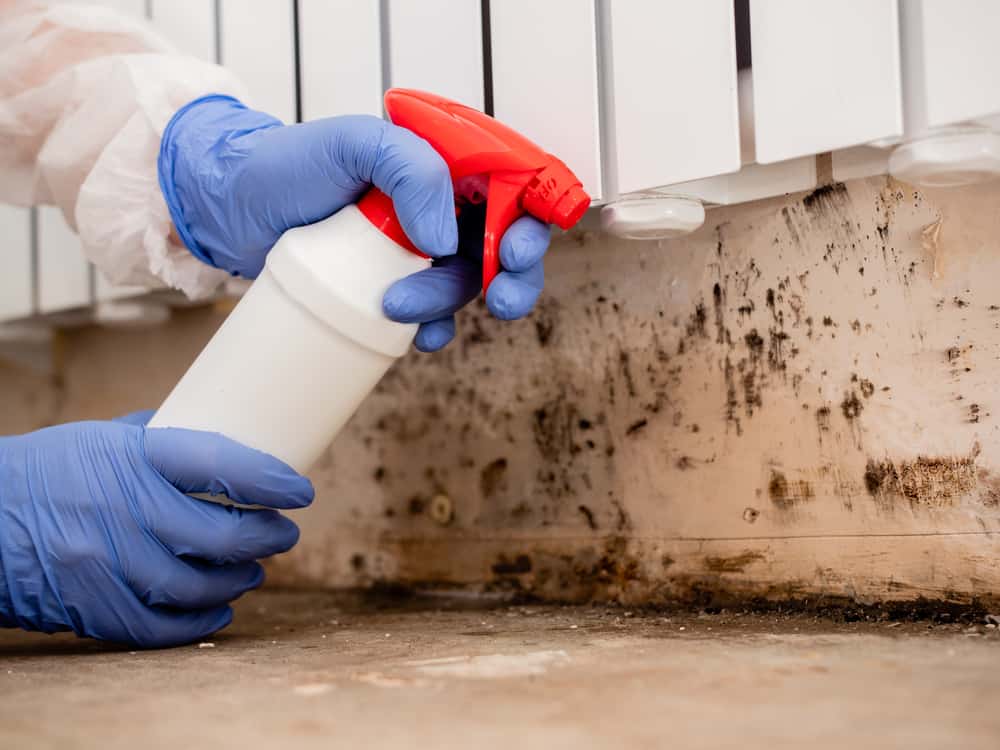
Professional Mold Remediation Process University Gardens NY
It starts with a 13-point inspection. Air testing, surface swab sampling, infrared imaging to find what’s behind walls, moisture measurement, and a side-by-side comparison of indoor and outdoor mold particle levels. You get a written report with lab results within two to three business days not a verbal summary, an actual document you can hand to your insurance adjuster or keep on file.
Before any remediation begins, we identify and address the moisture source. This is the step that most failed remediations skip. In University Gardens homes where aging pipe systems, older roof flashing, and foundation walls built before modern waterproofing standards are common the source is often not obvious. Finding it is what separates a permanent fix from a temporary one.
Once the source is resolved, containment goes up, HEPA filtration runs throughout the affected area, and the remediation follows the IICRC S520 standard from start to finish. After the work is complete, post-remediation clearance testing confirms the job was done correctly. If you’re in the core University Gardens subdivision, any structural reconstruction that follows will need to go through both the Town of North Hempstead Building Department and the UGPOA Board for review we understand that process and can help you navigate both.
Ready to get started?
Black Mold Remediation Services University Gardens NY
Mold remediation done properly isn’t just surface cleaning. Every job includes containment to prevent cross-contamination, HEPA air filtration throughout the work area, safe removal and disposal of affected materials, antimicrobial treatment of impacted surfaces, and post-remediation clearance testing with written documentation. The 13-point inspection that starts the process covers everything from attic sheathing to crawl space floors because in homes this age, mold rarely stays in one place.
For University Gardens homeowners dealing with basement mold, attic mold from ice dam damage, or crawl space mold from ground moisture intrusion, we handle the full scope. And when the remediation is complete and reconstruction is needed drywall, framing, finished surfaces that work is handled in-house too. You don’t have to find a separate contractor and start the coordination process over from scratch.
New York State law requires that the company performing your mold assessment and the company performing your remediation be separate, licensed entities. We operate in full compliance with that law and will explain exactly what it means for your project before anything starts. In a market where the “free inspection” model is still common, that transparency is worth paying attention to.
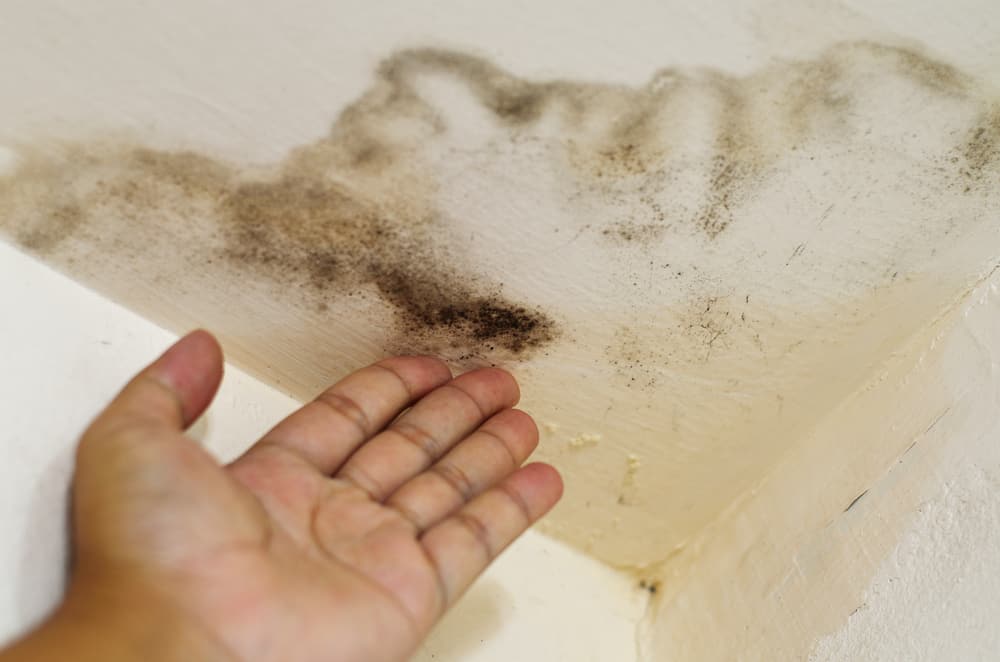
How do I know if my University Gardens home has a hidden mold problem?
The most common sign isn’t visible mold it’s a persistent musty smell, unexplained allergy symptoms that improve when you leave the house, or a history of water intrusion that was dried out but never professionally assessed. In University Gardens, where a significant portion of the housing stock dates to the 1940s through 1960s, hidden mold behind walls and under flooring is more common than most homeowners expect.
Older homes in this area were built before modern vapor barriers and waterproofing membranes were standard. That means moisture has had decades of opportunity to work its way into wall cavities, floor systems, and basement framing without being noticed. A professional inspection using infrared imaging and air sampling can identify mold growth that no visual check would catch. If your home has had any water intrusion a slow pipe leak, basement flooding after a nor’easter, or ice dam damage over the winter a professional assessment is the right next step, not a wait-and-see approach.
What does mold remediation actually cost, and what affects the price?
Most residential mold remediation jobs fall somewhere between $1,200 and $3,800, depending on the size of the affected area, how many surfaces are involved, and whether any structural materials need to be removed and replaced. More complex situations whole-basement infestations, attic mold across a large roof deck, or crawl space remediation in an older home can run higher, sometimes reaching $10,000 or more when reconstruction is part of the scope.
For University Gardens homeowners, the age of the home is often a factor. Older construction tends to have more porous materials, more interconnected wall cavities, and more places where mold can spread before it’s detected. That doesn’t automatically mean a higher cost it means a thorough inspection matters more, not less. Getting an accurate scope of work upfront, with a written estimate before anything starts, is the only way to know what you’re actually dealing with. Avoid any company that gives you a price before they’ve done a proper assessment.
Does homeowners insurance cover mold remediation in New York?
It depends on the cause. Most standard homeowners insurance policies in New York will cover mold remediation when the mold results directly from a covered event a burst pipe, storm-driven water intrusion, or an appliance leak that happened suddenly and was addressed promptly. What they typically won’t cover is mold that developed gradually over time due to deferred maintenance, chronic humidity, or a slow leak that went unaddressed for months.
For University Gardens homeowners, the key is documentation. If you had a water intrusion event basement flooding after a heavy rain, a roof leak during a nor’easter, or a pipe failure the timeline matters. The faster you document the event and bring in a professional, the stronger your insurance claim. We assist with the documentation and adjuster communication process, which makes a real difference when you’re trying to get a claim approved. Don’t assume coverage and don’t assume you don’t have it either. Get the inspection done and let the documentation do the work.
What is New York State's mold law, and how does it affect my remediation project?
New York State passed a mold licensing law in 2016 that requires the company performing your mold assessment the inspection and testing to be a separate, independently licensed entity from the company performing the actual remediation work. The same company cannot legally do both on the same property. This law exists specifically because the “free inspection” model had become a documented problem in the industry: a company would inspect, find mold regardless of actual conditions, and then charge for unnecessary or exaggerated remediation.
What this means for you practically is that you’ll work with a licensed mold assessor for the inspection phase and a licensed mold remediator for the remediation phase. Both must hold current New York State Department of Labor licenses. We operate in full compliance with this structure. Before any work begins on your University Gardens home, we’ll walk you through exactly how the process works, who’s responsible for what, and what documentation you’ll receive at each stage. If a company you’re evaluating doesn’t mention this law at all, that’s worth noting.
How long does mold remediation take from start to finish?
The inspection and lab results typically take two to three business days from the time samples are collected. Once you have the report and a remediation scope is agreed upon, the actual remediation work for a contained area a single basement room, a bathroom wall cavity, or a section of attic can often be completed in one to two days. Larger projects involving multiple areas or significant structural material removal will take longer, sometimes several days to a week.
What extends the timeline more than anything is the post-remediation clearance process, which shouldn’t be skipped. After the remediation is complete, air and surface samples are taken again and sent to the lab to confirm that mold levels are back within normal range. That adds another two to three business days before you have your final clearance documentation. For University Gardens homeowners who also need reconstruction work after the remediation and for those in the core subdivision who need UGPOA Board review alongside Town of North Hempstead permits building that review timeline into your planning from the start will save you frustration later.
Why does mold keep coming back even after it's been cleaned?
Mold returns when the moisture source that caused it was never fully resolved. Cleaning or treating the mold itself without fixing the underlying problem is a temporary measure at best. In University Gardens homes, the moisture source is often something that isn’t immediately obvious a slow leak inside a wall cavity from aging copper or galvanized steel plumbing, a flashing failure where a chimney meets the roofline, or ground moisture migrating through an older concrete block foundation that was never properly waterproofed.
The coastal environment on the Great Neck peninsula compounds this. Ambient humidity off Long Island Sound and Manhasset Bay stays elevated through much of the year, and the heavy tree canopy throughout the University Gardens subdivision reduces airflow and keeps surfaces damp longer after rain. If the remediation process doesn’t start by identifying and correcting the moisture source not just treating the visible mold the conditions that caused it remain in place. That’s why the inspection phase matters as much as the remediation itself. A thorough assessment finds the source. Everything after that is just cleanup if you skip that step.
Useful Links
Other Services we provide in University Gardens