
Mold Removal in Lake Grove, NY
Lake Grove's Aging Homes Hide More Than You Think
Hear from Our Customers
Residential Mold Removal Services in Lake Grove
The most common mistake homeowners make is treating the surface and calling it done. Bleach covers what you can see. It does nothing for what’s already spread into the wall cavity, the insulation, or the subfloor. Real mold removal means finding the full extent of the problem not just the patch on the drywall and eliminating it at the source.
For Lake Grove homeowners, that source is usually moisture. The village’s housing stock is predominantly postwar construction homes built in the 1960s and 1970s with concrete block basement walls, original attic insulation, and plumbing systems that weren’t designed for another 50 years of use. These structures absorb groundwater, trap humidity, and create the exact conditions mold needs to take hold. A heavy nor’easter or a slow pipe leak doesn’t have to be dramatic to do real damage it just has to go unaddressed long enough.
When we finish the work right, the air in your home is cleaner, the smell is gone, and the underlying moisture problem has been identified so mold doesn’t come back in six months. For families in Lake Grove especially those with kids in Sachem or Middle Country schools, or elderly residents in communities like Encore at Lake Grove that outcome matters well beyond the cosmetic.
Licensed Mold Removal Company in Lake Grove, NY
We’ve been operating out of West Babylon and serving Lake Grove and all of Suffolk County since the early 1990s. That’s not a franchise number it’s the actual length of time we’ve been working in homes like yours, in communities like Lake Grove, learning the specific conditions that drive mold growth in central Suffolk County’s aging residential neighborhoods.
We hold IICRC certification under the ANSI/IICRC S520 Standard for Professional Mold Remediation and operate in full compliance with New York State Article 32 of the Labor Law the mandatory licensing framework that has governed all mold remediation work in New York since 2016. Licensed, bonded, and insured. That’s not optional in this state, and it’s something you should confirm with any contractor before work begins.
We also handle water damage restoration, structural drying, dehumidification, air quality testing, and full cleaning services so you’re not coordinating three different companies after one water event. One call covers the whole job.
Professional Mold Remediation Process in Lake Grove
It starts with a thorough inspection. Not a visual scan an actual assessment using moisture meters, particle counters, and air quality testing equipment that detects mold behind walls and inside HVAC systems before it’s visible to the naked eye. In Lake Grove homes, where basement walls and attic spaces are often the first places mold establishes itself, this step is what separates a real diagnosis from a guess.
Once the scope is confirmed, we contain the affected area using negative air pressure and physical barriers to prevent spores from spreading to clean areas of your home during removal. Mold-affected materials drywall, insulation, framing where necessary are removed, treated, and disposed of properly. HEPA filtration runs throughout the process to capture airborne particles. Because New York State’s Article 32 regulations require that mold assessment and remediation be handled by separate licensed entities, we coordinate post-remediation air quality clearance testing through an independent assessor, which protects you and creates a documented record that the work was completed to standard.
After remediation, we identify the moisture source driving the problem whether that’s a cracked foundation wall, a bathroom exhaust fan venting into the attic, or a failing sump system. If structural repairs require a building permit through the Town of Brookhaven, we can walk you through what’s needed. The job isn’t finished until the environment is clean and the conditions that caused the problem are resolved.
Ready to get started?
Mold Removal Services in Lake Grove, NY
Basement mold removal is the most common call we get from Lake Grove homeowners and for good reason. The village’s full-basement homes sit on aging concrete block foundations that crack, shift, and absorb groundwater over decades. Spring snowmelt and heavy rain events saturate the soil around these foundations, and when water finds a way in, mold follows within 72 hours. We address both the colony and the entry point waterproofing gaps, sump systems, and drainage conditions that keep feeding the problem.
Attic mold removal in Lake Grove is the second most frequent issue we handle. Ranch-style and colonial homes built in the 1960s and 1970s commonly have bathroom exhaust fans that vent directly into the attic rather than to the exterior a code violation by modern standards but a reality in older construction. Warm, moisture-laden air accumulates against the cold roof sheathing and mold takes hold fast. The fix isn’t just removal it’s correcting the ventilation pathway so the problem doesn’t return.
Beyond basements and attics, we handle bathroom mold removal, crawl space mold removal, and commercial mold removal in Lake Grove for the retail and medical office spaces along the Route 347 corridor. If mold followed water damage a burst pipe, a roof leak, a failed appliance we also manage the full water damage restoration so you’re not left patching the problem in pieces. For Lake Grove landlords, Brookhaven Town’s rental inspection codes specifically address mold compliance, and documented professional remediation protects you if a violation is ever issued.
How do I know if I actually have mold or just a musty smell in my Lake Grove basement?
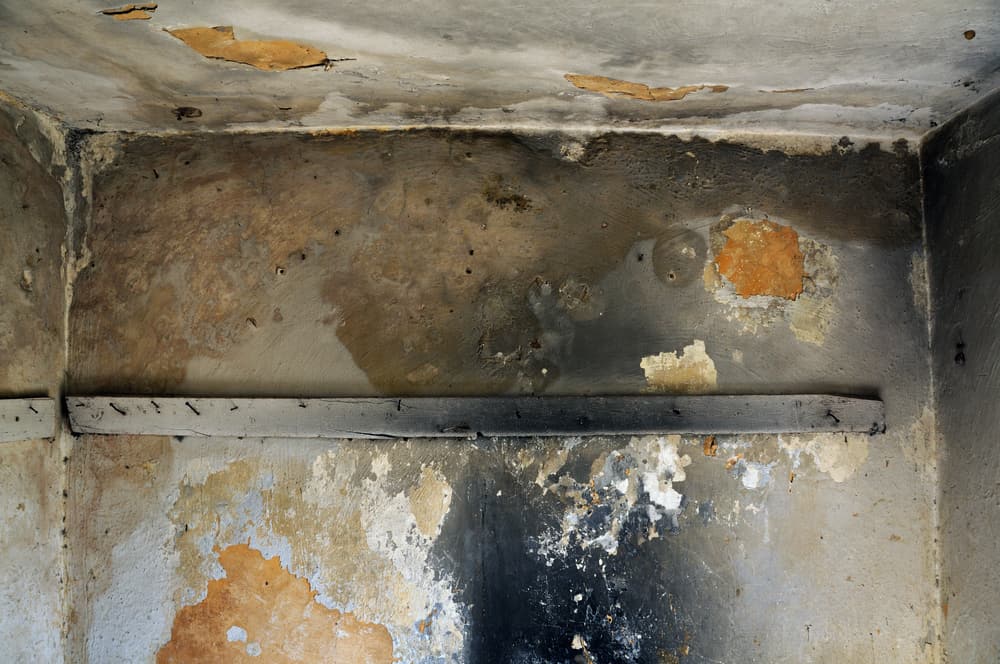
A musty smell is one of the most reliable early indicators of mold but it’s not the whole picture. Mold produces volatile organic compounds as it grows, and that earthy, damp odor is often detectable before any visible growth appears. In Lake Grove’s older basement construction particularly homes with concrete block walls that have been absorbing groundwater for 50 or 60 years mold can be well-established inside wall cavities and behind insulation long before you see a single dark spot on the surface.
The only way to know for certain is a professional inspection using moisture meters and air quality testing equipment. A visual check alone misses what’s hidden. If your Lake Grove basement has had any history of water intrusion, even minor seepage after a heavy rain or a slow sump pump, that’s enough moisture to support active mold growth. Don’t wait for visible confirmation by the time you can see it clearly, it’s already spread.
What does mold removal typically cost for a home in Lake Grove, NY?
Most residential mold remediation projects in the Lake Grove area fall somewhere between $1,200 and $3,800, depending on the size of the affected area and where the mold is located. Basement mold removal tends to run $1,500 to $6,000 for more extensive cases involving wall cavities or structural materials. Attic mold removal typically falls between $1,000 and $4,000 depending on the square footage and how far the growth has spread across the roof sheathing.
The range is wide because no two jobs are the same. A small bathroom mold issue caught early is a very different scope than a colony that’s been growing inside a basement wall for two seasons. What you should expect from us is a written estimate before work begins one that doesn’t change once the crew shows up. We provide transparent pricing upfront, and our real Lake Grove customers have specifically noted that what they were quoted is what they were charged no additions, no pressure mid-job.
Does homeowners insurance cover mold removal in New York, and how do I find out?
It depends on how the mold started. If mold is the direct result of a sudden, covered water damage event a burst pipe in winter, storm-driven water intrusion during a nor’easter, or a failed water heater most standard homeowners insurance policies in New York will cover at least a portion of the remediation cost. What insurers typically won’t cover is mold that resulted from a slow leak or long-term moisture problem that went unaddressed, because that falls under the category of deferred maintenance.
The critical step is documentation. Before any remediation work begins, the damage needs to be properly assessed and recorded in a format that satisfies your carrier’s requirements. We coordinate directly with insurance companies, document the damage according to claim standards, and work to maximize what your policy covers. Many Lake Grove homeowners don’t realize their policy applies until someone actually looks at the circumstances. It’s worth a call before you assume it’s all out of pocket.
Is the mold in my Lake Grove attic dangerous, and does it spread to the rest of the house?
Attic mold is genuinely dangerous, and yes it can spread. The attic isn’t sealed off from the rest of your home. Air moves through gaps around recessed lights, attic hatches, and HVAC penetrations, and mold spores travel with it. In Lake Grove homes where bathroom exhaust fans were installed to vent into the attic rather than the exterior a common shortcut in 1960s and 1970s construction that moisture-loaded air has been feeding mold growth directly above your living space for years in some cases.
The health implications are real. The World Health Organization links 21% of U.S. asthma cases to indoor dampness and mold, and children and elderly residents are the most vulnerable. For families in Lake Grove with kids in the Sachem or Three Village school districts, or for residents at Encore at Lake Grove dealing with respiratory sensitivities, attic mold is not a “deal with it later” situation. Removal needs to be paired with correcting the ventilation source otherwise the mold returns within a season.
Can I just use bleach to remove black mold myself, or do I need a professional?
Bleach works on non-porous surfaces tile, glass, sealed concrete. It does not penetrate porous materials like drywall, wood framing, or insulation, which is exactly where black mold in a Lake Grove home is most likely to be living. What bleach does in those situations is kill surface growth while leaving the root structure the hyphae intact inside the material. The mold looks gone. It isn’t. Within weeks, it’s back, often larger.
There’s also a safety consideration. Disturbing a mold colony without proper containment negative air pressure, sealed barriers, HEPA filtration releases spores into the air and spreads the problem to areas of the home that weren’t previously affected. New York State requires licensed contractors for mold remediation work for exactly this reason: improper handling creates more risk, not less. For anything beyond a very small, isolated surface spot on a non-porous material, professional black mold removal in Lake Grove is the right call not because it’s required, but because DIY attempts on hidden or porous mold consistently make the problem worse.
How long does mold remediation take for a typical Lake Grove home?
For most residential mold remediation jobs in Lake Grove, the active work takes one to three days. A contained basement or attic issue with clear boundaries can often be completed in a single day. Larger projects cases where mold has spread through multiple wall cavities, across a significant portion of attic sheathing, or into HVAC systems can run three to five days or longer depending on the scope of material removal and drying required.
After the physical remediation is complete, New York State’s Article 32 regulations require that post-remediation clearance testing be conducted by an independent licensed assessor not the same company that did the removal. That testing typically takes a day or two to schedule and process results. The full timeline from first call to final clearance is usually one to two weeks for most Lake Grove homes, though emergency situations can be prioritized. We operate 24 hours a day, seven days a week, so if you’re dealing with active water damage and mold risk following a storm or a pipe failure, the response doesn’t wait for business hours.
Useful Links
Other Services we provide in Lake Grove