
Water Damage Restoration in Calverton, NY
Calverton's 1970s Basements Weren't Built for Today's Water Table
Hear from Our Customers

Flood Restoration Services in Calverton
When water gets into a finished basement in Calverton, it’s not just a cleanup job. It’s decades of work a family room, a workshop, a home office sitting under water. The difference between a proper restoration and a surface-level wipe-down is structural drying that actually works.
Calverton’s homes sit on block foundations with minimal waterproofing. Groundwater moves differently here than it does in denser, more developed towns further west. The Pine Barrens aquifer sits beneath Calverton, and the Peconic River corridor runs through the southwestern portion of the hamlet. That means water intrusion in Calverton isn’t always storm-driven it can happen during dry stretches when the water table rises, which is exactly why consumer-grade equipment misses it.
Professional water damage restoration in Calverton means industrial moisture meters, commercial-grade dehumidifiers, and air movers that reach inside walls and under floors not just the surface you can see. When the job is done right, you’re not wondering whether we got it all. You know.
Residential Water Damage Repair in Calverton
We’ve been working on Long Island homes for nearly 30 years. That’s not a marketing number it’s the length of time it takes to actually understand how water behaves in a 1978 Calverton ranch versus a newer build, or what block foundation walls do after years of groundwater pressure. We’ve seen it all across Nassau and Suffolk County, and eastern Suffolk is not foreign territory.
We’re based in West Babylon and cover all of Suffolk County with a dedicated local presence a real (631) number, not a national call center routing you somewhere out of state. Our technicians are IICRC-certified, and we’re licensed, bonded, and insured. That matters when you’re filing an insurance claim, because the documentation your adjuster receives needs to reflect work done to a recognized standard.
Calverton sits at the end of the Long Island Expressway at Exit 71. For some companies, that means you’re at the bottom of the dispatch list. For us, Suffolk County coverage means Suffolk County including the eastern end of it.
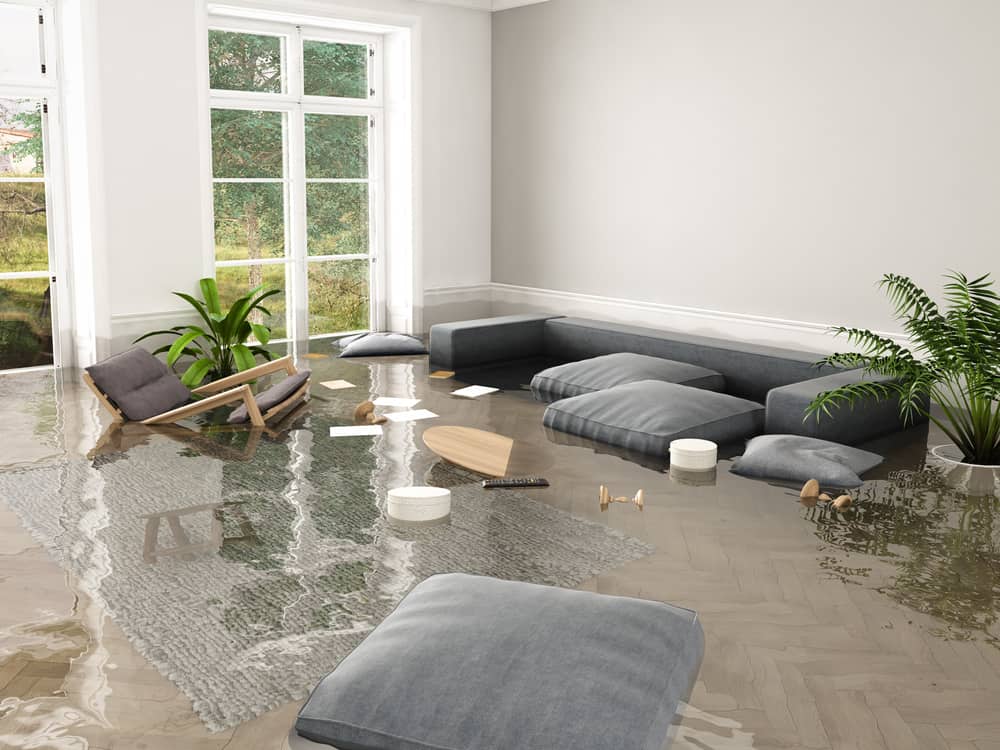
Basement Water Extraction Process in Calverton
When you call, the first thing that happens is a free on-site assessment. A technician comes to your Calverton home, evaluates the source and category of the water, maps the moisture using professional-grade meters, and tells you exactly what you’re dealing with before any commitment is made. That assessment also creates the documentation your insurance company will need which is why calling us before calling your adjuster is often the smarter move.
Water extraction comes next. We use commercial pumps and wet-extraction equipment to pull standing water out quickly, and then the structural drying phase begins. This is where the real work happens air movers and industrial dehumidifiers run for typically three to five days, targeting the moisture inside walls, under flooring, and in the structural cavities that a fan sitting in the corner will never reach. In Calverton’s older homes, especially those with finished basements and block foundation walls, this phase is critical. Skipping it or cutting it short is what leads to mold growth weeks later.
Once the structure is confirmed dry verified with moisture readings, not guesswork the reconstruction phase begins. We handle everything from drywall replacement through final finishes, so you’re dealing with one company from start to finish, not coordinating three separate contractors across eastern Suffolk County. Any structural work requiring a permit falls under the Town of Riverhead or Town of Brookhaven building department, depending on which portion of Calverton your property sits in we handle that coordination as part of the process.

Ready to get started?
Storm and Burst Pipe Water Damage in Calverton
Water damage in Calverton comes from a handful of consistent sources, and they’re worth naming plainly. Burst pipes are a real winter risk here older homes on larger wooded lots often have longer pipe runs through unheated garages and crawl spaces, and temperatures at the eastern end of Long Island can drop sharply. When a pipe goes at 2 a.m., the water doesn’t wait.
Groundwater intrusion is the other major driver in Calverton. The Pine Barrens aquifer beneath the hamlet and the Peconic River corridor to the southwest create conditions where basement seepage can occur even without a storm event. Nor’easters tracking up the Atlantic coast saturate the soil over 24 to 48 hours, and the drainage infrastructure in a rural-suburban hamlet like Calverton is not built to handle what a dense western Long Island community has. Storm drainage overwhelm during heavy rainfall is common, and the finished basements in Calverton’s 1970s and 80s housing stock are the first places that water finds.
We handle the full scope: emergency water removal, structural drying, mold prevention, content protection, and full reconstruction. Mold remediation, when needed, is performed in compliance with New York State Labor Law Article 32, which governs licensed mold remediation work throughout the state. We also work directly with your insurance carrier handling the documentation, the direct billing, and the adjuster communication so that process doesn’t fall entirely on you while you’re dealing with a flooded home.

Does homeowners insurance cover basement flooding in Calverton, NY?
It depends on what caused the flooding, and that distinction matters more than most people realize. Standard homeowners insurance covers sudden, accidental water damage from internal sources a burst pipe, a washing machine overflow, a water heater failure. Those events are typically covered. What standard homeowners insurance never covers is flooding from an external source, meaning groundwater rising from outside your home, storm surge, or overland water flow. For that, you need a separate flood insurance policy through the National Flood Insurance Program or a private carrier.
In Calverton, this distinction is especially relevant. The groundwater conditions near the Peconic River corridor and the Pine Barrens aquifer mean that some basement water intrusion events may be classified as groundwater seepage rather than a covered internal event. That’s one reason why having a professional assess the source of the water and document it correctly matters so much before you file a claim. We work directly with insurance carriers and can help ensure the damage is documented in a way that accurately reflects what happened and supports your claim.
How quickly does mold start growing after a basement floods?
The EPA’s guidance is clear: mold can begin developing within 24 to 48 hours of water exposure under the right conditions. In practice, that means the clock starts the moment water enters your home not when you notice it, not when you get around to calling someone. Mold spores are already present in the air; they just need a wet surface to land on and start growing.
In Calverton’s older homes, where finished basements have drywall, carpet, and wood framing sitting at or near water-table level, the conditions for rapid mold growth are almost ideal once water gets in. The materials absorb moisture quickly, and the interior spaces don’t dry on their own especially in a sealed, finished basement with limited airflow. Consumer-grade fans can move surface air, but they don’t pull moisture out of wall cavities or subfloor assemblies. By the time you see mold, it’s already been growing for days. Professional structural drying with commercial equipment is what interrupts that cycle before it takes hold.
How long does water damage restoration typically take in a Calverton home?
For a typical basement flooding event in Calverton a burst pipe or a groundwater intrusion event affecting one or two rooms the drying phase alone takes approximately three to five days with professional equipment running continuously. The full restoration process, from initial water extraction through final reconstruction, averages around two to three weeks for moderate damage. More extensive damage involving structural components, significant mold growth, or widespread flooding can extend that timeline considerably.
What affects the timeline in Calverton specifically is the building stock. The 1970s and 80s ranch homes and colonials that make up most of the hamlet’s residential inventory have block foundation walls and older framing that hold moisture longer than newer construction materials. That means the drying phase can’t be rushed the moisture readings have to confirm the structure is dry before reconstruction begins, or you’re sealing moisture inside the walls. Any reconstruction work requiring a building permit falls under either the Town of Riverhead or Town of Brookhaven building department depending on your property’s location within the hamlet, and that permitting timeline is factored into the overall schedule.
What's the difference between water damage and flood damage for insurance purposes?
This is one of the most common points of confusion homeowners face, and it has real financial consequences. For insurance purposes, “water damage” refers to damage caused by water originating from inside your home a burst pipe, an appliance failure, a roof leak. “Flood damage” refers to damage caused by water originating from outside your home rising groundwater, storm surge, overland flooding from heavy rain. Standard homeowners insurance covers the first category. It never covers the second. Flood damage requires a separate flood insurance policy.
The reason this matters in Calverton is that the line between these two categories isn’t always obvious when you’re standing in a wet basement. If your sump pump failed during a nor’easter and groundwater backed up through the floor drain, that may be classified differently than a burst pipe even though the end result looks the same. The source of the water, how it entered the home, and how it’s documented in the initial assessment all affect how your claim is categorized. Our technicians assess and document the water source as part of the initial evaluation, which gives you the clearest possible picture of what your claim will look like before you file it.
Should I try to dry out my flooded basement myself before calling a restoration company?
The short answer is that starting the process yourself moving standing water with a wet-vac, removing saturated materials, opening windows won’t hurt and may help limit surface damage. But consumer-grade equipment has a real ceiling, and it’s lower than most people expect. A household dehumidifier and a box fan cannot extract moisture from inside block foundation walls, beneath tile flooring, or within the framing cavities of a finished basement. Those are the spaces where hidden moisture lives and where mold grows weeks after the visible surface appears dry.
The other consideration is documentation. If you’re planning to file an insurance claim, the damage needs to be assessed and documented before too much of it is disturbed or removed. Calling a professional early ideally before you’ve torn out saturated drywall or discarded damaged materials gives your adjuster the clearest possible picture of the original damage. We offer a free on-site assessment, so there’s no cost barrier to making that call early. In a situation where the 24 to 48 hour mold window is already running, earlier is always better.
Why does it matter that a restoration company is IICRC-certified in Calverton, NY?
IICRC certification from the Institute of Inspection, Cleaning and Restoration Certification is the industry’s recognized standard for water damage restoration work. It matters for two practical reasons. First, it means the technicians working in your home are trained to follow established protocols for water categorization, structural drying, and documentation. That’s not just good practice it’s the framework insurance adjusters use to evaluate whether restoration work was performed correctly. Work done by non-certified companies can create complications when you file a claim.
Second, in Calverton specifically, the water damage scenarios homeowners face aren’t always straightforward. The groundwater conditions beneath the hamlet mean that not every water intrusion event involves clean water. IICRC protocols distinguish between water categories: clean water from a burst pipe is handled differently than groundwater that may have moved through contaminated soil. A certified team identifies the water category at the outset and documents it, which affects both the remediation approach and the insurance outcome. That level of assessment requires training, not just equipment.
Useful Links
Other Services we provide in Calverton