
Water Damage Restoration in Medford, NY
Medford Basements Don't Flood From the Ocean They Flood From Below
Hear from Our Customers

Flood Restoration Medford, NY
When water gets into a Medford home whether from a burst pipe in an Eagle Estates split-level or a sump pump that quit during a power outage the damage doesn’t stop spreading just because you’ve left for work. By the time you’re back on the Port Jefferson Branch heading home, what started as a contained problem can be soaking through drywall, wicking under hardwood floors, and setting the stage for mold growth within the next 24 to 48 hours. Getting the right team in quickly is the difference between a manageable claim and a months-long ordeal.
What you’re left with after a proper restoration isn’t just a dry floor. It’s walls that have been moisture-mapped, not just visually inspected. It’s structural materials that have been dried from the inside out using industrial equipment that no consumer-grade fan can replicate. It’s documentation that holds up when your insurance adjuster asks exactly what was affected, how it was treated, and what the drying readings showed at every stage.
Medford’s housing stock predominantly ranch homes and split-levels built in the 1960s and 1970s has a specific vulnerability. Water travels differently through these structures than it does in newer builds. Finished basements amplify the financial impact of any flooding event, and original plumbing systems from this era are aging into their most failure-prone years. Knowing that is half the job. Responding to it correctly is the other half.
Water Damage Repair Medford, Suffolk County
We’ve been handling water damage restoration across Suffolk County for nearly three decades. That means we’ve worked inside hundreds of homes built during the same post-war construction boom that shaped Medford’s neighborhoods Eagle Estates, Old Medford, The Pines. The galvanized pipes, the aging sump pits, the finished basements that take the worst of it none of that is new to us.
We’re based in West Babylon, operate under a Suffolk County phone number (631-587-5300), and dispatch locally to Medford. When a storm moves through central Long Island and a homeowner calls at 7 p.m. after getting off the LIRR, the response isn’t a callback scheduled for the next morning. It’s an actual same-night dispatch.
Every technician on our team is IICRC-certified, and we’re licensed, bonded, and insured. That matters for your insurance claim, and it matters for the quality of work done inside your home.
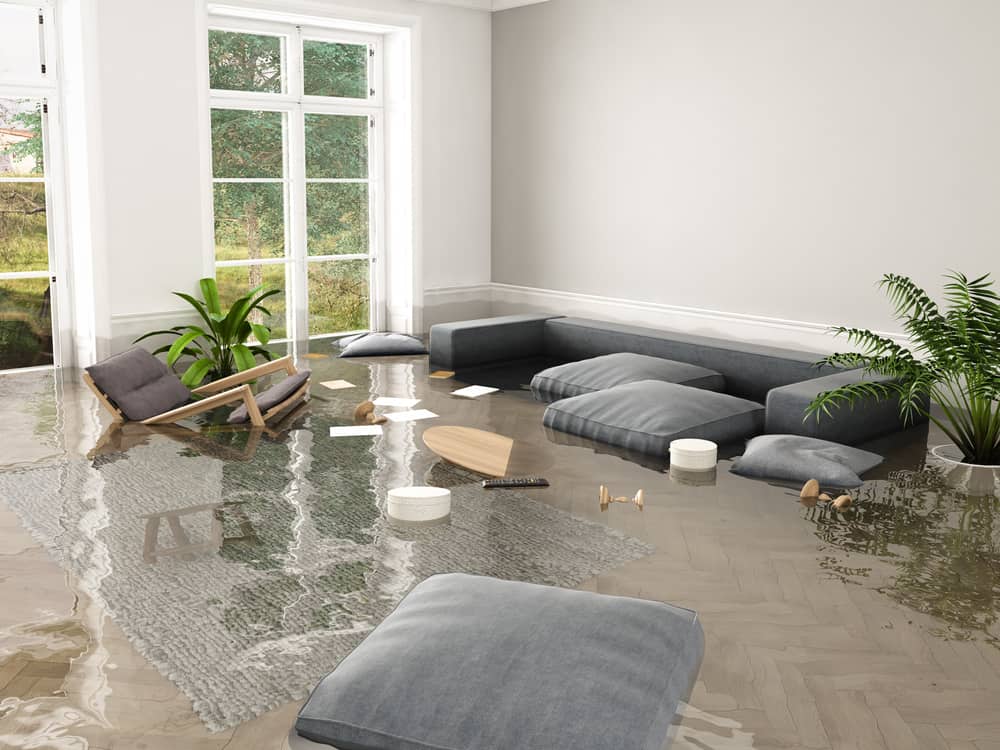
Basement Water Extraction Medford, NY
The first call triggers an immediate response. A technician is dispatched to your Medford address not scheduled, dispatched. When we arrive, the first step is a full moisture assessment using thermal imaging and moisture meters, not just a visual walkthrough. In Medford’s older split-level and ranch homes, water commonly travels inside wall cavities and under subfloors before it becomes visible, so this step defines the actual scope of the job.
Once the assessment is complete, water extraction begins using industrial-grade equipment. This is followed by structural drying a process that typically runs three to five days depending on the materials affected and the extent of saturation. Air movers and commercial dehumidifiers are placed strategically throughout the affected areas, and moisture readings are taken daily to track progress. In a finished basement, this phase requires careful attention to the materials involved carpet, drywall, and wood framing all dry at different rates and need to be monitored accordingly.
Throughout the process, everything is documented for your insurance company. We work directly with your insurer handling the paperwork, communicating with the adjuster, and billing directly so you’re not stuck in the middle. Any structural repairs or reconstruction that follow are also handled in-house, which means no handoff to a second contractor and no gap in accountability. Work requiring permits is handled in compliance with Town of Brookhaven requirements, so nothing is left undocumented.

Ready to get started?
Residential Water Damage Repair Medford, NY
Water damage restoration in Medford isn’t a one-size situation. A burst pipe in a 1963 Eagle Estates split-level behaves differently than a sump pump failure in a 1970s ranch in The Pines. Groundwater intrusion from a rising Pine Barrens water table is a different animal entirely from a washing machine overflow. The scope of work and the correct documentation for your insurance claim depends on understanding what actually happened and how it moved through your specific structure.
We handle the full range: emergency water removal, structural drying, dehumidification, mold prevention treatment, contents handling, and complete reconstruction when needed. There are no named service tiers here the work is scoped to what your home actually needs, not a pre-packaged offering. If your finished basement took on Category 2 water from a backed-up drain, that’s handled differently than a clean-water pipe burst in the laundry room upstairs, and we treat it accordingly.
For Medford homeowners, the insurance coordination piece is especially important. Most burst pipe and sump pump failure events in this area qualify as sudden, accidental losses under standard homeowners insurance which means they’re typically covered. We handle the claim documentation from the start, communicating directly with your adjuster and billing your insurer, so your out-of-pocket exposure is limited to your deductible. We’ve navigated Suffolk County insurance claims for nearly 30 years, and we know exactly what documentation adjusters require for the types of events Medford homes experience.

Why does my Medford basement flood even when the storm wasn't that bad?
Medford sits within the Long Island Central Pine Barrens the primary recharge zone for Long Island’s aquifer system. The water table in this part of central Suffolk County is among the highest on the island, and it responds quickly to rainfall, snowmelt, and prolonged wet weather. You don’t need a major hurricane or coastal surge event for groundwater to rise toward your foundation.
After a moderate nor’easter or a stretch of heavy spring rain, hydrostatic pressure builds against foundation walls and pushes water through floor drains, sump pits, and any crack or gap in the foundation. This is a fundamentally different flooding mechanism than what coastal towns on the South Shore experience. It doesn’t show up on storm surge maps or coastal flood zone charts, which is why Medford homeowners are sometimes caught off guard when their basement takes on water after what seemed like a routine storm.
The right restoration company will document this correctly identifying the source as groundwater intrusion rather than surface flooding which matters significantly when your insurance adjuster is determining coverage and cause.
Does homeowners insurance cover water damage from a burst pipe or sump pump failure?
In most cases, yes but the details matter. Standard homeowners insurance covers sudden, accidental water damage from internal sources like burst pipes, failed appliances, and in many policies, sump pump failures (particularly if you have a water backup endorsement). What it does not cover is flooding from external groundwater or surface water, which requires a separate flood insurance policy through the National Flood Insurance Program.
For Medford homeowners, the distinction between groundwater intrusion and a covered internal water event is something that needs to be documented correctly from the start. If a sump pump failed during a power outage and allowed water to back up into your basement, that’s a different claim than if the same water entered through a foundation crack due to rising groundwater pressure. We handle this documentation process directly, communicating with your adjuster and making sure the cause of loss is accurately represented which protects your claim and reduces the chance of a denial based on misclassification.
How quickly does mold start growing after a basement flood in a Suffolk County home?
The EPA’s guidance is clear: mold can begin developing within 24 to 48 hours of a water event under the right conditions. In a finished basement which is common in Medford’s Eagle Estates and Old Medford homes those conditions are almost always present. Drywall, carpet padding, and wood framing retain moisture long after the visible water is gone, and these materials create an environment where mold spores can begin colonizing before you’ve even called your insurance company.
This is why the response timeline matters as much as the response itself. A commuter household in Medford that discovers a flooded basement at 6:30 p.m. after a full workday may already be 8 to 10 hours into that 24-to-48-hour window. Getting extraction and drying equipment running the same night not scheduled for the following morning is what keeps a water damage event from becoming a mold remediation job on top of everything else. We dispatch immediately for this reason.
How long does water damage restoration take for a typical Medford home?
For a typical water damage event in a Medford ranch or split-level a burst pipe affecting one or two rooms, or a sump pump failure that flooded part of a finished basement the drying phase alone usually takes three to five days. That’s the time required for industrial air movers and dehumidifiers to bring moisture levels in walls, floors, and structural materials down to acceptable readings. During this period, we return daily to take moisture measurements and adjust equipment placement as needed.
The full restoration timeline, from initial extraction through final repairs and reconstruction, runs closer to two to three weeks for moderate damage. More extensive situations where water has traveled through multiple levels of a split-level home or where mold remediation is required on top of structural drying can extend that timeline. We walk you through a realistic scope and timeline during the initial assessment, so you can plan around the disruption rather than be surprised by it. For families in the Patchogue-Medford School District juggling work and school schedules, that clarity matters.
What's the difference between water extraction and structural drying, and do I need both?
Water extraction and structural drying are two distinct phases of the restoration process, and yes, you need both skipping the second step is one of the most common reasons water damage jobs fail. Extraction removes the standing water: the water you can see and pump out. It’s fast, typically completed within the first day or two, and it’s the visible part of the job that makes the space look better quickly.
Structural drying is what happens after that. It’s the process of removing moisture that has absorbed into building materials drywall, insulation, wood framing, subfloor, concrete block. Consumer-grade fans don’t accomplish this. Industrial dehumidifiers and air movers, placed strategically and monitored with moisture meters, are what actually bring the materials back to a dry state. In Medford’s older homes, where wall cavities and floor assemblies from the 1960s and 1970s can hold moisture in ways that aren’t visible on the surface, this phase is especially important. Skipping it or cutting it short is how a water event that appeared to be resolved turns into a mold problem six months later.
Can First Response Restoration & Cleaning handle the insurance claim process for my Medford water damage?
Yes, and this is one of the most practical reasons Medford homeowners choose us over a general contractor or a national franchise. We work directly with your insurance company handling documentation, communicating with your adjuster, and billing your insurer directly. You’re not stuck translating between your contractor and your insurance company while also trying to manage a disrupted household.
For a working family in Medford especially one where both adults are commuting to the city or heading west on the LIE each morning the last thing you need is to spend your evenings on hold with an insurance claims line trying to explain what happened and what was done about it. We’ve been navigating Suffolk County insurance claims for nearly 30 years. We know what documentation adjusters require, how to classify the loss correctly so it isn’t denied on a technicality, and how to make sure the full scope of damage is captured before any work begins. That experience directly affects the outcome of your claim and your out-of-pocket costs.
Useful Links
Other Services we provide in Medford