
Water Damage Restoration in North Bellmore, NY
North Bellmore's High Water Table Doesn't Wait Neither Do We
Hear from Our Customers

Flood Restoration Results in North Bellmore
When water gets into your home, the damage you can see is rarely the whole story. In North Bellmore, where the housing stock is predominantly post-war construction sitting on land that was once wetland, water finds its way into places that a shop vac and a box fan will never reach. Inside wall cavities, beneath finished basement flooring, behind baseboards that have been there since the 1950s. If it isn’t fully extracted and dried, it becomes mold and mold doesn’t announce itself until it’s already a much bigger problem.
What you get from proper restoration isn’t just a dry floor. It’s documented proof that the moisture is gone from every layer, not just the surface. That matters for your health, obviously, but it also matters for your home’s value. With median home prices in North Bellmore sitting around $678,000, a water damage event that isn’t handled correctly can surface during a home inspection and cost you far more than the restoration itself would have.
You also get your living space back. A lot of North Bellmore homes have finished basements family rooms, home offices, playrooms and those spaces represent real square footage, real value, and real daily life. Getting that back, fully dried and documented, is the actual outcome of doing this right.
Residential Water Damage Repair, Nassau County
We’ve been working in Nassau and Suffolk County homes for nearly 30 years. That means we’ve been inside hundreds of post-war homes just like the ones on your North Bellmore street, dealing with the same aging plumbing, the same block foundations, and the same South Shore drainage conditions that make basement flooding a recurring reality in North Bellmore and the broader Bellmores area.
We’re based in West Babylon with dedicated Nassau County coverage and a 516 area code not a national dispatch center routing your call to whoever’s available. When you reach First Response Restoration and Cleaning Inc., you’re reaching a local team that knows this part of Long Island because we’ve been working here for decades.
Every technician is IICRC-certified, we’re licensed, bonded, and insured, and we work directly with your insurance company so you’re not stuck managing that process alone during an already stressful situation.
Burst Pipe Water Damage Process, North Bellmore, NY
It starts with a free on-site assessment. We send someone to your home to evaluate the damage, identify where the water has traveled including inside walls and under flooring where it isn’t visible and give you a clear picture of what you’re dealing with before any work begins. No pressure, no vague estimates, no surprises.
Once the scope is established, extraction begins. Industrial-grade equipment removes standing water far more effectively than anything available at a hardware store, and it’s followed immediately by structural drying air movers, commercial dehumidifiers, and moisture meters that track what’s happening inside the materials, not just on the surface. In North Bellmore’s older homes, this phase is especially important. Finished basements with drywall, carpet, and wood framing hold moisture in ways that take time and proper equipment to address fully. The drying phase typically runs three to five days for most homes, though the full scope depends on how far the water traveled and how long it had been sitting.
Throughout the process, everything is documented moisture readings, equipment placement, daily progress in a format that your insurance company can use directly. Any work that involves structural repairs in North Bellmore falls under Town of Hempstead building permit requirements, and mold remediation in New York State requires licensed contractors under Article 32 of the Labor Law. We’re equipped to handle all of it without you having to coordinate separate contractors.

Ready to get started?
Flooded Basement Cleanup and Storm Damage, North Bellmore
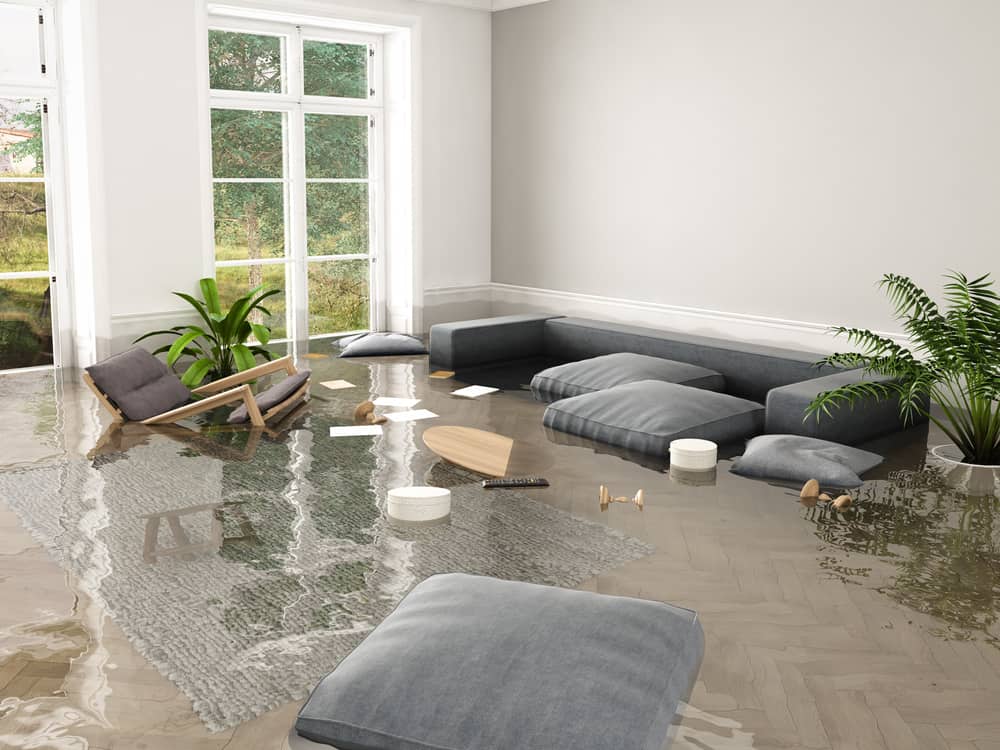
Water damage restoration in North Bellmore covers a lot of ground depending on what caused it. A burst pipe in a finished basement is a different scope than groundwater seeping through a 70-year-old foundation wall after a week of heavy rain, and both are different from the kind of storm flooding that hits South Shore communities when a nor’easter pushes water through drainage systems that weren’t built for today’s rainfall volumes. We handle all of it water extraction, structural drying, dehumidification, antimicrobial treatment, and full reconstruction when the damage warrants it.
One thing worth knowing if you’re in North Bellmore specifically: the source of the water matters a great deal for insurance purposes. Standard homeowners insurance typically covers sudden events like a burst pipe or a washing machine overflow. Groundwater seepage which is common here given the high water table and the age of the foundations can fall into a gray zone where neither your standard policy nor an NFIP flood policy automatically applies. We have years of experience navigating exactly these coverage questions with Nassau County insurance adjusters, and we’ll work directly with your insurer to document the damage in a way that gives your claim the best possible footing.
Services include 24/7 emergency response, full water removal and basement water extraction, structural drying and dehumidification, mold prevention and remediation (licensed under New York State requirements), contents assessment, and rebuild through completion. One call, one company, start to finish.

Does homeowners insurance cover basement flooding in North Bellmore, NY?
It depends on what caused the flooding, and this is where North Bellmore homeowners often run into complications. Standard homeowners insurance covers sudden, accidental water damage a pipe that bursts, a water heater that fails, a washing machine supply line that gives out. Those events are typically covered. What standard homeowners insurance does not cover is flooding caused by surface water or groundwater and that distinction matters a lot in North Bellmore, where the water table sits close to the surface and the land was originally wetland.
If water is entering your basement through hydrostatic pressure against the foundation walls which is a common scenario in North Bellmore after heavy rain or spring snowmelt you may find that neither your standard homeowners policy nor a separate NFIP flood policy covers it cleanly. NFIP flood insurance covers surface flooding, not groundwater seepage. This is a gray area that catches a lot of homeowners off guard. Proper documentation of how and where the water entered your home is critical to making a successful claim, and that’s something we handle directly with your insurer from the start.
How fast does mold start growing after a basement flood?
Faster than most people expect. The EPA’s guidance is clear: mold can begin developing within 24 to 48 hours of a water event. That doesn’t mean you’ll see it right away visible mold growth typically shows up after 48 to 72 hours but the conditions that allow it to colonize start forming almost immediately in wet, enclosed spaces. A finished basement in a North Bellmore home, with drywall, carpet padding, and wood framing, creates exactly the kind of environment where mold establishes itself quickly and spreads behind materials before it’s visible on the surface.
This is why the timeline matters so much. If you’re waiting to see how bad it gets before calling, you may already be past the window where a straightforward drying job is sufficient. Once mold is established inside wall cavities or beneath flooring, the scope of work and the cost increases significantly. Calling us as soon as the water appears gives you the best chance of keeping this a water damage job rather than a water damage and mold remediation job.
How long does water damage restoration typically take in a North Bellmore home?
For a typical basement flood in a North Bellmore single-family home, water extraction and initial emergency response happen within the first day. The structural drying phase where industrial dehumidifiers and air movers run continuously to pull moisture out of materials generally takes three to five days. After that, moisture readings are taken to confirm that the structure has reached acceptable dryness levels before any reconstruction begins.
The total timeline from first call to completed repairs depends heavily on the scope of the damage. A burst pipe that’s caught quickly in a partially finished basement might be resolved in a week to ten days. A more extensive event say, a sump pump failure during a nor’easter that leaves several inches of water in a fully finished basement can take two to three weeks from start to finish, and longer if structural repairs or mold remediation are involved. North Bellmore’s older housing stock, with its finished basements and aging framing, tends to hold moisture longer than newer construction, which is something we account for when setting expectations from the beginning.
What should I do immediately after my basement floods?
First, if there’s any question about electrical safety standing water near outlets, a breaker panel in the basement, or submerged appliances don’t go in until the power is confirmed off. That’s not overly cautious; it’s just the right call. Once it’s safe to enter, your first move should be to call a restoration company, not to start mopping things up yourself. Consumer-grade wet vacs and fans can remove surface water, but they won’t touch the moisture that’s already wicked into your drywall, your subfloor, and your framing.
While you’re waiting for help to arrive, document everything you can photos and video of the water level, where it’s coming from, what’s affected. That documentation supports your insurance claim and gives us useful context when we arrive. If you know your sump pump failed, note when it stopped working. If a pipe burst, try to identify which one and shut off the water supply if you can do so safely. We can walk you through any of this over the phone while we’re on the way 24 hours a day.
Is water damage from a burst pipe covered differently than storm flooding?
Yes, and the difference is significant. A burst pipe is generally covered under standard homeowners insurance because it’s a sudden, internal event something that happened inside your home without warning. Storm flooding, on the other hand, is typically excluded from standard homeowners policies. If water enters your home because of a storm through a window well, a bulkhead door, or surface runoff overwhelming your drainage that’s considered flood damage and requires a separate NFIP flood insurance policy to be covered.
The complication for many North Bellmore homeowners is that a single event can involve both. A severe storm might cause a power outage that takes out your sump pump, which then allows groundwater to enter your basement and that chain of events creates real ambiguity about which policy applies and to what extent. This is exactly the kind of situation where having a restoration company that works directly with insurance adjusters makes a difference. We document the damage in a way that clearly establishes the cause and sequence, which is what your insurer needs to process the claim correctly.
Why do North Bellmore homes seem to flood more often than newer construction?
A few reasons, and they’re all connected to the age and location of the housing stock. North Bellmore was built out primarily during the post-war suburban boom the 1940s through the 1960s on land that was previously wetland. The water table in this part of Nassau County sits close to the surface year-round, and the foundations that were poured 60 to 80 years ago have had decades to develop the minor cracks and gaps that allow water to enter under hydrostatic pressure. Newer construction uses different materials and techniques specifically designed to address these issues; older homes simply weren’t built with today’s understanding of below-grade waterproofing.
Add to that the aging plumbing inside these homes original galvanized steel pipes that corrode from the inside out, rubber washing machine supply hoses that crack with age, water heaters in basement utility rooms that are well past their service life and you have a housing stock where water damage events are genuinely more frequent than in newer neighborhoods. That’s just the reality of owning a mid-century home in a high-water-table area like North Bellmore. The good news is that these are known, predictable failure points, and a restoration company with nearly 30 years of experience working in Nassau County homes like yours knows exactly where to look and what to do when they fail.
Useful Links
Other Services we provide in North Bellmore