
Water Damage Restoration in North Lynbrook, NY
Old Homes, High Water Tables, and Why North Lynbrook Needs a Different Approach
Hear from Our Customers

Flood Restoration North Lynbrook, NY
When water damage is handled correctly, you’re not just getting a dry floor you’re getting confirmation that the moisture inside your walls, under your subfloor, and behind your baseboards is gone. That matters everywhere, but it matters more in North Lynbrook, where most homes were built between the 1920s and 1960s and carry original or near-original plumbing, aging foundation sealants, and drainage systems that weren’t designed for today’s nor’easters.
The South Shore’s water table sits close to the surface year-round. After a heavy rain, groundwater doesn’t wait for a pipe to fail it rises through the soil, finds the path of least resistance at your foundation, and works its way in through block wall cracks, floor-wall joints, and utility penetrations. A surface cleanup doesn’t solve that. Industrial drying equipment, moisture mapping, and a crew that knows how to read an old house does.
When the job is finished correctly, you’re not wondering six months from now why there’s a musty smell in the basement or why the drywall is bubbling near the floor. You have documentation, a dry structure, and the kind of peace of mind that comes from knowing a company with nearly 30 years of Long Island experience handled it not someone who showed up after the storm and disappeared after the check cleared.
Residential Water Damage Repair North Lynbrook, NY
First Response Restoration & Cleaning has been handling water damage restoration across Nassau and Suffolk County for close to three decades. That’s not a number we throw around lightly it means we’ve worked inside the colonials, Tudors, Cape Cods, and brick homes that define North Lynbrook and the surrounding South Shore communities. We know how lathe and plaster holds moisture differently than drywall. We know what aging galvanized pipes look like when they finally give out. We know the difference between a basement that dried out and a basement that looks like it dried out.
North Lynbrook sits between Lynbrook and Malverne, and the homeowners here tend to know their homes well a significant share of residents work in construction and trades. We’re not going to oversell you or talk around the problem. Our IICRC-certified technicians show up, assess what’s actually happening, and tell you exactly what needs to be done. We handle the insurance coordination directly, so you’re not stuck as the middleman between your adjuster and your contractor. Licensed, bonded, and insured and reachable at our Nassau County line whenever you need us.
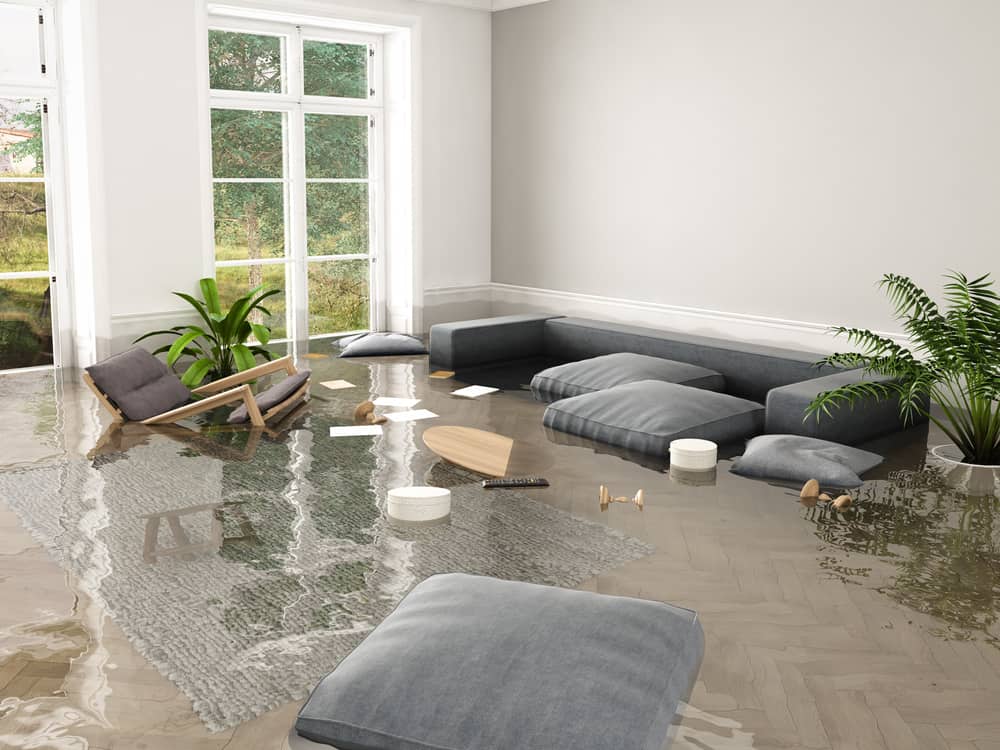
Basement Water Extraction North Lynbrook, NY
When you call, we pick up around the clock. The first thing we do is get someone to your property to assess the actual scope of what you’re dealing with. In North Lynbrook, that assessment matters more than most places because the source of the water isn’t always obvious. It might be a burst pipe, a sump pump that failed during a storm, groundwater pushing through a foundation crack, or a combination of all three. We use moisture meters and thermal imaging to find what you can’t see with your eyes.
Once we know what we’re working with, extraction comes first. We remove standing water using industrial-grade equipment not the kind of shop vac setup that leaves moisture behind in the subfloor. Then the drying phase begins: air movers, dehumidifiers, and targeted drying positioned based on where the moisture actually is, not just where the water was visible. For North Lynbrook’s older homes, this phase requires patience and monitoring original hardwood subfloors and lathe and plaster walls need controlled drying to avoid warping or crumbling.
Any work that involves structural repairs or significant reconstruction in North Lynbrook falls under Town of Hempstead building requirements, and mold remediation in New York State is governed by NYS Article 32, which sets licensing requirements for assessors and remediators. We’re familiar with both. Throughout the process, we document everything in a format that supports your insurance claim and we work directly with your insurance company so you’re not navigating that process alone while your home is still being dried out.

Ready to get started?
Storm Damage Restoration North Lynbrook, NY
Water damage restoration in North Lynbrook isn’t a one-size-fits-all job. The services we provide here are shaped by the specific conditions of this community a high water table, aging housing stock, and a location that puts it squarely in the path of nor’easters and the kind of sustained rainfall that overwhelms older drainage systems.
We handle the full scope: emergency water removal, basement water extraction, structural drying, mold remediation, antimicrobial treatment, and complete reconstruction when needed. If your sump pump failed during a storm and you’ve got two feet of water in a 1950s basement, we handle that. If a pipe burst inside a wall and you’re not sure how far the moisture traveled, we find it. If the flooding happened days ago and you’re now worried about mold, we assess it and address it because the EPA’s guidance is clear that mold can begin forming within 24 to 48 hours of water exposure, and in an older home with more organic material in the walls and framing, that window matters.
We also handle fire damage restoration, mold inspection, and severe odor remediation for North Lynbrook homeowners dealing with more complex situations. For homes in the Lynbrook ZIP code (11563) that have sustained storm damage, we’re familiar with the FEMA flood hazard designations for Nassau County and can help you understand what that means for your claim. One call to our Nassau County line covers the assessment, the work, and the insurance coordination start to finish.

Does homeowners insurance cover basement flooding in North Lynbrook, NY?
This is one of the most important questions to get right before you file anything. Standard homeowners insurance typically covers sudden, accidental water damage from internal sources a burst pipe, a failed water heater, an appliance overflow. What it does not cover is flooding from an external source, meaning groundwater that rises and enters your foundation. That distinction matters a great deal in North Lynbrook, where the South Shore’s high water table means basement water intrusion often comes from the ground up rather than from a pipe failure.
If your water damage came from a sudden internal event, your standard policy likely applies. If it came from storm surge, rising groundwater, or overland flooding, you’d need a separate flood insurance policy through the National Flood Insurance Program. The tricky part is that many claims fall into a gray area a nor’easter that overwhelms your sump pump, for example, involves both storm conditions and a mechanical failure. How the damage is documented makes a significant difference in how the claim is handled. We work directly with your insurance company and document everything in a way that gives your claim the best possible foundation.
How fast does mold grow after a basement flood, and should I be worried?
Yes, and the timeline is shorter than most people expect. The EPA states that mold can begin forming within 24 to 48 hours of water exposure under the right conditions. Visible growth typically appears between 48 and 72 hours, but microscopic growth starts earlier and by the time you can see it, it’s already established in the material.
In North Lynbrook’s older homes, this is a heightened concern. Lathe and plaster walls, original wood framing, and older insulation materials provide more organic material for mold to colonize than modern drywall and synthetic insulation. If your basement flooded and you ran fans for a day or two, that’s a start but consumer-grade fans don’t reach moisture inside walls, under subfloors, or in the structural cavities where mold takes hold. If there’s any doubt about whether the structure dried completely, a professional moisture assessment is worth doing before you close the walls back up. Catching it early is significantly less expensive and disruptive than discovering mold during a home inspection or six months after the fact.
What typically causes basement flooding in North Lynbrook homes?
There are a few common culprits, and in North Lynbrook they tend to show up in specific combinations. The most frequent cause is sump pump failure the South Shore’s high water table means most homes in this area rely on sump systems to actively manage groundwater, and when a pump fails during a storm (due to a power outage, a burned-out motor, or a clogged float), water can accumulate quickly. Local waterproofing contractors confirm that Lynbrook-area homes typically need 1/3 to 1/2 HP sump pumps, with high-water-table properties requiring 3/4 HP units undersized or aging pumps are a common point of failure.
The second major cause is foundation intrusion. North Lynbrook’s housing stock is predominantly pre-1970 construction, and the mortar, sealants, and drainage systems in these homes have had decades to degrade. Block foundation walls develop cracks; floor-wall joints open up; original French drains lose capacity. After a heavy rain or a nor’easter, groundwater finds those gaps. The third cause is plumbing failure burst pipes, failed water heaters, and washing machine overflow which becomes more likely as original plumbing systems age well past their design life. In older homes, it’s not unusual for more than one of these factors to be at play at the same time.
How long does water damage restoration take for a North Lynbrook home?
The honest answer is that it depends on how much water got in, how long it sat, and what type of materials were affected. For a straightforward basement flood where the water is extracted quickly and the structure is relatively intact, the drying phase alone typically takes three to five days using industrial dehumidifiers and air movers. A complete restoration drying, structural repairs, and reconstruction generally runs two to three weeks for moderate damage.
In North Lynbrook’s older homes, the timeline can extend because pre-war and mid-century construction materials respond differently to water and drying than modern materials do. Original hardwood subfloors require controlled drying to prevent warping. Lathe and plaster walls need careful monitoring to avoid crumbling during the drying process. If mold is found during the assessment, remediation adds time before reconstruction can begin. We give you a realistic timeline at the assessment, not a number designed to make you feel better in the moment.
Can I stay in my house during water damage restoration?
In most cases, yes but it depends on the extent of the damage and what’s been affected. If the flooding is contained to a basement and the living areas above are dry and structurally sound, most homeowners can remain in the home during the drying and restoration process. The industrial equipment we use air movers and dehumidifiers runs continuously and can be noisy, and the affected areas will need to stay clear, but day-to-day life in the rest of the home is generally possible.
The situations where temporary relocation becomes necessary are when the damage has reached living areas, when there’s significant mold growth that poses a health risk, or when structural repairs require sections of the home to be opened up and left exposed. In North Lynbrook’s older homes, water that enters a basement can sometimes wick up through original wood framing into the first floor if that’s happened, we’ll tell you clearly and let you make an informed decision about whether staying is practical. Your safety and the safety of your family is part of the assessment conversation, not an afterthought.
Why should I hire a certified company instead of a general contractor for water damage in North Lynbrook?
Water damage restoration is a technical process, not just a cleanup job. A general contractor can replace drywall and paint over a water stain but without moisture mapping equipment, they have no reliable way to confirm that the structure behind the wall is actually dry. If it isn’t, you’re sealing moisture into the wall cavity, and mold follows. That’s a problem that shows up months later, often right before a home sale or during a home inspection, and it’s significantly more expensive to address at that point than it would have been initially.
IICRC certification which our technicians hold means the work follows the industry’s established standards for water damage restoration, including documentation protocols that insurance companies recognize and accept. In Nassau County, where median home values in communities like North Lynbrook are approaching $630,000, a poorly documented or improperly completed restoration can affect your home’s value and complicate future insurance claims. New York State also requires licensed mold assessors and remediators under NYS Article 32 for projects above certain thresholds a general contractor without that licensing cannot legally perform that work. Hiring a certified restoration company isn’t a premium option; it’s the baseline for getting the job done in a way that holds up.
Useful Links
Other Services we provide in North Lynbrook