
Water Damage Restoration in Rockville Centre, NY
When Rockville Centre's Pre-War Pipes Finally Give Out
Hear from Our Customers

Flood Restoration in Rockville Centre, NY
Water damage in a Rockville Centre home isn’t just an inconvenience it’s a financial event. With median home values pushing toward $800,000 and a housing stock where original hardwood floors, plaster walls, and pre-war architectural details are the norm, the stakes of getting the cleanup right are real.
Hidden moisture left behind walls or under original subfloor planks doesn’t show up on day one. It shows up as mold two months later, when you think everything was fine. What you actually get from proper restoration is a genuinely dry home not just a surface-dry one. That means moisture meters confirming what the eye can’t see, structural drying that reaches into wall cavities and under flooring, and documentation that holds up when you file your insurance claim.
For a home built in the 1930s or 1940s, that thoroughness isn’t optional it’s the difference between a resolved problem and a recurring one. Rockville Centre’s combined sewer system adds another layer of risk that most homeowners don’t think about until it’s too late. During heavy storms like the September 2023 event that dropped nine inches of rain on the village in six hours that system gets overwhelmed and pushes water back through basement floor drains.
That’s not just a flooded basement. That’s a Category 3 contamination event requiring a completely different remediation approach. Knowing that distinction and handling it correctly from the start is what actually gets your home back to normal.
Residential Water Damage Repair in Nassau County, NY
We’ve been serving Nassau and Suffolk County homeowners for nearly three decades. We’re based in West Babylon with a dedicated Nassau County team which means when you call the 516 number, you’re reaching people who actually work in this part of Long Island, not a dispatch center routing your call three counties over.
That matters in Rockville Centre specifically. The pre-war homes along the village’s residential streets, the clay soil that holds water instead of draining it, the aging infrastructure that makes sewer backup a real seasonal risk these aren’t abstract conditions to us. They’re the everyday reality of working in South Shore Nassau County homes for 30 years. We’ve seen what happens inside a 1935 Colonial when a cast iron drain pipe fails, and we know how to handle it without turning a water damage job into a gut renovation.
All our technicians are IICRC-certified, and we’re licensed, bonded, and insured. That protects your home, your claim, and your peace of mind from start to finish.
Emergency Water Removal in Rockville Centre, NY
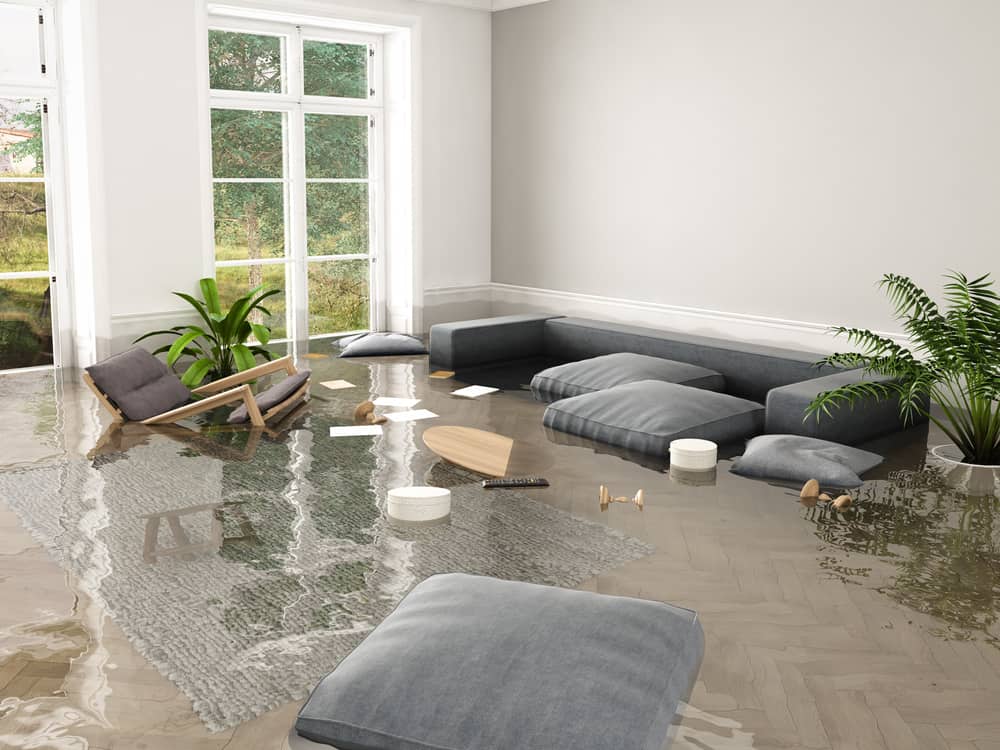
The first call triggers a 24/7 response. Whether it’s a burst pipe at 2 a.m. in January or a basement flood on Long Beach Road during a nor’easter, someone is available and the response starts immediately. In a situation where mold can begin forming within 24 to 48 hours, every hour before extraction begins matters.
When we arrive, the first step is assessment not just a visual walkthrough, but a moisture mapping process using professional-grade meters and equipment that detects water inside walls, under flooring, and in structural cavities. In Rockville Centre’s older homes, where original plaster walls and wood subfloors absorb and hold moisture differently than modern drywall and concrete board, this step is critical. What looks dry on the surface is often not.
From there, water extraction begins industrial equipment that goes well beyond what a shop vac or consumer dehumidifier can do. Structural drying follows, with air movers and commercial dehumidifiers positioned based on the moisture map, not just placed in the middle of the room. We monitor daily until readings confirm the structure is genuinely dry.
If mold remediation is needed which is common after sewer backup events in this area we handle that with our certified crew, under New York State Department of Labor Part 56 requirements for licensed mold remediation. Throughout all of it, we document the damage for your insurance claim and work directly with your insurer so you’re not managing that process alone.
Ready to get started?
Basement Water Extraction in Rockville Centre, NY
Water damage restoration in Rockville Centre covers the full scope from the moment water enters the home to the point where the structure is dry, treated, and documented. That includes water extraction, structural drying, dehumidification, antimicrobial treatment where contamination is present, and full reconstruction when materials need to be removed and replaced.
For homes in Rockville Centre’s pre-war stock, we adapt the service to what’s actually there. Original hardwood floors get a different drying protocol than engineered wood or tile. Plaster walls require different moisture monitoring than drywall. When cast iron drain pipes are involved which is common in homes built before 1950 we identify and document the source of the water before restoration begins, so there’s no ambiguity in the insurance claim about what caused the damage and when.
Sewer backup events, which are a documented local risk when Rockville Centre’s combined sewer system is overwhelmed during heavy rainfall, are treated as Category 3 water damage meaning full antimicrobial remediation, not just water removal. If the event qualifies for coverage under a sewer backup endorsement on your homeowners policy, the documentation we provide is built to support that claim from the start. We handle direct insurance billing and coordinate with adjusters, so the administrative side of a stressful situation doesn’t fall entirely on you.

Does homeowners insurance cover water damage from a burst pipe in Rockville Centre?
In most cases, yes but the specifics matter. Standard homeowners insurance typically covers sudden and accidental water damage, which includes burst pipes, appliance failures like a washing machine overflow, and similar events where the damage happened quickly and without warning. What it does not cover is gradual damage a slow leak under a sink that went unnoticed for months, or a foundation crack that’s been seeping for years. Insurers can and do deny claims on the grounds that the damage resulted from deferred maintenance rather than a sudden event.
In Rockville Centre, where a significant portion of the housing stock is 75 or more years old and original plumbing is still in place in many homes, the line between “sudden failure” and “long-term deterioration” can get blurry. That’s why documentation from the moment the damage is discovered is so important. We photograph, moisture-map, and document the full scope of the event from the start which gives your insurer what they need to process the claim correctly and reduces the chance of a denial based on ambiguous cause.
What's the difference between water damage and flood damage for insurance purposes?
This is one of the most common points of confusion, and it has real financial consequences. Standard homeowners insurance covers water damage from internal sources pipes, appliances, roof leaks, and similar events that originate inside or on the structure. It does not cover flooding, which is defined as water that enters from the ground up, including storm surge, overland flooding, and rising groundwater. Flood coverage requires a separate policy, typically through the National Flood Insurance Program.
Rockville Centre carries a FEMA Zone X designation, meaning it’s not in the 100-year flood plain but that doesn’t mean flooding can’t happen here. The September 2023 storm that produced knee-deep water on Long Beach Road and Peninsula Boulevard was driven by rainfall overwhelming local drainage systems, not by coastal surge. Whether that kind of event is covered depends on the specific policy language and how the damage is documented. We work with homeowners and their insurers to classify the damage accurately and build the documentation that supports the strongest possible claim.
How quickly does mold start growing after water damage in an older home?
The EPA’s guidance is clear: mold can begin growing within 24 to 48 hours of water exposure under the right conditions and in a pre-war home with original plaster walls, wood lath, and hardwood subfloors, those conditions are almost always present. Older building materials hold moisture longer than modern materials, and the cavities inside original wall construction trap humidity in ways that standard drying approaches can miss entirely.
In practical terms, this means that if you’ve had a basement flood or a burst pipe in a Rockville Centre home and you’re waiting to see how bad it gets before calling, you’re likely already inside the window where mold growth has started. Visible mold typically appears within 48 to 72 hours, but microscopic growth begins earlier. The right move is to start extraction and drying as fast as possible not because it’s a sales pitch, but because the remediation cost increases significantly once mold is established versus when the structure is still just wet.
What happens if my basement floods from sewer backup during a storm in Rockville Centre?
Sewer backup is categorized as Category 3 water damage the most serious classification because the water entering your basement through a floor drain during a combined sewer overflow carries sewage contamination, not just stormwater. That means the cleanup protocol is fundamentally different from a standard flooded basement situation. It’s not enough to extract the water and run dehumidifiers. The affected surfaces need antimicrobial treatment, and any porous materials drywall, carpet, insulation, wood framing below the water line typically need to be removed rather than dried in place.
Rockville Centre’s aging combined sewer system has been identified as a specific local risk factor, particularly during heavy rainfall events when the system’s capacity is exceeded. If you have a sewer backup endorsement on your homeowners policy, you may have coverage for this type of event but the claim requires documentation that clearly establishes the cause and the scope. We handle the full remediation process and build the documentation your insurer needs from day one, so you’re not trying to reconstruct the timeline after the fact.
How long does water damage restoration typically take in a pre-war home?
The honest answer is that it depends on the scope, but there are reasonable benchmarks. For a moderate water damage event say, a burst pipe affecting one or two rooms the extraction and structural drying phase typically takes three to five days. Full restoration, including any necessary material replacement and reconstruction, usually runs two to three weeks for a contained event. A more extensive situation involving multiple rooms, subfloor damage, or mold remediation can extend that timeline significantly.
In a Rockville Centre pre-war home, the drying phase often takes longer than it would in newer construction. Original plaster walls and wood subfloors hold moisture more stubbornly than modern materials, and the structural cavities in older homes require more targeted drying to reach. We monitor moisture readings daily and don’t move to reconstruction until the structure tests genuinely dry not just surface-dry. Rushing that phase to speed up the timeline is one of the most common mistakes in water damage restoration, and it’s the reason some homeowners end up with mold problems months after they thought the job was done.
Is it safe to stay in my Rockville Centre home during water damage restoration?
It depends on the type and extent of the damage. For a contained event a burst pipe in one room, a washing machine overflow that’s been caught quickly staying in the home is usually fine as long as the affected area is isolated and the rest of the living space is accessible and dry. The restoration equipment (air movers, dehumidifiers) is loud and runs continuously, which some households find manageable and others don’t, but it’s not a safety issue in a contained situation.
Where staying in the home becomes a real concern is with Category 3 events sewer backup, sewage contamination, or significant mold presence. These situations involve health risks that make the affected areas genuinely unsafe to occupy, and in some cases the remediation process itself requires temporary displacement. For Rockville Centre homeowners dealing with a storm-related sewer backup, which is a documented local risk, the honest guidance is to get a clear assessment before assuming it’s safe to stay. We’ll tell you directly what the situation is and what the realistic options are including whether the scope of work requires you to be out of the home and for how long.
Useful Links
Other Services we provide in Rockville Centre