
Water Damage Restoration in Searingtown, NY
When 80-Year-Old Pipes Fail in Your Searingtown Home, You Need This Right
Hear from Our Customers

Flood Restoration Searingtown, NY
When water gets into a Searingtown home, the visible damage is only part of the problem. The bigger risk is what you can’t see moisture wicking through plaster walls, sitting under hardwood floors, or trapped inside the cavities of a mid-century foundation. Left unaddressed, that hidden moisture becomes mold within 24 to 48 hours, and by then you’re dealing with a much larger remediation job than you started with.
Over 81% of homes in Searingtown were built between 1940 and 1969. That’s housing stock with galvanized steel plumbing designed to last 40 to 70 years and in many of these homes, that clock has already run out. When a pipe fails in a Searingtown home worth over a million dollars, you’re not just dealing with wet carpet. You’re protecting finished basements, hardwood floors, custom cabinetry, and the school district premium baked into every dollar of your home’s value.
What a proper restoration outcome looks like in Searingtown isn’t abstract. It’s a home that’s been moisture-mapped, structurally dried, treated for microbial growth, and documented in a way that holds up with your insurance company. It means you’re not second-guessing whether the job was actually finished because the readings say so, and someone who knows what they’re doing signed off on it.
Residential Water Damage Repair Nassau County
We’ve been working in Searingtown and across Nassau County for close to three decades. That’s not a marketing number it means our team has been restoring Long Island homes since the ones on Searingtown’s residential streets were middle-aged. We know how plaster walls behave when they get wet, how masonry foundations wick moisture differently than modern framing, and what a galvanized pipe failure looks like versus a copper or PEX failure. That kind of familiarity with the actual housing stock in Searingtown isn’t something you get from a training manual.
We’re IICRC-certified, licensed, bonded, and insured, and we work directly with your insurance company handling the documentation, the billing, and the back-and-forth with the adjuster so you’re not stuck in the middle. For Searingtown homeowners navigating a claims process that can be genuinely complicated, that matters. We’re reachable at 516-698-1776, and we’re available around the clock because water damage doesn’t schedule itself around business hours.
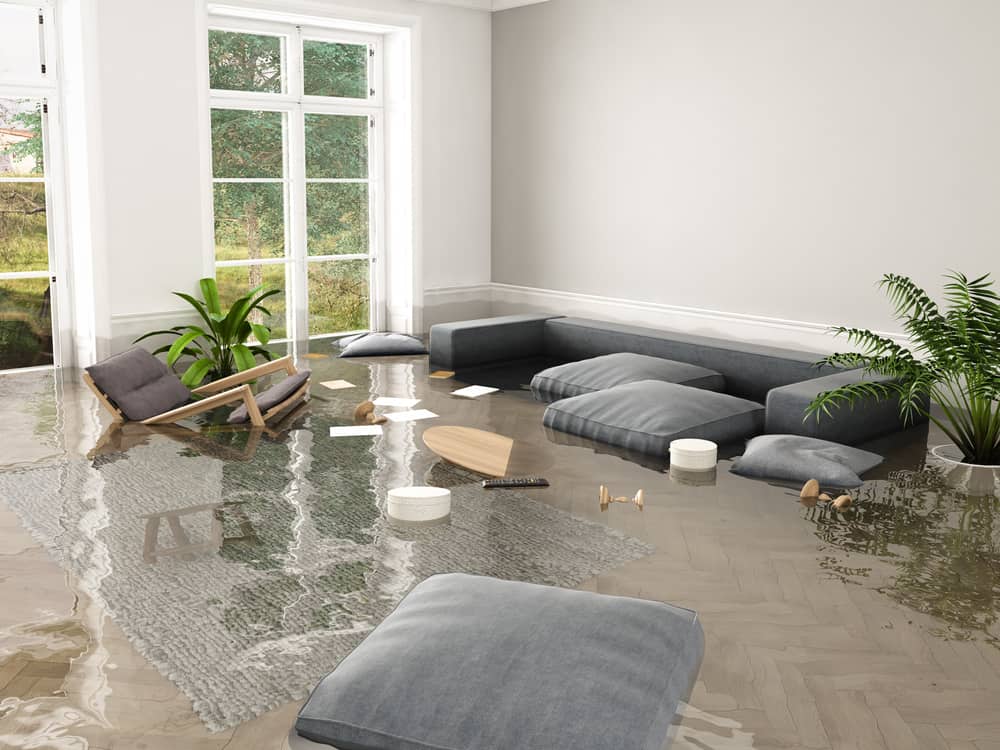
Basement Water Extraction Searingtown, NY
The first step is assessment, and it happens fast. When we arrive, we’re not just looking at what’s wet we’re using industrial moisture meters and thermal imaging to find where moisture has traveled inside the structure. In a Searingtown home with plaster walls and concrete subfloors, that matters more than it does in a newer build. Water moves differently through older materials, and surface drying gives a false sense of completion if you don’t check what’s behind the walls.
Once the scope is clear, extraction starts immediately. Industrial-grade pumps and wet-vacs remove standing water, followed by strategically placed air movers and commercial dehumidifiers that pull moisture out of structural cavities that a consumer fan can’t touch. This phase typically runs three to five days depending on the extent of the damage, and we take moisture readings throughout to confirm the structure is actually drying not just the surface.
From there, the process moves into antimicrobial treatment, structural repairs, and whatever rebuilding is needed to bring the space back to its pre-damage condition. Because we handle the full scope extraction through rebuild you’re not coordinating between multiple contractors or wondering who’s responsible for what. It’s one company, one process, and one point of contact from the first call through the final walkthrough. Any structural repair work that requires permits is handled in coordination with the Town of North Hempstead Building Department, which governs permitting for all construction and restoration work in Searingtown.
Ready to get started?
24/7 Water Damage Restoration Searingtown, NY
Water damage restoration in Searingtown covers more ground than most homeowners expect when they first make the call. It starts with emergency water removal getting the standing water out before it spreads further and moves through structural drying, moisture mapping, mold prevention treatment, and full documentation for insurance purposes.
For homes in Searingtown and the surrounding Herricks area, where documented flooding events have caused Herricks Park Pond to overflow into surrounding streets and push sewage-mixed water up through basement drains, that documentation piece is especially important. Sewage-involved flooding is classified as Category 3 water damage under IICRC standards the most serious type and it requires a different level of antimicrobial treatment and protective protocol than a clean-water pipe burst.
We also handle fire and smoke damage, mold remediation, and full reconstruction when the damage goes beyond surface repairs. Because virtually every home in Searingtown was built before 1978, any work that disturbs painted surfaces also falls under the EPA’s Renovation, Repair and Painting rule, which requires lead-safe work practices and our certified team follows those protocols as a standard part of the job, not an add-on.
Mold remediation work in Nassau County requires licensing under both New York State Labor Law Article 32 and Nassau County’s Environmental Hazard Remediation Provider requirements. We operate inside those compliance frameworks not cutting corners on credentials in a county that requires them.

Does homeowners insurance cover water damage from burst pipes in Searingtown?
Generally, yes standard homeowners insurance covers sudden, accidental water damage from internal sources like burst pipes, failed water heaters, or washing machine overflow. The key word is sudden. If the adjuster determines that the damage resulted from a slow, gradual leak that went unaddressed over time, most policies will deny the claim on the basis of neglect or lack of maintenance.
This distinction matters in Searingtown specifically because so many homes here have aging galvanized steel plumbing. A pipe that’s been corroding slowly for years and finally fails can look like a sudden burst from the inside but if there were warning signs (discolored water, reduced pressure, rust staining) that went unaddressed, an insurer may argue the failure wasn’t truly sudden. Proper documentation from an IICRC-certified restoration company, taken immediately after the event, is one of the strongest tools you have when making that case to an adjuster. We handle that documentation process directly and work with your insurance company on your behalf.
How quickly can water damage lead to mold in a Searingtown home?
The EPA’s guidance is 24 to 48 hours that’s how long it takes for mold spores to begin germinating in a water-damaged space under the right conditions. In practice, visible growth often appears within 48 to 72 hours, but microscopic growth starts earlier. In a Searingtown home with plaster walls and hardwood floors over concrete subfloors, the risk is compounded because those older materials retain moisture differently than modern drywall and vinyl. The surface can feel dry while moisture is still sitting inside the wall cavity or beneath the floor.
This is why the timing of your call matters as much as who you call. A restoration team that arrives within hours of the event with the equipment to find hidden moisture, not just what’s visible gives you a real shot at stopping mold before it starts. One that arrives two days later is often responding to a different, larger problem than the one that was originally reported.
What happens if water backed up through my basement drain during a storm in Searingtown?
If water entered your basement through a floor drain, toilet, or any other drain point during a heavy rain event, you’re likely dealing with a sewer backup not a clean-water flood. That’s a meaningful distinction. Under the IICRC S500 standard, sewage-involved water is classified as Category 3, which means it carries bacteria, pathogens, and contaminants that require full antimicrobial treatment, specialized protective equipment, and a more intensive remediation process than a burst pipe event.
This scenario is well-documented in the Searingtown and Herricks area. When heavy rainfall overwhelms the aging combined sewer infrastructure in this part of Nassau County, the result can be sewage-mixed water backing up into basements across multiple blocks exactly what residents in adjacent Herricks reported when Herricks Park Pond overflowed during a major storm event. Standard homeowners insurance typically does not cover sewer backup unless you have a specific endorsement on your policy. We can help you understand what’s covered, handle the documentation, and manage the remediation process from the initial assessment through the final clearance.
How long does water damage restoration typically take for a Searingtown home?
The honest answer depends on the scope. For a single-room event a burst pipe that affected one area of the home and was caught quickly the drying phase alone typically runs three to five days, with water extraction taking one to three days before that. A more involved scenario, like a flooded finished basement in a Searingtown Colonial with plaster walls and hardwood floors, can take two to three weeks from the initial extraction through final repairs.
The age of the housing stock in Searingtown is a real factor in the timeline. Older materials plaster, masonry, original hardwood absorb and release moisture more slowly than modern construction materials. That means the drying phase can run longer than it would in a newer build, and cutting it short to speed up the schedule is exactly the kind of shortcut that leads to mold problems six weeks later. Moisture readings taken throughout the process are the only reliable way to know when the structure is actually dry, and that’s what drives the timeline not a calendar estimate.
Should I try to dry out my basement myself before calling a restoration company?
It’s understandable to want to start doing something immediately and there are a few things that make sense, like turning off the water source if it’s a burst pipe, moving valuables out of the affected area, and documenting the damage with photos before anything is disturbed. But running consumer-grade fans and a household dehumidifier and calling it done is where things go wrong.
The equipment available at a hardware store isn’t designed to pull moisture out of structural cavities. It can dry the surface while water continues to sit inside the wall, under the subfloor, or behind the baseboard invisible until it shows up as mold weeks later. In a Searingtown home where the walls are plaster over masonry and the basement floor is concrete slab, that hidden moisture problem is especially common. Industrial air movers and commercial dehumidifiers work at a different scale, and moisture meters confirm the drying is actually happening inside the structure, not just on the surface. If you’ve already run fans for a day or two and you’re not sure whether the job is done, a professional assessment is the right next step not a reason to assume it’s fine.
Why does it matter whether a restoration company is IICRC-certified in Nassau County?
IICRC certification means the technicians working in your home have been trained to a recognized industry standard the same standard that insurance companies reference when they review water damage claims. When an adjuster looks at the documentation from a restoration job, they’re looking for evidence that the work followed established protocols: proper water category classification, documented moisture readings, appropriate drying methods, and antimicrobial treatment where required. Work performed by a non-certified company may not generate that documentation in a form the insurer accepts, which can complicate or delay your claim.
In Nassau County specifically, there’s an additional layer. Mold remediation work requires licensing under New York State Labor Law Article 32, and Nassau County adds its own Environmental Hazard Remediation Provider licensing requirement on top of that. A company that’s IICRC-certified and operating inside those compliance frameworks isn’t just better trained they’re operating legally in a county that has specific licensing requirements for this type of work. For a Searingtown homeowner protecting a home valued at over a million dollars, those credentials aren’t a nice-to-have. They’re the baseline for making sure the job holds up with the insurance company, with the county, and with the structure of the home itself.
Useful Links
Other Services we provide in Searingtown