
Water Damage Restoration in Southampton, NY
When a Hamptons Property Sits Empty, Water Doesn't Wait
Hear from Our Customers

Flood Restoration Services in Southampton
The thing most people don’t realize about water damage is that the visible mess is rarely the whole problem. Moisture works its way into wall cavities, under flooring, and behind baseboards long before you can see or smell anything. By the time mold becomes visible typically within 48 to 72 hours of the initial event it’s already been growing for a day or more. That’s why the outcome of a proper restoration isn’t just a dry floor. It’s a structure that’s been thoroughly dried, documented, and confirmed clear.
For Southampton homeowners, this matters more than in most places on Long Island. A significant portion of the town’s housing inventory sits vacant from fall through spring estates in Water Mill, cottages in Westhampton Beach, bayfront homes in Hampton Bays and when a pipe bursts during a January cold snap, there’s often no one there to catch it early. What would be a contained water extraction job in a year-round home can become a full structural drying and mold remediation project after weeks of undetected moisture. Getting it right the first time, with the documentation to back it up, protects both the property and the insurance claim.
We use thermal imaging cameras to locate moisture that standard moisture meters alone might miss. These cameras detect temperature variations in walls, ceilings, and floors that indicate hidden water intrusion the kind that sits behind drywall or under subflooring for weeks before visible damage appears. In Southampton’s older housing stock, where wall assemblies and construction methods vary widely, this technology is often the difference between catching a problem early and discovering mold six months after you thought the job was done.
Southampton’s coastal geography adds another layer. Properties along the Atlantic beachfront and around Shinnecock Bay sit in FEMA Zone VE and Zone AE flood areas, where storm surge events produce Category 3 water the most contaminated and most expensive damage category. A proper restoration in these areas isn’t just about drying. It means decontamination, structural assessment, and documentation that satisfies both your homeowners policy and, where applicable, your NFIP flood coverage.
Residential Water Damage Repair in Southampton, NY
We’ve been serving Long Island homeowners for nearly three decades. That means we’ve responded to water damage across Southampton and Suffolk County through multiple hurricane seasons, nor’easters, and the kind of winter pipe failures that don’t get discovered until a caretaker calls in March. We’re not a national franchise dispatching crews from out of state. We’re a locally rooted Long Island operation with a real Southampton presence and a team that knows the South Fork’s building stock, flood zone dynamics, and seasonal property challenges firsthand.
Our technicians are IICRC-certified, which matters a great deal when you’re dealing with a high-value Southampton property and an insurance claim that needs to hold up. We’re fully licensed, bonded, and insured so when you’re giving a restoration crew access to an unoccupied Quogue cottage or a Bridgehampton estate, you’re not taking a risk on an unknown contractor. We work directly with insurance companies, handle the documentation, and bill the insurer directly. You don’t have to fight that battle from a Manhattan apartment while your Southampton home is being dried out.
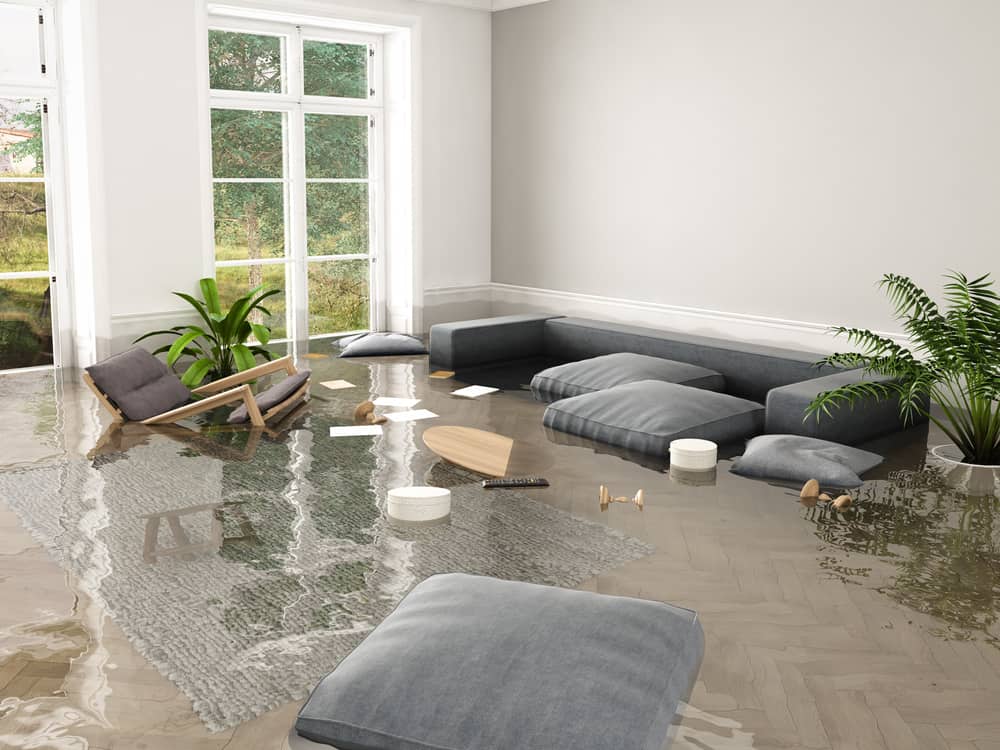
Burst Pipe Water Damage Restoration in Southampton
When you call, our first priority is getting eyes on the property as quickly as possible. For Southampton homeowners discovering damage remotely whether you’re in the city and got a call from a neighbor, or you’re opening up a seasonal property for the first time in months that initial assessment is critical. We arrive, evaluate the full extent of the moisture intrusion using professional-grade moisture meters and thermal imaging, and give you a clear picture of what you’re dealing with before anything else happens.
Water extraction comes first. We use industrial pumps and wet-vac equipment to remove standing water, and then the structural drying phase begins air movers, dehumidifiers, and targeted drying equipment work on the areas that consumer-grade fans simply can’t reach. This phase typically runs three to five days, depending on the extent of the saturation and the construction type. Southampton’s older housing stock historic homes in Southampton Village, post-war construction in Hampton Bays can hold moisture differently than newer builds, and we adjust the drying plan accordingly.
Once the structure is confirmed dry, we assess for mold and document the completed work for your insurance claim. If your Southampton property sits in one of the town’s FEMA flood zones, the documentation is prepared with that in mind because claims involving Zone VE or Zone AE properties require a higher standard of record-keeping. If structural repairs or reconstruction are needed, we handle that too, from start to finish, under one roof.
Ready to get started?
24/7 Water Damage Restoration in Southampton, NY
Water damage restoration in Southampton isn’t one-size-fits-all. The town spans 140 square miles, from barrier island communities on the Atlantic to bay neighborhoods along Shinnecock Bay, and the risks and conditions vary significantly depending on where your property sits. We cover the full scope water removal, structural drying, dehumidification, mold remediation, contents protection, and complete reconstruction across all of Southampton’s communities, from Hampton Bays and East Quogue on the west side of the Shinnecock Canal to Southampton Village, Water Mill, and Sag Harbor on the east.
For seasonal and second-home properties, our service includes thorough moisture mapping of the entire structure, not just the visible damage area. When water has been sitting undetected for weeks or months which is a real and common scenario in the Hamptons the moisture footprint is almost always larger than it first appears. We use industrial moisture meters and thermal imaging to find it all before the drying process begins, so nothing gets missed and mold doesn’t resurface six months later.
It’s also worth knowing that under New York State law, any mold project of 10 square feet or more requires a licensed NYS Mold Assessor to write the remediation plan separately from the company performing the remediation. We operate in full compliance with New York State Article 32, which protects you and ensures the work holds up to scrutiny important in a market where high-value properties change hands and water damage history gets disclosed at closing.

Does homeowners insurance cover water damage in Southampton, NY?
Standard homeowners insurance typically covers sudden, accidental water damage from internal sources a burst pipe, an appliance overflow, a water heater failure. What it does not cover is flooding. If storm surge from Shinnecock Bay or the Atlantic pushes water into your Southampton home, that’s a flood event, and standard homeowners policies exclude it entirely. For that coverage, you need a separate NFIP flood insurance policy or a private flood policy.
This distinction matters a great deal in Southampton, where a significant portion of residential properties sit in FEMA Zone VE or Zone AE flood areas. A burst pipe discovered in March after a January freeze? That’s likely a covered internal water damage claim. Storm surge from a nor’easter that came through Hampton Bays? That’s a flood claim, handled under a completely different policy. We work directly with both types of insurers and help document the damage correctly from the start which is the single most important factor in whether a claim gets approved or denied.
My Southampton vacation home sat flooded for weeks is restoration still possible?
Yes, but the scope will be larger than if the damage had been caught early. When water sits undetected for weeks or months a very common scenario in Southampton’s seasonal property market moisture works its way deep into wall assemblies, subfloor systems, and structural framing. Mold establishes itself well beyond the 48-to-72-hour window, and by the time you discover the damage, you’re likely dealing with both a water damage event and an active mold situation.
The good news is that this is a restorable condition in most cases. We start with a full moisture assessment of the entire structure not just the obvious wet areas using professional moisture meters and thermal imaging to map where the water traveled. From there, we develop a drying and remediation plan that addresses the full extent of the damage, not just what’s visible. Under New York State Article 32, a licensed mold assessor writes the remediation plan separately from the company performing the work, which provides an independent layer of oversight. We handle all of this and coordinate directly with your insurer throughout.
How long does water damage restoration take for a Southampton property?
For most water damage events, the drying phase alone runs three to five days. A straightforward burst pipe in a single room, caught early, can be dried and documented within a week. More extensive damage saturation across multiple rooms, moisture inside walls, or water that’s been sitting for an extended period typically takes two to three weeks from initial extraction through final repairs. Cases involving significant mold growth or structural damage can extend beyond that.
Southampton properties add some variables worth knowing about. Older homes in Southampton Village and Hampton Bays, many of which were built before modern moisture barriers and insulation standards, can hold water in ways that newer construction doesn’t. Seasonal properties that have been closed up with no airflow or climate control also tend to dry more slowly. We account for these factors when building the drying timeline, and we’ll give you a realistic projection at the assessment stage rather than a number that sounds good but doesn’t hold up.
What is Category 3 water damage, and why does it matter in coastal Southampton?
Water damage is classified on a three-category scale based on contamination level. Category 1 is clean water a burst supply line or appliance overflow. Category 2 is gray water washing machine discharge, toilet overflow without solids. Category 3 is black water sewage backup, groundwater intrusion, or storm surge. It’s the most hazardous category, and it requires a completely different remediation protocol: extraction, decontamination, antimicrobial treatment, and in many cases removal of porous materials that can’t be adequately cleaned.
In Southampton, Category 3 events are a real and recurring risk. When storm surge from the Atlantic or Shinnecock Bay enters a home particularly in the beachfront and bayfront communities along the south shore and around Hampton Bays that water carries contaminants from the ocean, the bay, and everything the surge picked up along the way. It is not safe to treat this like a clean water event, and companies that don’t properly classify and remediate Category 3 damage create serious health risks and can compromise your insurance claim. IICRC-certified technicians are trained specifically to identify and respond to each category correctly.
Does a vacant Southampton home affect my water damage insurance claim?
It can, and this is something Southampton seasonal property owners need to understand before they need it. Many standard homeowners policies include a vacancy clause a provision that limits or voids coverage if the home has been unoccupied for a defined period, typically 30 to 60 days. If a pipe bursts in January in a home that’s been closed since October, and the policy has a 30-day vacancy clause, you may have a coverage dispute on your hands.
The first step is to review your specific policy language and talk to your insurance agent about whether a seasonal property endorsement or a separate vacant home policy is appropriate for your situation. When damage does occur, proper documentation from the moment the damage is discovered is critical the date of discovery, the condition of the property, evidence of maintenance and winterization. We document everything from the initial assessment forward, which gives your insurer a clear, professional record to work from. This doesn’t guarantee a claim outcome, but it removes the documentation gaps that often give insurers grounds to deny or reduce a payout.
What causes basement flooding in Hampton Bays and other Southampton communities?
The causes vary depending on where in Southampton you are. In Hampton Bays and the communities around Shinnecock Bay, the primary drivers are storm surge and high water table. The bay communities sit in Zone AE flood areas, and during nor’easters or tropical storms, water can push inland through the Shinnecock Canal corridor and into residential neighborhoods that aren’t oceanfront but are still well within surge reach. High groundwater levels in these low-lying areas also mean that heavy rainfall events can cause water to seep through foundation walls and floor slabs even without any plumbing failure.
In the estate communities east of the Shinnecock Canal Southampton Village, Water Mill, Bridgehampton basement flooding is more commonly tied to aging infrastructure. Southampton’s housing stock includes a significant number of pre-1980 structures with older drainage systems, sump pumps that haven’t been serviced in years, and foundation waterproofing that was installed decades ago. A heavy spring rain or a rapid snowmelt along NY 27 can overwhelm these systems quickly. Whatever the cause, the response is the same: we get the water out fast, dry the structure thoroughly, and document everything before mold has time to establish itself.
Useful Links
Other Services we provide in Southampton