
Water Damage Restoration in Westhampton Beach, NY
When Bay Water Reaches Your Home, Minutes Matter
Hear from Our Customers

Flood Restoration in Westhampton Beach, NY
When water gets into a Westhampton Beach property whether it’s a Nor’easter pushing bay water into Pond Point, a burst pipe discovered months after Labor Day, or a storm surge event on Dune Road the damage compounds every hour it goes unaddressed. What starts as a flooded basement or soaked crawl space becomes a structural problem and a mold problem if the response isn’t fast and thorough.
The goal isn’t just to get the water out. It’s to get your home back to the way it was walls dry, air clean, and nothing hiding behind the drywall that will cost you more six months from now.
For Westhampton Beach homeowners, that means accounting for conditions that don’t apply in most other Long Island towns. The coastal humidity here accelerates mold growth faster than in inland communities. Many properties sit vacant for eight or more months of the year, meaning damage can go undetected for weeks before anyone notices. And for homes in FEMA-designated flood zones along Dune Road and the barrier island, the restoration process involves documentation and compliance steps that go beyond a standard residential job.
Getting all of that right from the first moisture reading to the final insurance submission is what complete restoration actually looks like in this community.
Trusted Water Damage Restoration, Suffolk County, NY
We’ve been serving Long Island homeowners for nearly three decades. That means our team has responded to water damage events across multiple storm cycles on the East End, including the kind of flooding that Westhampton Beach and the surrounding South Shore communities know all too well.
We’re based in West Babylon and serve all of Suffolk County, with a dedicated local number (631-587-5300) staffed by people who know this area not a national dispatch center routing calls from out of state.
Our technicians are IICRC-certified, and we’re fully licensed, bonded, and insured. That matters here more than in most places. After every major storm on the South Shore, unlicensed contractors show up fast and disappear faster. We’ve been here for thirty years and will be here after the job is done.
We work directly with your insurance company, handle the documentation, and manage the process from the first call through the final walkthrough so you’re not left coordinating between an adjuster, a contractor, and a mold remediator on your own.
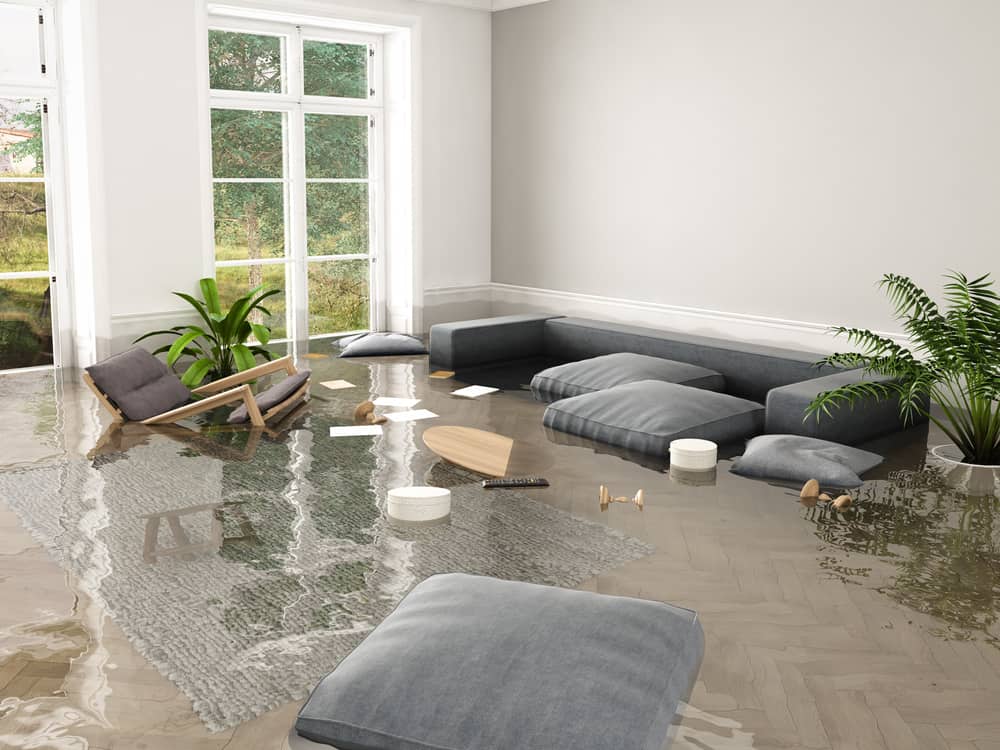
Emergency Water Removal, Westhampton Beach, NY
The process starts the moment you call. Whether you’re standing in a flooded basement or getting a call from your property manager while you’re back in the city, the first step is getting a certified technician on-site as quickly as possible.
Time is the variable that controls almost everything else how extensive the drying process will be, whether mold becomes part of the conversation, and how the damage gets documented for your insurance claim.
Once on-site, we do a full moisture assessment before anything else. In a coastal home, that means checking beyond the visible water inside wall cavities, under flooring, in crawl spaces, and anywhere that ambient humidity or high groundwater may have pushed moisture into the structure. We use industrial-grade moisture meters and drying equipment throughout, not consumer-grade tools.
For properties in Westhampton Beach’s FEMA flood zones, we also document conditions in a way that supports the insurance claim and meets the Village’s Flood Damage Prevention standards under local code which can affect reconstruction requirements if damage crosses the substantial damage threshold.
From there, the process moves through extraction, structural drying, dehumidification, and antimicrobial treatment. If mold is already present which is common in seasonal homes where damage sat undetected we handle remediation as part of the same job. You deal with one company, one point of contact, from start to finish.
Ready to get started?
Residential Water Damage Repair, Westhampton Beach, NY
Water damage restoration in Westhampton Beach covers a wider range of scenarios than most Long Island towns. On the barrier island side, storm surge events and Nor’easters can bring simultaneous ocean-side and bay-side flooding two separate water sources, two separate intrusion paths, and a structure that may have been compromised from multiple directions at once.
On the seasonal property side, the most common scenario is delayed discovery: a pipe that froze and burst in February, a sump pump that failed during a March storm, or a slow roof leak that went unnoticed until the owner arrived for Memorial Day weekend. By then, the damage profile looks very different from a same-day response.
We handle water extraction, structural drying, basement water extraction, mold inspection and remediation, dehumidification, odor treatment, and reconstruction. For Dune Road and other Zone VE properties, we’re familiar with the permitting environment under Westhampton Beach Village Code and can coordinate with the Building Department when restoration work requires a permit.
We also work directly with both standard homeowners insurance carriers and NFIP flood insurance adjusters a distinction that matters in this community, where many properties carry both types of coverage and the line between covered water damage and flood damage can affect your claim significantly.
There are no named service packages or published price tiers. Every job is assessed on-site, and the scope is determined by what the property actually needs not a pre-set menu.

Does homeowners insurance cover water damage in Westhampton Beach, NY?
Standard homeowners insurance typically covers sudden, accidental water damage from internal sources a burst pipe, a failed water heater, an appliance that overflows. What it does not cover is flooding, meaning water that enters from outside the structure.
In Westhampton Beach, this distinction is especially important because many properties sit in FEMA-designated flood zones, and the damage from a storm surge or bay overflow event is classified as flood damage, not water damage which means it falls under a separate NFIP flood insurance policy, not your standard homeowners coverage.
If your home carries both types of insurance, the documentation of how and where the water entered matters enormously for the claim. A pipe that burst inside the house is one conversation with your adjuster. Water that came in through the foundation during a Nor’easter is a different conversation entirely.
Getting that documentation right from the start before anything is removed or dried is one of the most important things a restoration company can do for you. We work directly with both homeowners and flood insurance carriers and handle the paperwork on your behalf.
How fast does mold grow after water damage in a coastal home?
The EPA’s guidance is that mold can begin growing within 24 to 48 hours of water exposure under the right conditions. In a coastal environment like Westhampton Beach, where ambient humidity is already elevated year-round, that window can be even tighter.
Mold doesn’t need visible standing water to start it needs moisture, warmth, and a surface to colonize, all of which are present in a wet wall cavity or a damp crawl space long after the visible water has been removed.
For seasonal properties that sit unoccupied, the risk is compounded. If water damage occurs in January and isn’t discovered until May, mold has had months to colonize interior surfaces that no one has seen. By the time the owner walks in, the visible damage is often just the surface layer of a much deeper problem.
This is why a thorough moisture assessment not just a visual inspection is critical in any Westhampton Beach restoration job. Industrial moisture meters and thermal imaging can detect saturation inside walls and under floors that looks completely dry to the eye.
What should I do if my Westhampton Beach vacation home floods while I'm away?
Call a restoration company immediately don’t wait until you can get back to the East End. Every hour that passes without extraction and drying increases the scope of the damage and the cost of the repair.
If you have a property manager, caretaker, or trusted neighbor with access to the home, have them document the visible damage with photos before anything is touched. That documentation supports your insurance claim and establishes a baseline for our team.
When we arrive, we can begin the full assessment and extraction process without you being on-site. We’ll document conditions thoroughly, communicate with you directly about what we find, and coordinate with your insurance carrier. For Westhampton Beach seasonal homeowners managing the situation remotely, this matters you shouldn’t have to drive out from the city in the middle of the week to authorize a water extraction job.
We handle the process and keep you informed at every step. One practical note: if your home is in a FEMA flood zone and the damage is significant, the Village’s substantial damage rules may come into play before reconstruction begins. We’re familiar with that process and can help you understand what it means for your specific property.
What is the difference between flood damage and water damage for insurance purposes?
This is one of the most consequential distinctions in a Westhampton Beach water damage situation, and it’s one that catches a lot of homeowners off guard. Water damage, in insurance terms, refers to damage caused by water that originates inside the home a burst pipe, an overflowing appliance, a leaking roof that lets rain in.
Flood damage refers to water that enters from outside the structure, typically from storm surge, rising groundwater, or overflowing bodies of water. Standard homeowners insurance covers the former; it does not cover the latter.
In Westhampton Beach, where Moriches Bay and the Atlantic Ocean are both capable of pushing water into residential areas during a significant storm, the source of the water is a critical question. Homes in FEMA Special Flood Hazard Areas including much of the Dune Road barrier island and lower-elevation areas of the village are required to carry separate NFIP flood insurance if they have a federally backed mortgage.
Even if you’re not required to carry it, having both policies in place is the only way to be fully covered for the range of water events this community faces. We document the source and path of water intrusion carefully from the first inspection, which supports the correct claim filing and reduces the risk of a denial.
How long does water damage restoration take for a typical Long Island home?
For a straightforward job a burst pipe affecting one or two rooms, caught quickly the drying phase typically takes three to five days, and the full restoration including any necessary repairs can be completed within two to three weeks. For more extensive damage involving multiple rooms, structural saturation, or mold growth, the timeline extends significantly. Major flooding that leads to structural issues can take several months to fully remediate.
In Westhampton Beach, the timeline is often affected by two factors that don’t apply in most inland communities. First, if the property was vacant when the damage occurred, the extended exposure time means we’re often dealing with a more saturated structure and active mold growth from the start which adds time to both the assessment and the remediation phases.
Second, for properties in FEMA flood zones where reconstruction requires a building permit and review under the Village’s Flood Damage Prevention ordinance, the permitting process adds time before structural repairs can begin. We’ll give you a realistic timeline after the initial on-site assessment, based on what’s actually in front of us not a generic estimate made over the phone.
How do I prevent mold in a Westhampton Beach home that's closed for the winter?
The most important step is winterization and it goes beyond just turning off the water. Pipes should be drained and blown out, the heating system should be set to maintain a minimum temperature (typically 55°F is the standard recommendation for vacant homes), and a functioning sump pump with a battery backup should be in place for any home with a basement.
If the sump pump fails during a March storm while the house is empty, you may not know about it until the damage is already significant. Beyond the mechanical steps, it’s worth having someone check the property periodically through the off-season not just a drive-by, but an actual walk-through to look for signs of moisture, check the sump pit, and verify the heat is running.
Westhampton Beach’s coastal humidity means that even without a visible water event, crawl spaces and basements in lower-lying areas can accumulate enough ambient moisture over the winter to support mold growth by spring. If you return in May and notice a musty smell, discoloration on walls, or soft spots in the flooring, don’t assume it will air out on its own.
Those are signs of active mold, and the longer it goes unaddressed, the deeper it gets into the structure. We handle mold inspection and remediation as part of our full restoration scope if you’re not sure what you’re dealing with, a professional assessment is the right first step.
Useful Links
Other Services we provide in Westhampton Beach