
Hear from Our Customers
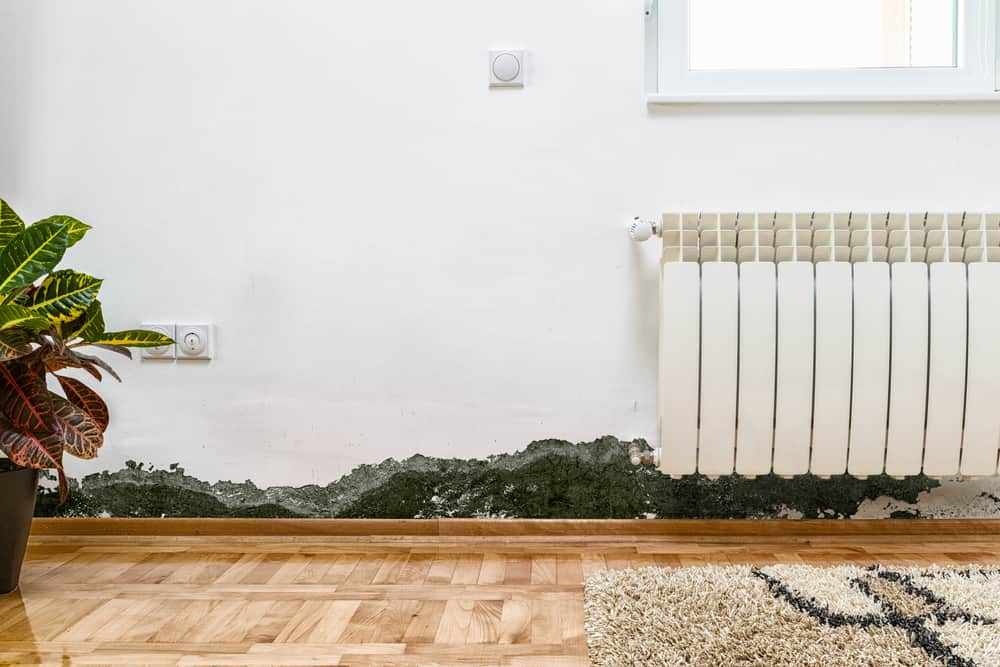
Most Bay Wood homes were built between the late 1940s and the 1960s. That means concrete block basement walls, crawl spaces with bare soil floors, and attic ventilation that was never designed to handle Long Island’s humid summers. These aren’t just cosmetic issues — they’re the exact conditions that let mold take hold quietly, often for months before you notice a smell or your kid starts coughing.
When mold remediation is done right, you stop treating symptoms and start solving the actual problem. The musty basement becomes usable space again. The crawl space under your ranch-style home stops feeding moisture into the framing above it. Your attic stops holding summer heat and humidity against the roof decking long enough for mold to grow.
Bay Wood sits inland from Great South Bay, which means it doesn’t get the drying coastal breezes that help manage humidity in waterfront towns. What it does get is the full weight of Long Island’s humid summers — and older homes in Bay Wood feel that more than most. Getting mold out of your home isn’t just about air quality. It’s about protecting the investment you’ve been paying property taxes on for years.
First Response Restoration and Cleaning Inc. has been working in Long Island homes for over three decades, including throughout Bay Wood and the surrounding Town of Islip. Owner Richard Peterson holds personal New York State licenses in both mold assessment and mold remediation contracting — not a company filing, not a credential buried in a drawer. His name is on the license, which means he’s personally accountable for every job that leaves this company.
Our entire technician team is IICRC-certified, and we operate 24 hours a day, seven days a week. That matters in a commuter hamlet like Bay Wood, where the Deer Park LIRR station sits right on Pine Aire Drive and most residents are away from their homes for the better part of the day. When you get home and find water in your basement, you need someone who picks up the phone — not someone who schedules you for next Tuesday.
We also handle the full cycle: remediation and cleaning, under one roof, one invoice. No coordinating between separate contractors, no wondering who’s responsible for what’s left behind.
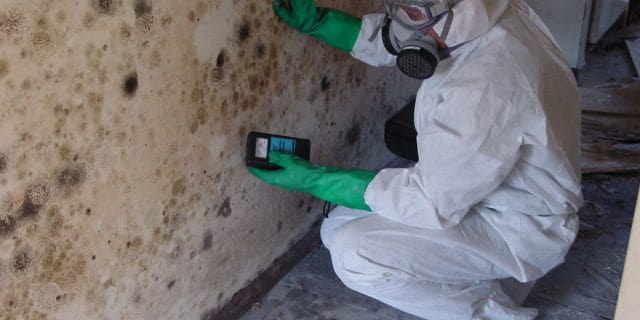
Every job starts with a thorough assessment. Before anything is removed or treated, we identify where the moisture is actually coming from. This step is what separates a permanent fix from a temporary one. In Bay Wood’s older housing stock — homes with concrete block basements and unencapsulated crawl spaces — the source is often slow, hidden, and ongoing. Finding it first is non-negotiable.
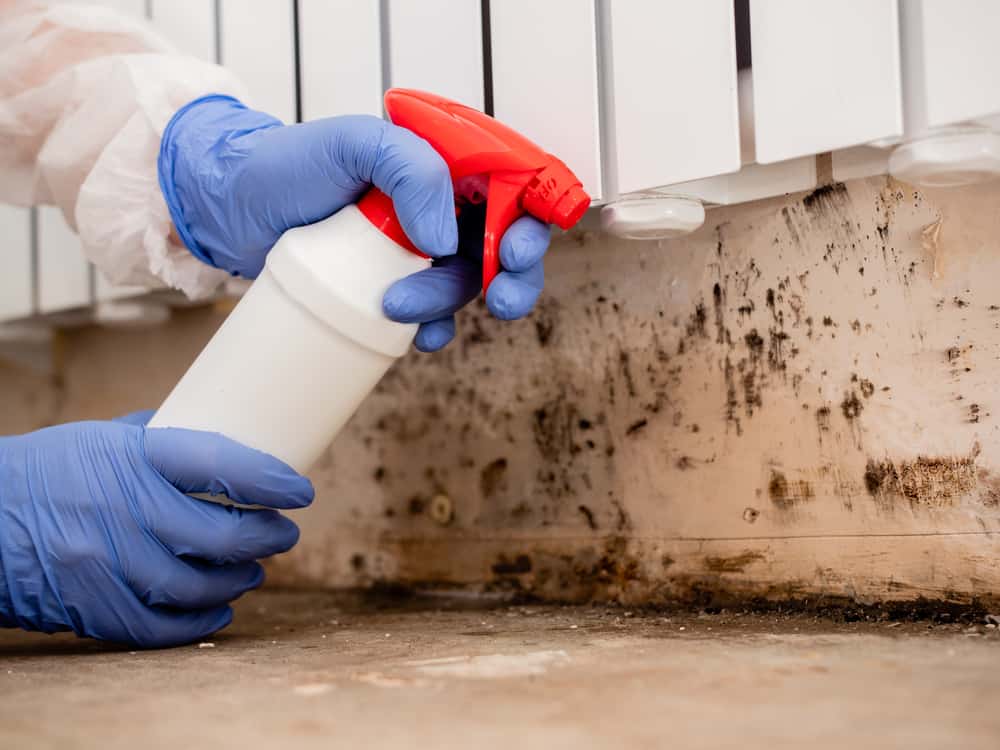
Once the source is identified, we establish containment to keep mold spores from spreading to unaffected areas of your home. Then comes the physical remediation: removing contaminated materials, treating affected surfaces with antimicrobial agents, and drying the structure thoroughly. Every step follows the IICRC S520 Standard for Professional Mold Remediation — the industry’s benchmark protocol.
After the remediation work is complete, we don’t just tell you it’s done. Post-remediation air quality testing confirms that mold spore counts are back to normal levels. You get written documentation — the kind that insurance companies accept, that real estate attorneys can use in a transaction, and that gives you actual proof the job was done right. New York State’s Article 32 licensing law requires that mold assessment and remediation be handled by licensed contractors, and every step of our process is fully compliant.
Ready to get started?
Mold in Bay Wood homes tends to show up in predictable places — and each one requires a different approach. Basement mold in concrete block construction often comes from wall seepage that’s been happening slowly for years. Crawl space mold in ranch-style and Cape Cod homes is frequently tied to bare soil releasing moisture vapor into unprotected framing above. Attic mold in older Bay Wood homes is usually a ventilation problem — summer heat and humidity build up against the roof decking until condensation does the work for you.
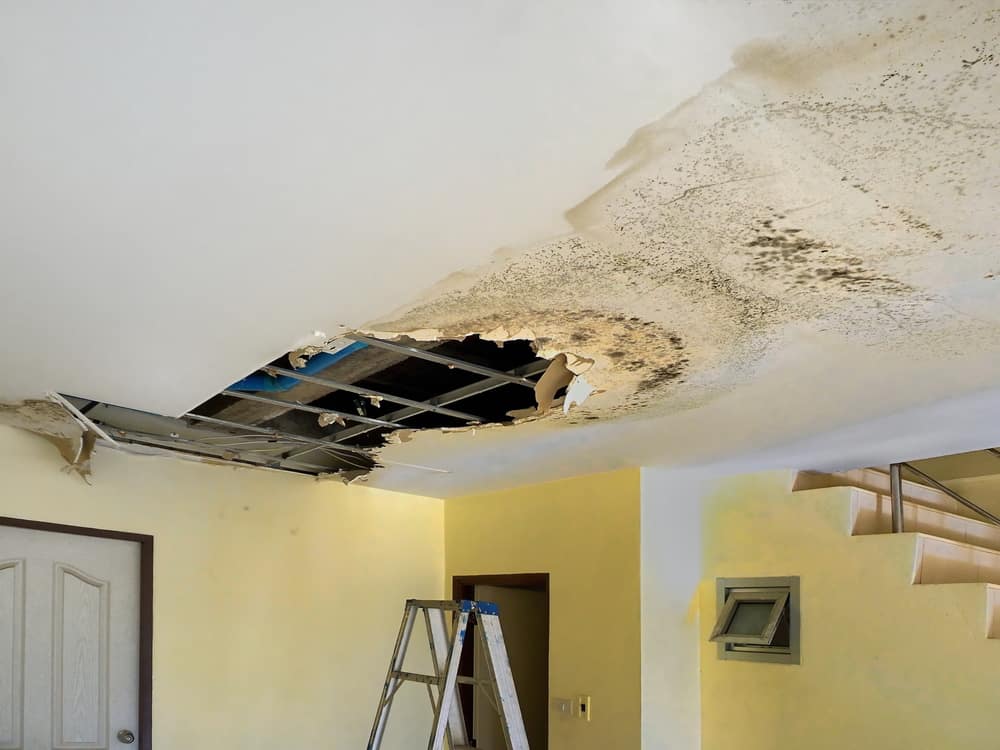
We handle all of it. Basement mold remediation, crawl space mold remediation, attic mold remediation, and emergency mold remediation when water damage has just happened and the 24-to-48-hour window before active growth begins is closing fast. Our integrated cleaning division means that once the structural work is done, the final cleaning of affected surfaces and contents is handled by the same team — no handoff, no gap in accountability.
For Bay Wood homeowners dealing with a mold discovery during a real estate transaction — which happens regularly in the Town of Islip’s active property market — the clearance documentation we provide after post-remediation verification is exactly what’s needed to keep a deal moving. Cost for most residential projects runs between $1,500 and $6,000 depending on scope and location within the home, and we help you understand what your homeowner’s insurance may cover before work begins.
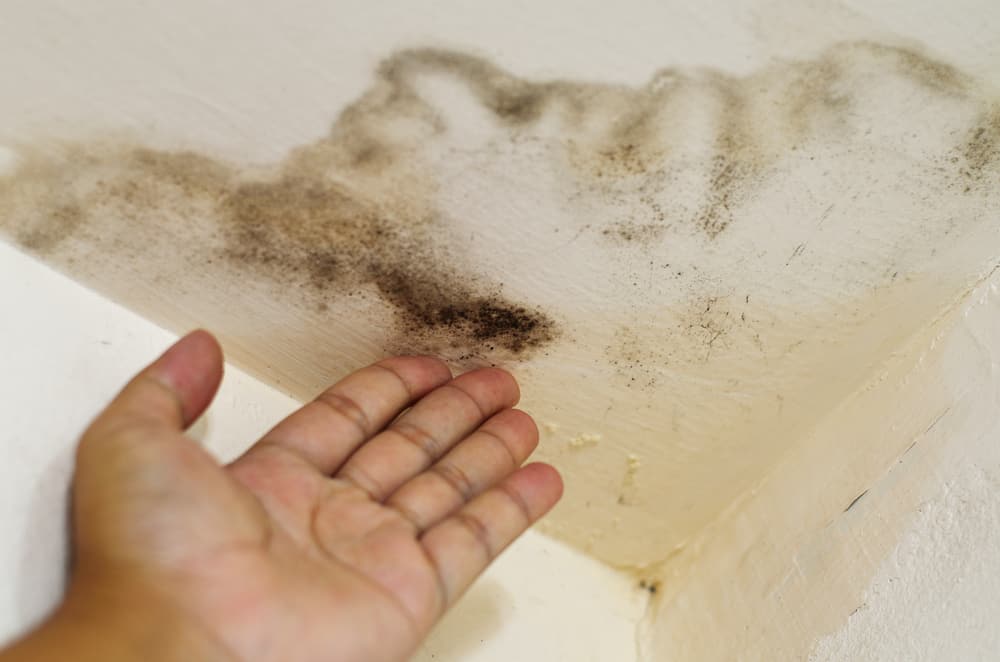
Yes — and the reason comes down to when most Bay Wood homes were built. The majority of the housing stock here dates to the late 1940s through the 1960s, when moisture management in residential construction was minimal by today’s standards. Concrete block basement walls are porous and allow water to migrate through over time. Crawl spaces were typically left with bare soil floors and no vapor barrier. Attic ventilation was rarely engineered to handle the kind of sustained summer humidity Long Island delivers every year.
Add to that the fact that Bay Wood sits inland from the coast without the benefit of consistent drying breezes, and you have a community where ambient humidity stays elevated throughout the warmer months — exactly the conditions mold needs to grow. Many homeowners don’t discover it until there’s a visible patch on a wall, a persistent musty smell, or a home inspector flags it during a sale. By that point, it’s usually been growing quietly for months.
Mold removal suggests you’re just taking away what’s visible — wiping it off a surface or cutting out a section of drywall. Mold remediation is a complete process: identifying the moisture source, containing the affected area so spores don’t spread, removing contaminated materials, treating surfaces with antimicrobial agents, drying the structure, and verifying through air quality testing that the problem is actually resolved.
The distinction matters in Bay Wood because the mold you can see is rarely the full picture. In a 1950s Cape Cod with an unencapsulated crawl space, the visible mold on a floor joist is the result of a moisture condition that’s been building for a long time. If you remove the mold without correcting that condition, it comes back — sometimes within a single season. True remediation addresses the root cause, not just the symptom. That’s what the IICRC S520 Standard requires, and it’s what every job we do is built around.
Cost depends on where the mold is, how far it’s spread, and what’s involved in correcting the moisture source. For most residential projects in Bay Wood, you’re looking at a range of roughly $1,500 to $6,000. Attic mold remediation tends to run between $1,500 and $9,000 depending on attic size and the extent of contamination. Crawl space remediation typically falls between $500 and $4,000, though it can go higher if encapsulation is also needed. Basement mold — which is one of the most common calls we get from Bay Wood homeowners — ranges from $500 for surface-level issues to significantly more if structural materials are involved.
The most important thing to know is that the cheapest quote usually skips critical steps: containment, post-remediation air testing, and moisture source correction. When those steps are skipped, mold returns — and you pay again. We walk through cost ranges with you before work begins, and we help you understand what your homeowner’s insurance may cover, particularly if the mold resulted from a sudden event like a burst pipe or storm water intrusion.
It depends on what caused the mold. Homeowner’s insurance in New York typically covers mold remediation when it results from a sudden and accidental event — a burst pipe, a washing machine overflow, storm water that entered through a damaged roof. If the mold is the result of long-term moisture buildup, deferred maintenance, or a slow leak that went unaddressed, most policies won’t cover it.
For Bay Wood homeowners, this distinction is worth understanding before you call your insurance company. If you came home from a day of commuting and found your basement flooded, that’s likely a covered event. If the mold in your crawl space has been growing for two years because the vapor barrier was never installed, that’s typically not. We help you document the damage in the format insurers require and can walk you through what your policy is likely to cover — so you’re not navigating that conversation alone while also dealing with the stress of a mold discovery.
In many cases, yes — but it depends on the size of the affected area and where it’s located. When mold is contained to a basement, crawl space, or attic, and proper containment barriers are in place, most homeowners can remain in the living areas of the home during the remediation process. The containment setup is specifically designed to prevent mold spores from migrating to unaffected parts of the house.
If the mold is extensive, covers a large portion of the main living area, or involves black mold in a location that’s difficult to isolate, temporary relocation may be the safer choice — especially for households with young children, elderly residents, or anyone with respiratory sensitivities. We’ll give you a straightforward assessment of the situation before work starts so you can make an informed call about whether to stay or step out for the duration.
New York State’s Article 32 mold licensing law, which took effect in January 2016, makes it illegal to perform mold assessment or remediation without a valid license issued by the NYS Commissioner of Labor. The law applies to every job in Bay Wood, and it exists specifically to protect homeowners from unqualified operators.
The simplest way to verify a contractor’s license is through the NYS Department of Labor’s public license lookup. Any legitimate mold remediation company operating in Suffolk County should be able to give you their license number without hesitation. At First Response Restoration, owner Richard Peterson holds personal state licenses in both mold assessment and mold remediation contracting — meaning the person running the company is individually accountable under New York law, not just a business entity with a filing. That’s a meaningful difference. Hiring an unlicensed contractor in Bay Wood doesn’t just risk poor work — it can result in your insurance claim being denied and leave you with no legal recourse if something goes wrong.
Useful Links
Other Services we provide in Bay Wood