
Hear from Our Customers
The air in your home feels different when the source of the problem has been dealt with — not just wiped down, but genuinely resolved. No more musty smell drifting up from the basement. No more second-guessing whether that discoloration on the wall is something to worry about. Your home is yours again, and you’re not managing a slow-moving problem in the background of your life.
For Elwood homeowners specifically, that outcome matters more than most people realize. The majority of homes in this community were built between the 1940s and 1960s — before vapor barriers and moisture-resistant building materials were standard. That means your crawl space, your basement walls, and your attic are all working against you in ways that newer construction simply doesn’t have to deal with. Long Island’s humid summers make it worse, with mold capable of colonizing wet surfaces in as little as 36 hours in these conditions.
There’s also the financial side of it. Homes in Elwood are selling in the $700,000 to $900,000 range. Mold found during a buyer’s inspection doesn’t just delay a sale — it can kill it outright, or shave a significant number off the final price. Getting this handled properly, with documented clearance to back it up, protects what you’ve built here.
Richard Peterson, our owner, holds personal New York State licenses in both mold assessment and mold remediation under Article 32 of the Labor Law. That’s not a credential sitting in a filing cabinet — it’s his license, his name, and his professional reputation tied directly to every job. Every technician on our team is IICRC-certified, meaning the people who walk into your home have been formally trained and tested, not just hired and handed a vacuum.
We’ve been operating on Long Island for approximately 31 years. That’s three decades of working inside the ranch homes, cape cods, and split-levels that define Elwood and the surrounding Huntington area. We know what Long Island’s soil does to a 1958 foundation over time. We know where moisture hides in this era of construction. That kind of local, hands-on experience isn’t something a national franchise can replicate.
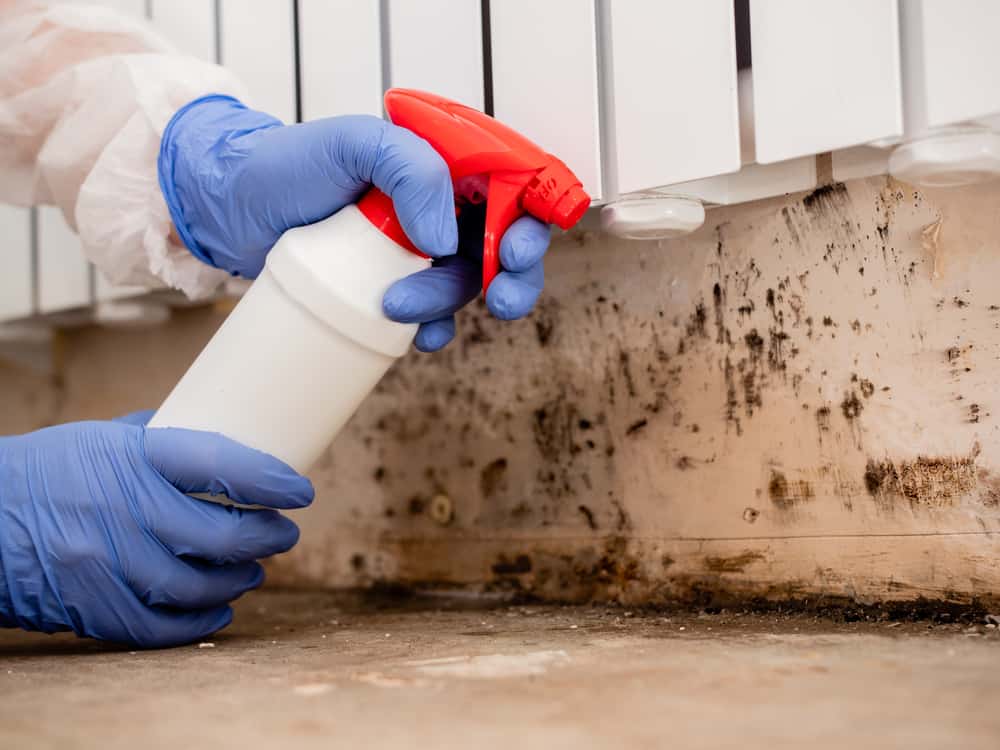
It starts with a thorough assessment. Before anything is removed or treated, we identify the moisture source driving the mold growth. This step is where most recurring mold problems originate — a company comes in, cleans what’s visible, and leaves without ever asking why the mold was there in the first place. In Elwood’s older housing stock, that source is often a cracked foundation wall, inadequate attic ventilation, a crawl space with no vapor barrier, or a drainage grading issue that’s been pushing water toward the foundation for years.
Once the source is mapped, we set up containment to keep spores from spreading to unaffected areas of your home during the work. Then the actual remediation begins — removal of affected materials, treatment of structural surfaces, and HEPA filtration of the air throughout the process. For projects involving drywall, insulation, or structural framing removal, the Town of Huntington’s building department may require a permit, and we navigate that process as part of the job.
When the work is complete, independent post-remediation air quality testing confirms that spore counts have returned to normal, safe levels. You receive a formal clearance report — the kind of documentation that satisfies a buyer’s agent, an insurance adjuster, or simply your own need to know the job was done right.
Ready to get started?
Mold remediation in Elwood isn’t a one-size situation. Basement mold in a 1955 ranch differs from attic mold in a cape cod, and our approach matches the problem. Basement and crawl space remediation typically involves moisture mapping, material removal, structural treatment, and encapsulation where the space has never had a proper vapor barrier installed — which, in Elwood’s older housing stock, is more common than not. Attic mold remediation focuses heavily on ventilation correction, because the condensation that drives summer attic mold in mid-century Elwood homes doesn’t stop growing back until the airflow problem is fixed.
Beyond the structural work, our integrated cleaning division handles the full post-remediation cleanup — not just the affected area, but any surface, content, or space impacted during the process. You’re not left coordinating a second crew to finish what we started.
We also offer emergency mold remediation around the clock. When a nor’easter pushes water into your basement at 10 PM on a Sunday, the 24-to-36-hour window before active mold growth begins doesn’t wait for Monday morning. We’re reachable and operational when it matters — serving Elwood and the surrounding Huntington area with the same urgency whether it’s a routine job or a post-storm emergency.
Yes — and this is one of the most important things to verify before hiring anyone. Under Article 32 of New York State Labor Law, effective January 1, 2016, it is unlawful for any person to perform mold assessment or mold remediation without a valid state-issued license. That applies to every job in Elwood, regardless of size.
The reason this matters beyond legal compliance is accountability. An unlicensed contractor performing mold remediation in your home can create real problems — insurance companies can deny claims for work done by unlicensed operators, and documentation from an unlicensed provider won’t hold up in a real estate transaction. In a community where homes are selling for $750,000 or more, that’s not a risk worth taking. Richard Peterson holds personal NYS licenses in both mold assessment and mold remediation, and those license numbers are publicly verifiable through the NYS Department of Labor.
The honest answer is that it depends on scope, and any company quoting a flat number before seeing your home is guessing. That said, most residential mold remediation projects fall somewhere between $1,200 and $6,000, with the national average around $2,347. Larger jobs — full basement remediation, attic mold with structural involvement, or crawl space encapsulation in an older home — can run higher.
For Elwood specifically, the age of the housing stock tends to push jobs toward the higher end of mid-range. Homes built in the 1940s and 50s often have original materials — unencapsulated crawl spaces, aging insulation, older drywall — that require more extensive removal and replacement than newer construction would. The cost of doing it right is real, but so is the cost of doing it wrong: a home with a documented mold history in this market can lose 20% or more of its value, and that’s on a home worth $750,000 or more.
Because the moisture source was never fixed. This is the most common reason mold returns after remediation, and it’s also the most preventable. Removing visible mold without identifying and correcting what’s feeding it is the equivalent of mopping up a leak without turning off the water.
In Elwood’s older homes, the underlying causes are predictable but varied. Aging foundation walls absorb groundwater through their pores. Crawl spaces without vapor barriers act as moisture collection chambers year-round. Attics with compressed or inadequate insulation create temperature differentials that generate condensation every summer. Grading issues direct surface water toward foundations that weren’t built to handle it. Our remediation process starts with moisture mapping — identifying exactly what’s driving the growth before anything is removed. That step is what separates a permanent fix from a temporary one.
In many cases, yes — but it depends on the location and scale of the affected area. For a contained basement or crawl space job, most homeowners can remain in the home while work is underway, as long as proper containment barriers are in place to prevent spore migration into living areas. HEPA air filtration runs throughout the process to keep the rest of your home’s air quality stable.
For larger remediation projects — particularly those involving HVAC systems, significant attic space, or multiple rooms — temporary relocation during the active remediation phase may be the better call, especially if there are young children, elderly family members, or anyone with respiratory sensitivities in the household. This is something we assess and discuss before the job starts, not after. You’ll know exactly what to expect before any work begins.
Mold removal refers specifically to the physical act of taking mold out — cleaning a surface, cutting out drywall, removing contaminated insulation. Mold remediation is the full process: assessment, containment, removal, structural treatment, moisture source correction, and post-remediation verification. Remediation is what actually solves the problem. Removal alone is one step in that process.
This distinction matters because mold spores are microscopic and airborne. You can’t simply wipe a surface and call it done. Without containment during the work, spores spread to unaffected areas. Without treating the structural materials underneath, regrowth happens. And without post-remediation air quality testing, there’s no objective confirmation that the job actually worked. In Elwood’s older homes — where mold has often been establishing itself quietly for years before it’s discovered — cutting corners at any of these stages typically means paying for the job twice.
The general guideline from the EPA is that mold covering more than 10 square feet requires professional remediation rather than DIY cleaning. But square footage isn’t the only factor. The type of material matters — mold on a non-porous surface like tile is a different situation than mold inside drywall, wood framing, or insulation, where it can’t be fully reached by surface cleaning. The species of mold matters. And the location matters significantly.
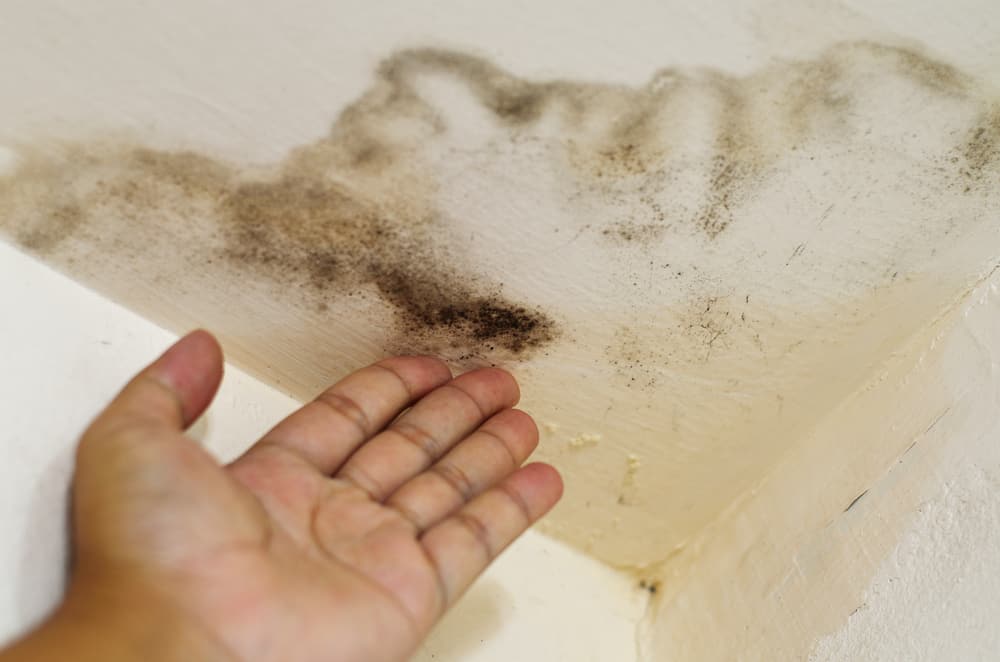
In Elwood specifically, the concern is usually what you can’t see. A musty smell in a basement that looks clean, or a small patch of discoloration on a wall that keeps coming back after you clean it, are both signs that the problem is deeper than the surface. Homes in this community that were built before modern moisture barriers are particularly prone to mold establishing itself inside wall cavities and floor systems before it ever becomes visible. If you’re unsure, a professional assessment — not just a visual check — is the right starting point.
Useful Links
Other Services we provide in Elwood