
Hear from Our Customers
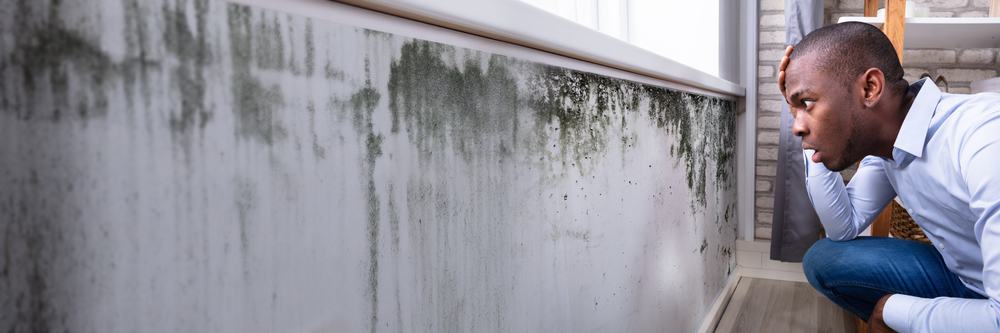
Most mold problems in Blue Point don’t start with something visible. They start with a musty basement after a nor’easter, a crawl space that hasn’t been opened in years, or an attic above a Cape Cod that’s been quietly collecting moisture since the Eisenhower administration. By the time you can see it, it’s already been growing for a while.
A thorough mold inspection tells you what’s there, where it’s coming from, and how serious it actually is. That’s not a small thing — especially in Blue Point, where homes regularly sell between $400,000 and $1.2 million and where the Great South Bay keeps ambient humidity higher than almost anywhere else on Long Island. Knowing the full picture before a sale, after a storm, or when someone in your household starts having unexplained symptoms is the difference between managing a problem and being blindsided by one.
For Blue Point homeowners specifically, the stakes around hidden moisture are real. Older foundations built without modern drainage membranes, aging insulation that holds water instead of repelling it, and a waterfront location that doesn’t give your home a break from humidity — these aren’t hypothetical risk factors. They’re the actual conditions your house lives in every day. A professional inspection gives you documented, lab-verified clarity on what those conditions have produced inside your walls.
We’ve been working in Suffolk County homes for over three decades — long before mold inspection became a crowded search result and long before New York State made licensing mandatory in 2016. That kind of tenure doesn’t happen by accident on Long Island, where reputation matters and word travels.
Operating out of West Babylon, we know the South Shore corridor intimately — the housing stock, the seasonal storm patterns, the way Great South Bay humidity behaves differently than what you’d find ten miles inland. Blue Point isn’t a new market for us. It’s home turf. We understand the specific moisture challenges that older homes in your area face, from bayfront foundations to aging roof structures on Cape Cods that have weathered decades of ice dams and winter moisture.
Every technician who walks through your door carries IICRC certification — not just the owner, not just management. That’s our company standard, not a marketing line. And because we hold both the NY State Mold Assessor and Mold Remediator licenses, you’re covered from the first air sample through any remediation work that follows — with one team, one point of contact, and no contractor juggling.
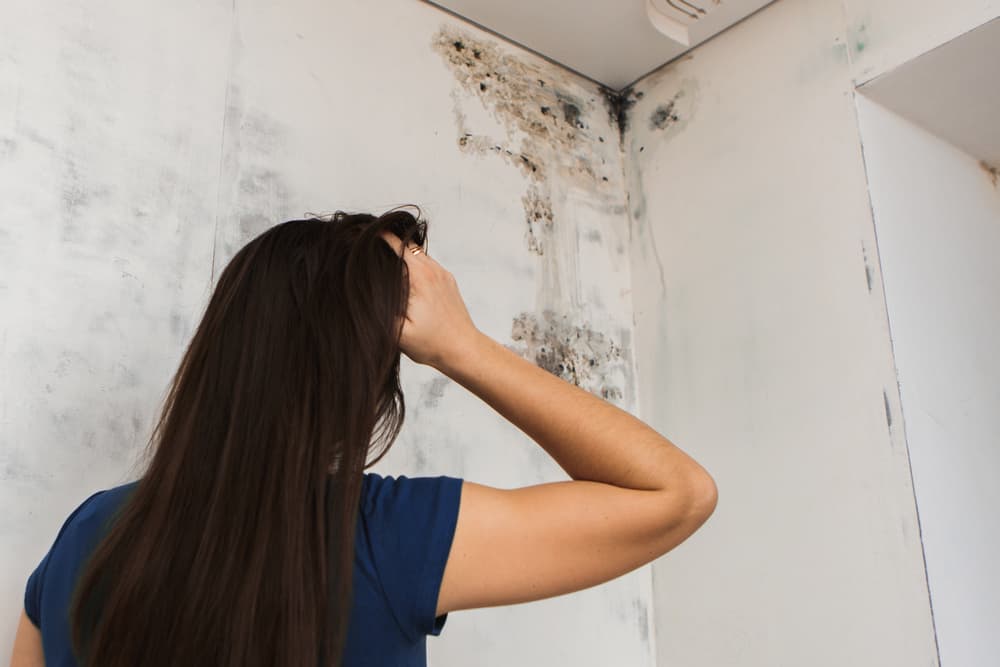
The inspection starts before anything is collected. Our technician does a full walkthrough — basement, crawl space, attic, HVAC areas, and any spaces where water intrusion has been reported or suspected. In Blue Point homes, that often means paying close attention to older foundations facing the bay side, attic structures on Cape Cods where ice dams have caused repeated winter moisture, and crawl spaces that haven’t been properly sealed against ground-level humidity.
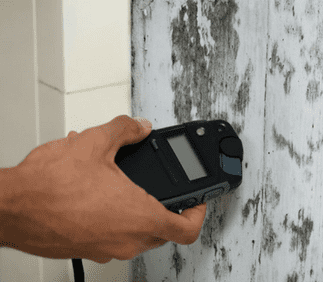
From there, air sampling captures what’s floating in the indoor environment — spore types and concentrations — and swab samples pull surface material from areas of visible or suspected growth. Moisture readings are taken throughout, and infrared thermal imaging is used to detect temperature differentials behind walls and under floors that indicate hidden moisture activity. This is where a lot of problems in older Blue Point homes get found that a visual check alone would completely miss.
Everything collected goes to an accredited laboratory. When results come back, you receive a written report in plain language — mold species identified, concentration levels compared to outdoor baseline samples, moisture sources documented, and specific remediation recommendations if needed. If your inspection is connected to a real estate transaction or an insurance claim, that report is something you can actually hand to a lender, an adjuster, or an attorney. New York State law requires licensed mold assessors for this work — and that license is verifiable through the NY Department of Labor before you hire anyone.
Ready to get started?
Our mold inspection service covers air testing, surface swab sampling, water intrusion assessment, moisture level measurement across the full property, and photographic documentation of every area of concern. Infrared thermal imaging is included to find what standard visual inspections can’t reach — the moisture hiding inside wall cavities, beneath flooring, and above ceilings. In a community like Blue Point, where a significant portion of the housing stock dates back to the 1930s through 1960s, that thermal layer of the inspection isn’t optional. It’s where the real story usually lives.
All samples go to an accredited lab. The final written report documents what was found in plain language — no raw data that requires a mycologist to interpret, no vague summaries. If mold is confirmed and remediation is needed, we hold the NY State license to handle that work as well. If remediation requires removing and replacing damaged drywall, insulation, or structural materials, reconstruction is handled by our same team. Blue Point homeowners don’t need to coordinate multiple contractors through an already stressful situation.
For homeowners dealing with an insurance claim — whether from a nor’easter, a burst pipe during a January cold snap, or lingering water damage from a past storm event — we manage the documentation and communication with your insurer from start to finish. That’s not a common offering in this space, and for Blue Point homeowners navigating a claim while also trying to protect a high-value property, it matters.
The short answer is that it raises it — consistently and year-round. The Great South Bay is a shallow, semi-enclosed estuary that keeps relative humidity elevated along the Blue Point shoreline in a way that inland communities simply don’t experience. When indoor humidity regularly exceeds 60%, mold spores that are always present in the air find exactly the conditions they need to colonize surfaces, insulation, and structural materials. You don’t need a flood event for that to happen — sustained coastal humidity alone is enough over time.
The issue compounds significantly in older homes. Blue Point’s housing stock includes a substantial number of Cape Cods, ranch homes, and Colonial Revivals built between the 1930s and 1960s — construction that predates modern vapor barriers, modern drainage membranes, and current insulation standards. These homes weren’t built to manage the moisture load that a Great South Bay location puts on them indefinitely. Crawl spaces and basements are the most vulnerable areas, but attics above older rooflines and wall cavities behind exterior-facing surfaces can hold moisture problems for years without any visible sign. A professional mold inspection is the only way to know what’s actually accumulated in those spaces.
A full mold inspection covers several distinct steps: a complete property walkthrough to identify areas of visible concern or suspected water intrusion, air sampling to capture airborne spore types and concentrations, surface swab sampling from areas of suspected growth, moisture level readings taken throughout the property, and infrared thermal imaging to detect hidden moisture activity behind walls, beneath floors, and inside ceilings. Everything is photographically documented. The whole process typically takes two to four hours depending on the size and condition of the home.
After the inspection, all collected samples go to an accredited laboratory for analysis. Lab turnaround typically takes a few business days, after which you receive a written report in plain language summarizing what was found, what mold species were identified, how indoor spore concentrations compare to outdoor baseline levels, where moisture sources are located, and what remediation steps are recommended if needed. For Blue Point homeowners using the report in a real estate transaction or an insurance claim, this documentation is structured to be usable — not just informative. It’s something you can hand directly to a lender, an insurance adjuster, or a real estate attorney without needing to translate it first.
Nationally, professional mold inspections run between $303 and $1,043, with an average around $670 according to recent Angi data. What you’ll pay in Blue Point specifically depends on the size of the home, the number of areas being sampled, and whether additional testing — like infrared thermal imaging or expanded lab panels — is included in the scope. Larger older homes with multiple potential moisture entry points will typically fall toward the higher end of that range.
It’s worth putting that cost in context for this market. Blue Point homes are selling between $400,000 and $1.2 million. Research from RubyHome indicates that undisclosed mold issues can reduce a home’s value by 20 to 37 percent — which on a $700,000 Blue Point property represents a potential loss of $140,000 to $260,000. A thorough inspection is a small fraction of that exposure. For buyers under time pressure in a low-inventory market, skipping the inspection to move faster on a deal is one of the more common ways homeowners end up with a much larger problem than the one they were trying to avoid.
It depends on the cause. Most standard homeowner’s insurance policies will cover mold remediation when the mold is a direct result of a covered event — a burst pipe, storm-driven water intrusion, or roof damage that let water in. What policies typically don’t cover is mold that developed from long-term neglect, chronic moisture issues, or conditions that existed before the policy was in place. The distinction matters, and insurers will look closely at the documentation to make that determination.
For Blue Point homeowners, storm events are the most common trigger for covered mold claims. Nor’easters and tropical systems that push water against older bayfront foundations, or winter storms that cause ice dams and roof leaks on aging Cape Cods along the South Shore, are the kinds of events that can generate legitimate mold claims. The key is documentation — and that’s where the inspection report becomes critical. We manage the full insurance communication process, from the initial inspection documentation through the remediation scope, in the format that adjusters require. If you’re dealing with a claim alongside a mold discovery, having a licensed mold assessor who also handles the insurer paperwork removes a significant burden from an already stressful situation.
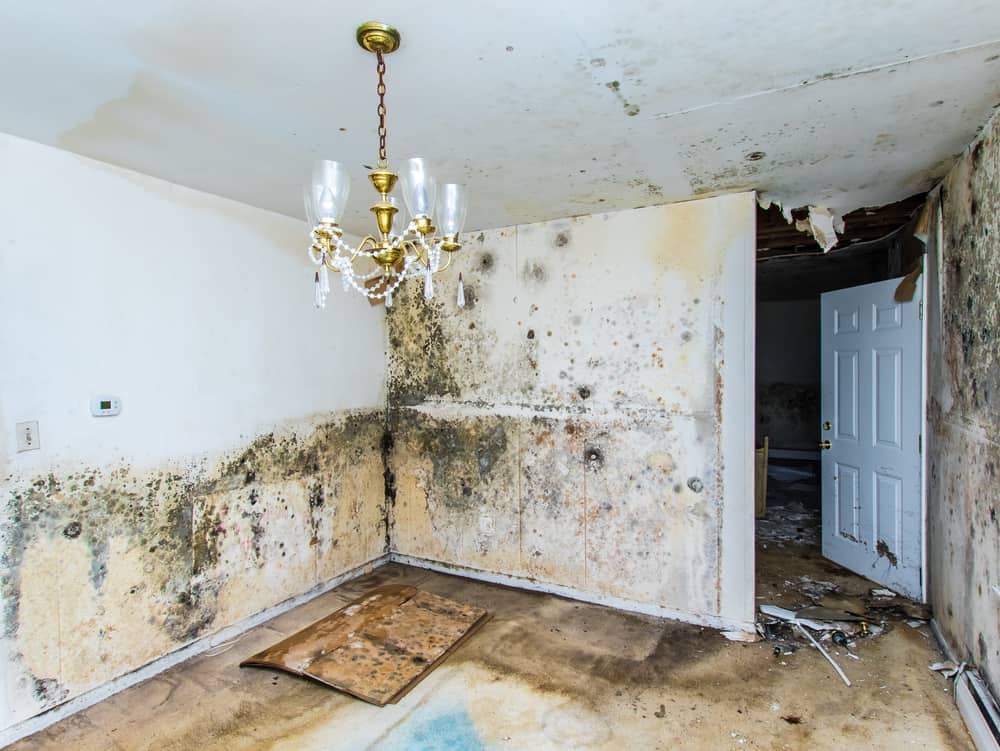
The most obvious sign is visible dark growth — typically on basement walls, around window frames, in crawl spaces, or on attic sheathing. But visible mold is actually the less common way people find out they have a problem. More often, the first sign is a persistent musty smell that doesn’t go away after cleaning, or unexplained respiratory symptoms — congestion, coughing, or irritation — that seem to improve when household members spend time outside or away from home.
In Blue Point specifically, a few situations should put mold inspection near the top of your list even without obvious symptoms. If your home is more than 40 years old and the basement or crawl space has never been professionally assessed, that’s a meaningful gap. If you’ve had any basement flooding — from a storm, a sump pump failure, or a plumbing issue — and it wasn’t fully remediated within 48 to 72 hours, mold colonization is likely. And if you’re in the process of buying a home in Blue Point and the general home inspection didn’t include air sampling or thermal imaging, you don’t actually know what’s inside the walls. A standard home inspection is not a mold inspection — those are two separate assessments with very different scopes.
There’s no law in New York State or in the Town of Brookhaven — Blue Point’s governing municipality — that mandates a mold inspection as a condition of sale. What New York does require is that anyone performing a mold assessment or mold remediation hold a valid license from the New York State Department of Labor. That requirement has been in effect since January 1, 2016, and applies to all work performed in Blue Point. You can verify any company’s licensure through the NY DOL’s online contractor search tool before you hire them — and you should, because several companies that appear in local search results for Blue Point are national lead-generation sites or referral networks, not licensed local operators.
While inspection isn’t legally required for a transaction, mold conditions in a home can trigger disclosure obligations under New York real estate law and can materially affect a sale — either by surfacing during the buyer’s due diligence, affecting appraisal values, or creating post-closing liability if a known issue wasn’t disclosed. In a market like Blue Point, where homes move quickly and buyers are making substantial financial commitments on older waterfront properties, getting a professional mold inspection before listing — or before closing on a purchase — is straightforward risk management. It gives both sides of the transaction accurate information, and it eliminates the kind of post-closing disputes that tend to be far more expensive than the inspection itself.
Useful Links
Other Services we provide in Blue Point