
Mold Inspection in Bay Wood, NY
Bay Wood's Aging Homes Hide Mold Where You Can't See It
Hear from Our Customers
Bay Wood Mold Assessment Services
Bay Wood sits in a part of Suffolk County where the conditions for mold are almost built into the landscape. The Great South Bay keeps ambient humidity elevated through most of the year, and the housing stock here predominantly post-WWII construction along streets like Bay Shore Road and Pine Aire Drive was built long before modern vapor barriers and moisture management were standard practice. A home that’s been standing since 1958 has had decades to accumulate the kind of slow, hidden moisture intrusion that feeds mold growth behind walls, under floors, and inside attics.
A professional mold inspection in Bay Wood, NY doesn’t just tell you whether mold is present it tells you why it’s there, where it started, and what needs to happen next. That matters because mold without a resolved moisture source always comes back. You get a written report backed by accredited lab results, clear documentation of every finding, and a specific remediation roadmap not a vague verbal summary.
For homeowners in Bay Wood with median home values approaching $450,000, the financial case is straightforward. Mold discovered during a real estate transaction can drop a home’s value by 20 to 37 percent and cause buyers to walk away entirely. An inspection that costs a few hundred dollars is a fraction of what undiscovered mold can cost you later whether that’s in lost equity, remediation expenses, or a deal that falls apart at closing.
Licensed Mold Inspection Company in Bay Wood
We’re based in West Babylon a few miles west of Bay Wood along the same south shore corridor and have been serving Suffolk County homeowners for over three decades. That’s not a marketing number. It means we’ve inspected the bi-levels, ranch homes, and aging bungalows that define Bay Wood and the rest of the Town of Islip, through nor’easters, storm flooding events, and everything in between. We understand what happens to 1950s construction when it sits near the Great South Bay for 70 years.
New York State requires separate licenses for mold assessment and mold remediation and we hold both, issued by the NY Department of Labor and publicly verifiable through their contractor database. Every technician on our team carries IICRC certification, not just the owner. That’s a standard most local competitors don’t meet.
When something is found, you don’t have to go find another contractor. We handle everything from the initial mold inspection through full remediation and structural reconstruction if needed one licensed team, start to finish.
Residential Mold Inspection Process in Bay Wood
The inspection starts with a full walkthrough of the property basement, attic, crawl spaces, bathrooms, and any area with a known or suspected water intrusion history. In Bay Wood homes, that typically means paying close attention to basement waterproofing systems that are decades past their design life, attic insulation that wasn’t built to manage today’s humidity levels, and HVAC ductwork that can harbor and circulate mold spores throughout the living space.
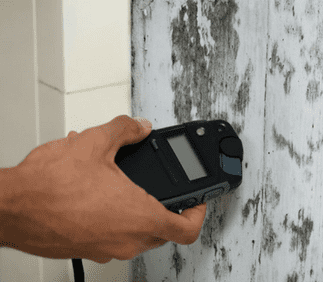
From there, air samples are collected and sent to an accredited laboratory for analysis. Swab samples are taken from any visible growth for species identification. Calibrated moisture meters are used throughout the home to map where water is present even where it isn’t visible. And because Bay Wood’s older homes frequently hide moisture behind plaster walls and under original flooring, infrared thermal imaging is used to detect temperature differentials that indicate hidden moisture without opening a single wall.
The final report documents everything: mold species identified, spore concentrations compared against an outdoor control sample, moisture readings, photos of all findings, and a clear outline of recommended next steps. If your situation involves an insurance claim which is common in this area given the Town of Islip’s documented history of storm-related flooding the report is formatted to support that process from the start. New York State’s mold licensing law also requires that assessment and remediation be handled under separate licensed credentials, and we hold both, so there’s no gap in the chain of documentation.
Ready to get started?
Mold Detection Services for Bay Wood, NY Homes
Every mold inspection in Bay Wood, NY includes a five-point evaluation: air quality testing, surface swab sampling, a full water intrusion assessment to identify the moisture source, calibrated moisture measurements throughout the property, and complete photographic documentation of all findings. The air samples go to an accredited lab not evaluated on-site with a kit from a hardware store and the results are compared against an outdoor baseline sample so you’re getting an accurate picture of what’s actually elevated indoors.
Infrared thermal imaging is part of the process for Bay Wood properties. Given the age of the housing stock here and the south shore’s humidity patterns, mold behind walls and under original flooring is not uncommon and it won’t show up on a visual inspection alone. The thermal camera finds it without invasive testing.
The written report you receive is plain-language and detailed. It covers what was found, what species were identified, where the moisture is coming from, and what remediation steps are recommended. If mold remediation is needed, we can move directly into that phase under our NY State Mold Remediator License and if structural repairs are required after remediation, that’s handled in-house as well. Bay Wood homeowners dealing with insurance claims after a water event will also have full documentation support throughout the process, from the initial inspection report through final project completion.
How much does a mold inspection cost in Bay Wood, NY?
Mold inspection costs in Bay Wood, NY typically fall between $300 and $1,000, with most residential inspections landing in the $500 to $700 range depending on the size of the home and the scope of what’s being assessed. Larger homes, properties with multiple suspected problem areas, or inspections that require more extensive air sampling and lab analysis will generally run toward the higher end of that range.
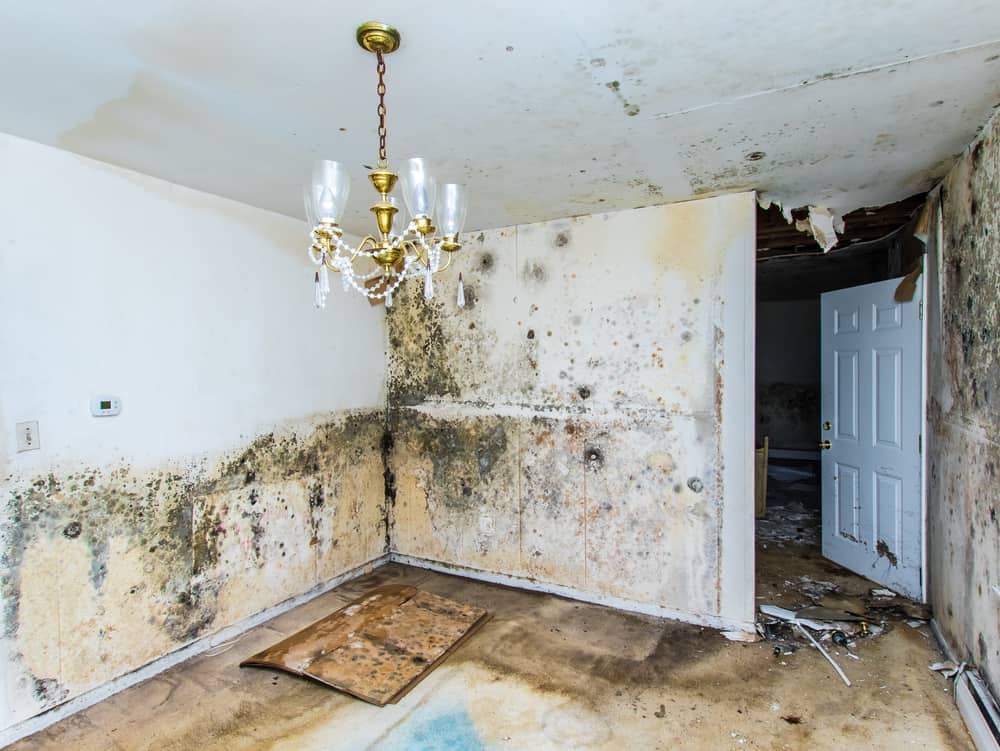
It’s worth putting that number in context. Bay Wood’s median home value is approaching $450,000. A mold problem discovered after closing or left unaddressed until it spreads into structural materials can cost anywhere from $1,500 to $20,000 or more to remediate, and can reduce a home’s resale value by 20 to 37 percent. The inspection fee is a small fraction of what you’re protecting. If the inspection turns up nothing, you have documented proof that your home is clean which has real value in a real estate transaction. If it does find something, you know exactly what you’re dealing with before it gets worse.
What are the signs I actually need a mold inspection in my home?
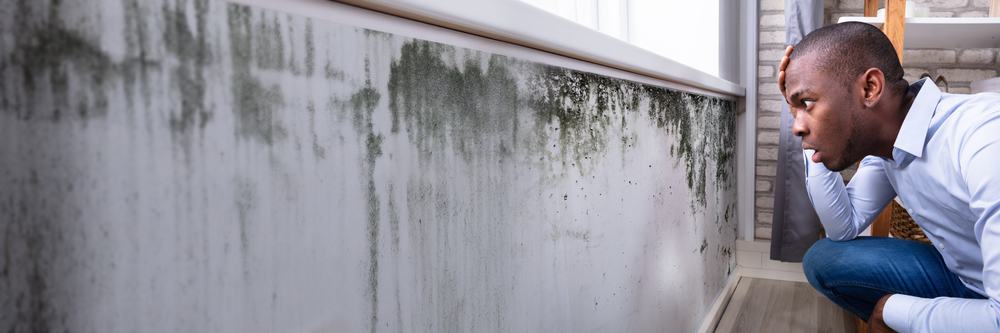
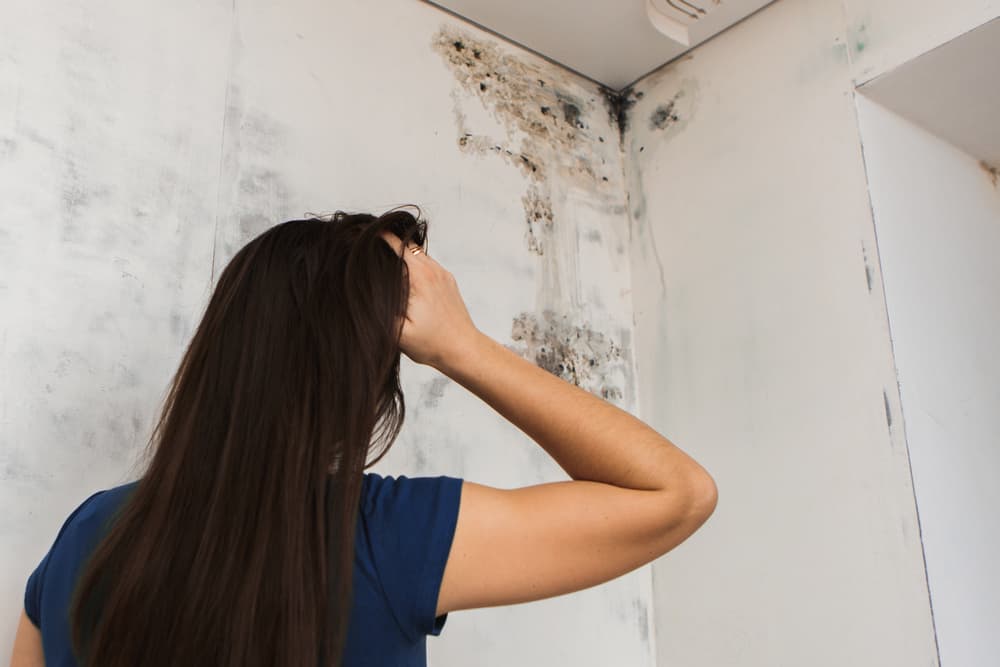
The most common trigger is a musty smell especially in the basement or attic that doesn’t go away no matter how much you ventilate. In Bay Wood’s older homes, that smell is often the first sign that moisture has been sitting somewhere it shouldn’t be, sometimes for years. Other signs include visible dark spots on walls or ceilings, water stains that have dried but left discoloration, peeling paint or wallpaper near exterior walls, and unexplained respiratory symptoms like chronic congestion, coughing, or worsening allergies particularly in children.
You should also consider an inspection after any significant water event. Bay Wood and the surrounding Islip area have experienced some serious rainfall a documented storm dropped 13 inches of rain on Islip in a single 24-hour period, causing widespread basement flooding across Bay Shore, West Islip, and Holbrook. If your basement took on water during any storm in recent years and you didn’t have a professional assessment afterward, mold may have established itself in the weeks that followed. Mold can begin growing within 48 hours of a water intrusion event, and it doesn’t stop on its own.
Does mold inspection in New York require a licensed professional?
Yes and this is something a lot of Bay Wood homeowners don’t realize until they’ve already hired someone. New York State has required all mold assessors and mold remediators to hold valid licenses issued by the NY Department of Labor since January 1, 2016. These are two separate licenses one for assessment and one for remediation and a company legally cannot perform both under a single credential. Any contractor offering mold inspection or remediation in Bay Wood, NY without these licenses is operating outside the law.
You can verify any mold contractor’s license through the NY DOL’s public contractor search database before you hire anyone. We hold both the Mold Assessor License and the Mold Remediator License independently searchable, not self-reported. This matters because unlicensed work doesn’t just put your home at risk it can create liability issues for you as a homeowner, and it produces documentation that won’t hold up if you need to file an insurance claim or disclose a remediation in a real estate transaction.
Should I get a mold inspection before buying a home in Bay Wood?
A standard home inspection is not a mold inspection. Most general home inspectors are not licensed mold assessors, and their visual walkthrough is not designed to detect mold behind walls, in attic insulation, or in basement cavities where moisture has been accumulating for decades. In Bay Wood, where most of the housing stock was built in the 1950s and 1960s, that gap matters these homes have had 60 to 70 years for original waterproofing to fail, vapor barriers to degrade, and moisture to work its way into places a general inspector won’t look.
If you’re buying a home in Bay Wood, a dedicated mold inspection before closing gives you documented, lab-verified information about the property’s actual condition. If mold is found, you have leverage to negotiate repairs or remediation as a condition of sale. If nothing is found, you have written proof that the home is clean which is worth having given the financial stakes. With median home values in Bay Wood near $450,000, the cost of a pre-purchase mold inspection is one of the more straightforward investments you can make in the process.
What's the difference between mold inspection and mold testing?
These terms get used interchangeably, but they describe different things. Mold testing refers specifically to the collection and laboratory analysis of samples air samples, surface swabs, or bulk material samples to identify whether mold is present and at what concentration. Mold inspection is the broader process: a licensed assessor physically evaluates the property, identifies moisture sources, documents conditions that are contributing to or could contribute to mold growth, and then incorporates testing as part of that overall assessment.
In practice, a thorough mold inspection in Bay Wood, NY includes both. You want the physical inspection to understand the why where moisture is entering, where it’s collecting, and what building conditions are creating the problem. And you want the lab testing to confirm the what which species are present, at what levels, and how that compares to normal outdoor baseline concentrations. One without the other gives you an incomplete picture. A lab report without a physical assessment doesn’t tell you where the problem is coming from. A physical inspection without lab results doesn’t give you the documented, defensible evidence you need for insurance claims or real estate disclosures.
Can mold come back after it's been remediated in a Bay Wood home?
It can but only if the moisture source that caused it wasn’t fully resolved. Mold remediation removes the existing growth, but mold is a symptom. The underlying cause is always moisture, and in Bay Wood’s housing stock, that moisture typically comes from one of a few places: failed basement waterproofing in homes built before modern standards existed, inadequate attic ventilation in 1950s and 1960s construction that traps humid air against the roof deck, or water intrusion through aging window seals and exterior walls. If any of those sources remain active after remediation, mold will return.
This is why the inspection phase matters so much. A proper mold inspection in Bay Wood doesn’t just confirm mold is present it identifies the moisture pathway that’s feeding it. Our inspection process includes a full water intrusion assessment alongside the air and surface sampling, so by the time remediation begins, the source has already been documented and addressed as part of the scope of work. The south shore’s humidity levels and the age of Bay Wood’s homes mean that moisture management isn’t a one-time fix it’s something worth revisiting, especially after heavy storm seasons that bring significant rainfall to the Islip corridor.
Useful Links
Other Services we provide in Bay Wood