
Mold Inspection in Bellerose Terrace, NY
Pre-War Homes Hide Mold. Here's How to Know for Sure.

Hear from Our Customers
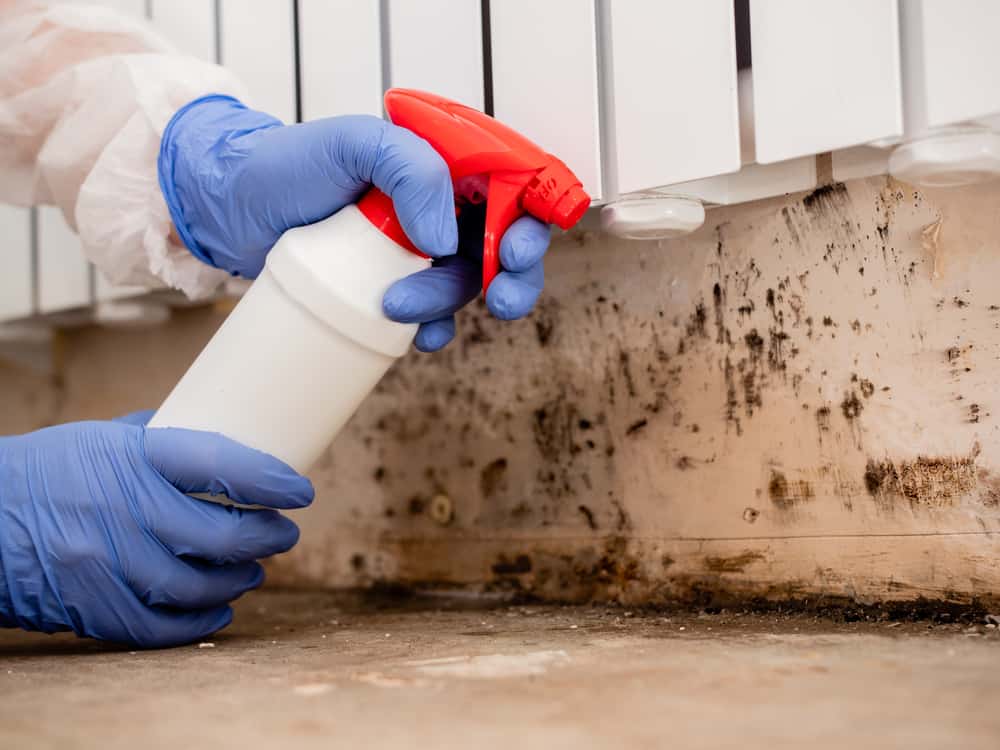
Residential Mold Detection in Bellerose Terrace
A proper mold inspection doesn’t just tell you whether mold exists it tells you where it is, what kind it is, and what it’s going to take to fix it. That’s the difference between a written lab report and someone walking through your house with a flashlight.
In Bellerose Terrace, the housing stock is genuinely older than most of Nassau County. Seventy-six percent of homes here were built before 1940 stone foundations, original plaster walls, attics that were never designed for modern ventilation standards. Moisture doesn’t announce itself. It moves through porous foundation walls, collects inside wall cavities, and sits in unventilated attic spaces for months before anyone notices. By the time there’s a visible stain or a smell you can’t ignore, the problem is usually already established.
After a mold inspection with us, you walk away with a certified lab report that identifies the mold species present, the spore concentration levels inside your home compared to outdoor air, and a clear remediation plan if one is needed. That documentation matters for your insurance company, for a real estate transaction, and for your own peace of mind. You’re not guessing anymore.
Licensed Mold Inspection Company Bellerose Terrace NY
We’ve been serving Nassau County homeowners since the early 1990s. That’s not a marketing number it means our team has worked through hurricane seasons, nor’easters, and decades of Long Island’s aging housing stock. We know what pre-war construction looks like from the inside, and we know exactly where moisture tends to hide in homes like the ones throughout Bellerose Terrace’s blocks.
Every technician on our staff is IICRC-certified not just the owner, everyone. We also hold full NYS Department of Labor licensing for both mold assessment and mold remediation, which has been legally required in New York since 2016. That licensing isn’t a formality; it requires state-approved training, liability insurance, and renewal every two years.
When you call our Nassau County line at 516-698-1776, you’re reaching a team that has almost certainly worked in homes identical to yours dense lots, aging foundations, basements that have seen their share of water. That kind of local experience isn’t something you can replicate with a template.
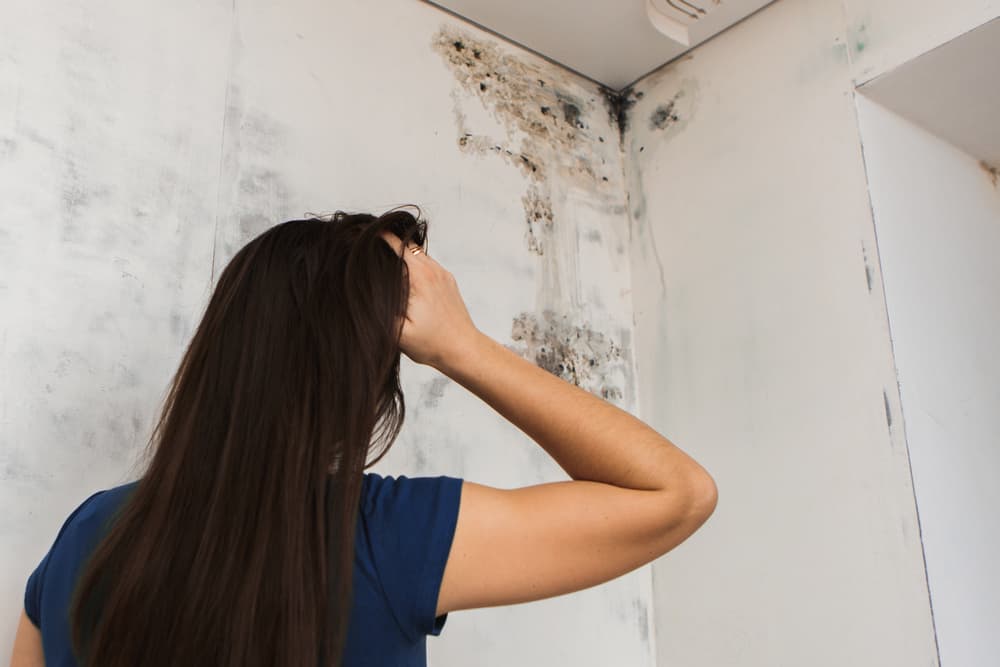
Mold Assessment Services Bellerose Terrace NY
The inspection starts before anyone touches a wall. Our technician reviews the history of the property with you any known water events, areas of concern, past repairs because context matters. A basement that flooded after a storm near the Cross Island Parkway corridor tells a different story than an attic with a slow roof leak. That background shapes where the inspection focuses.
From there, the process covers five distinct methods in a single visit: air sampling, surface swab collection, moisture level measurement, water intrusion assessment, and infrared thermal imaging to detect temperature differentials behind walls, under floors, and inside ceiling cavities. That last step is especially relevant in Bellerose Terrace, where original plaster-over-lath construction creates hidden voids where moisture accumulates completely out of sight. A visual inspection alone won’t find that.
All samples go to a certified third-party lab. When the results come back, you receive a written report that includes mold species identification, indoor-versus-outdoor spore comparison data, and specific remediation recommendations if the findings warrant them. Because we hold separate NYS DOL licensing for both assessment and remediation, the remediation plan if needed comes from the same team that ran the inspection. No handoffs, no miscommunication, no starting over.
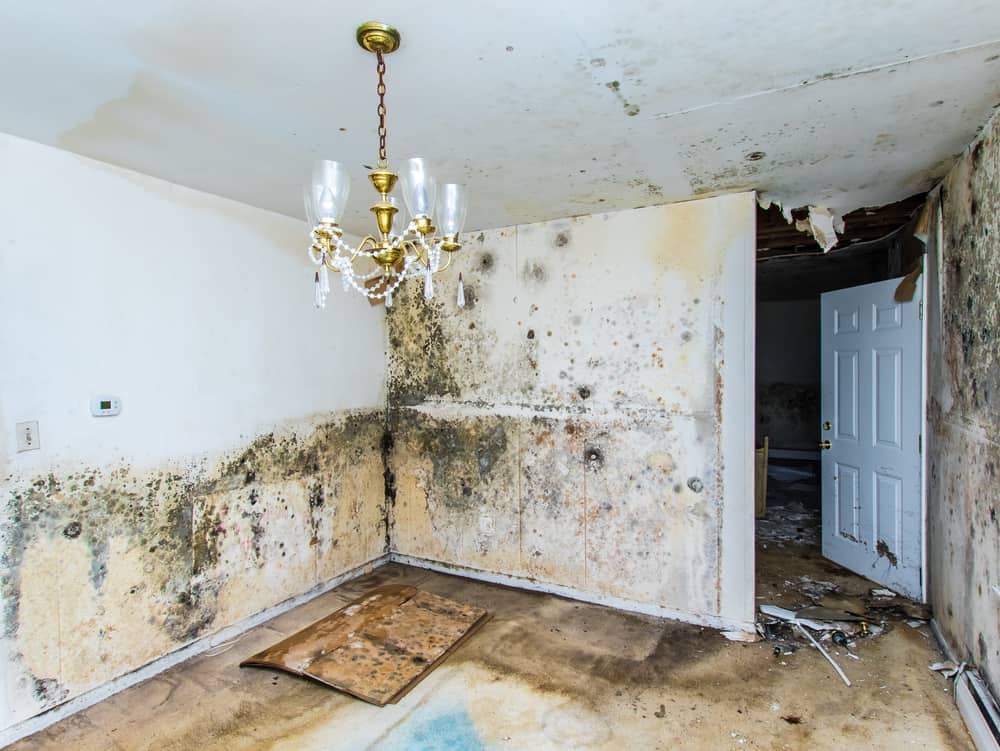
Ready to get started?
Indoor Air Quality Testing for Mold Bellerose Terrace NY
Mold inspection in Bellerose Terrace isn’t one-size-fits-all, and we don’t treat it that way. The inspection covers the areas where mold most commonly establishes itself in this community’s housing stock: basements with porous stone or brick foundations that wick ground moisture year-round, attics with original or modified rooflines that lack adequate ventilation, wall cavities in older plaster construction, and any space that’s been exposed to water intrusion whether from a storm event, a slow plumbing leak, or the kind of chronic humidity that builds up in a tightly sealed older home during winter.
Indoor air quality testing for mold is built into our process. The internal-versus-external air particle comparison is what separates a real assessment from a surface-level look around. If your home’s indoor spore counts are significantly elevated relative to the air outside, that’s a measurable, documentable finding not an opinion. For families in Bellerose Terrace with school-age children experiencing unexplained respiratory symptoms or persistent allergies, that data point can be the answer they’ve been looking for.
The written report you receive is formatted to meet the documentation standards that insurance companies and real estate attorneys in Nassau County recognize. Whether you’re dealing with a post-flood situation, preparing for a sale, or buying a pre-war Colonial near the Floral Park border, the report gives you something concrete to work with not a verbal summary you have to take on faith.
Does a mold inspection in Bellerose Terrace require a licensed assessor by law?
Yes and this is something a lot of homeowners don’t know until they’re already in the middle of a project. New York State has required all mold assessors and mold remediation contractors to hold a valid NYS Department of Labor license under Article 32 of the New York Labor Law since January 1, 2016. That applies to any professional performing mold work for compensation, including inspections.
Fines for unlicensed mold work can reach $10,000, and any assessment performed without a license carries no legal standing which matters if you’re using the report for an insurance claim or a real estate transaction. Because Bellerose Terrace is an unincorporated hamlet under Town of Hempstead jurisdiction rather than an incorporated village with its own code enforcement, residents here are sometimes less familiar with this requirement than neighbors in Floral Park or the Village of Bellerose. Before you hire anyone, ask to see their NYS DOL license number. We hold full licensing for both mold assessment and remediation.
How much does a professional mold inspection typically cost in Nassau County?
Nationally, mold inspections average around $670, with a range of roughly $300 to $1,050 depending on the size of the home and the scope of the assessment. In Nassau County, pricing tends to fall within that range for a thorough, multi-method inspection that includes air sampling, surface testing, and a certified lab report.
What’s worth understanding is what you’re comparing when you look at price. A low-cost visual walkthrough with no lab analysis gives you an opinion. A full inspection with certified laboratory results gives you documentation the kind that holds up with an insurance adjuster, a real estate attorney, or a Nassau County health review. When the median home value in Bellerose Terrace is over $560,000, paying for a complete inspection is a straightforward decision relative to what’s at stake. If mold is found and remediation is needed, costs typically run between $1,150 and $3,400 for moderate situations and significantly more for severe cases. The inspection is the smallest line item in that picture.
My basement had water in it after a storm. How soon should I get a mold inspection?
As soon as possible and that’s not an exaggeration. Mold can begin growing within 24 to 48 hours of water exposure, depending on the temperature and the materials involved. Drywall, wood framing, and older insulation are particularly fast to colonize. If your basement took on water during a heavy rain event and you dried it out without a professional assessment, there’s a real chance mold has already started in places you can’t see.
Basement flooding is a documented recurring issue in Bellerose Terrace. The combination of dense lot configurations, aging stone and brick foundations with no modern waterproofing membrane, and the drainage demands created by the Cross Island Parkway corridor means that when it rains hard, water finds its way in. A post-flood mold inspection should happen within a week of the event if possible and if it’s been longer than that, the inspection becomes even more important because you’re looking for what’s already established, not just what might be starting. We offer 24/7 emergency dispatch throughout Nassau County.
What's the difference between a mold inspection and mold testing are they the same thing?
They’re related but not identical, and the distinction matters when you’re deciding what you actually need. Mold testing refers specifically to the collection and lab analysis of air or surface samples to identify mold species and measure spore concentrations. Mold inspection is the broader process a physical assessment of the property to locate moisture sources, identify visible or suspected mold growth, and determine where testing should be performed.
A good mold inspection includes testing, but testing alone without a thorough physical inspection can miss the source entirely. You might get a lab result showing elevated spore counts without knowing where the mold is coming from or how far it’s spread. In a home built in the 1920s or 1930s which describes most of Bellerose Terrace the source is often hidden inside wall cavities or in an attic space that hasn’t been properly assessed. Our five-point protocol combines both: a physical inspection using infrared thermal imaging alongside certified air and surface sampling, so the lab results are tied directly to findings from the property itself.
Can mold in my home actually affect my family's health, or is that overstated?
It’s not overstated but it’s also not a reason to panic before you have actual data. Mold exposure can cause or worsen respiratory symptoms, trigger allergic reactions, and aggravate asthma. Research estimates that mold contributes to more than 20% of asthma cases. For children, the elderly, and anyone with a compromised immune system, the effects can be more pronounced.
What matters most is knowing whether your home’s indoor air quality is actually elevated relative to normal outdoor levels. That’s what the internal-versus-external air particle comparison in a professional inspection tells you. If the numbers are within normal range, you have documentation confirming your air is safe. If they’re elevated, you have a starting point for action. For families in Bellerose Terrace a community where most residents chose this neighborhood specifically for the school district and the quality of life it offers having that answer is responsible homeownership.
We're buying a pre-war home in Bellerose Terrace. Should we get a mold inspection before closing?
Yes, and a general home inspector’s report isn’t a substitute for it. Home inspectors are trained to flag visible concerns and note conditions that warrant further evaluation but they’re not licensed mold assessors, and they don’t perform certified air sampling or lab analysis. When a home inspector writes “possible mold noted in attic” or “moisture present in basement,” that’s a prompt to get a real mold inspection, not a conclusion.
In Bellerose Terrace specifically, where 76% of homes were built before 1940, the structural characteristics that drive mold risk are consistent across the housing stock: porous foundations, original plaster walls, attics with ventilation that hasn’t been updated in decades, and plumbing systems that are at or past their expected service life. A pre-purchase mold inspection gives you a certified lab-backed report before you sign. If mold is found, you have documentation to negotiate with. If the home is clean, you have confirmation that what you’re buying is what it appears to be. With home values in this area regularly exceeding $560,000, that’s due diligence.
Useful Links
Other Services we provide in Bellerose Terrace