
Mold Inspection in Lido Beach, NY
When the Ocean Gets In, the Mold Stays Behind
Hear from Our Customers

Mold Detection Services in Lido Beach, NY
A mold problem caught early costs a few hundred dollars. One that gets ignored or missed by a visual-only inspection can turn into a $10,000 to $20,000 remediation project. In Lido Beach, where homes routinely face saltwater intrusion, elevated coastal humidity, and a water table that sits unusually high for Nassau County’s South Shore, that risk isn’t abstract. It’s the reality of owning property on a barrier island.
What changes after a thorough mold inspection is simple: you stop guessing. You know whether the musty smell in your crawl space is a minor moisture issue or an active mold colony. You know whether the wall cavity behind your repaired drywall the one that got wet during Sandy and was patched over in 2013 is clean or not. That clarity has real dollar value, especially when you’re protecting a home worth $800,000, $1.5 million, or more.
For Lido Beach residents navigating a real estate transaction, an insurance claim, or a dispute with a condo association at the Towne House or Lido Towers, a written laboratory report isn’t just useful it’s often the document that decides the outcome. You get the documentation, the mold species identification, the spore counts, and specific recommendations. Not a verbal opinion. Not a contractor’s guess. A certified report you can actually use.
Licensed Mold Inspection Company in Lido Beach, NY
First Response Restoration and Cleaning Inc. has been serving Nassau and Suffolk Counties for over 31 years. That’s not a marketing number it means we were here before Sandy, responded during Sandy, and have been inspecting and remediating the aftermath ever since. We’ve seen what barrier island flooding does to homes on the Long Beach Barrier Island. We know where moisture hides in a 1960s split-level, what saltwater intrusion looks like inside a wall cavity, and how mold behaves differently in a coastal home like those throughout Lido Beach versus an inland one.
Every technician on our team holds IICRC certification not just the owner. We’re fully licensed by the New York State Department of Labor as both a mold assessor and remediator under Article 32, and we carry full licensing, bonding, and insurance. When you call for mold inspection in Lido Beach, NY, you get a certified professional dispatched to your home, not a subcontractor who’s never been to this side of the Meadowbrook Parkway.
Residential Mold Inspection Process in Lido Beach, NY
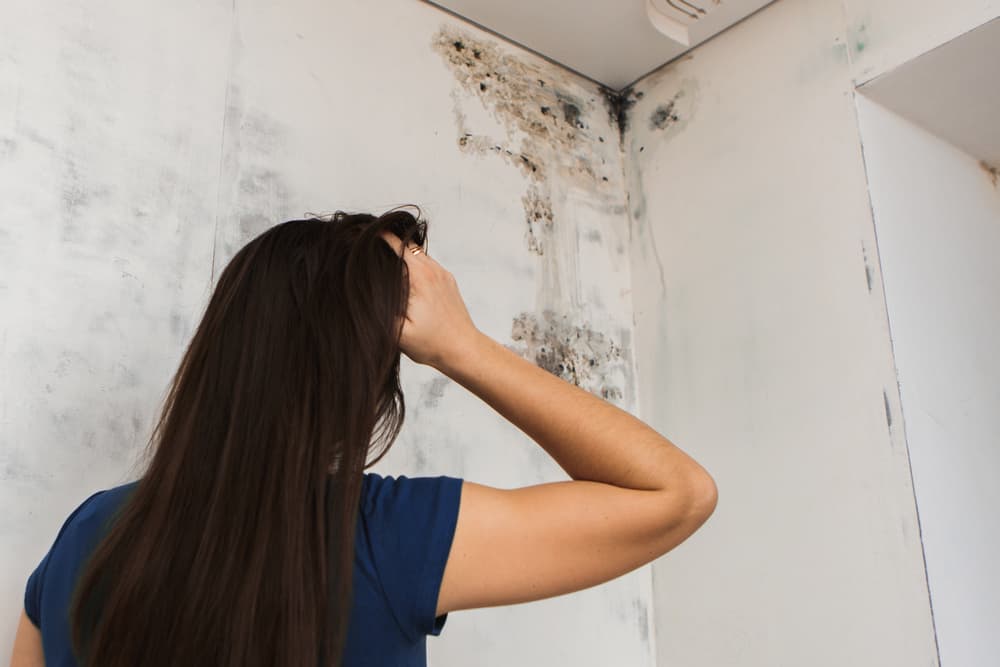
The inspection starts with a full walkthrough of your property attic, crawl space, basement-level areas, and any rooms with known or suspected water history. In Lido Beach, that often means paying close attention to the ocean-facing side of the home, the foundation perimeter where the water table runs high, and any areas that were repaired or rebuilt after storm flooding. These are the locations where hidden mold is most likely to be living behind finished surfaces.
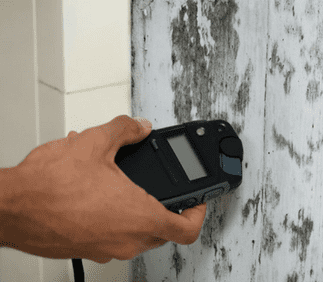
From there, we collect air samples from inside your home and compare them against an outdoor baseline. Surface swab samples are taken from any areas showing visible growth or discoloration. We record moisture readings throughout the property using professional-grade meters, and we use infrared technology to scan walls, ceilings, and floors for temperature differentials that indicate hidden moisture the kind that doesn’t show up until you open a wall. All samples go to a certified third-party laboratory for analysis.
When the lab results come back, you receive a written report that includes mold species identification, spore concentration levels, a comparison of indoor versus outdoor air quality, photographs of mold sources, and specific remediation recommendations. Because New York State requires mold assessors to hold a valid NYS DOL license under Article 32, that report carries legal standing something that matters when you’re dealing with an insurance adjuster, a real estate attorney, or a condo association board.
Ready to get started?
Mold Assessment Services in Lido Beach, NY
Every mold inspection we perform in Lido Beach, NY covers the full five-point protocol: air testing, surface swab sampling, water intrusion inspection, moisture level measurement, and infrared technology scanning for hidden mold. You also get the internal-versus-external air particle comparison, photographic documentation of all mold sources, and a written laboratory-backed report with specific remediation recommendations. This isn’t a checklist inspection it’s the level of assessment that a high-value coastal property actually requires.
For Lido Beach specifically, we account for the conditions that make this community different from an inland Nassau County suburb. Salt air accelerates the breakdown of window seals, flashing, and roofing materials creating moisture entry points that wouldn’t exist in a home ten miles inland. Many Lido Beach homes are slab-on-grade or have crawl spaces rather than full basements, which changes how below-grade moisture intrusion is assessed. Older homes in the original Lido Colony and the Towne House condo complex a 224-unit building now over 60 years old carry a different risk profile than newer construction in the Lido Dunes area, and we adjust our inspection approach accordingly.
Black mold testing in Lido Beach, NY is included when surface sampling indicates the need for species-level identification. Toxic mold testing, indoor air quality testing for mold, and attic mold inspection are all part of the same comprehensive assessment there’s no upsell required to get the full picture. We operate 24/7 and dispatch immediately, so if you’re working against a real estate closing deadline or dealing with a post-storm situation, you’re not waiting weeks for a scheduled appointment.
Is mold common in Lido Beach, NY homes, and why?
Yes and the geography is the main reason. Lido Beach sits on a narrow barrier island between the Atlantic Ocean and Reynolds Channel, which means homes here are surrounded by water on three sides. Ambient humidity runs higher than almost anywhere else in Nassau County, and when indoor humidity climbs above 60%, mold can begin growing within 24 to 48 hours. That threshold gets crossed routinely in Lido Beach during summer months, nor’easter season, and anytime a storm pushes moisture into a home’s envelope.
The housing stock adds another layer of risk. Many Lido Beach homes were built in the 1930s through 1960s, before modern vapor barriers and ventilation standards existed. Older attics are often under-ventilated. Crawl spaces in slab-on-grade homes can trap ground moisture year-round. And the elevated water table on Nassau County’s South Shore means that even without a major storm event, below-grade moisture intrusion is a persistent reality for a large portion of the Lido Beach community.
Could my Lido Beach home still have mold from Hurricane Sandy?
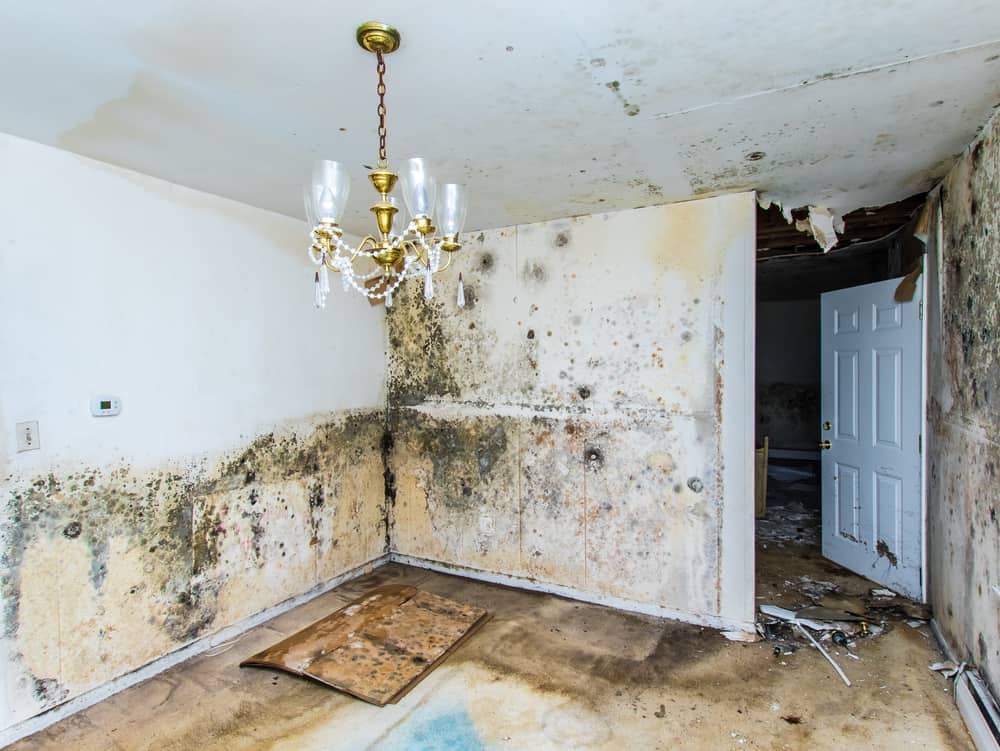
It’s a legitimate concern, and more common than most people expect. Hurricane Sandy flooded the Long Beach Barrier Island in October 2012, and while most major structural repairs were completed in the years that followed, mold doesn’t always reveal itself immediately. It can grow behind repaired drywall, inside wall cavities that were never fully dried before reconstruction, under flooring that was replaced without treating the substrate, and inside HVAC systems that were contaminated during the surge.
Saltwater flooding is particularly aggressive in this regard. Salt residue left in building materials retains moisture long after the visible water recedes, creating a persistent environment where mold can colonize slowly and silently. If your Lido Beach home was flooded in 2012 or if you purchased a property here after Sandy and aren’t certain what remediation was done an infrared-assisted inspection is the only reliable way to know what’s actually inside your walls. A visual walkthrough won’t find it. Lab-confirmed air and surface sampling will.
How much does a mold inspection in Lido Beach, NY typically cost?
Most professional mold inspections in the Lido Beach area fall somewhere between $300 and $700 for a standard residential property, depending on the size of the home and the scope of the assessment. Larger properties, multi-unit condos like the Towne House at Lido Beach, or homes with known water damage history that require more extensive sampling may run higher. The national average sits around $670, and that benchmark holds reasonably well for Nassau County.
What’s worth keeping in mind is the cost comparison. A mold inspection at $400 to $600 is a small number relative to the average home value in Lido Beach, which sits above $867,000 community-wide and well above $1 million in the Lido Dunes area. If that inspection identifies a moderate mold problem early, you’re looking at a $1,000 to $3,500 remediation. If it goes undetected and spreads, remediation costs can reach $15,000 to $20,000 or more. The inspection isn’t the expense skipping it is.
Do I need a licensed mold inspector in New York, or can anyone do it?
New York State requires all mold assessors and remediators to hold a valid license issued by the NYS Department of Labor under Article 32 of the NY Labor Law. This requirement has been in effect since January 1, 2016, and fines for unlicensed mold work can reach $10,000. That means if someone performs a mold assessment or remediation on your Lido Beach home without a valid Article 32 license, the work carries no legal standing and any report they produce won’t hold up with an insurance company, a real estate attorney, or a condo association.
This matters more than most homeowners realize. In a community like Lido Beach, where mold inspection reports are frequently used in real estate transactions, insurance claims, and condo association disputes, the licensing status of the inspector is the difference between a document that works and one that doesn’t. Before you book anyone, ask for their NYS DOL license number and verify it. First Response is fully licensed in both mold assessment and mold remediation you can verify that before the appointment.
What's the difference between mold testing and a mold inspection?
A mold inspection is a physical assessment of your property a trained technician examines the structure, uses moisture meters to identify elevated readings, employs infrared technology to detect hidden moisture behind walls and under floors, and visually documents any areas of concern. It tells you where the problem is and how extensive it appears to be. Mold testing refers specifically to the collection and laboratory analysis of air samples and surface swabs, which identifies the species of mold present and measures spore concentration levels in the air you’re breathing.
In practice, a thorough mold inspection in Lido Beach, NY includes both. The physical inspection locates the problem; the lab testing confirms what it is and how serious it is. For a home on a barrier island where multiple mold species can be present simultaneously some more health-relevant than others knowing the species matters. Black mold testing in Lido Beach, NY, for example, requires surface sampling and lab analysis to confirm whether Stachybotrys chartarum is actually present, since it cannot be identified by appearance alone. The written lab report you receive at the end covers all of it.
My Lido Beach condo has a mold smell is that my problem or the association's?
That question comes up often in Lido Beach’s condo communities, and the honest answer is: it depends on where the mold is originating. In shared-wall buildings like the Towne House at Lido Beach or Lido Towers, mold can start in one unit and migrate through shared wall cavities, HVAC systems, or building envelope failures that are technically the association’s responsibility to maintain. Without a professional inspection and a lab-backed report, there’s no way to determine the source and without that documentation, neither party has a clear basis for action.
What a certified mold inspection does in this situation is establish the facts. It identifies where the mold is, what species it is, what the likely moisture source is, and whether the origin point falls within your unit or within shared building systems. That report becomes the document your attorney or property manager uses to determine responsibility and next steps. Condo associations in Nassau County regularly require this level of documentation before they’ll authorize any remediation work so getting the inspection done properly from the start saves time, money, and a significant amount of back-and-forth.
Useful Links
Other Services we provide in Lido Beach