
Hear from Our Customers
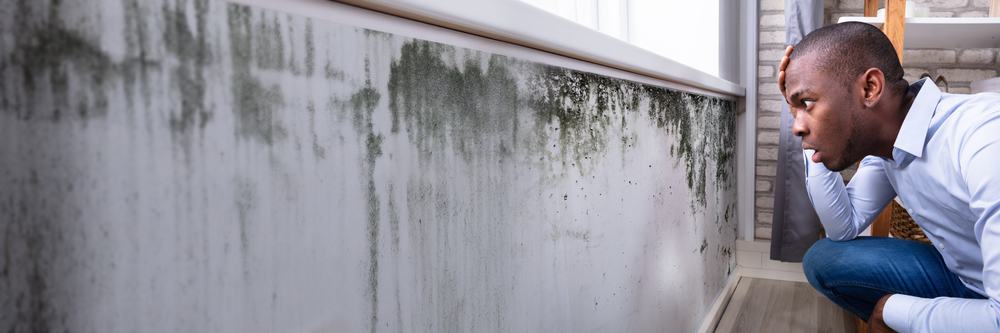
Most Lindenhurst homeowners who call us aren’t panicking. They’re just tired of the musty smell in the basement that comes back every spring, or the nagging feeling that the remediation done after Sandy wasn’t quite finished. That uncertainty is its own kind of stress — and it’s exactly what a proper mold inspection is designed to eliminate.
When you know what’s actually in your home, you can make real decisions. Not guesses. If there’s mold behind the drywall in a canal-adjacent ranch that’s been holding groundwater pressure for decades, you need that documented — not discovered by a buyer’s inspector the week before closing. Homes in Lindenhurst are selling in the $600,000 range. Mold found late in a transaction doesn’t just delay things. It can drop your price or kill the deal entirely.
There’s also the health piece. Mold doesn’t always announce itself visibly. If someone in your home has had persistent sinus issues, worsening allergies, or respiratory irritation that nobody can quite explain, the indoor air quality in a mid-century ranch with aging insulation and a basement that’s seen flooding is worth looking at seriously. A lab-verified inspection gives you a clear answer — and if the answer is clean, that’s worth knowing too.
We’ve been operating on Long Island for over three decades, based out of West Babylon — which puts us directly next door to Lindenhurst within the same Town of Babylon. We’re not a franchise. We’re not a call center routing jobs to whoever’s available. We’re a locally owned operation that has worked in homes on both sides of Montauk Highway, in the canal district, and throughout North Lindenhurst for years.
Richard Peterson has led our company since the beginning. Every technician we send carries IICRC certification — not just the senior staff, everyone. We hold NY State licenses for both mold assessment and mold remediation, as required by law since 2016. And we carry full insurance, so you’re protected throughout the entire process.
When you call our Suffolk County line, you’re reaching a team that already understands what the housing stock in Lindenhurst looks like, what post-Sandy remediation gaps tend to leave behind, and what the combination of Great South Bay humidity and aging construction does to a home over time. That context matters.
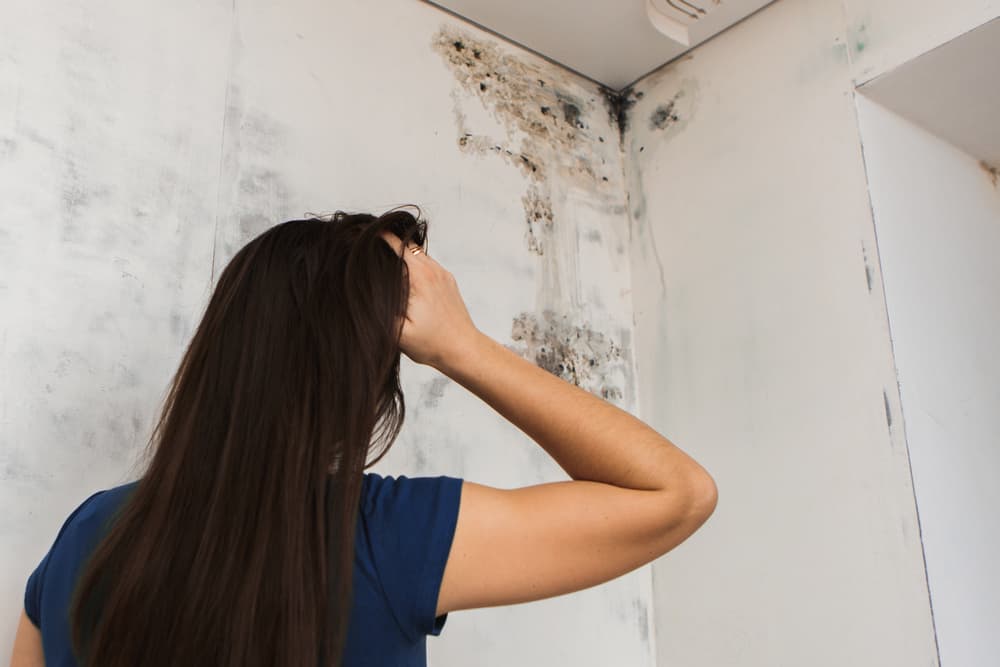
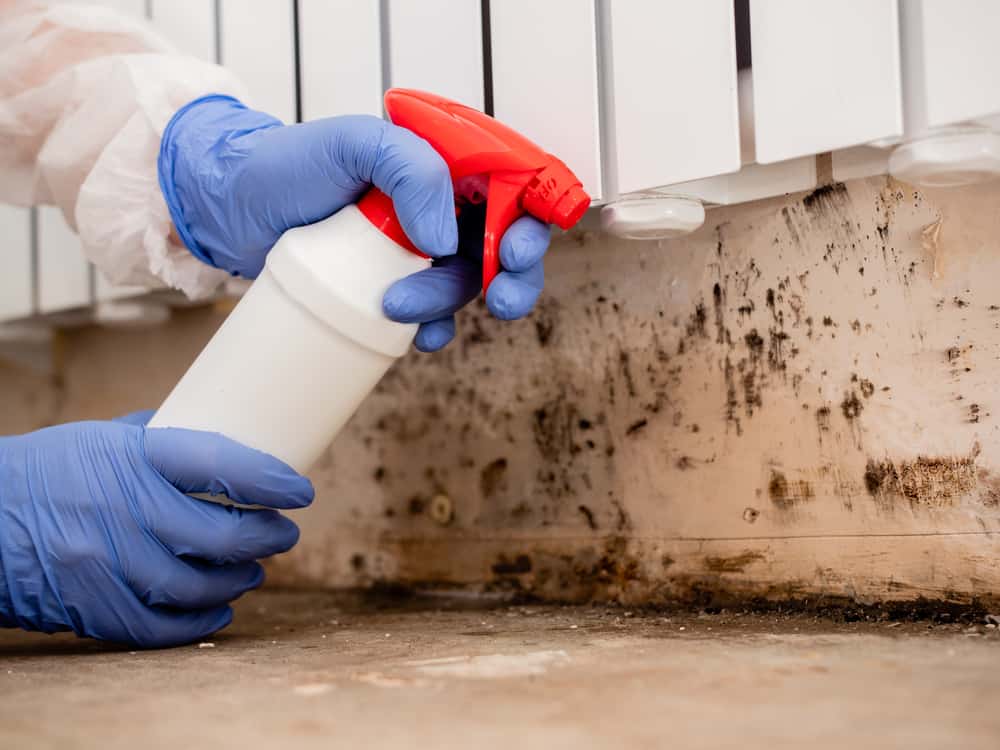
We start with a full walkthrough of your home — interior and exterior — looking at every area where water intrusion is likely or has historically occurred. In Lindenhurst, that means paying close attention to basements, crawl spaces, wall bases near the canal-facing side of the property, attic insulation, and anywhere post-Sandy repairs were made. We’re looking at what’s visible, but we’re also using infrared thermal imaging to detect moisture and mold activity behind walls and under flooring that looks perfectly normal on the surface.
From there, we collect air samples and surface swab samples from affected and unaffected areas. The comparison matters — indoor spore levels are measured against outdoor baseline counts to give you an accurate picture of what’s actually elevated inside your home. Every sample goes to a certified, accredited laboratory. You get real data, not a technician’s opinion.
The final step is a written report in plain language. It tells you what was found, where it is, what’s causing it, and what needs to happen next. If remediation is needed, we can handle that too — and if structural repairs are involved, we do those in-house as well. New York State requires separate licensing for mold assessment and remediation, and we hold both. You don’t need to coordinate multiple contractors. One call covers the whole process from inspection through reconstruction.
Ready to get started?
Our inspection process has five documented components: air sampling for airborne spore counts, surface swab sampling, water intrusion source identification, moisture level measurement with calibrated meters, and full photographic documentation of every mold source found. On top of that, every inspection includes the infrared thermal scan, an internal-versus-external mold particle comparison, a complete damage assessment, and a written summary of lab findings with specific remediation recommendations.
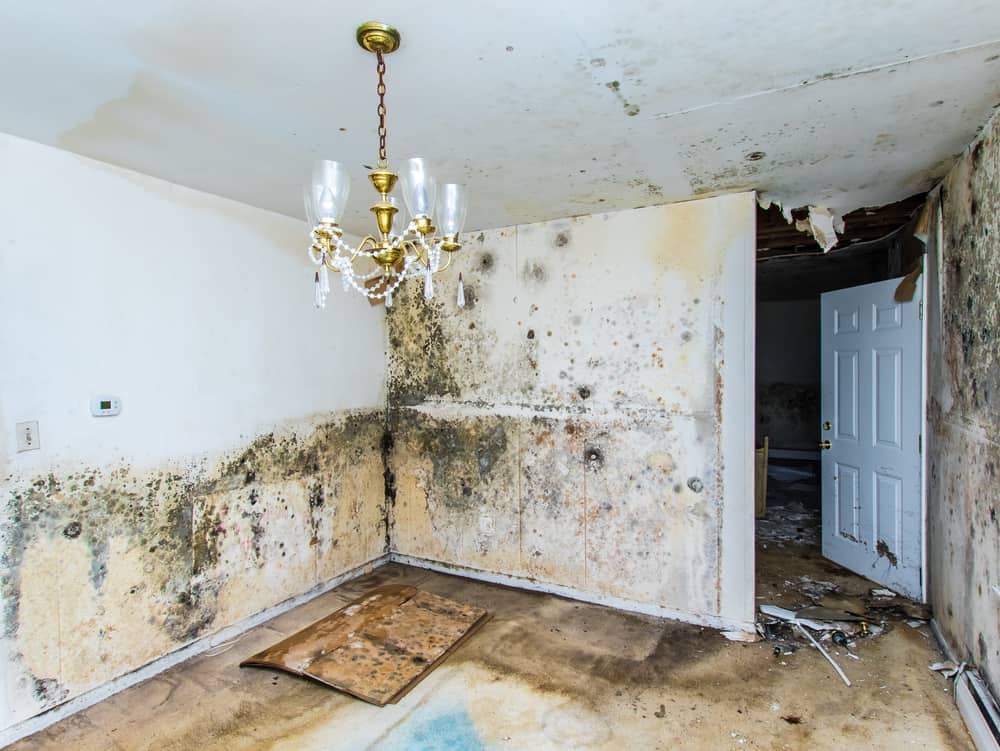
For Lindenhurst homes — especially those south of Montauk Highway where Sandy pushed water up to six feet high — this level of detail isn’t overkill. It’s the only way to know whether the problem is on the surface or whether it’s been living inside the wall cavity since 2012. The mid-century ranch and hi-ranch homes that make up most of this village were built without the vapor barriers and moisture management systems that newer construction uses. That makes them more susceptible, and it makes thorough inspection more important.
We also handle the insurance side of things. If your inspection findings support a claim, we document everything the way insurance companies need to see it and communicate directly with your carrier throughout the process. That’s something most mold inspection companies in the area don’t offer — and for homeowners who’ve already been through the insurance process once after Sandy, having someone take that off your plate makes a real difference.
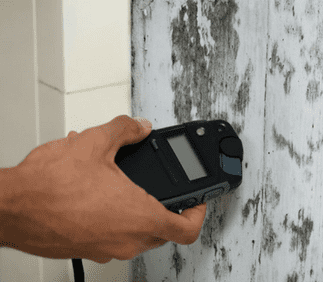
This is one of the most common questions we get from homeowners in the canal district and south of Montauk Highway. The honest answer is that you often can’t tell just by looking. Mold that developed after Sandy flooding — especially in wall cavities, beneath replaced flooring, or inside insulation that absorbed water before it was dried out — can remain active for years without being visible. The more telling signs are persistent musty odors in the basement or lower level, recurring moisture staining on walls even after repairs, or unexplained respiratory symptoms in the household that don’t have another clear cause.
The only way to know for certain is a professional mold inspection with air sampling and lab analysis. A visual walkthrough alone won’t find mold that’s behind drywall or under a subfloor. Our infrared thermal imaging is specifically useful in post-Sandy scenarios because it detects residual moisture and temperature differentials that indicate active mold growth even when the surface looks fine. If your Lindenhurst home was repaired after Sandy but you’ve never had a formal inspection with lab results, that’s the gap worth closing.
For a standard residential mold inspection in Lindenhurst, you’re generally looking at a range of $300 to $700. More complex inspections — larger homes, canal-adjacent properties with multiple potential intrusion points, or situations where extensive infrared scanning and additional sampling locations are needed — can run higher. The scope of the property and the number of samples collected are the main cost drivers.
What’s worth keeping in mind is the comparison. If mold is present and goes undetected, remediation costs typically run anywhere from $1,150 on the low end to $20,000 or more for severe cases involving structural materials. And if mold is discovered by a buyer’s inspector during a real estate transaction rather than by you beforehand, the impact on your sale price or the deal itself can far exceed what the inspection would have cost. In a market where Lindenhurst homes are selling in the $600,000 range, a few hundred dollars for documented certainty is a straightforward investment.
Yes, and this is something every homeowner in Lindenhurst should verify before hiring anyone. New York State law has required mold assessors and mold remediators to hold separate, state-issued licenses from the NY Department of Labor since January 1, 2016. These are two distinct licenses — a company licensed to inspect is not automatically licensed to remediate, and vice versa. You can verify any contractor’s license status directly through the NY DOL’s online search tool before you sign anything.
We hold both licenses — mold assessment and mold remediation — and both are current and verifiable. This matters practically, not just legally. When a licensed assessor writes the inspection report and a licensed remediator does the work, there’s a documented chain of accountability that protects you if questions come up later — with insurance, with a buyer, or with a contractor dispute. In a community where post-Sandy remediation was done by a wide range of contractors at varying quality levels, having that documentation in order is worth more than most homeowners realize until they need it.
Mold can begin colonizing within 24 to 48 hours of water intrusion under the right conditions — and the South Shore of Long Island provides those conditions reliably. The combination of coastal humidity from Great South Bay, warm interior temperatures, and the organic materials in older construction — plaster walls, wood framing, paper-faced insulation — gives mold exactly what it needs to get established fast. In Lindenhurst’s mid-century housing stock, where basement walls are often concrete block without interior waterproofing membranes, water that gets in during a storm or a high-water-table event doesn’t just dry out on its own.
This is why timing matters after any water event. The longer the moisture sits, the deeper the mold penetrates into porous materials, and the more extensive the remediation required. If your basement took on water — whether from a recent storm, a sump pump failure, or chronic groundwater seepage through the foundation — getting an inspection scheduled within days rather than weeks significantly affects both the scope and the cost of what comes next. Emergency response is available 24/7 for exactly this reason.
They’re related but not identical, and the distinction matters when you’re evaluating what you’re actually getting from a company. Mold testing typically refers to the sampling process — collecting air or surface samples and sending them to a lab for analysis. Mold inspection is the broader process: a physical assessment of the property to identify mold growth, moisture sources, water intrusion pathways, and conditions that support mold development. Testing is one component of a complete inspection.
A company that only offers testing without a thorough physical inspection can give you lab data without the context to understand what’s causing it or where it’s coming from. That’s not particularly useful on its own. What you need — especially in a Lindenhurst home with a complex moisture history — is both: a systematic physical inspection using tools like infrared thermal imaging to locate the problem, combined with lab-verified sampling to confirm what’s there and at what concentrations. The written report that comes out of that process is what gives you something actionable and documentable, whether you’re making a remediation decision, filing an insurance claim, or preparing for a real estate transaction.
Absolutely, and it’s increasingly standard in this market for good reason. Lindenhurst’s real estate market is active, and properties here — particularly those in the canal district or south of Montauk Highway — carry a documented flood and mold history that any informed buyer is going to ask about. If you’re selling, a clean mold inspection report done before listing gives you something concrete to hand to buyers and their agents. It removes a major objection before it becomes a negotiating point or a deal-breaker at the inspection contingency stage.
If you’re buying, a pre-purchase mold inspection is one of the most practical things you can do before closing on a Lindenhurst property — especially if the home was built before 1980, sits near the canals, or was on the market after Sandy. A general home inspector is not a licensed mold assessor and won’t conduct air sampling or use thermal imaging. The mold inspection is a separate, specialized process, and the lab-verified report it produces is a different category of documentation than what a standard home inspection provides. For a home in the $600,000 range, knowing what you’re actually buying is worth the cost of the inspection many times over.
Useful Links
Other Services we provide in Lindenhurst