
Mold Inspection in New Suffolk, NY
When Your Waterfront Home Has Been Closed Up, This Is What's Growing Inside
Hear from Our Customers
Residential Mold Inspection New Suffolk, NY
Most mold problems in New Suffolk don’t start with a visible stain. They start with a home that’s been sealed up since October, sitting through a North Fork winter with no active dehumidification, no ventilation, and no one checking the crawl space. By the time you’re back in the spring, what started as elevated humidity has had months to settle into wall framing, attic insulation, and subfloors.
That’s the reality of owning a waterfront property on Peconic Bay. The salt air accelerates material degradation. The water table stays high year-round from the surrounding farmland and open bay. Homes built in the 1800s which describes a good portion of New Suffolk’s housing stock weren’t designed with vapor barriers or sealed foundations. Moisture doesn’t just sit on the surface. It moves through the structure.
A professional mold inspection here isn’t about checking a box. It’s about knowing what’s actually happening inside a home that spends a significant part of the year unoccupied, in one of the most humidity-exposed communities on Long Island. The findings either give you peace of mind or give you a clear path forward either way, you leave with real information instead of a guess.
Professional Mold Inspector New Suffolk, NY
We’ve been operating on Long Island since before New York State even required mold assessors to hold a license. That law went into effect in January 2016. We were already three decades into the work. Our owner, Richard Peterson, holds both a NY State Mold Assessor license and a NY State Mold Remediator license separate credentials, both legally required, both verifiable through the NY Department of Labor. Every technician on our team carries IICRC certification. Not just the owner. Everyone.
We serve the full breadth of Suffolk County, including communities out on the North Fork like New Suffolk, Cutchogue, Peconic, and Southold. We understand what it means to inspect a 19th-century waterfront property on Peconic Bay the kind of home that breathes differently, absorbs moisture differently, and hides problems in places a standard inspection wouldn’t think to look. You get a dedicated Suffolk County line at (631) 587-5300, not a general routing number.
Mold Detection Services New Suffolk, NY
The inspection starts with airborne spore sampling air drawn from inside your home is tested and compared against an external baseline sample taken outside. This comparison tells you whether the mold particle count inside your home is elevated beyond what’s naturally present in the surrounding environment. For a property sitting on Peconic Bay, surrounded by farmland and open water, that baseline matters. The North Fork carries ambient spores from agricultural activity and coastal vegetation that wouldn’t exist in a suburban setting. The internal-versus-external comparison accounts for that.
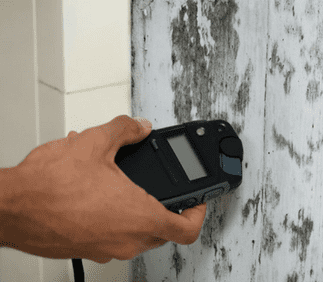
From there, any visible mold growth gets swab-sampled and sent to a certified lab for species identification. Moisture levels are measured throughout the home using calibrated meters not guesswork, actual readings. Water intrusion sources are traced: roof penetrations, foundation seams, window seals degraded by salt air, HVAC drain lines. Everything that could be feeding a moisture problem gets looked at.
The part that matters most for older homes in New Suffolk is the infrared thermal imaging. This technology detects temperature differentials behind walls, under floors, and inside ceilings that indicate hidden moisture the kind that’s been sitting in original plaster or century-old wood framing long before it becomes visible. When the inspection wraps up, you receive a comprehensive written report: lab results, mold species identified, moisture readings, source locations, and specific recommended next steps. Clear language. No raw data to decode on your own.
Ready to get started?
Mold Assessment Services New Suffolk, NY
The mold inspection includes five documented steps: air testing, surface swab sampling, water intrusion inspection, moisture level measurement, and photographic documentation of every mold source identified. Lab analysis is conducted by a certified, accredited laboratory not an in-house evaluation. The written report you receive at the end is usable for insurance claims, real estate transactions, and legal documentation. If you’re buying a historic home near the New Suffolk waterfront or closing on a property along Cutchogue Harbor, that documentation matters.
What separates our inspection from a standard walkthrough is the full-service capability behind it. If the inspection finds mold that has compromised structural materials drywall, insulation, framing we can handle the remediation and the reconstruction under the same roof. No coordinating separate contractors. No managing three different companies while you’re back in the city during the week. One licensed team takes it from initial findings through complete resolution, and we manage the insurance communication throughout.
For seasonal homeowners especially, that end-to-end model isn’t just convenient it’s the only realistic way to handle a mold problem in a property you’re not present to oversee full-time. New York State law requires separate licensing for mold assessment and mold remediation. We hold both. Any company that doesn’t is operating outside the law, and any report they produce may not hold up for insurance or real estate purposes.
Can mold really grow in my New Suffolk home while it's closed for the season?
Yes and it’s one of the most common scenarios we see on the North Fork. Mold doesn’t need a burst pipe or a visible leak to get started. Sustained indoor humidity above 60% is enough, and a sealed home in New Suffolk with no active climate control or dehumidification will reach that threshold quickly especially through the fall and winter months when the home is absorbing moisture from the surrounding bay air and the high water table beneath it.
The 24 to 48-hour window that’s often cited for mold growth assumes ideal conditions the right temperature, the right humidity, an organic material to colonize. In a waterfront home on Peconic Bay with original wood framing and no vapor barrier, those conditions can exist for months without anyone noticing. By spring, what started in October can be well-established inside your walls. A pre-season inspection before you reopen the home is one of the most practical steps a seasonal homeowner in New Suffolk can take.
How much does a professional mold inspection typically cost in New Suffolk, NY?
The national average for a professional mold inspection runs between $303 and $1,043, with most homeowners landing somewhere around $670 depending on the size and complexity of the property. For older homes in New Suffolk particularly those with crawl spaces, original plaster walls, or unfinished basement areas the inspection tends to be more involved because there are more potential moisture pathways to evaluate. That can affect the time required and, by extension, the cost.
What’s worth keeping in mind is what an undetected mold problem actually costs. Documented research shows that mold issues can reduce a home’s value by 20 to 37 percent and cause up to half of potential buyers to walk away from a deal even after remediation is disclosed. In a community where waterfront properties command premium prices, the cost of a thorough inspection is a fraction of what a missed problem could cost you at the negotiating table or in remediation scope if it’s caught late.
What's the difference between mold testing and a mold inspection and which one do I need?
Mold testing typically refers to the sampling process collecting air samples or surface swabs and sending them to a lab for analysis. A mold inspection is the broader assessment: a trained professional physically evaluates the property for visible mold, moisture sources, water intrusion points, and conditions that support mold growth and testing is conducted as part of that process.
For most homeowners in New Suffolk, a full inspection is the right call. Testing alone, without the physical evaluation, can tell you that elevated spore counts exist but won’t tell you where the moisture is coming from, which materials have been affected, or how far the growth has spread. In a home with aging construction, salt-air exposure, and periods of seasonal vacancy, understanding the source is just as important as confirming the presence. The inspection gives you both findings and context so you know what you’re actually dealing with and what needs to happen next.
Does New York State require mold inspectors to be licensed, and how do I verify it?
Yes. New York State law, effective January 1, 2016, requires all mold assessors and mold remediators operating in the state to hold separate licenses issued by the NY Department of Labor. These licenses are renewed every two years and are publicly searchable through the NY DOL’s online licensing database. Before hiring any company to inspect or remediate mold in your home, you can look them up by name or license number and confirm their credentials are current.
This matters more than it might seem. A mold inspection conducted by an unlicensed assessor may not be legally defensible for insurance claims, real estate disclosures, or any situation where documented findings need to hold up to scrutiny. In a community like New Suffolk, where many homeowners are managing high-value properties and making significant real estate decisions, the licensing status of the company you hire is not a minor detail it’s the baseline standard the law requires, and it’s one of the first things a buyer’s attorney or insurance adjuster will ask about.
My New Suffolk home is over 100 years old does that change what the inspection looks for?
It does, and it’s one of the reasons infrared thermal imaging is particularly valuable in older homes. Homes built in the 19th and early 20th centuries which describes a significant portion of New Suffolk’s housing stock, given the hamlet was planned in 1836 were constructed without modern vapor barriers, sealed foundation systems, or the insulation assemblies that help newer homes manage moisture. The building materials themselves are different: original wood framing, plaster walls, and older flooring systems are more porous and more susceptible to moisture retention than modern materials.
In a home like this, moisture doesn’t just appear on a surface. It migrates through the structure along pathways that aren’t visible to the naked eye. Infrared thermal imaging detects temperature differentials behind walls and under floors that indicate moisture presence catching problems that a visual inspection alone would completely miss. The inspection process is adapted to account for the specific vulnerabilities of older construction, not just the standard checklist designed for a 1990s split-level.
What happens if the mold inspection finds something serious in my home?
The inspection report will document exactly what was found mold species, spore concentrations, affected materials, moisture source locations, and the recommended remediation scope. From there, you have a clear picture of what you’re dealing with and what needs to happen. If the findings are significant, the next step is remediation, which under New York State law must be performed by a licensed mold remediator a separate credential from the mold assessor license.
We hold both licenses, which means you don’t need to find a second company to handle what the inspection uncovers. The same team that conducted the assessment can manage the remediation and, if structural materials have been compromised, the reconstruction as well. For homeowners in New Suffolk who aren’t on-site full-time, that matters significantly. You’re not coordinating multiple contractors from a distance or waiting on a handoff between companies. The process moves forward under one licensed, insured team, and we handle the insurance communication so you’re not navigating that on your own either.
Useful Links
Other Services we provide in New Suffolk