
Mold Inspection in North Bellmore, NY
When Your 1950s Home Is Hiding More Than You Think
Hear from Our Customers
Home Mold Testing in North Bellmore, NY
Over 83% of homes in North Bellmore were built between 1940 and 1969. That’s not a trivia stat it’s a mold risk profile. Original plumbing, minimal vapor barriers, and ventilation systems that were never designed for modern airtight construction create exactly the kind of slow, hidden moisture conditions that mold needs to take hold. By the time you notice a smell or a stain, it’s usually been growing for months.
Nassau County’s South Shore, where North Bellmore sits, has a notoriously high water table. When the ground saturates after a nor’easter or a heavy summer storm, water doesn’t just pool in the yard it seeps through foundation walls and slab floors into basements that were never waterproofed to modern standards. That’s a recurring condition in North Bellmore, not a rare one. A professional mold inspection tells you exactly what’s happening, where it’s happening, and what it’s going to take to fix it.
What you get on the other side of that inspection is clarity. You stop guessing, stop wondering if the smell is seasonal, and stop putting off a problem that compounds the longer it sits. Whether you’re protecting a home you’ve lived in for twenty years or buying one of the $700,000-plus properties in this market, a documented, lab-backed inspection is the only way to know what you’re actually dealing with.
Certified Mold Inspector in North Bellmore, NY
We’ve been working in Nassau County homes since the mid-1990s. That means our team has inspected and remediated mold in split-levels, colonials, and ranch homes across the South Shore homes nearly identical to the ones lining the neighborhoods of North Bellmore for over three decades. That kind of experience isn’t something you can manufacture with a new website and a certification course.
Every technician on our staff holds IICRC certification not just the owner, but the person who actually shows up at your door. We’re fully licensed under New York State’s Article 32 mold assessor requirements, bonded, and insured. Our Nassau County line is 516-698-1776, and we operate 24 hours a day, seven days a week, because water damage and mold don’t follow business hours.
When you call First Response Restoration and Cleaning Inc., you’re not reaching a national call center. You’re reaching a Long Island company that knows what post-war North Bellmore housing looks like from the inside out.
Mold Assessment Services in North Bellmore, NY
The inspection starts before any samples are collected. A certified technician walks the property looking for the conditions that create mold signs of water intrusion, moisture-prone areas, ventilation gaps, and anything that points to where a problem might be hiding. In North Bellmore’s older housing stock, that often means checking original plumbing connections, crawl space conditions, and attic spaces where inadequate ridge ventilation has been trapping heat and moisture for decades.
From there, air samples and surface swabs are collected and sent to a certified third-party laboratory. Infrared thermal imaging is used to scan wall cavities and ceiling assemblies for moisture that hasn’t broken the surface yet the kind of hidden problem that a visual inspection alone will never catch. The internal air results are compared against an external baseline sample, so you can see whether your indoor air quality is actually elevated relative to normal outdoor levels, not just whether spores are present.
When the lab results come back, you receive a written report. Not a verbal summary a documented report with species identification, spore concentration data, moisture level readings, photographs of every identified source, and specific remediation recommendations. That report is what your insurance company, your real estate attorney, or your doctor will ask for. New York State requires mold assessors to hold a current NYS DOL license under Article 32, and every step of this process is performed in full compliance with that requirement.
Ready to get started?
Residential Mold Inspection in North Bellmore, NY
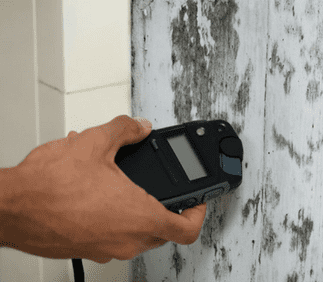
Our mold inspection isn’t a walk-through with a flashlight. The five-point protocol covers air testing, surface swab sampling, water intrusion assessment, calibrated moisture meter readings, and infrared scanning for hidden mold behind walls and inside ceiling cavities. Every sample goes to a certified lab. Every finding gets documented. The written report includes a direct comparison of indoor versus outdoor air particle levels a baseline that actually proves whether your home’s air is elevated, not just whether mold spores exist somewhere on the property.
For North Bellmore homeowners dealing with a water damage event a pipe failure in aging plumbing, a basement that flooded after a storm pushed the water table up, or a roof leak that went unnoticed through a wet winter the inspection report is also what your insurance company needs before authorizing remediation coverage. We understand what Nassau County insurers require and produce documentation that holds up in the claims process.
If the inspection identifies a problem, we handle remediation and complete property restoration under the same roof. You don’t have to coordinate between an inspector, a separate remediation crew, and a contractor. Attic mold inspection, basement mold inspection, crawl space assessment, HVAC evaluation it’s all part of one documented process, handled by a company that has been doing this work on Long Island for 31 years.
How much does a mold inspection cost in North Bellmore, NY?
Mold inspections typically range from $303 to $1,043 nationally, with most professional inspections landing around $600 to $700 depending on the size of the home and what’s included. In North Bellmore, where the average home was built in the late 1950s and often has a basement, crawl space, and attic all worth examining, a thorough inspection that covers all three areas will generally sit in the mid-to-upper range of that window.
What matters more than the price is what you’re getting for it. An inspection that includes air testing, surface sampling, infrared scanning, certified lab analysis, and a written report is a fundamentally different product than a visual walk-through with a verbal summary. The written report with lab results is what your insurance company, your real estate attorney, or your lender will actually ask to see and it’s the only documentation that holds up if the situation escalates. Think of the inspection cost as the thing that tells you whether you’re looking at a $1,500 problem or a $15,000 one before it gets worse.
What are the signs I actually need a professional mold inspection?
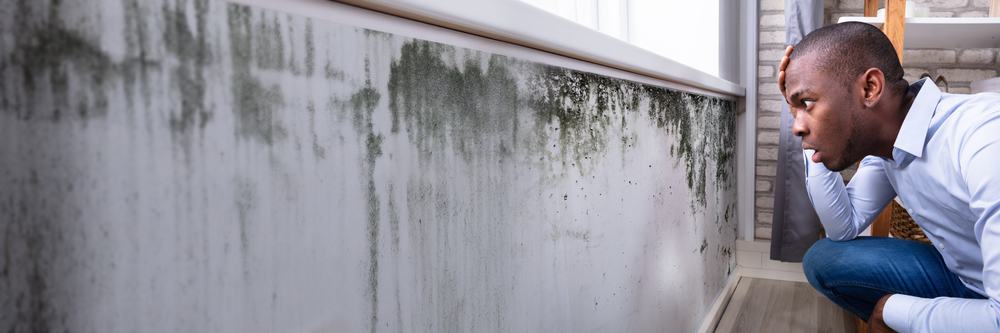
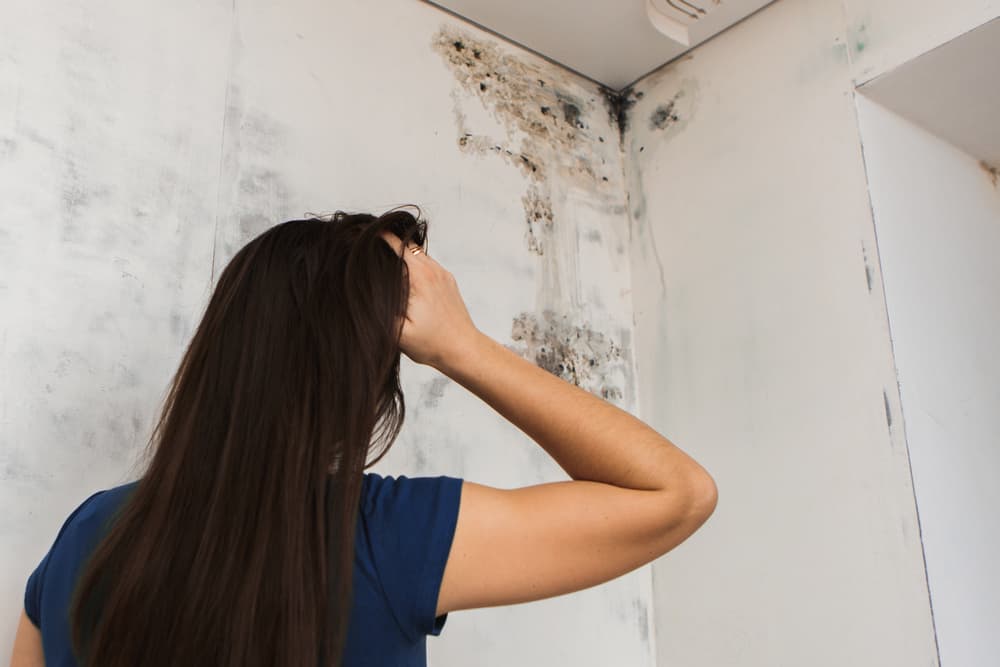
The most obvious sign is visible mold dark spots on drywall, discoloration around window frames, or growth along basement walls. But in North Bellmore’s older housing stock, mold often doesn’t show itself on the surface. A persistent musty smell in a basement or finished lower level, allergy symptoms that get worse indoors, or a history of water intrusion even something that dried out and seemed fine are all reasons to get a professional assessment.
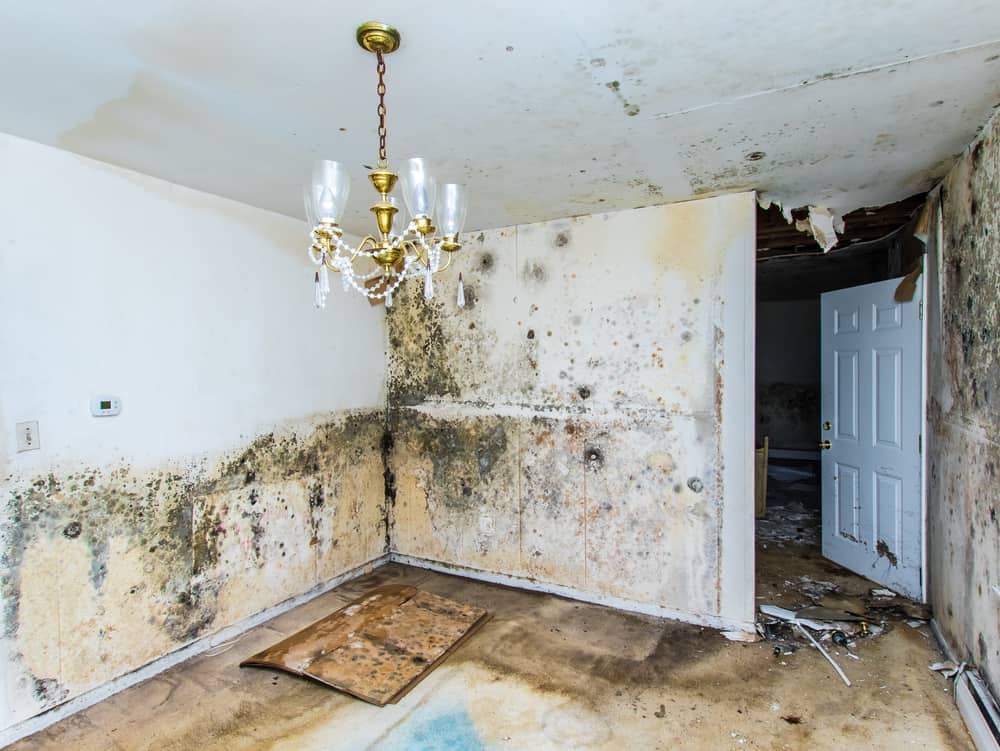
Homes built in the 1940s through 1960s frequently have mold growing inside wall cavities, behind finished basement ceilings, and in attic insulation without any visible surface evidence. If your home has had a plumbing leak, a flooding event, or any period of elevated basement moisture, professional mold inspection with infrared imaging is the only reliable way to confirm whether the problem resolved on its own or kept developing out of sight. Waiting until you can see it usually means the remediation scope and cost is significantly larger than it would have been earlier.
Does homeowners insurance cover mold inspection and remediation in New York?
It depends on the cause. In New York, homeowners insurance typically covers mold remediation when the mold is a direct result of a covered water damage event a burst pipe, an appliance failure, or storm-related water intrusion that was sudden and accidental. If the mold developed from long-term moisture accumulation or deferred maintenance, most policies will not cover it.
For North Bellmore homeowners, the distinction matters because the area’s high water table and aging housing stock create two very different types of moisture problems. A basement that flooded during a storm event may be a covered loss. A basement that has been slowly seeping groundwater through a cracked foundation slab for years typically is not. The inspection report is what establishes the cause of loss which is exactly why the documentation needs to be thorough and specific. A vague written summary won’t satisfy a Nassau County insurance adjuster. A certified lab report with moisture mapping and a documented cause of loss will.
Do I need a mold inspection before buying a home in North Bellmore, NY?
If you’re purchasing a home in North Bellmore, a pre-purchase mold inspection is worth taking seriously. The community’s housing stock is predominantly mid-century construction homes that are now 55 to 85 years old and standard home inspectors are not mold assessors. They may flag moisture concerns or visible staining, but they’re not equipped to collect air samples, run lab analysis, or produce the kind of documented report that tells you what you’re actually buying.
In a market where single-family homes regularly sell for $700,000 to $900,000 or more, discovering a significant mold problem after closing is a costly surprise that a pre-purchase inspection could have prevented. If a home inspector flags anything related to moisture, water intrusion, or musty conditions, that’s a clear signal to bring in a certified mold assessor before the transaction closes. The inspection report can also be used in negotiations a documented remediation need is a legitimate basis for a price adjustment or seller credit.
What is the difference between mold inspection and mold testing in North Bellmore?
These terms get used interchangeably, but they describe different things. Mold testing refers specifically to the laboratory analysis of collected samples air samples, surface swabs, or bulk material samples that identifies what mold species are present and at what concentration. Mold inspection is the broader process: the physical assessment of the property, the identification of moisture sources and conditions that support mold growth, the collection of samples, and the interpretation of lab results in the context of what was found during the walkthrough.
A mold test without an inspection gives you data without context. Knowing that a certain spore count was detected in your basement air doesn’t tell you where it’s coming from, how far it’s spread, or what’s driving it. A full inspection ties the lab results to specific conditions in the home a moisture-saturated wall assembly, an attic with inadequate ventilation, a crawl space without a vapor barrier and produces a remediation recommendation that actually addresses the source. In North Bellmore’s older homes, where the source is often hidden inside the building envelope, that context is what makes the report actionable.
Is mold in North Bellmore homes really that common, or is this something most people don't deal with?
It’s genuinely common and the local conditions explain why. North Bellmore sits on Nassau County’s South Shore, where the water table is high enough that basement moisture intrusion is a documented, recurring issue. Multiple restoration companies that serve the area specifically reference the high water table as a primary driver of basement flooding and mold calls in this community. The housing stock was built before modern waterproofing and vapor barrier standards existed, and you have a neighborhood where the underlying conditions for mold are built into the homes themselves.
That doesn’t mean every home has an active mold problem it means the conditions that create mold are present in a large portion of North Bellmore properties, and that a problem can develop without much warning. Seasonal flooding from nor’easters, summer humidity that gets trapped in poorly ventilated attic spaces, and aging plumbing that develops slow leaks inside wall cavities are all real, recurring scenarios in this area. The homeowners who catch it early before a musty smell becomes a visible colony typically deal with far less disruption and far lower remediation costs than those who wait.
Useful Links
Other Services we provide in North Bellmore