
Mold Inspection in Plainview, NY
Plainview's Older Homes Hide Mold Better Than You Think
Hear from Our Customers
Residential Mold Inspection Plainview, NY
When you get a professional mold inspection done right, you stop reacting to symptoms and start dealing with facts. No more wondering if that musty smell in your basement is something serious. No more second-guessing the air quality in your kid’s bedroom. You get a certified lab report that tells you exactly what’s there, what species it is, how concentrated it is, and what needs to happen next.
Plainview’s housing stock is predominantly post-war construction most homes in this community were built in the 1950s and 1960s, which means the infrastructure is 55 to 75 years old. At that age, original plumbing, roofing materials, and attic insulation systems weren’t built to last this long. Water finds its way in through aging flashing, deteriorating window seals, and roof systems that have been patched multiple times over the decades. That moisture doesn’t just dry out it feeds mold colonies that can grow for months before anyone notices.
Add in Long Island’s humid summers where indoor humidity regularly pushes past 60%, the threshold where mold can begin growing within 24 to 48 hours and you have conditions that make mold inspection less of an optional precaution and more of a basic responsibility of homeownership here. If you’re buying a home in Plainview, dealing with a recent water event, or just chasing a smell you can’t explain, a thorough inspection gives you the clarity to move forward with confidence.
Licensed Mold Assessment Company Plainview, NY
We’ve been working in Nassau and Suffolk County for over three decades. That’s not a marketing number it’s the difference between a company that’s read about post-war Long Island construction and one that’s been inside hundreds of homes built during that era, in communities like Plainview, Old Bethpage, Syosset, and Woodbury.
Every technician on our team is individually IICRC-certified not just the owner, not just the person who answers your call. The person who walks through your door holds the same credentials as the person who sold you the service. We’re also NYS Department of Labor licensed mold assessors and remediators, which is a state requirement under Article 32 of the NY Labor Law and something not every company operating in Nassau County can honestly confirm.
We’re fully licensed, bonded, and insured. When you’re protecting a home valued at $750,000 or more in a community like Plainview, that’s not a small thing. It’s the baseline you deserve.
Professional Mold Detection Services Plainview, NY
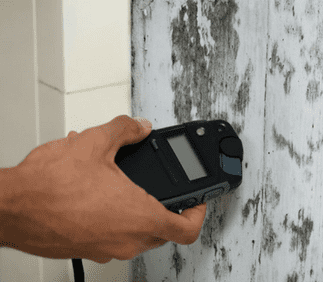
When you reach out, we schedule a time that works for you and send a certified technician to your Plainview home. From the moment they arrive, the inspection follows a structured five-point protocol not a visual walkthrough, not a quick look around. Every inspection includes air testing, surface swab sampling, a full water intrusion assessment, moisture level readings using calibrated meters, and infrared thermal imaging to detect hidden mold behind walls, under flooring, and inside ceiling or attic cavities.
That infrared component matters more in Plainview than people realize. In homes built in the 1950s and 1960s, finished basements and modified attic spaces often conceal moisture damage that has been building for years. Infrared lets us see what’s happening inside the structure without opening a single wall. Every sample we collect goes to a certified third-party laboratory not assessed on-site, not judged by eye. The lab identifies the mold species, quantifies spore concentrations, and compares indoor air quality against outdoor baseline levels.
You receive a written report with everything: lab results, species identification, spore counts, the internal-versus-external air comparison, photographic documentation, and specific recommended next steps. If your situation involves an insurance claim which is common after the nor’easters and basement flooding events that hit Nassau County homes every year this report is built to satisfy what adjusters actually need. You’ll know what you’re dealing with before you make a single decision about what comes next.
Ready to get started?
Mold Testing and Assessment Services Plainview, NY
A lot of companies call a visual walkthrough a mold inspection. That’s not what we do. In Plainview’s older homes where aging infrastructure, modified HVAC systems, and full basements create multiple hidden moisture pathways a visual check alone misses most of what matters. Our inspection covers the full structure: attic, basement, crawl spaces, HVAC components, wall cavities, and anywhere else moisture is likely to accumulate in this era of construction.
We handle residential mold inspection for single-family homes throughout Plainview, including the areas along Manetto Hill Road, the neighborhoods near Route 135, and the older residential pockets closer to the Old Bethpage border. We also conduct commercial mold inspection for office buildings and light industrial spaces along the South Service Road corridor a part of Plainview where HVAC failures and roof membrane issues are a consistent source of indoor air quality problems.
Whether you’re a homebuyer doing due diligence on a property, a longtime Plainview homeowner dealing with a post-storm situation, or a property manager handling a tenant concern, the inspection process and the reporting standard are the same. Lab-certified results, a written report you can act on, and technicians who are qualified under New York State law to give you findings that hold up with insurance companies, real estate attorneys, and health professionals alike.
How much does a mold inspection cost for a Plainview, NY home?
The cost of a mold inspection in Plainview typically falls in the range of $300 to $700 for most single-family homes, with the national average sitting around $670. The final cost depends on the size of the home, the number of areas being tested, and whether additional sampling is needed based on what the initial assessment turns up.
For Plainview specifically, it’s worth factoring in the age and configuration of the home. Older post-war construction which makes up most of the housing stock here often requires more thorough testing because moisture can be present in multiple areas simultaneously: the basement, the attic, and inside wall cavities that have been modified over the decades. A home that appears to have one problem area sometimes has two or three once infrared imaging is used. The inspection cost is a fraction of what remediation runs if a problem is caught late mold remediation in Nassau County can range from $1,150 to $3,400 for typical cases, and well beyond that for extensive structural involvement.
What are the signs I actually need a mold inspection, not just a cleaning?
The clearest signs are a persistent musty odor that doesn’t go away after cleaning, visible discoloration on walls or ceilings that returns after being painted over, or a history of water intrusion a basement that took on water during a storm, a roof leak that was repaired but not fully dried out, or a plumbing failure that was addressed quickly but left moisture behind.
Health symptoms are another signal people often overlook. If someone in your household especially a child or elderly family member has developed unexplained respiratory issues, recurring congestion, or worsening allergy symptoms that don’t track with pollen season, mold in the living environment is worth ruling out. In Plainview’s older homes, where HVAC systems have been modified and extended multiple times over the years, mold growing inside ductwork can distribute spores throughout the entire house every time the system runs. That’s not something a surface cleaning resolves. An inspection with air testing and infrared scanning is the only way to know for certain what you’re dealing with.
Do I need a mold inspection before buying a house in Plainview, NY?
If you’re buying a home in Plainview, a mold inspection before closing is one of the most straightforward investments you can make. With median home prices in this community ranging from $750,000 to close to $1,000,000, discovering a mold problem after the transaction is a costly and stressful situation that a pre-purchase inspection almost always prevents.
Plainview’s housing stock skews heavily toward post-war construction, which means the homes trading hands right now are 55 to 75 years old. At that age, original roofing, plumbing, and basement waterproofing systems have had decades of opportunity to fail in ways that aren’t always visible during a standard home inspection. A general home inspector looks for structural and mechanical issues mold testing requires specialized equipment, air sampling, and lab analysis that goes beyond what a typical inspection covers. Getting both done before you close gives you a complete picture of what you’re buying, and if mold is found, it gives you documented leverage to negotiate or require remediation before the sale proceeds.
Is mold inspection and mold testing the same thing?
They’re related but not identical. A mold inspection is the broader process a certified technician physically assesses your home for signs of mold growth, moisture intrusion, and conditions that support mold development. Mold testing refers specifically to the collection and laboratory analysis of samples, which happens as part of a thorough inspection.
Some companies offer testing without a full inspection they collect a few air samples and send them to a lab. That can tell you whether mold spores are present in the air, but it won’t tell you where the mold is, what’s causing it, or how far it’s spread. In Plainview homes, where moisture can be hiding behind finished basement walls or inside attic insulation that’s been in place for 40 years, air samples alone don’t give you the full picture. A complete mold inspection one that includes infrared thermal imaging, moisture readings, water intrusion assessment, and lab-certified air and surface sampling gives you findings you can actually act on. That’s the difference between knowing mold exists somewhere and knowing exactly where it is, what species it is, and what remediation it requires.
How long does a mold inspection take, and do I need to leave my home?
For most Plainview homes, a thorough mold inspection takes between two and four hours, depending on the size of the property and the number of areas being assessed. You don’t need to vacate the home during the inspection a certified technician will move through the space methodically, and most homeowners find it useful to be present so they can point out areas of concern and ask questions in real time.
After the inspection, your samples go to a certified third-party laboratory for analysis. Lab turnaround typically takes two to five business days, after which you receive a written report with all findings, including mold species identification, spore concentration levels, and specific recommended next steps. If your situation is urgent a recent basement flood, a post-storm water intrusion, or a situation where an insurance claim is already open let us know when you call. We dispatch certified technicians 24 hours a day, seven days a week, and we can prioritize scheduling for time-sensitive situations. Long Island’s weather doesn’t follow a schedule, and neither do we.
Does homeowners insurance cover mold inspection or remediation in New York?
It depends on the cause of the mold. In New York, most standard homeowners insurance policies will cover mold inspection and remediation if the mold resulted directly from a covered water damage event a burst pipe, an appliance failure, or storm-driven water intrusion that was sudden and accidental. What policies typically don’t cover is mold that developed from long-term moisture issues, deferred maintenance, or gradual water seepage that the homeowner was aware of and didn’t address.
For Plainview homeowners, this distinction matters because the community sees real storm exposure nor’easters, heavy summer thunderstorms, and the occasional hurricane remnant that drives water through aging rooflines and around basement window wells. When those events happen and water gets inside, having a certified, lab-backed inspection report is what makes the difference between a claim that gets approved and one that gets disputed. Insurance adjusters need documentation not a verbal assessment, not a quick visual check. Our inspection reports are specifically structured to provide the species identification, spore concentration data, and remediation recommendations that adjusters require. If you’re in the middle of a claim or about to open one, that documentation is the most important thing you can have in your corner.
Useful Links
Other Services we provide in Plainview