
Mold Inspection in Saddle Rock Estates, NY
Your Bay-Side Home Deserves More Than a Flashlight and a Guess

Hear from Our Customers

Residential Mold Inspection in Nassau County
Most mold problems in Saddle Rock Estates aren’t visible. They’re behind the plaster, under the original flooring, or sitting in an attic that hasn’t been properly ventilated since the home was built which, for most homes here, was before 1960. By the time you smell something or see a stain, the problem has usually been growing for months.
Living on the Great Neck Peninsula means your home deals with something inland Nassau County homes simply don’t: persistent bay humidity from Little Neck Bay, salt air that slowly breaks down caulking and window seals, and coastal storm exposure that drives moisture into places you’d never think to look. A professional mold inspection gives you a clear, lab-backed picture of what’s actually going on not a guess, not a visual scan, but documented results you can act on.
That matters even more if you’re buying, selling, or refinancing. Since June 2023, New York State requires sellers to disclose known indoor mold on the Property Condition Disclosure Statement. In a community where homes regularly transact above $1 million, an undisclosed mold condition discovered after closing creates real legal and financial exposure. Getting an inspection before you list or before you close is the kind of due diligence that protects an asset this size.
Certified Mold Inspector Serving Saddle Rock Estates
First Response Restoration and Cleaning Inc. has been serving Nassau and Suffolk County homeowners for over three decades. I hold a personal New York State Department of Labor license for both mold inspection and mold remediation and every technician on our team is IICRC-certified. That’s not a company-level credential handed down on paper. It means the person walking through your home actually earned it.
We’ve worked in homes all across the Great Neck Peninsula, including the pre-war and mid-century construction that defines Saddle Rock Estates. We understand what aging plumbing looks like in these walls, how original ventilation systems fail, and where moisture hides in homes that were built long before modern building science existed. We’ve seen how Little Neck Bay’s salt air degrades window frames and exterior caulking, creating moisture entry points that inland Nassau County contractors often miss.
You get a licensed assessment, certified lab results, and a written report the kind of documentation that holds up with insurance carriers, real estate attorneys, and your physician if it comes to that.
How Mold Testing Works in Saddle Rock Estates
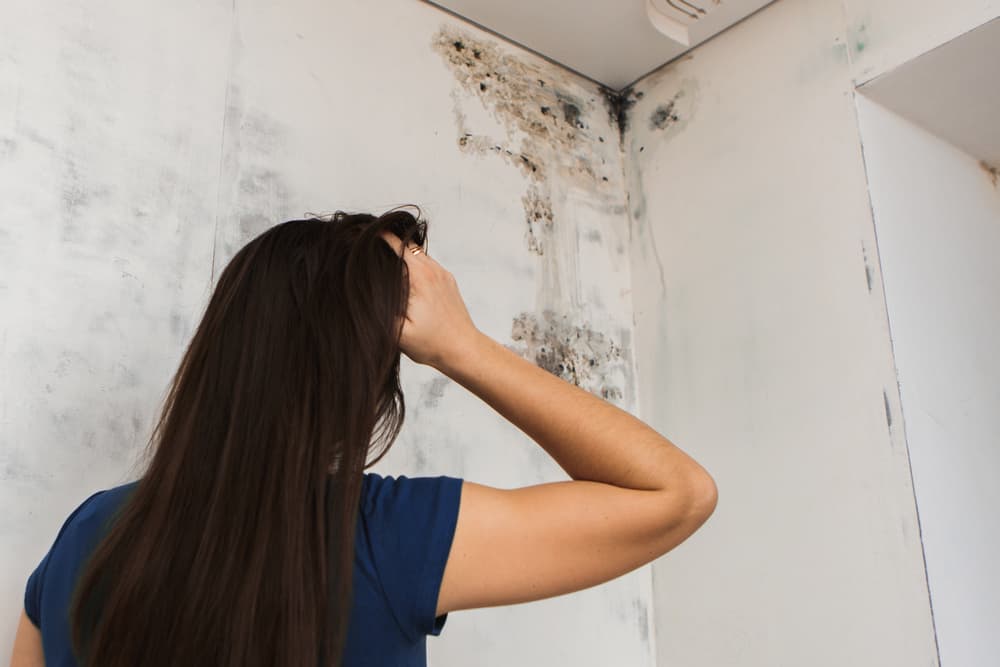
When one of our technicians arrives at your Saddle Rock Estates home, the inspection starts with a full walk-through not just the obvious spots, but the areas where moisture tends to accumulate in pre-1960s construction: attics with original insulation, basement walls near the foundation, crawlspaces, and anywhere near plumbing that hasn’t been updated. We’re looking at the whole picture, not just what’s easy to see.
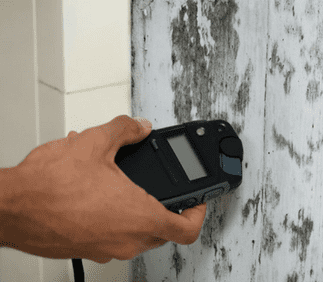
From there, we collect air samples and surface swab samples, measure moisture levels throughout the home with calibrated meters, and use infrared thermal imaging to detect temperature differentials that indicate hidden moisture behind walls and ceilings. We also compare indoor and outdoor air particle counts because that comparison is what tells you whether what’s circulating inside your home is actually a problem, or just background environmental noise.
Every sample goes to a certified third-party laboratory. You receive a written report with the actual findings: mold species identified, spore concentration levels, moisture readings, and specific recommendations based on what we found. Under New York State’s Article 32, all mold assessment work must be performed by a licensed assessor and that’s exactly who’s doing your inspection. The process typically takes two to three hours for a standard residential property, and results come back from the lab within a few business days.
Ready to get started?
Mold Assessment Services in Saddle Rock Estates, NY
A mold inspection from us isn’t a quick visual pass and a handshake. Our five-point protocol covers air quality testing, surface swab sampling, water intrusion assessment, moisture level measurement, and infrared imaging for hidden mold detection. You get internal-versus-external air particle comparison, photographs of every identified mold source, and a full written report backed by certified lab analysis the kind of documentation that Nassau County insurance adjusters and real estate attorneys actually accept.
For Saddle Rock Estates homeowners specifically, we design the inspection around the conditions that make these properties unique. Homes on the western edge of the peninsula near Little Neck Bay face a different moisture environment than a home in Plainview or Bethpage. Salt air degrades building materials differently. Bay-side humidity loads are higher and more consistent. And in a home built before modern vapor barriers and HVAC systems existed, those conditions accumulate in ways that require more than a surface-level look.
If remediation is needed after the inspection, we’re licensed to handle that too which means the team developing your remediation plan is the same team that found the problem. No hand-off, no translation loss between contractors, and no risk of a second company “discovering” additional issues we somehow missed. One company, one relationship, from inspection through restoration.
Does mold inspection in Saddle Rock Estates require a licensed assessor under New York law?
Yes and this is one of the most important things to verify before you hire anyone. Under Article 32 of the New York State Labor Law, which took effect January 1, 2016, all mold assessment and mold remediation work in New York must be performed by a contractor holding a valid NYS Department of Labor license. Operating without that license carries fines of up to $10,000, and any work performed by an unlicensed contractor has no legal standing which matters enormously if you’re filing an insurance claim, navigating a real estate transaction, or dealing with a landlord-tenant dispute.
Saddle Rock Estates is an unincorporated hamlet governed by the Town of North Hempstead, so there are no additional local mold-specific licenses required beyond the NYS DOL mandate. But that state license is non-negotiable. We hold a current NYS DOL license for both mold inspection and remediation, and I’m personally licensed not just the business entity. Ask any contractor you consider for their license number and verify it directly through the NYS DOL before work begins.
How much does a professional mold inspection typically cost in Saddle Rock Estates, NY?
For a standard residential mold inspection in Saddle Rock Estates and the Great Neck area, you’re generally looking at somewhere between $300 and $700 depending on the size of the home, the number of samples collected, and whether additional testing like air quality sampling in multiple zones is included. That range covers the inspection itself, sample collection, and certified laboratory analysis with a written report.
It’s worth putting that number in context. The median home value in Saddle Rock Estates is over $1 million. If mold has been growing inside a wall cavity or attic for months undetected, the remediation cost alone can run anywhere from $1,500 to $20,000 or more depending on the extent of the damage. A professional inspection is genuinely one of the lowest-cost, highest-return steps you can take to protect a property of this value especially in a home with pre-1960s construction and coastal exposure that creates consistent moisture risk year-round.
What are the most common signs that a home in Saddle Rock Estates might have a mold problem?
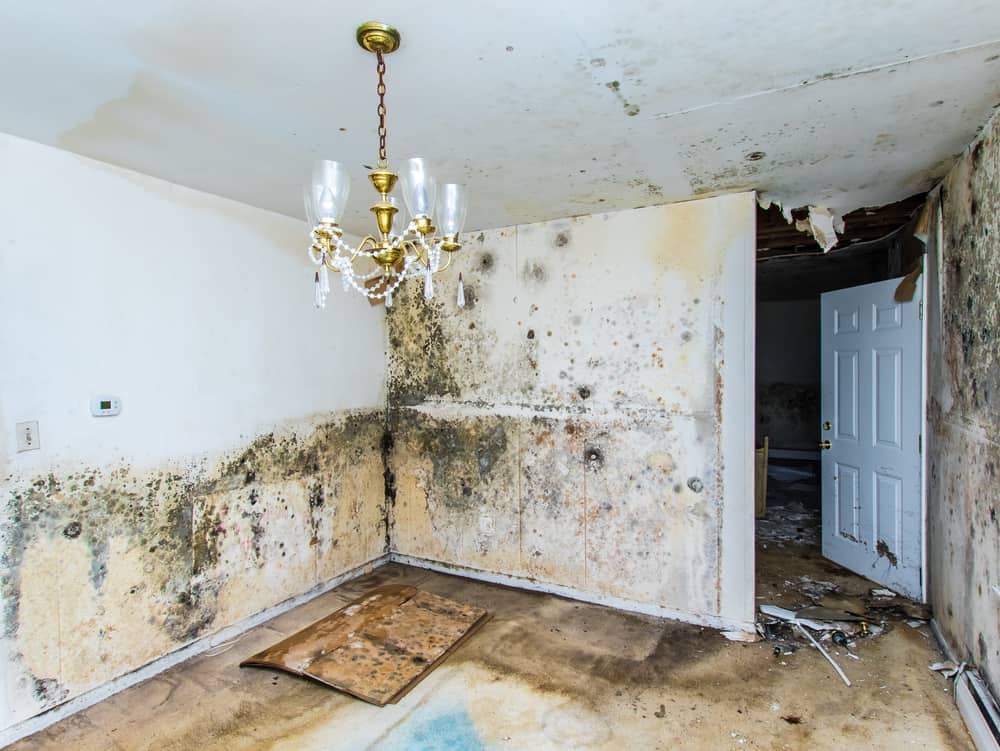
The honest answer is that the most common sign is no sign at all which is exactly why professional mold inspection exists. In older homes like those that define Saddle Rock Estates, mold tends to grow inside wall cavities, beneath original flooring, in attic insulation, and behind plaster completely out of sight. By the time you notice a musty smell, see discoloration on a ceiling, or start experiencing unexplained allergy symptoms indoors, the colony has typically been established for weeks or months.
That said, there are conditions that should prompt you to call sooner rather than later: any recent water intrusion from a roof leak, pipe failure, or storm-driven moisture; visible condensation on windows or walls during humid months; a basement or crawlspace that feels persistently damp; or a home that’s been closed up for an extended period. On the Great Neck Peninsula, homes near Little Neck Bay face elevated ambient humidity and salt air exposure that accelerates the breakdown of seals and building materials creating entry points for moisture that aren’t always obvious until a professional is looking for them with the right equipment.
How does mold inspection differ from mold remediation, and can the same company do both in New York?
Mold inspection also called mold assessment is the process of identifying whether mold is present, where it is, what species it is, and how concentrated the problem is. Mold remediation is the physical removal and containment process that follows if the inspection confirms a problem. Under New York State’s Article 32, these are treated as separate licensed activities, and the law was designed specifically to prevent a single contractor from performing both on the same project the concern being that an inspector who also sells remediation has a financial incentive to find problems.
In practice, full-service restoration companies like ours operate within this framework by maintaining separate licensing for both activities and following the protocol as required. What that means for you as a homeowner is that the assessment is conducted independently and the results drive the remediation scope not the other way around. We’ve built a 31-year reputation in Nassau County on honest assessments. A company that has served this community for three decades has far more to lose from inflated findings than it has to gain from an unnecessary upsell.
Is a mold inspection worth getting before buying a home in Saddle Rock Estates?
Strongly worth it and the case for it has gotten stronger since June 2023, when New York amended its Property Condition Disclosure Statement to require sellers to disclose known indoor mold. That change shifted the legal landscape for real estate transactions across the state, including in high-value markets like Saddle Rock Estates. But “known” is the operative word. A seller can only disclose what they know about. A pre-purchase mold inspection gives you independent, lab-backed documentation of the actual condition not just what the seller is aware of or willing to share.
In a community where homes regularly transact above $1 million and the housing stock dates predominantly to before 1960, the risk of undiscovered mold is real. Older plumbing, original ventilation systems, and decades of coastal humidity exposure create conditions that accumulate quietly over time. A mold inspection before closing costs a few hundred dollars. Discovering a significant remediation need after you’ve signed the papers and after the seller’s disclosure window has closed is a very different conversation.
How long does a mold inspection take, and when will I get the results?
For a standard single-family home in Saddle Rock Estates, the on-site inspection typically takes two to three hours. That covers the full walk-through, air sampling in multiple zones, surface swab collection, moisture readings throughout the home, and infrared imaging to check for hidden moisture behind walls and ceilings. Larger homes or properties with complex layouts including homes with finished basements, multiple attic sections, or extensive crawlspace areas may take longer.
After the on-site work is complete, the collected samples go to a certified third-party laboratory for analysis. Turnaround time is generally two to five business days depending on the lab’s current volume. Once results are back, you receive a written report that includes the lab findings, identified mold species, spore concentration levels, a comparison of indoor versus outdoor air quality, photographs of any identified mold sources, and specific recommendations based on what was found. If you’re working against a real estate closing deadline or an insurance timeline, let us know upfront we’ll do everything on our end to move as quickly as the lab process allows.
Useful Links
Other Services we provide in Saddle Rock Estates