
Mold Inspection in Sagaponack, NY
When Your Estate's Been Closed All Winter, Here's What You Need to Know First

Hear from Our Customers

Mold Detection Services in Sagaponack, NY
Most mold problems in Sagaponack aren’t discovered because something looks wrong. They’re discovered because something smells wrong or because a pre-purchase inspection catches what no one else was looking for. By the time you can see it, it’s already been growing for a while. That’s why a thorough mold inspection matters here more than in almost any other zip code on Long Island.
The Atlantic Ocean isn’t just a view from your back lawn it’s a constant source of salt-laden, moisture-heavy air that works its way into wall cavities, crawl spaces, and HVAC systems year-round. When a Sagaponack property sits unoccupied from October through May with minimal climate control, that ambient humidity has nowhere to go. It condenses. It settles. And if there’s any point of water intrusion a slow roof leak, a plumbing drip, a compromised foundation after a nor’easter you may be looking at months of undetected mold growth by the time you open the front door in June.
The good news is that catching it early changes everything. A documented inspection with lab-verified results gives you a clear picture of what’s actually happening inside your property not a guess, not a visual walkthrough, but a written report backed by accredited laboratory analysis. For a real estate transaction in 11962, that report can be the difference between a clean closing and a costly renegotiation. For an owner returning to Sagaponack for the season, it’s simply peace of mind that your family isn’t walking into a health problem.
Mold Inspection Company in Sagaponack, NY
We’ve been serving Suffolk County homeowners since 1993 long before many of the estates currently lining Daniels Lane and Fairfield Pond Lane in Sagaponack were built. We’re not a franchise with a local phone number. We’re an owner-operated company with over three decades of hands-on experience working through Long Island’s coastal conditions, seasonal vacancy patterns, and the specific building challenges that come with properties on the South Fork.
Every technician on our team carries IICRC certification not just the person who answers the phone or manages the job, but every individual who enters your property. We also hold both the New York State Mold Assessor License and the Mold Remediator License, which have been legally required since January 1, 2016. Both are verifiable through the NY Department of Labor. For Sagaponack homeowners who do their due diligence and most do those credentials are easy to confirm and worth checking before you let anyone through the door.
Professional Mold Inspector in Sagaponack, NY
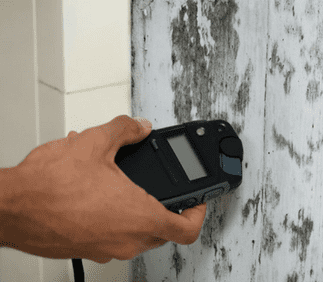
We start with a full walkthrough of your property every structure, not just the main house. On a typical Sagaponack estate, that means the primary residence, the pool house, any guest cottage or carriage house, and the mechanical rooms. Each area is a distinct mold risk zone, and skipping any one of them leaves the picture incomplete. We measure moisture levels throughout, and flag any areas of concern immediately.
From there, we collect air samples and surface swab samples and send them to a certified, accredited laboratory not analyzed in-house, not estimated on-site. The lab results are objective and legally defensible, which matters whether you’re navigating a real estate transaction, an insurance claim, or simply want documentation of your property’s condition. For homes within the Sagaponack Historic District, where original plaster walls and 18th-century wood framing can conceal moisture and mold that no visual inspection would catch, we use infrared thermal imaging to see what’s happening behind the surface.
Once results come back, you receive a written report in plain language not raw data you have to decode. It tells you what was found, where it was found, and what the recommended next steps are. If remediation is needed, we can handle that too, along with any structural reconstruction, so you’re not starting over with a new contractor at the most stressful point in the process.
Ready to get started?
Residential Mold Inspection in Sagaponack, NY
Our mold inspection in Sagaponack, NY covers the full scope of what a property this size actually requires. That includes air quality testing for mold, surface swab sampling, moisture level readings throughout the structure, a water intrusion assessment, and complete photographic documentation of every area inspected. All of it is compiled into a written report with lab-verified results the kind of documentation that holds up in real estate negotiations, insurance claims, and legal proceedings.
For properties along the oceanfront or near Sagaponack Lake, where coastal erosion and storm surge events have introduced water into foundations and lower levels over time, we pay particular attention to basement and crawl space conditions. Attic mold inspection in Sagaponack, NY is also included as a standard component not an add-on because roofline vulnerabilities in older structures are one of the most common entry points for the moisture that eventually becomes a mold problem.
If the inspection reveals contamination that has reached structural materials drywall, insulation, framing we can move directly into licensed remediation and, where needed, full reconstruction. For property owners managing a Sagaponack estate from Manhattan or coordinating through a property management company, having one licensed, insured team handle the entire process from inspection through restoration is a practical advantage that most mold inspection companies in the Hamptons simply can’t offer.
Does a Sagaponack home really need a mold inspection every spring after winter vacancy?
If your property sits unoccupied from fall through spring which describes the majority of homes in Sagaponack then yes, a spring inspection is worth taking seriously. The combination of Atlantic Ocean humidity, minimal climate control during the off-season, and the age of many structures in and around the Sagaponack Historic District creates ideal conditions for mold to develop undetected over the winter months. A frozen pipe that thaws slowly, a minor roof leak after a nor’easter, or condensation building up in a crawl space over several months can all result in active mold growth by the time you return.
The inspection doesn’t need to be an annual ritual if results come back clean and no new moisture events have occurred. But for any property that’s been closed for six or more months, especially one with a basement, crawl space, or pool house, a professional assessment before full occupancy is a reasonable precaution and far less costly than discovering a problem mid-summer when remediation timelines are compressed.
How much does a mold inspection cost in Sagaponack, NY for a large estate?
The cost of a mold inspection depends on the size and scope of your property. For a large Sagaponack estate a main residence of 5,000 to 9,000 square feet plus outbuildings, a pool house, and multiple HVAC systems the cost will reflect the actual scope of work involved. That means more air samples, more surface swabs, more areas to document, and more time on-site. Expecting to pay a flat rate for a multi-structure estate inspection in Sagaponack isn’t realistic, and any company quoting you a low flat fee for a property of this scale is likely cutting corners somewhere.
What’s worth keeping in mind is the context. In a market where median home values exceed $5.75 million and a mold problem left unaddressed can reduce a property’s value by 20% or more, the cost of a thorough inspection is genuinely small relative to what you’re protecting. The written, lab-verified report you receive at the end isn’t just a receipt it’s documentation that has real value in transactions and insurance conversations.
What's the difference between mold testing and a mold inspection in Sagaponack?
Mold testing refers specifically to the collection and laboratory analysis of samples air samples, surface swabs, or both. A mold inspection is the broader process: a physical assessment of the property to identify visible mold, moisture sources, water intrusion points, and conditions that are likely to produce mold growth, combined with the testing component. Testing without inspection gives you data without context. Inspection without testing gives you observations without scientific verification.
In Sagaponack, where properties often include multiple structures, older building materials, and conditions that make hidden mold genuinely common, both components matter. The inspection identifies where to look and what to test. The lab results confirm what’s actually there and at what concentration. The written report ties both together in a format that’s useful to you, your real estate attorney, your insurance carrier, or your physician depending on why you called in the first place.
Can mold hide inside the walls of older homes in the Sagaponack Historic District?
Yes and this is one of the more important things to understand about historic properties along Sagg Main Street and within the broader Sagaponack Historic District. Structures built in the 17th and 18th centuries were not constructed with modern moisture barriers, vapor retarders, or synthetic insulation. Original plaster walls, timber framing, and older foundation systems can absorb and hold moisture in ways that modern construction doesn’t. Mold can establish itself inside wall cavities, behind original plaster, or beneath historic flooring and remain completely invisible to a standard visual inspection.
This is exactly why infrared thermal imaging is part of our inspection process for properties like these. Thermal imaging detects temperature differentials caused by moisture it can identify wet areas and potential mold zones behind surfaces without any destructive opening of walls. For homeowners of historic Sagaponack properties who want a complete picture of what’s happening inside their structure, not just on the surface, this technology closes a gap that a visual walkthrough simply can’t address.
Is black mold testing in Sagaponack, NY different from a standard mold inspection?
Black mold most commonly Stachybotrys chartarum is one specific species among thousands of mold types that can grow inside a building. A standard mold inspection and air quality test will identify what species are present, including Stachybotrys if it’s there, along with their concentration levels. You don’t need a separate “black mold test” the comprehensive inspection covers it as part of the full analysis.
What matters more than the color of the mold is the concentration and the location. Some mold species that aren’t black can still produce mycotoxins and cause health issues at elevated levels. Others are relatively common and found at low levels in most buildings without posing a significant risk. The accredited laboratory analysis that comes with a professional inspection identifies exactly what’s present, at what levels, and how that compares to outdoor baseline readings giving you and your physician or attorney an accurate picture rather than a reaction to a color.
Do I need a mold inspection before buying a property in Sagaponack, NY?
At the price points involved in Sagaponack real estate median sale prices above $5.75 million, with oceanfront compounds reaching into the tens of millions a pre-purchase mold inspection is one of the most straightforward due diligence steps a buyer can take. A general home inspection may note visible moisture or staining, but it won’t tell you what’s growing inside the walls, in the HVAC ductwork, or beneath a pool house floor. Those are the areas where mold problems develop quietly and expensively.
The written, lab-verified report from a professional inspection gives your real estate attorney something concrete to work with if contamination is found. It can support price renegotiation, require remediation as a condition of closing, or simply confirm that the property is clean before you commit. In a market where Hamptons brokers move quickly and closing timelines can be compressed, scheduling the inspection early in the due diligence window rather than as a last-minute add-on gives you the most flexibility to act on whatever the results show.
Useful Links
Other Services we provide in Sagaponack