
Hear from Our Customers
Most South Farmingdale homeowners don’t call a mold inspector because they see mold. They call because something feels off — a smell in the basement after a heavy rain, a kid with unexplained allergies, a water stain that was “fixed” years ago but never really went away. That uncertainty is exactly what a proper inspection resolves.
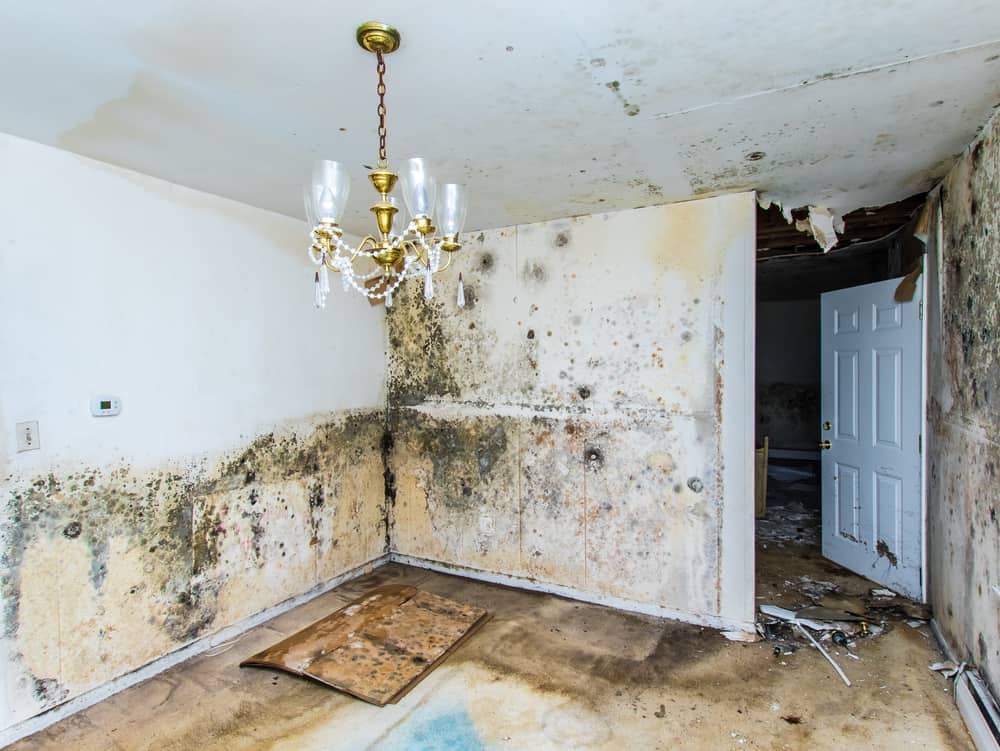
South Farmingdale sits on the South Shore, and the groundwater conditions here are real. Basements in this area are known to seep during heavy storms, and the flat topography doesn’t help drainage. When water gets in — even slowly, even seasonally — it doesn’t just dry out and disappear. It soaks into concrete block walls, settles under flooring, and creates the kind of sustained moisture that mold needs to take hold. By the time you smell it, it’s already been growing.
The homes here compound that risk. Cape Cods, ranches, hi-ranches — most of them built for returning GIs in the postwar boom — are now pushing 60 to 80 years old. Original plumbing, aging insulation, and decades of minor water events add up. A certified mold inspection in South Farmingdale, NY doesn’t just tell you if there’s a problem. It tells you exactly where it is, how bad it is, and what needs to happen next — so you’re not guessing, and you’re not overpaying a contractor to fix something that was never properly diagnosed.
We’ve been serving Nassau and Suffolk County for over three decades. That’s not a tagline — it means our technicians have been inside homes like yours throughout South Farmingdale and the surrounding Farmingdale corridor, from the ranches near Woodward Parkway to the split-levels closer to the Southern State Parkway. We know what post-war Long Island construction looks like from the inside, and we know where it fails.
Every technician on our team holds IICRC certification. Our owner, Richard Peterson, is personally licensed by the New York State Department of Labor as both a mold assessor and mold remediator under Article 32 — the state law that governs all mold work in Nassau County. That license isn’t just a credential. In New York, it’s a legal requirement, and not every company you’ll find online actually has it.
We’re based in West Babylon, which puts us right on the South Shore — close enough to South Farmingdale that we’re not dispatching from across the island. We’re a neighbor-community operation, and that matters when you need someone who genuinely understands the conditions your home is dealing with.
When you call, we move fast. We operate 24 hours a day, seven days a week, and we dispatch a certified technician as soon as you reach us. For South Farmingdale homeowners dealing with a post-storm situation or a pre-closing timeline, that response time matters.
When the technician arrives, the inspection starts with a full visual walkthrough — but that’s just the beginning. We use calibrated moisture meters to measure what you can’t see, and infrared scanning technology to detect hidden moisture behind walls, inside ceiling cavities, and beneath flooring. In a 1950s Cape Cod or a finished hi-ranch basement, that’s where the real story usually is. We also collect air samples and surface swabs, which go directly to a certified laboratory for analysis.
The lab results come back with specific mold species identified, spore concentration levels quantified, and an indoor-versus-outdoor air comparison that establishes whether your home’s air quality is actually elevated above normal environmental baseline. Everything gets compiled into a written report — the kind that holds up with your insurance company, your real estate attorney, or your doctor. Because New York State requires all mold assessors to be licensed under Article 32, that report also carries the legal weight of a credentialed professional assessment, not just an opinion. You’ll know exactly what you’re dealing with before you spend a dollar on remediation.
Ready to get started?
A mold inspection from us isn’t a walkthrough with a flashlight. Our five-point protocol covers visual inspection for visible mold growth, air sampling, surface swab collection, water intrusion assessment, and moisture level measurement — all in a single visit. The infrared technology we use is specifically designed to find mold and moisture in the places that older South Farmingdale homes are most vulnerable: inside wall assemblies, beneath finished basement ceilings, and in attic spaces where decades of inadequate ventilation have created the right conditions for growth.
Every sample goes to a certified lab. The written report you receive at the end includes the lab results, a breakdown of what was found and where, the indoor-versus-outdoor air quality comparison, and a specific set of recommended next steps. That documentation is what insurance companies require for claims, what real estate attorneys use in negotiations, and what physicians reference when a patient’s symptoms point to an environmental cause.
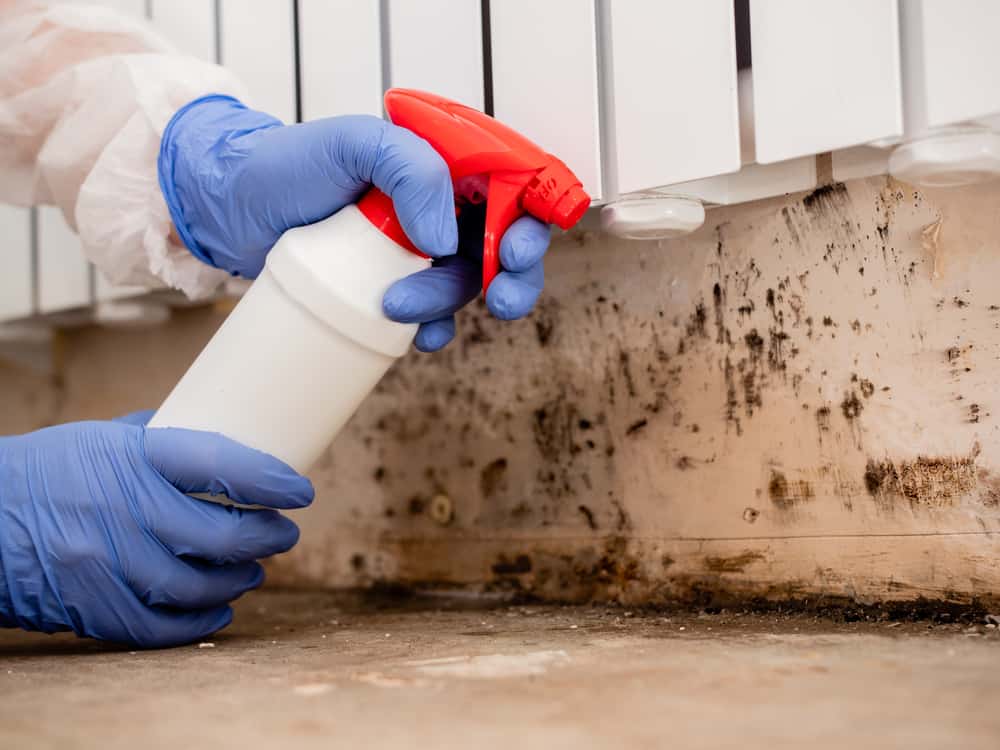
If remediation turns out to be necessary, you don’t have to start over with a new contractor. We handle the full scope — inspection, remediation, structural restoration, and clearance testing — so the company that diagnosed the problem is the same one that fixes it. For South Farmingdale homeowners who don’t want to manage multiple vendors through a stressful process, that continuity is worth a lot.
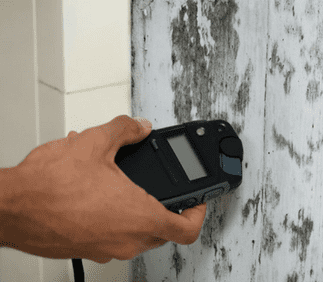
A general home inspection and a mold inspection are two completely different things, and it’s a distinction that catches a lot of South Farmingdale buyers off guard. A licensed home inspector is trained to assess the overall condition of a property — structure, electrical, plumbing, roof — but they are not trained or equipped to perform mold assessment. They might note visible staining or flag an area as having moisture concerns, but they won’t collect air samples, run lab analysis, or produce a report that identifies specific mold species and spore concentrations.
In New York State, mold assessment is a separate licensed profession governed by Article 32 of the Labor Law. A home inspector cannot legally perform that function. If you’re buying a home in South Farmingdale — especially one built in the postwar era with a finished basement or older attic — and your home inspector mentions anything related to moisture or staining, that’s your cue to bring in a certified mold assessor before you close. The cost of the inspection is a fraction of what you’d spend remediating a problem discovered after the sale is final.
Nationally, mold inspections range from roughly $300 to $1,050, with the average landing around $650 to $700. On Long Island, and in Nassau County specifically, you can expect pricing to sit at the higher end of that range given the cost of doing business here — licensed labor, certified lab analysis, and professional equipment all factor in.
What’s worth understanding is what you’re actually paying for. A low-cost inspection that skips air sampling or doesn’t include a written lab report isn’t really an inspection — it’s a visual walkthrough with a verbal opinion. That won’t hold up with your insurance company, and it won’t give you the documentation you need if you’re negotiating a home purchase or addressing a health concern. For a South Farmingdale home valued between $550,000 and $900,000, a thorough, certified inspection with lab-backed results is the kind of due diligence that protects a major financial asset. The report you get from a proper inspection is what moves the conversation forward — with your insurer, your attorney, or your contractor.
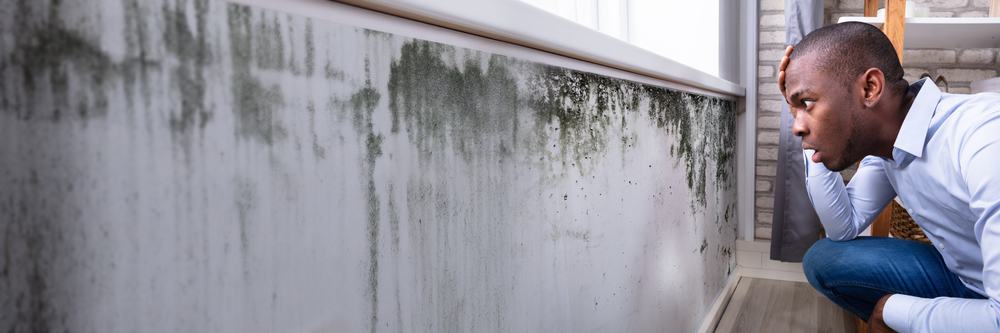
The most obvious sign is a persistent musty smell — especially in basements, crawl spaces, or finished lower levels. If you notice it more after heavy rain or during humid summer months, that’s a strong indicator that moisture is getting in somewhere and mold may be following. South Farmingdale’s South Shore location means groundwater levels can rise quickly after storms, and the older foundation systems in many homes here weren’t built to handle sustained hydrostatic pressure.
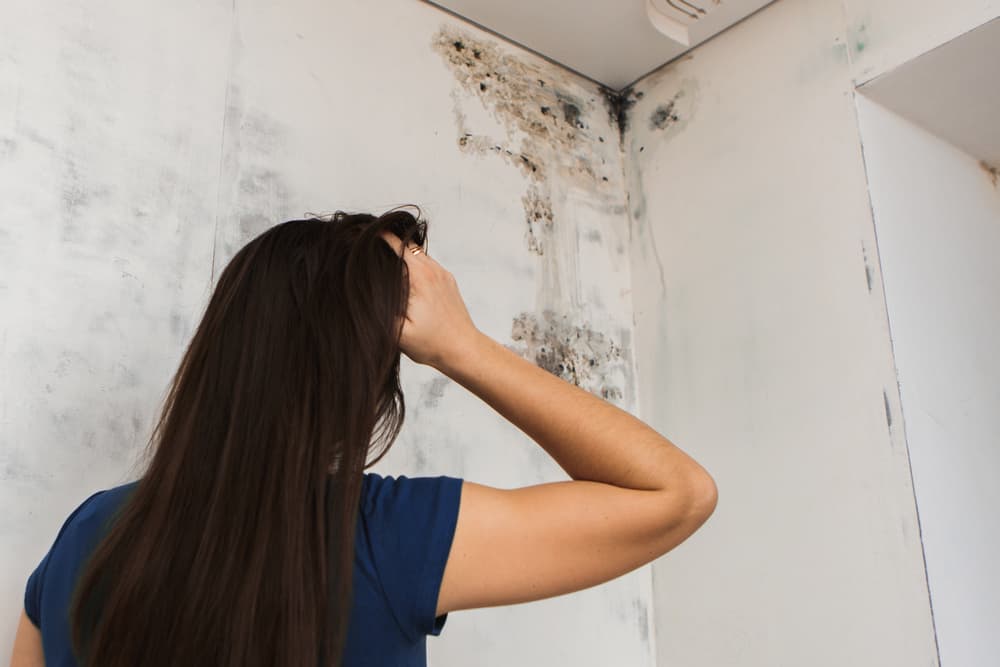
Beyond the smell, look for discoloration on walls or ceilings — especially near exterior walls, around window frames, or in corners where two surfaces meet. Peeling paint or wallpaper, warped wood trim, and efflorescence (white chalky residue) on basement walls are all signs that moisture is moving through the structure. In attics, dark staining on the underside of the roof deck is common in homes with insufficient ventilation, which describes a lot of the postwar housing stock in this area. If you’re seeing any of these signs, a professional mold inspection in South Farmingdale, NY will tell you definitively whether growth is present and how far it’s spread.
Whether mold is covered by your homeowners insurance in New York depends almost entirely on the cause. If the mold resulted from a sudden, covered water damage event — a burst pipe, an appliance leak, storm-related roof damage — there’s a reasonable basis for a claim. If the mold developed gradually from long-term seepage or deferred maintenance, most standard policies will deny it. The line between those two scenarios is often where disputes happen.
What makes the difference in a successful claim is documentation. Insurance companies need a written report from a licensed mold assessor that connects the mold growth to a specific covered event, includes moisture readings and lab results, and clearly defines the scope of what needs to be remediated. A verbal assessment or a general contractor’s estimate won’t carry that weight. We produce exactly the kind of certified, lab-backed written report that insurers require — and because we’re licensed under New York State Article 32, our documentation carries the legal standing that adjusters expect to see. If you’ve had any water damage event in your South Farmingdale home, getting a proper inspection on record before filing is the step most homeowners skip and later regret.
For a typical South Farmingdale home — a ranch, Cape Cod, or hi-ranch in the 1,500 to 2,500 square foot range — a thorough mold inspection generally takes two to three hours on-site. Larger homes or properties with extensive finished basements, attic spaces, or multiple areas of concern may take longer. The inspection itself is non-invasive, meaning we’re not opening walls or pulling up flooring during the assessment phase. We use infrared scanning and moisture meters to detect what’s behind surfaces without causing damage.
You don’t need to leave during the inspection, but it’s helpful to have access to all areas of the home — including any locked storage spaces, utility rooms, and the attic. If you have a finished basement with drop ceilings, those panels will need to be temporarily moved so we can assess the cavity above. After the on-site portion is complete, the samples go to the lab, and turnaround on results typically takes a few days. Your written report follows once the lab analysis is complete, and we’ll walk you through what it means in plain language — no technical jargon, no vague summaries.
Mold can absolutely return after remediation if the underlying moisture source isn’t addressed. Removing the mold without fixing what caused it is like patching a roof leak without replacing the damaged flashing — you’ve treated the symptom, not the problem. In South Farmingdale, the most common recurring moisture sources are basement groundwater seepage through aging foundation walls, inadequate attic ventilation in postwar-era homes, and condensation from older HVAC ductwork that hasn’t been properly insulated or maintained.
After remediation, a clearance test — a follow-up air quality inspection — confirms that spore levels have returned to normal and the remediation was successful. We handle both the remediation and the clearance testing, so you’re not coordinating between multiple companies to get a final answer. On the prevention side, the most effective long-term measures for South Farmingdale homes are improving basement waterproofing or drainage systems, ensuring attic ventilation meets current standards, and keeping indoor humidity below 50% year-round with a properly functioning HVAC system. Homes in this area that have had one mold event are worth inspecting every few years — especially after a significant storm season — because the structural conditions that allowed moisture in the first time rarely fully resolve on their own.
Useful Links
Other Services we provide in South Farmingdale