
Mold Remediation in Amagansett, NY
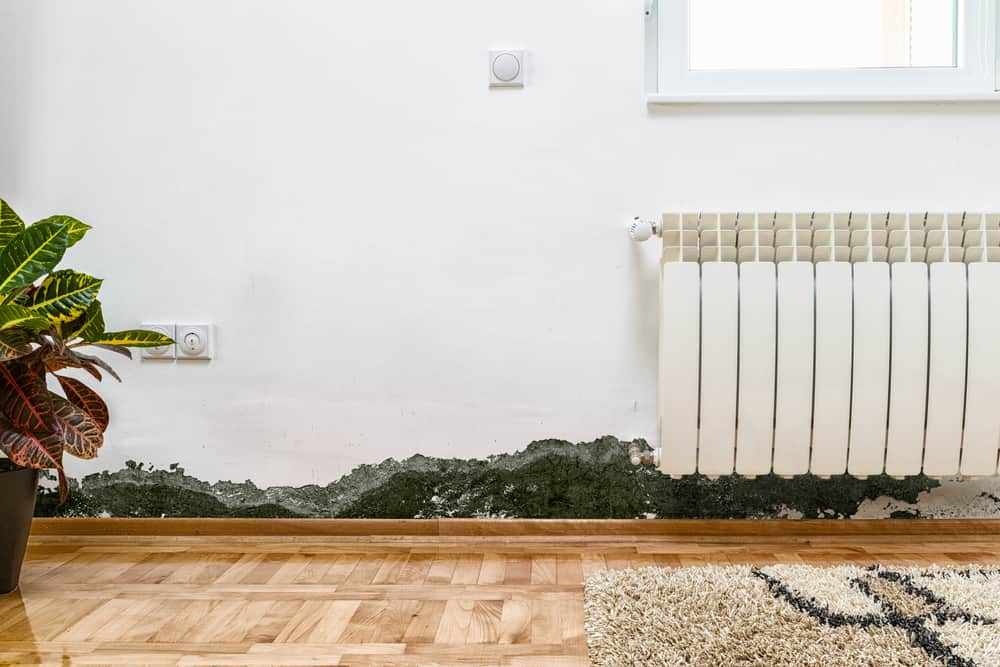
When You Open the Door After Winter, This Is What You Don't Want to Find
Hear from Our Customers
Certified Mold Remediation in Amagansett, NY
When mold remediation is done right, you’re not just getting rid of a smell or a stain. You’re getting a home that’s been assessed at the source, treated with the right protocols, and verified clean with documentation that holds up whether you’re opening for the summer, closing a real estate deal, or just making sure your family isn’t breathing something they shouldn’t be.
Amagansett’s position between the Atlantic and Gardiner’s Bay means ambient humidity here stays elevated year-round, not just in July. That sustained moisture load is what makes coastal homes on the South Fork fundamentally different from properties twenty miles inland. Add in the seasonal vacancy that defines this market properties sitting dark and unoccupied from October through May and you have conditions where a slow roof leak after a nor’easter or a sump pump that quit in February can produce months of undisturbed mold growth before anyone even opens the front door.
The outcome you’re looking for isn’t just “the mold is gone.” It’s knowing the source was found, the affected material was properly removed, and the air quality was tested afterward and cleared. That’s what professional mold remediation in Amagansett, NY actually delivers and that’s the standard we hold every job to.
Mold Remediation Companies in Amagansett, NY
First Response Restoration and Cleaning Inc. is an owner-operated company that has been doing this work on Long Island for approximately 31 years. Richard Peterson, our owner, holds personal New York State licenses in both mold assessment and mold remediation verifiable through the NYS Department of Labor. Every technician on our team is IICRC-certified, which means the people physically working in your home have been formally trained and tested to the industry’s recognized standard.
That tenure matters out here in Amagansett and across the East End. The crawl space moisture patterns in Amagansett’s older beach cottages, the attic mold that builds up in properties running heavy air conditioning through a South Fork summer, the post-storm water intrusion that comes through aging flashing on homes in Devon Colony these aren’t textbook scenarios. They’re jobs we’ve actually done, repeatedly, over three decades of working on Long Island’s East End.
We also handle the full cycle. When remediation is complete, our cleaning division takes care of what’s left surface contamination, residual debris, odor so you’re not coordinating a second contractor to finish the job.

Professional Mold Remediation Process in Amagansett
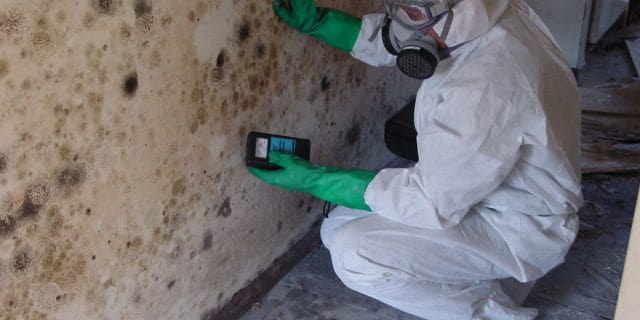
It starts with a thorough assessment. Before anything is removed or treated, we identify the moisture source because without finding what’s feeding the mold, remediation is temporary at best. In Amagansett properties, that source is often hidden: inside a crawl space under a mid-century beach cottage, behind drywall where a roof leak tracked down after a nor’easter, or in an attic where condensation from a heavily used HVAC system has been accumulating unnoticed. Moisture mapping tells us what a visual inspection alone would miss.
Once the source is identified and addressed, we establish proper containment to prevent spore dispersal into unaffected areas of the home. Mold-contaminated materials are removed following IICRC S520 protocols, HEPA vacuuming is performed, and EPA-registered antimicrobial treatment is applied to affected surfaces. For crawl spaces common in Amagansett’s older homes encapsulation may be recommended to prevent future moisture intrusion from the ground up.
After the work is done, we perform post-remediation verification. Independent air quality testing confirms that mold spore counts have returned to normal levels, and you receive a written clearance report. In Amagansett’s real estate market, where transactions regularly involve attorneys on both sides, that clearance document isn’t optional it’s the proof that the job was actually completed. Any structural repairs requiring replacement of drywall, framing, or insulation are coordinated with the Town of East Hampton Building Department, which governs permits for that type of work in this area.
Ready to get started?
Black Mold and Crawl Space Remediation in Amagansett
The mold problems that show up in Amagansett aren’t one-size-fits-all, and the remediation shouldn’t be either. Crawl space mold remediation in Amagansett, NY is one of the most common scopes we handle because a significant portion of the hamlet’s older beach cottages and ranch-style homes sit on crawl spaces rather than full basements. In a coastal environment, those spaces pull ground moisture upward constantly. By the time you notice a musty odor coming through the floors, the mold in the crawl space framing has often been growing for months. Crawl space remediation typically runs $500 to $4,000, with encapsulation projects reaching $6,000 or more depending on the scope.
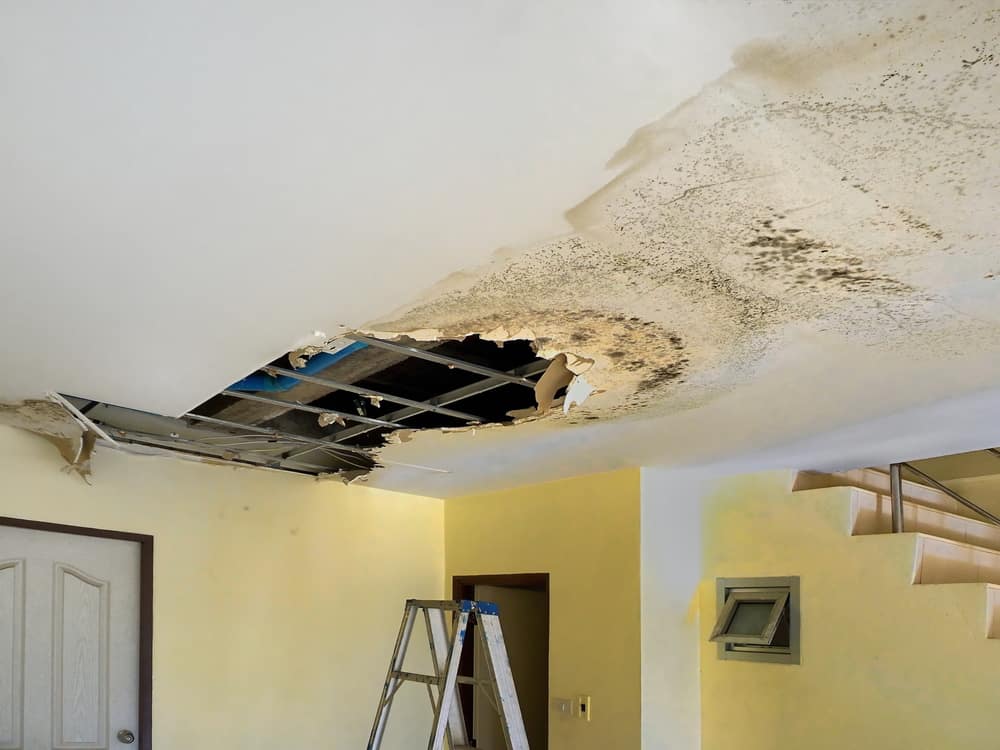
Attic mold remediation in Amagansett, NY is another frequent scenario particularly in properties that run air conditioning heavily through the summer season. The temperature differential between a cooled interior and the humid South Fork air creates condensation in attic spaces, especially where ventilation is inadequate. Attic remediation averages $1,500 to $9,000 depending on the size of the space and the extent of contamination.
Black mold remediation in Amagansett, NY requires enhanced containment, proper protective equipment, and strict handling protocols not a surface wipe-down. If black mold is found during a home inspection on a high-value Amagansett property, the documentation requirements for the remediation are equally important as the work itself. We provide written estimates, licensed contractor credentials, and post-remediation clearance reports that satisfy buyers, sellers, and their attorneys.
Is mold common in Amagansett homes, and what usually causes it?
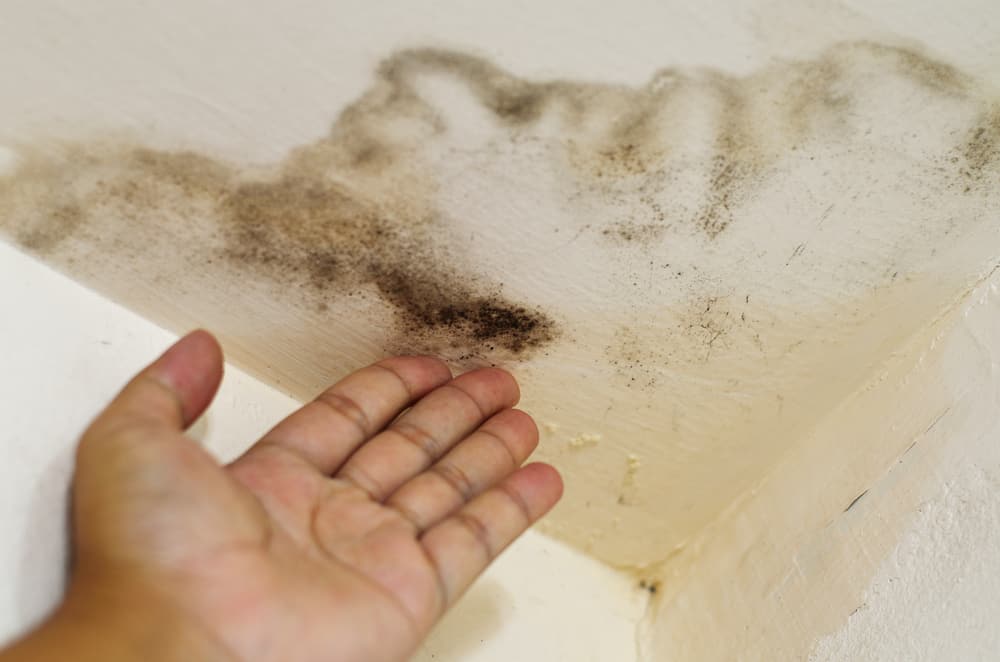
Mold is genuinely common in Amagansett more so than in most Long Island communities, and the reasons are specific to where this hamlet sits. Being flanked by the Atlantic Ocean to the south and Gardiner’s Bay to the north means ambient humidity here stays elevated year-round, not just during the summer months. Relative humidity in the East Hampton area regularly reaches 82 to 83 percent in June and remains high through September. That sustained moisture load creates baseline conditions that support mold growth in any structure with even minor vulnerabilities.
The bigger driver in Amagansett, though, is seasonal vacancy. A large share of properties here sit unoccupied from October through May. Any moisture intrusion event during that period a roof leak after a nor’easter, a sump pump failure during a spring storm, a pipe that slowly drips behind a wall after a freeze goes undetected for months. Mold begins growing within 24 to 48 hours of water intrusion. A problem that started in January can be a significant colony by the time someone opens the door in late April.
How much does mold remediation cost in Amagansett, NY?
The cost of mold remediation in Amagansett, NY depends heavily on where the mold is, how far it’s spread, and what materials are affected. For most residential projects, the range runs from roughly $1,200 to $4,000. Crawl space remediation one of the most common scopes in Amagansett given the number of older beach cottages and ranch-style homes built on crawl spaces typically falls between $500 and $4,000, with encapsulation adding cost if the crawl space needs to be sealed against ongoing ground moisture. Attic remediation, which is frequent in properties running heavy air conditioning through the summer, averages $1,500 to $9,000 depending on the size of the space.
In Amagansett’s market, where typical home values exceed $3.27 million, the cost of remediation is almost always a small fraction of what’s at stake. A mold discovery that derails a real estate closing, or a remediation that fails because the contractor wasn’t licensed or didn’t verify the work, costs far more than the job itself. Written estimates before any work begins are standard practice you should always know what you’re paying for and why before anything starts.
What's the difference between mold remediation and mold removal in Amagansett, NY?
You’ll see both terms used, sometimes interchangeably, but they don’t mean the same thing and the distinction matters for Amagansett homeowners dealing with a real problem. Mold removal implies physically taking mold out, which sounds complete but isn’t always. Mold spores are microscopic and exist naturally in the air everywhere. You can’t remove every spore from an environment, and attempting to do so isn’t the goal. What you can do is bring indoor spore counts back down to normal levels and eliminate the conditions that allowed mold to colonize in the first place.
Mold remediation is the correct term for that process and it’s the standard that licensed contractors in New York State are required to follow under Article 32 of the NYS Labor Law. It includes source identification, containment, removal of contaminated materials, antimicrobial treatment, and post-remediation verification. In Amagansett, where real estate transactions regularly involve attorneys reviewing contractor credentials and clearance documentation, the difference between a company that did “removal” and one that performed licensed remediation with a verified clearance report can be the difference between a deal closing and a deal falling apart.
Does homeowner's insurance cover mold remediation for my Amagansett property?
It depends on what caused the mold, and insurance companies draw that line carefully. Mold that resulted from a sudden and accidental event a burst pipe, a storm-related roof leak, an appliance failure is generally covered under a standard homeowner’s policy. Mold that developed gradually from long-term moisture, deferred maintenance, or neglect is typically not. For Amagansett second-home owners, this distinction gets complicated quickly. A slow roof leak that went undetected during a five-month winter vacancy sits in a gray area that insurers frequently contest.
The documentation you have from the start of the process matters enormously. Photographic evidence of the damage, moisture readings, and a licensed contractor’s written assessment assembled correctly and promptly give you the strongest foundation for a claim. New York State’s Article 32 licensing requirement also means that insurance companies expect the remediation to have been performed by a licensed contractor. Work done by an unlicensed operator may not be reimbursable regardless of the cause. Getting the documentation right from the first call is not a formality it’s what determines whether your claim holds up.
Can mold in my crawl space spread into the rest of my Amagansett home?
Yes, and it happens more commonly than most homeowners expect. Crawl spaces sit directly beneath the living area, and air moves between them through gaps in flooring, around plumbing penetrations, and through HVAC systems. Mold growing on the framing and subfloor of a crawl space releases spores into that air continuously. Over time, those spores migrate upward into the living space which is why the first sign of a crawl space mold problem is often a persistent musty odor inside the home, not anything visible.
In Amagansett, crawl spaces are particularly vulnerable because of the coastal moisture environment. Ground moisture wicks upward through the soil, condenses on the wooden framing above, and creates persistently damp conditions that support aggressive mold growth often without any visible indication from inside the living space. By the time the smell is noticeable, the mold has typically been growing for months. A crawl space inspection is worth doing proactively, especially if your property has been vacant over the winter or if you’ve noticed any musty odor that you can’t trace to an obvious source.
Do I need a licensed contractor for mold remediation in Amagansett, or can I handle it myself?
New York State’s Article 32 mold licensing law makes this fairly clear: any mold assessment or remediation work performed in New York must be done by a state-licensed contractor. This isn’t a local ordinance specific to East Hampton Town it’s a statewide requirement that applies to every property in Amagansett. Hiring an unlicensed operator isn’t just inadvisable; it’s illegal, and it creates real exposure for the homeowner if the work is later reviewed by an insurance adjuster, an attorney, or a buyer’s inspector.
For Amagansett specifically, the stakes of using an unlicensed contractor are higher than in most markets. If mold remediation is part of a real estate transaction and in this market, it frequently is the clearance documentation must come from a licensed contractor for it to be accepted by the attorneys involved. A remediation performed by an unlicensed handyman, regardless of how thorough it appeared, won’t produce the verified clearance report that closes the loop on a transaction. Beyond the legal and transactional exposure, there’s the practical reality: mold in a coastal South Fork property often involves hidden growth in crawl spaces, attic framing, or wall cavities that requires proper containment and post-remediation air testing to confirm it’s actually been resolved not just covered over.
Useful Links
Other Services we provide in Amagansett