
Hear from Our Customers
The musty smell that hits you when you open the basement door. The allergy flare-ups your kid can’t shake. The home inspector’s report that just put your sale on hold. These aren’t small problems — and they don’t go away on their own. Real mold remediation fixes the source, removes what’s there, and gives you documented proof that the air in your home is clean again.
For Bayport homeowners, that matters more than it does in most places. Roughly 68% of homes here were built before 1980 — before vapor barriers, modern insulation standards, and moisture-resistant building codes were standard practice. Block foundation walls, dirt-floor crawl spaces, and aging attic ventilation systems weren’t built to handle the sustained coastal humidity that comes with living this close to the Great South Bay. When moisture gets in, it doesn’t just sit there. It grows.
The families who live here year-round — not seasonal renters, not weekend visitors — need a result that lasts. That means the moisture source gets identified and corrected before anything else happens. It means post-remediation air testing confirms the job is done, not just visually complete. And it means you walk away with documentation you can actually use, whether that’s for an insurance claim, a real estate transaction, or your own peace of mind.
We’re a Long Island-based, owner-operated company that has been doing this work since before most of our current customers bought their homes. Our owner, Richard Peterson, holds personal New York State licenses in both mold assessment and mold remediation — not a company-level credential filed somewhere, but his own individual license you can look up through the NYS Department of Labor. Every technician on our team is IICRC-certified, meaning the people physically working in your home have been formally trained and tested on the industry’s remediation standards.
We’ve responded to South Shore flooding events from Bay Shore to Patchogue, and we know what bay surge does to a crawl space on Oak Road in Bayport. We know how the San Souci Lakes area holds groundwater after a heavy rain, and we know what a 1960s Cape Cod with a block foundation looks like after a nor’easter. That’s not something you learn from a training manual — it comes from three decades of showing up here, doing the work, and standing behind it.
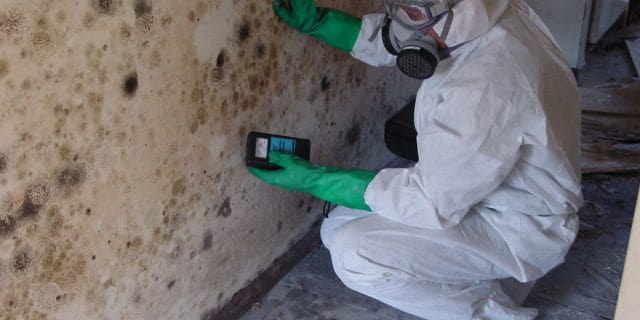
It starts with a thorough assessment. Before anything is removed or treated, we identify where the moisture is coming from — because if that’s not corrected first, the mold comes back. In Bayport, that source is often a compromised foundation wall, a crawl space with no vapor barrier, a failed sump pump, or condensation buildup in an attic that wasn’t ventilated for the humidity levels this close to the bay. We use moisture mapping to find what you can’t see, not just what’s visible on the surface.
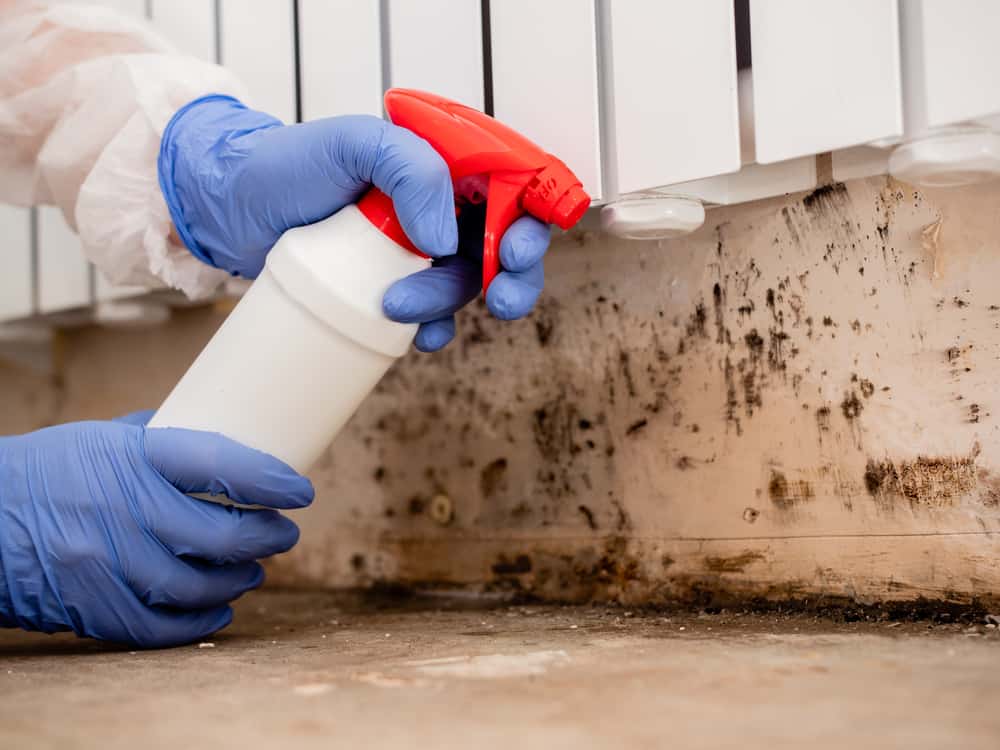
Once the source is identified and addressed, we establish containment to prevent mold spores from spreading to unaffected areas of your home. Contaminated materials are safely removed and properly disposed of in accordance with New York State Article 32 requirements — the state mold licensing law that governs all remediation work performed in Bayport and across Suffolk County. Affected surfaces are then treated with antimicrobial agents, and structural drying is completed before anything is closed back up.
The last step is post-remediation verification — independent air quality testing that confirms mold spore counts have returned to normal levels. You get written documentation of that result. If you’re dealing with an insurance claim, a home sale, or just want to know your family is breathing clean air, that clearance report is what actually closes the loop. Our integrated cleaning division handles the final cleaning of all affected surfaces and contents, so you’re not coordinating a second crew to finish what we started.
Ready to get started?
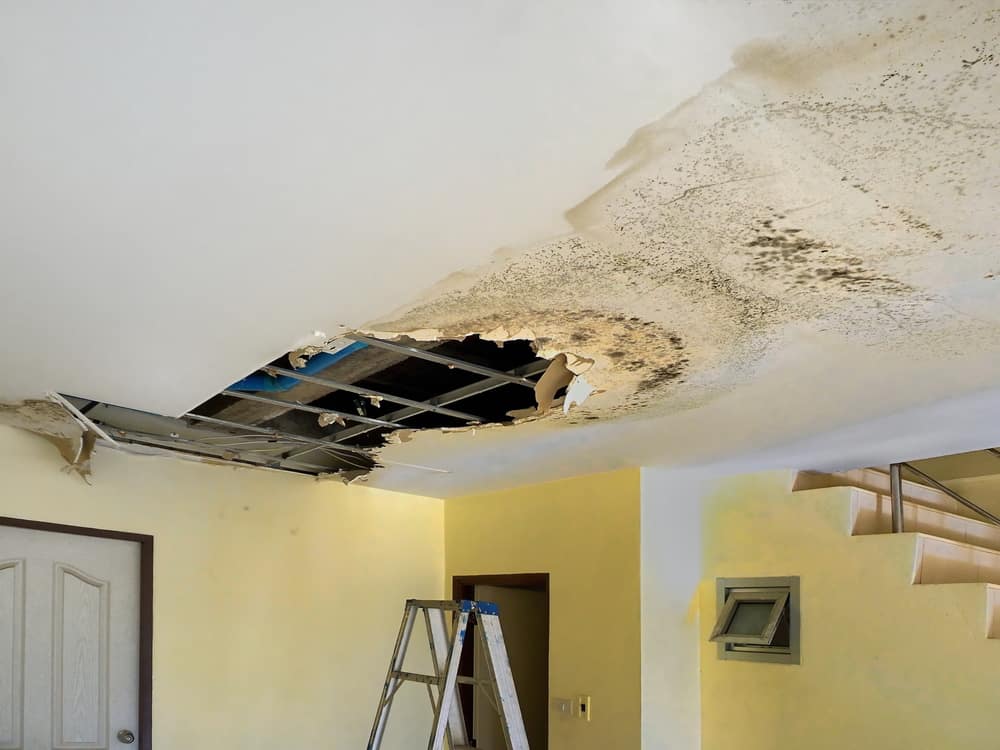
Mold remediation in Bayport isn’t one-size-fits-all, because the conditions here aren’t generic. Basement mold remediation in older South Shore homes often involves block foundation walls that have been wicking moisture for decades. Crawl space mold remediation in this area frequently requires vapor barrier installation or full encapsulation — especially for properties near the waterfront or the San Souci Lakes area, where groundwater levels stay elevated long after a storm passes. Attic mold remediation is common in pre-1980 homes where the original ventilation system wasn’t designed to manage the ambient humidity that comes with being this close to the Great South Bay.
Every job we perform includes moisture source identification, containment setup, safe removal of contaminated materials, antimicrobial treatment, structural drying, and post-remediation air quality verification. The work is performed by IICRC-certified technicians under the direct oversight of an NYS-licensed remediation contractor — which is what New York State law requires, and what you should be asking for from any company you consider hiring. Unlicensed mold remediation in New York is illegal and can result in insurance claim denial.
For waterfront properties in South Bayport, we’re also familiar with the documentation requirements that come with flood insurance claims — separate from standard homeowner policies and with different rules. We help you get the paperwork right so the claim process doesn’t become a second problem on top of the mold itself. Emergency mold remediation is available 24 hours a day, 7 days a week, because mold starts growing within 24 to 48 hours of water intrusion and waiting until Monday morning is not always an option.
Yes — and this is one of the most important things to verify before you hire anyone. New York State’s Article 32 of the Labor Law, which took effect January 1, 2016, makes it illegal for any person to perform mold remediation in New York without a valid state-issued license. That applies to every job in Bayport, whether it’s a small bathroom issue or a full crawl space remediation after bay flooding. The license requirement covers both the mold assessor (the person evaluating the problem) and the remediation contractor (the person doing the work) — and those can be two separate licenses.
Richard Peterson, our owner, holds personal NYS licenses in both categories. You can verify his license number directly through the NYS Department of Labor’s online database before you book anything. Hiring an unlicensed contractor isn’t just a risk to the quality of the work — it can result in your insurance company denying a related claim, and it can leave you with no legal recourse if the job is done improperly.
Most residential mold remediation projects fall somewhere between $1,223 and $3,754 for contained, localized issues — a single room, a section of drywall, or a moderate basement situation. Larger jobs involving structural materials, full crawl space encapsulation, or attic systems in older homes can run from $5,000 to $15,000 or more depending on the scope. Attic mold remediation specifically averages $1,500 to $9,000, and crawl space work ranges from $500 on the low end to over $6,000 when encapsulation is involved.
For Bayport homeowners, the scope is often larger than it first appears — particularly in pre-1980 homes where moisture has been working its way into block foundations or unprotected crawl spaces for years without being addressed. The honest answer is that cost depends entirely on what the assessment finds, and any company quoting you a number before they’ve done a proper moisture inspection is guessing. What you want is a clear, itemized estimate after a real assessment — not a low number designed to get them in the door.
Mold removal is one step inside the larger process of mold remediation — it’s the physical act of taking out contaminated materials. Remediation is the full scope: identifying and correcting the moisture source, containing the affected area so spores don’t spread, removing the mold, treating surfaces with antimicrobial agents, drying the structure, and then verifying through air quality testing that the mold is actually gone. If a company tells you they do “mold removal” and hands you a bill after pulling out some drywall, that’s not remediation.
The distinction matters especially in Bayport, where the underlying moisture conditions — coastal humidity, high water table, aging foundations — mean that removing visible mold without fixing what caused it almost guarantees a return visit. New York State’s Article 32 licensing law was written specifically around the full remediation process, not just removal, which is part of why the licensing requirement exists. You want a contractor who treats this as a complete process, not a quick extraction job.
It depends on the location and size of the affected area. For small, well-contained jobs — a single bathroom, a section of a basement wall — staying in the home is often possible as long as the containment barriers are properly set up and the HVAC system is isolated so spores aren’t circulating through the rest of the house. For larger remediation projects, particularly those involving attic systems, full basement remediation, or significant crawl space work, temporarily relocating during the active remediation phase is often the safer call — especially if anyone in the household has respiratory sensitivities or asthma.
This is a real consideration for Bayport families. The CDC estimates that one in three people has some sensitivity to mold, and the American College of Allergy, Asthma, and Immunology links mold exposure to roughly 25% of all asthma attacks. If you have children in a school district as family-oriented as Bayport-Blue Point, you already know how seriously the community takes kids’ health. The right answer for your household depends on the scope of the job — and a legitimate contractor will give you an honest recommendation rather than a blanket “you’ll be fine” to avoid complicating the booking.
It depends on what caused the mold. Standard homeowner’s insurance policies typically cover mold remediation when it results from a sudden, covered event — a burst pipe, an appliance leak, or storm damage that’s explicitly included in your policy. They generally do not cover mold that developed from long-term moisture problems, deferred maintenance, or gradual water intrusion that the homeowner could have addressed earlier. Flood insurance — which is a separate policy from your homeowner’s coverage — has its own set of rules and covers damage from flooding events, but the mold coverage within flood policies varies and has limits.
For waterfront properties in South Bayport, this gets more complicated. If bay surge from a nor’easter floods your crawl space and mold develops, you may be filing against a flood policy rather than your homeowner’s policy, and the documentation requirements are different. Getting the paperwork right from the start — including a proper assessment report, a detailed scope of work, and post-remediation verification — is what keeps a claim from getting denied on a technicality. We help with that documentation process, because navigating two separate insurance policies while also dealing with a mold problem in your home is genuinely difficult.
It’s more common than most people realize. Sandy made landfall in October 2012, and the bay surge it pushed into South Shore communities — including documented flooding in Bayport waterfront neighborhoods — left moisture behind in crawl spaces, wall cavities, and subfloor systems that wasn’t always fully dried or properly remediated. Over the following years, that residual moisture created conditions for slow-developing mold growth in areas that weren’t visibly affected at the time. More than a decade later, some of those homes are still dealing with the consequences.
If your home has a persistent musty smell that you can’t locate, recurring respiratory symptoms without a clear cause, or you’ve noticed discoloration in a crawl space or basement that’s been there “as long as you can remember” — and your home sits in or near the South Bayport waterfront zone — it’s worth having a professional moisture assessment done. A thorough inspection will identify whether the moisture pattern is consistent with long-term intrusion from a prior flooding event versus an active, ongoing source. Either way, knowing what you’re dealing with is the starting point for fixing it permanently.
Useful Links
Other Services we provide in Bayport