
Hear from Our Customers
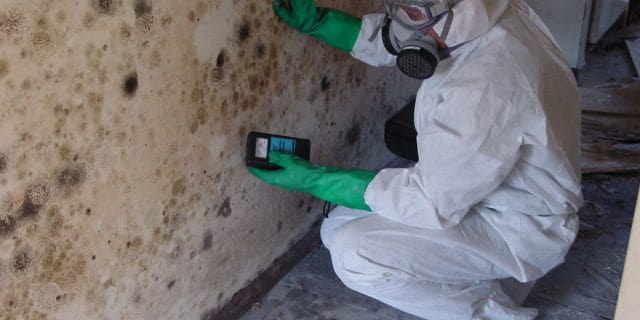
The Strathmore and Fairfield Park homes that define so much of East Hills were built between 1947 and 1952 — the same era as Levittown, but in a very different price bracket. What they share with every other post-war home on Long Island is aging infrastructure: foundations that weren’t built with modern waterproofing in mind, crawl spaces without vapor barriers, and basements that were finished decades before anyone thought much about moisture management. When Nassau County’s summer humidity climbs past 60% and nor’easters push water through hairline cracks in those old foundations, mold doesn’t need an invitation. It just needs 48 hours.
Getting the mold removed is one thing. What actually changes your situation is knowing the source of moisture was identified and addressed — so you’re not dealing with the same problem six months from now. A properly remediated home in East Hills means your family is breathing clean air, your basement or crawl space is documented as clear, and your home’s value is protected. On a property worth $1.5 million or more, that documentation isn’t a bonus — it’s the whole point.
If you’re in the middle of a sale, a buyer’s inspection finding mold can collapse the deal or force a significant price cut. If you’re staying put, unresolved mold is a health issue that tends to get worse, not better. Either way, the outcome you’re looking for isn’t just “mold gone” — it’s certainty that it was done right.
We’ve been serving Long Island homeowners for nearly three decades. That’s not a marketing number — it’s the difference between a company that knows East Hills’ housing stock and one that’s still figuring it out. The Levitt-built colonials in Strathmore, the 1949 ranches in Fairfield Park, the larger estates off Glen Cove Road — these aren’t unfamiliar territory. The moisture patterns, the foundation types, the crawl space configurations that come with 70-plus-year-old construction in this part of Nassau County are things we’ve worked with for years.
Every technician who shows up at your door holds individual IICRC certification — not a company-level credential that gets applied loosely, but personal certification earned through rigorous industry training. We also operate in full compliance with New York State’s 2016 Mold Law, which requires that assessment and remediation be handled by separate, licensed entities. That law exists to protect you, and working with a company that follows it matters.
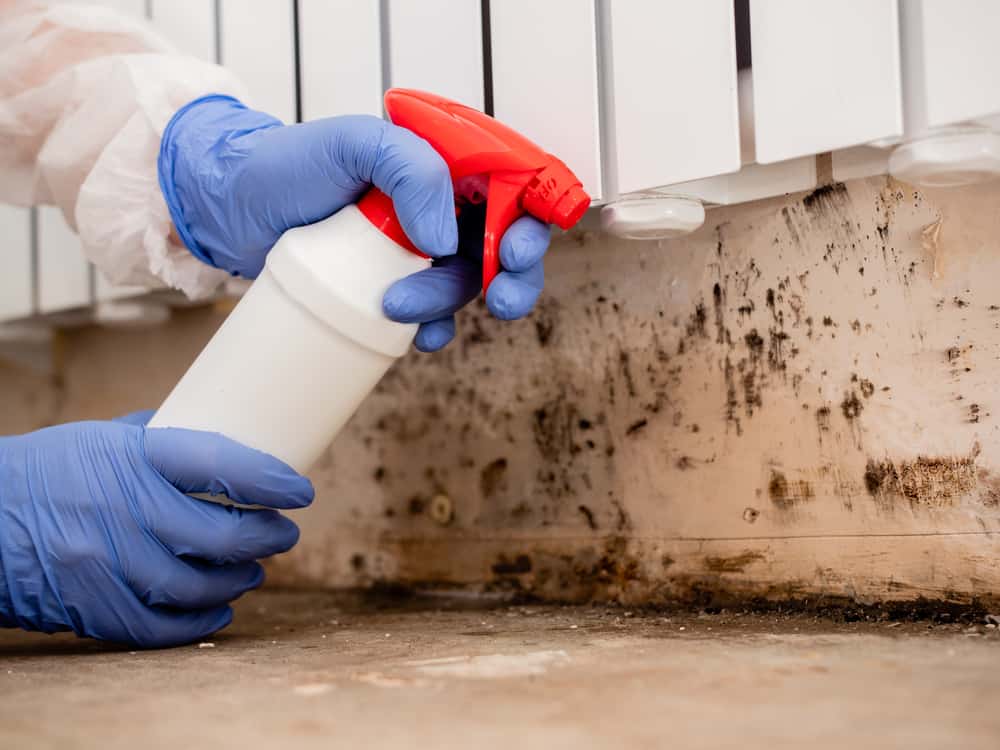
It starts with a thorough inspection — not a quick walkthrough and a verbal opinion. We conduct a 13-point mold inspection that includes air testing, swab sampling, infrared imaging to detect hidden moisture behind walls, and moisture level measurements throughout the affected area. Because New York State law requires that assessment and remediation be performed by separate licensed parties, the inspection process is handled independently before any remediation work begins. You’ll have a written report with lab results within 2 to 3 business days — real documentation, not a rough estimate.
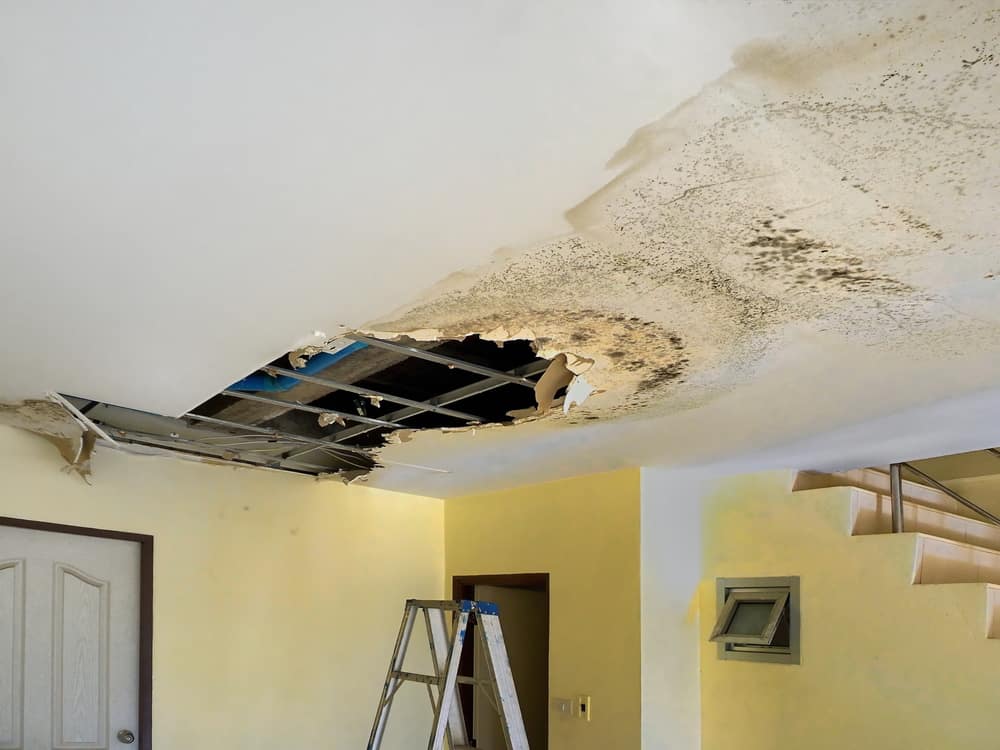
Once the scope is confirmed, remediation begins with containment of the affected area to prevent spores from spreading to clean parts of the home. Depending on what the inspection found — whether it’s a basement wall in a Strathmore colonial, a crawl space under a Fairfield Park ranch, or an attic with ice dam damage from a hard winter — the remediation process is adapted to the specific conditions of your home. We use air scrubbers, antimicrobial treatment, and controlled removal of affected materials as part of the work. The moisture source that allowed the mold to grow in the first place is addressed as part of the job, not left for someone else to deal with.
After remediation is complete, post-clearance testing confirms the space is clean. If structural repairs are needed — new drywall, framing, flooring — we handle reconstruction as well, so you’re not left coordinating a second contractor to finish what the first one started.
Ready to get started?
Mold remediation in East Hills isn’t a one-size-fits-all job. Our service is built around what your specific home actually needs — and in a village where the housing stock ranges from 70-year-old post-war construction to fully renovated estates along Country Estates, that scope can vary significantly. What doesn’t vary is the standard of work.
Every remediation we perform includes the full inspection and lab-documented findings, containment setup, HEPA air filtration and scrubbing, antimicrobial treatment of affected surfaces, safe removal and disposal of contaminated materials, and post-clearance testing to confirm the space is clean before the job is considered done. For East Hills homeowners dealing with crawl space mold — one of the most common hidden problems in the village’s older Fairfield Park and Westwood homes — our service includes crawl space-specific containment and moisture source identification, since surface treatment without addressing the underlying drainage or vapor issue is a temporary fix at best.
We also handle the full reconstruction side of things when materials need to be replaced. Finished basements, drywall, subfloor — whatever was removed to complete the remediation can be rebuilt by the same team. And if you’re navigating a homeowners insurance claim, the written documentation, photographs, and lab results produced during the job are exactly what adjusters need. You won’t be left assembling paperwork on your own.
For the remediation work itself — containment, removal, antimicrobial treatment — a permit is generally not required. Where permits become relevant is in the reconstruction phase that sometimes follows remediation. If drywall, structural framing, flooring, or any component tied to electrical or plumbing needs to be replaced, East Hills operates as an incorporated village with its own Building Department, separate from the Town of North Hempstead. That means permit requirements and inspections go through the Village of East Hills directly, not a county or town office.
This is worth knowing before work begins, especially in older East Hills homes where remediation sometimes uncovers more than expected behind finished walls. We handle the full reconstruction side of the job, which means any permit-related coordination is part of the process — not something you’re left to figure out on your own after the remediation crew leaves.
No — and this is one of the more important things to understand before hiring anyone. New York State’s 2016 Mold Law, under Article 32 of the Labor Law, explicitly prohibits the same company from both assessing and remediating mold on the same property. The law was put in place specifically because the “free inspection” model was being used to manufacture or exaggerate findings and generate remediation contracts. Separate licensing is required for each function.
What this means practically is that any company offering to inspect your home and then immediately quote you a remediation job — as one bundled service from the same entity — is operating outside of what New York State law allows. Before you hire anyone for mold work in East Hills or anywhere else in Nassau County, ask for their NYS Mold Remediation Contractor license number. It’s a simple verification that separates legitimate operators from those cutting corners. We operate in full compliance with this law.
The most common reason mold returns after treatment is that the moisture source was never fixed. Treating the mold without addressing what’s allowing water or humidity into the space is like mopping a floor while the faucet is still running. In East Hills’ older housing stock — particularly the post-war homes in Strathmore, Fairfield Park, and Westwood — the moisture source is often structural: a hairline crack in a 70-year-old foundation, a crawl space without adequate drainage, an aging window seal, or an attic with insufficient ventilation that accumulates condensation over time.
Nassau County’s North Shore climate compounds the problem. Summer humidity on Long Island regularly exceeds 60%, which is the threshold at which mold growth accelerates significantly. Add in the hydrostatic pressure that builds up in the glacial moraine soil during spring snowmelt and heavy rain seasons, and older foundations in this area face consistent moisture stress. A remediation job that doesn’t include identifying and resolving the underlying water intrusion issue isn’t a complete job. That’s the standard we hold every project to.
Cost depends on the size of the affected area, the type of mold present, and how much structural material needs to be removed and replaced. Nationally, most mold remediation jobs fall somewhere between $1,200 and $3,800, with the average around $2,300. Larger jobs — a fully finished basement, an attic with widespread growth from ice dam damage, or a crawl space that’s been accumulating moisture for years — can reach $10,000 to $15,000 or more when reconstruction is factored in.
For East Hills homeowners, the more relevant number is what leaving it unresolved costs. A mold problem can reduce a home’s resale value by 20% to 37%. On a property valued at $1.5 million — which is close to the median in East Hills — that’s a potential loss of $300,000 to more than $550,000. Fifty percent of buyers walk away entirely when a home inspection turns up mold. The remediation cost, whatever it lands at for your specific situation, is a fraction of that exposure. We provide written, itemized documentation of all findings and work performed, which is what your insurance adjuster will need if the damage qualifies for a claim.
It depends on the location and extent of the mold, and a straightforward answer matters here. For small, contained areas — a section of a basement wall, a portion of a crawl space — it’s often possible to remain in the home while work is underway, particularly if the affected area can be properly sealed off from the living spaces. We use containment barriers and negative air pressure during remediation to prevent spores from spreading to clean areas of the home.
For larger infestations — widespread attic mold, significant basement contamination, or cases involving black mold in HVAC systems or central air pathways — temporary relocation during the active remediation phase is the safer call, especially in households with children, elderly residents, or anyone with asthma or respiratory sensitivities. East Hills has a significant family population, and parents whose kids are dealing with unexplained respiratory symptoms or allergy flare-ups should take the air quality question seriously. The inspection and lab results will give you a clear picture of what you’re dealing with before any decisions about displacement need to be made.
Mold removal suggests that mold can be completely eliminated from an environment — which isn’t accurate. Mold spores exist naturally in the air and in most buildings. What remediation does is bring mold levels back down to a normal, non-harmful range, address the conditions that allowed it to grow, and remove contaminated materials that can’t be safely cleaned. It’s a more precise and more honest description of what the process actually accomplishes.
The distinction matters because companies that promise complete “removal” are often setting an expectation they can’t deliver — and that can lead to disputes when a post-remediation air test still shows some spore presence, which is normal and expected. What you’re looking for after a proper remediation is a clearance test showing that spore counts are back within normal parameters for your area. In East Hills, where many homes have older HVAC systems and limited attic ventilation that can recirculate air throughout the house, understanding what a successful outcome actually looks like — and having the lab documentation to prove it — is what protects you long-term.
Useful Links
Other Services we provide in East Hills