
Mold Remediation in Fire Island, NY
When You Open the Door and Mold Opens Back
Hear from Our Customers
Professional Mold Remediation Fire Island NY
When a Fire Island home sits closed from Labor Day to Memorial Day, it doesn’t just sit still. Ocean humidity from the Atlantic, bay-side moisture from the Great South Bay, and months without airflow or heat create the exact conditions mold needs to take hold in crawl spaces, behind walls, under flooring, and across the wood framing that most of these older bungalows are built on. By the time you’re standing in the doorway, it’s already been growing for months.
Getting that handled quickly isn’t just about comfort. It’s about protecting a property that carries real value and real carrying costs. Whether you’re trying to get the house ready for renters arriving in June, or you simply want your family’s summer to start without a health concern hanging over it, a clean, properly remediated home is the only acceptable outcome. Not a surface wipe-down. Not a spray and a hope. A full remediation that addresses the source, removes what grew, and verifies through air testing that the job is actually done.
Fire Island’s bungalow construction stick-built, often on crawl space foundations, many built between the 1940s and 1980s holds moisture differently than a mainland house with a finished basement and central HVAC. Our remediation approach has to match the building. That means understanding what’s underneath the floor, what’s inside the wall cavity, and what conditions have been building up since October. That’s the kind of mold remediation Fire Island, NY properties actually need.
Certified Mold Remediation Companies Fire Island NY
First Response Restoration and Cleaning Inc. has been working in Suffolk County for over 31 years. Owner Richard Peterson holds personal New York State licenses in both mold assessment and mold remediation contracting not a company-level credential buried in paperwork, but his name, on the license, verifiable through the NYS Department of Labor. Every technician on our team carries individual IICRC certification, meaning the people who actually show up and do the work have been formally trained and tested.
Working on Fire Island isn’t the same as a mainland job in Bay Shore or Patchogue. Equipment, containment materials, and supplies have to move by ferry. Scheduling has to account for crossing times. Off-season access requires contractor permits. We understand that and we plan for it before the job starts, not after. That kind of logistical awareness is what separates a company that can actually serve Fire Island from one that’s never thought past the ferry terminal.
We also operate an integrated cleaning division, which matters here more than most places. When the remediation work is done, the final cleaning is handled by our same team one point of contact, one coordinated schedule, and no second contractor to ferry in separately.
Mold Damage Repair Process Fire Island NY
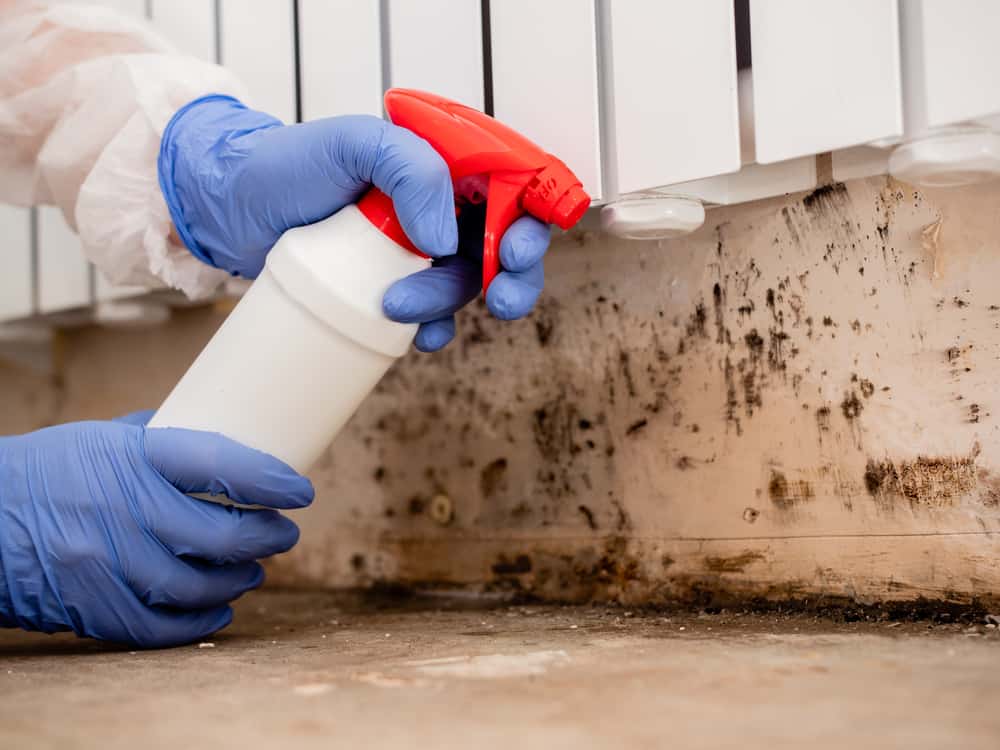
It starts with assessment. Before anything is removed or treated, we map moisture throughout the affected areas walls, floors, crawl spaces, attic spaces to identify every source contributing to the problem. On Fire Island, that step matters more than almost anywhere else, because the moisture source is rarely a single event. It’s usually a combination of ambient humidity, a compromised building envelope, and months of unventilated air. Treating visible mold without understanding what’s feeding it means you’ll be back in the same situation next spring.
Once the assessment is complete and the scope is defined, containment goes up. HEPA air filtration runs continuously during removal to keep spores from spreading to unaffected areas. Contaminated materials drywall, insulation, structural wood are removed, bagged, and disposed of properly. Remaining surfaces are treated with antimicrobial agents appropriate for the specific mold type and the specific substrate. In older bungalows common across Fire Island communities like Fair Harbor, Ocean Beach, and Dunewood, that often means treating exposed framing members that have absorbed moisture over decades.
After the physical remediation is complete, we perform post-remediation air quality testing. This is independent verification not us grading our own work, but a clearance standard that confirms spore counts have returned to normal levels throughout the treated space. You get a written clearance report. For a seasonal property that will sit closed again after the summer, that documentation is the only way to know the job was done right before you lock the door again in September.
Ready to get started?
Mold Cleanup and Remediation Services Fire Island NY
Mold remediation in Fire Island, NY covers more ground than a standard mainland job and the scope reflects that. Our full process includes initial moisture mapping and mold assessment, containment setup with negative air pressure, HEPA filtration throughout the work period, removal of contaminated materials, antimicrobial treatment of affected surfaces and structural components, structural drying where needed, and post-remediation air quality verification with a written clearance report. The cleaning phase is handled in-house, so there’s no gap between remediation and final clean our team sees it through from start to finish.
Crawl space mold remediation gets particular attention here because of how Fire Island’s bungalow stock is built. Many homes across communities like Seaview, Atlantique, and Kismet sit on crawl space foundations that are close to grade, poorly ventilated, and exposed to groundwater and bay-side humidity simultaneously. That combination creates some of the most persistent mold conditions on Long Island. Vapor barriers, ventilation assessment, and structural wood treatment are standard parts of our crawl space scope not add-ons.
For properties affected by storm flooding including homes that were inundated during Hurricane Sandy in 2012 and may not have received thorough post-flood remediation at the time our assessment process includes targeted inspection of structural cavities and wall assemblies where residual contamination most commonly persists. If your Fire Island home was flooded and the remediation felt incomplete, that’s worth a proper look. The documentation we produce through this process also satisfies insurance requirements and supports real estate transactions both of which come up regularly in a market where home values across Fire Island communities regularly exceed $600,000 to well over $1 million.
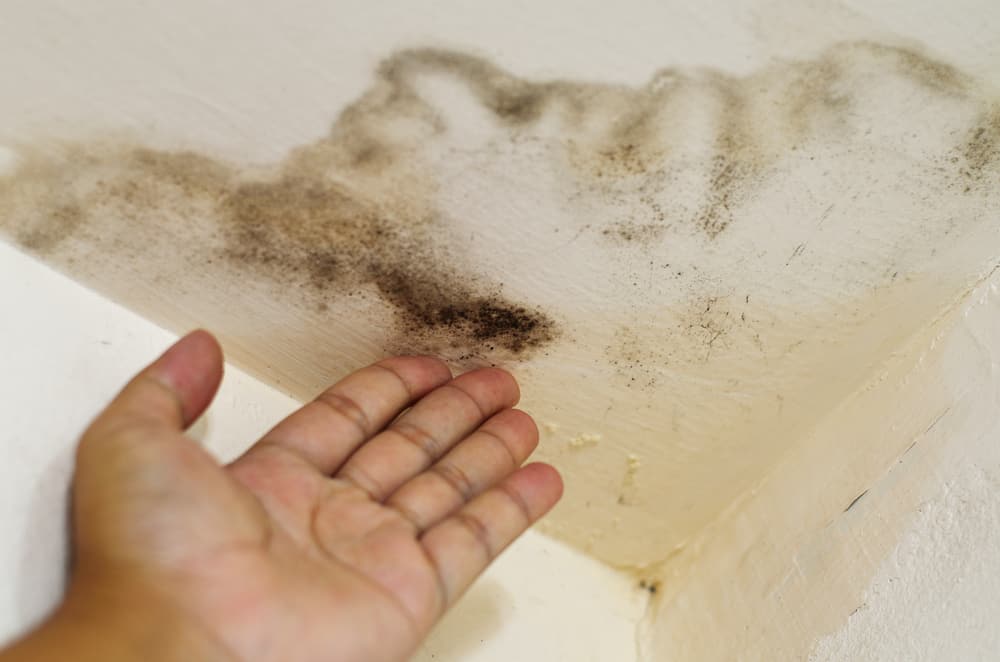
How does a mold remediation company actually get to Fire Island?
This is one of the first things Fire Island property owners ask and it’s a fair question. During the summer season, Fire Island is car-free in most communities, which means contractors can’t simply drive to your door. Equipment, materials, and crew all travel by ferry. We coordinate logistics around the ferry schedule out of Bay Shore, Sayville, or Patchogue depending on which Fire Island community your property is in. That means planning equipment staging, material transport, and crew scheduling before the job starts not figuring it out when we get to the terminal.
During the off-season, a limited number of contractor driving permits allow vehicle access to Fire Island. If your property needs remediation in the fall or winter which is actually a smart time to address mold before closing the house that permit process is something we’re familiar with. The logistical complexity of working on a barrier island is real, but it’s manageable when the company has done it before and builds the planning into the job from the start.
What causes mold in Fire Island homes that sit empty all winter?
The short answer is that a closed, unheated, unventilated home on a barrier island is almost perfectly designed to grow mold. When you shut the house down after Labor Day, you’re leaving behind whatever moisture is already in the structure in the crawl space, in the wall assemblies, in the attic with no airflow to move it out and no heat to keep condensation from forming on cold surfaces. The ambient humidity from the Atlantic Ocean and the Great South Bay doesn’t stop just because the season ended.
Over six to eight months of winter, that moisture accumulates. Wood framing absorbs it. Drywall holds it. Any small gap in the building envelope a cracked window seal, a deteriorated roof flashing, a vent screen that’s shifted lets more in. By the time you return to Fire Island in May, mold that’s been growing since November may be well established in areas you can’t see from the doorway. That’s why the assessment step matters so much: visible mold is almost never the whole picture in a home that’s been closed that long.
Is mold remediation on Fire Island more expensive than on the mainland?
It can be, and it’s worth understanding why. The cost of professional mold remediation typically ranges from around $1,200 to $3,800 for most residential projects, with crawl space and attic work sometimes running higher depending on scope. On Fire Island, there’s a logistical layer that doesn’t exist on the mainland: ferry transport of equipment and materials, scheduling around crossing times, and the coordination required to run a multi-day project on a car-free island. Those factors can affect the overall cost of the job.
What they don’t affect is the standard of work. The remediation protocol containment, removal, antimicrobial treatment, air testing, clearance documentation is the same regardless of how the crew got there. And in a market where Fire Island home values regularly exceed $600,000 to over $1 million depending on the community, cutting corners on mold remediation to save a few hundred dollars is rarely the right calculation. A failed or incomplete remediation that comes back next spring costs significantly more to address the second time and can affect your ability to rent or sell the property.
What's the difference between mold remediation and mold removal in Fire Island, NY?
Mold removal typically refers to surface cleaning wiping or scrubbing visible mold off a surface. It’s a partial solution at best, and in a coastal environment like Fire Island, it’s rarely enough. Mold remediation is a comprehensive process that addresses not just what’s visible, but the moisture source driving the growth, the contaminated materials that need to come out, the structural components that need treatment, and the air quality verification that confirms the problem is actually resolved.
The distinction matters especially in older bungalow-style construction, which is the dominant housing type across Fire Island’s seventeen communities. In homes built on crawl space foundations with wood framing that’s been absorbing coastal humidity for decades, mold rarely stays on the surface. It colonizes the wood itself. Cleaning the surface without removing the affected material and treating the underlying structure leaves active contamination in place. Under New York State’s Article 32 mold licensing law, legitimate remediation work must be performed by a licensed contractor and the process is defined specifically to go beyond surface removal.
How do I know if my Fire Island home still has mold from Hurricane Sandy flooding?
When Hurricane Sandy hit Fire Island in October 2012, the entire island was inundated with a high-water mark of 5.6 feet. About 200 homes were destroyed outright, but many more were flooded and then remediated or partially remediated in the rushed months that followed. More than a decade later, homes that didn’t receive thorough post-flood remediation can still harbor mold in wall cavities, crawl spaces, and structural framing where floodwater sat and where drying was incomplete.
The signs aren’t always obvious. A persistent musty smell that returns every spring, discoloration on baseboards or lower wall sections, or a history of respiratory symptoms in people who spend time in the house are all worth taking seriously. Our assessment process includes moisture mapping and targeted inspection of the structural areas where post-flood contamination most commonly persists not just a visual scan of surfaces. If you have any reason to believe your Fire Island home’s post-Sandy remediation was incomplete, a proper assessment is the only way to know for certain.
Does homeowner's insurance cover mold remediation in a seasonal Fire Island property?
It depends on the policy and the cause of the mold. Most standard homeowner’s insurance policies cover mold remediation when it results directly from a covered event a burst pipe, storm flooding, or sudden water intrusion. What they typically don’t cover is mold that developed gradually due to long-term moisture accumulation, deferred maintenance, or the natural conditions of a seasonal home that sat unoccupied. On Fire Island, where the seasonal vacancy pattern is the norm and where ambient humidity is a constant, that distinction can affect how a claim is evaluated.
The most important thing you can do for an insurance claim whether it’s approved or denied is documentation. A written assessment from a licensed mold assessor, a detailed remediation scope, and a post-remediation clearance report create the paper trail that insurance adjusters need to process a claim and that protects you if the claim is disputed. We provide that documentation as a standard part of our remediation process. If you’re filing a claim related to storm damage, having a licensed contractor’s report from the outset puts you in a significantly stronger position than trying to reconstruct the documentation after the fact.
Useful Links
Other Services we provide in Fire Island