
Mold Remediation in Fort Salonga, NY
When Gold Coast Homes Hide a Moisture Problem, You Need More Than a Quick Fix
Hear from Our Customers
Mold Damage Repair in Fort Salonga, NY
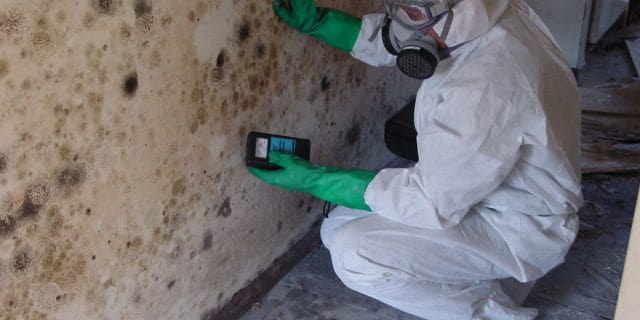
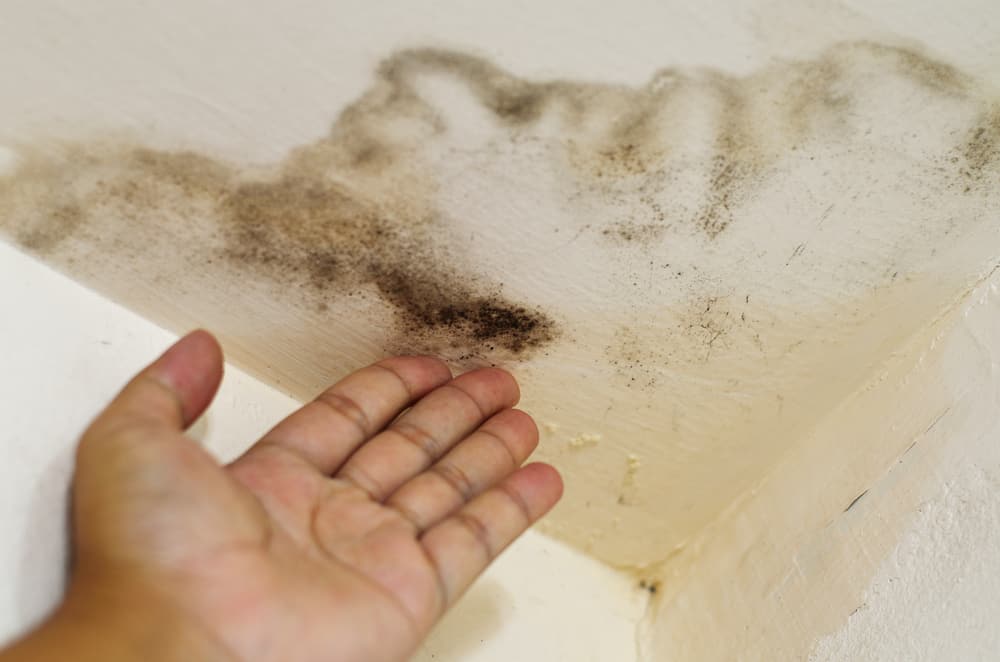
Mold doesn’t always announce itself. In a lot of Fort Salonga homes especially the colonials and ranch-style houses in Highview Estates that were built in the late 1960s and early 1970s it’s been quietly growing behind drywall, under flooring, or inside crawl spaces for years before anyone notices. By the time you smell something or see a stain, the problem is usually bigger than what’s visible.
What you actually want after remediation is simple: you want to breathe normally in your own home, you want documentation that the job was done right, and you want to know it won’t come back in six months. That’s what a proper remediation delivers not just surface treatment, but a resolved problem with verification to back it up.
For Fort Salonga specifically, that means accounting for the moisture that keeps coming in. Long Island Sound’s coastal humidity doesn’t stop at your front door. Homes near Crab Meadow and along the North Shore bluffs deal with elevated ambient moisture year-round, and any remediation that doesn’t address the underlying source whether that’s groundwater pressure, attic condensation under a shaded roofline, or a crawl space that was never properly sealed is only buying you time before it returns.
Certified Mold Remediation in Fort Salonga, NY
First Response Restoration and Cleaning Inc. has been serving Suffolk County homeowners for approximately 31 years. Our owner, Richard Peterson, holds personal New York State licenses in both mold assessment and mold remediation contracting issued under Article 32 of the NYS Labor Law, publicly verifiable through the Department of Labor. That’s not a company credential buried in a filing cabinet. It’s the owner’s license, tied to his name.
We are IICRC-certified and trained to the S520 Standard for Professional Mold Remediation. Every technician who comes into your home has been formally trained and tested not just briefed on the job.
Fort Salonga sits across two towns Huntington to the west and Smithtown to the east and navigating permit requirements on both sides of Bread and Cheese Hollow Road is something that comes with three decades of working in this county. We’ve handled mold remediation throughout the North Shore, including homes in communities like Crab Meadow and Salonga Seas, and we bring that local familiarity to every job.
Professional Mold Remediation Process in Fort Salonga, NY
It starts with a thorough assessment. Before anything is removed or treated, the moisture source has to be identified. In Fort Salonga, that step matters more than most places the combination of hilly terrain, proximity to Long Island Sound, and older construction means moisture can be entering from multiple directions at once. Groundwater pushing against a foundation on a downhill lot behaves differently than condensation forming in an attic beneath a heavily shaded roofline. We map all of it.
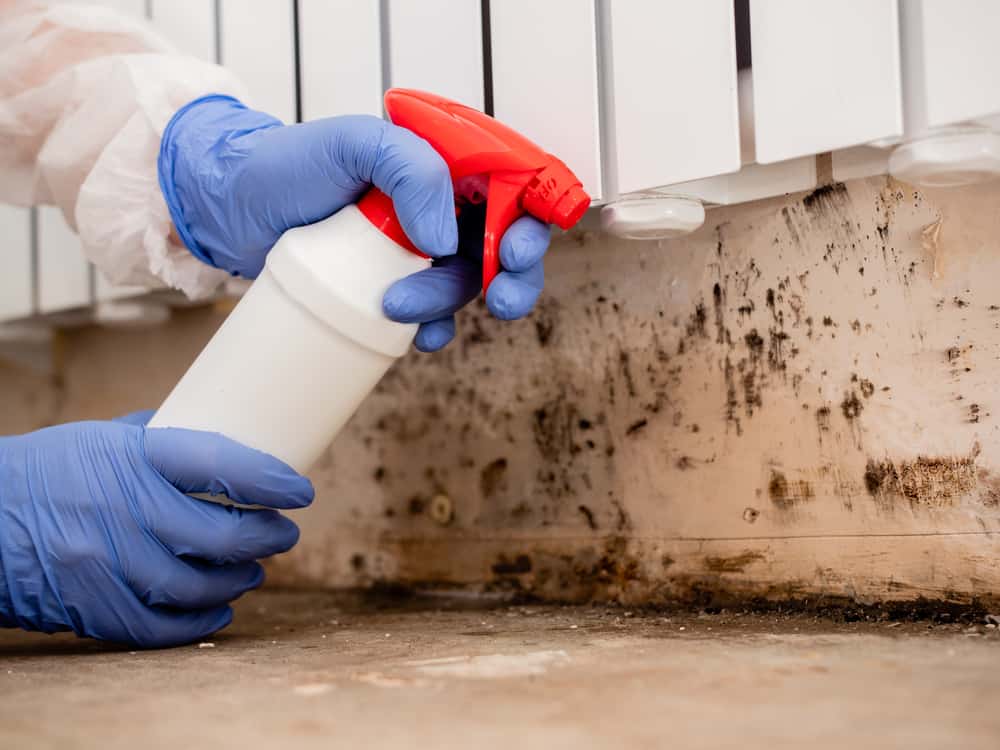
Once the source is identified and the scope is clear, containment goes up. This keeps spores from spreading to unaffected areas of your home during the removal process. Contaminated materials are removed, HEPA vacuuming clears airborne particles, and EPA-registered antimicrobial treatment is applied to affected surfaces. Structural drying follows to bring moisture levels down to where they need to be before anything is rebuilt or restored.
Because Fort Salonga straddles the Town of Huntington and the Town of Smithtown, any structural work that requires a permit drywall replacement, insulation, framing repairs goes through the correct building department based on your address. We handle that coordination. After the remediation is complete, post-remediation air quality testing confirms that mold spore counts are back to normal. You receive that documentation in writing not a verbal assurance, but an actual clearance report.
Ready to get started?
Basement and Attic Mold Remediation in Fort Salonga, NY
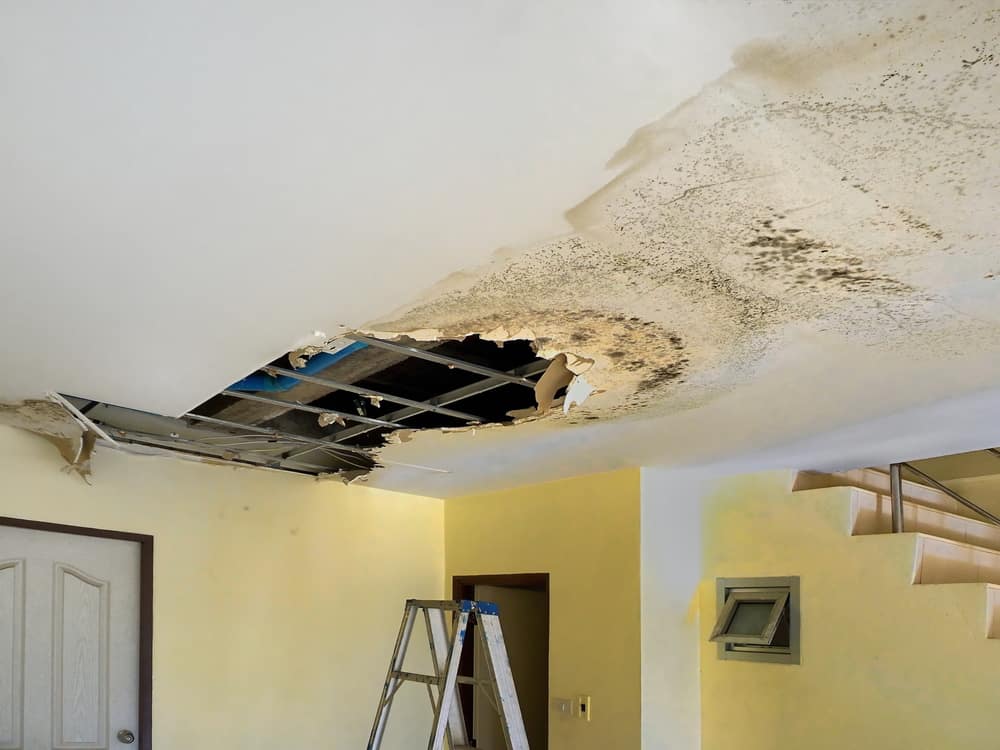
Attic mold remediation in Fort Salonga, NY is one of the more common calls we get from North Shore homeowners, and it makes sense given the conditions here. Dense tree canopy shades rooflines throughout the hamlet, which slows solar drying and traps moisture in attic spaces far longer than in open, sun-exposed locations. Attic mold remediation typically ranges from $1,500 to $9,000 depending on the size of the space and how far the contamination has spread into the sheathing and framing.
Crawl space mold remediation in Fort Salonga, NY is another frequent issue particularly for homes on downhill lots near Crab Meadow or in the lower sections of the hamlet’s ridgelines, where groundwater pressure concentrates against older foundation systems. Crawl space remediation generally runs $500 to $4,000 for standard projects, with encapsulation adding cost when the space needs a full moisture barrier going forward. Basement mold remediation in Fort Salonga, NY ranges from $500 to $3,000 for surface-level contamination, but can reach $10,000 or more when structural materials like framing or subfloor are involved.
What separates us from most remediation companies is that the job doesn’t stop at the structural phase. Our integrated cleaning division handles the full post-remediation cleanup affected surfaces, contents, and living areas under the same roof. One company, one point of accountability, and a home that’s genuinely clean when the crew leaves, not just structurally remediated.
Does homeowners insurance cover mold remediation costs in Fort Salonga, NY?
It depends on what caused the mold, and that distinction matters a lot. If the mold resulted from a sudden, accidental event a burst pipe, a storm that sent water into your basement, or a roof leak from a nor’easter your homeowners policy will typically cover the remediation. If it’s the result of long-term moisture that built up slowly over time, most policies treat that as a maintenance issue and won’t cover it.
For Fort Salonga homeowners, this line can get blurry. Homes near Crab Meadow that experienced water intrusion during Hurricane Sandy in 2012, or properties that have dealt with recurring groundwater pressure against aging foundation walls, sometimes sit in a gray area where documentation of the cause becomes critical. We help you build that documentation what was found, when, and what the likely source was in a format that insurance companies can actually work with. That alone can be the difference between a covered claim and an out-of-pocket expense.
What's the difference between mold remediation and mold removal?
Mold removal implies you can simply take the mold out and be done with it. Remediation is a more accurate description of what actually has to happen. Mold spores are everywhere indoors and outdoors and the goal isn’t to eliminate every spore from your home, which isn’t possible. The goal is to bring indoor spore counts back to normal, background levels and remove the conditions that allowed mold to grow in the first place.
In practice, that means containment, physical removal of contaminated materials, HEPA vacuuming, antimicrobial treatment, structural drying, and post-remediation air quality testing to confirm the job worked. Any company that tells you they can simply “remove” your mold without addressing the moisture source is setting you up for a repeat problem. In a home on Long Island’s North Shore where coastal humidity, shaded lots, and older construction all contribute to moisture accumulation skipping the source identification step almost guarantees the mold comes back.
How long does mold remediation take for a typical Fort Salonga home?
For most residential projects, the active remediation work takes anywhere from one to five days depending on the size of the affected area and which part of the home is involved. A contained crawl space issue might be resolved in a day or two. An attic with significant contamination spread across the sheathing and framing, or a basement where structural materials are involved, can take longer especially if drying time needs to be factored in before the space can be rebuilt.
In Fort Salonga specifically, the timeline can also be affected by permit requirements if structural repairs are part of the scope. Because the hamlet straddles the Town of Huntington and the Town of Smithtown, the applicable building department depends on your address, and permit processing timelines differ between the two towns. We account for that early in the process so it doesn’t become a surprise delay. Post-remediation air quality testing is typically done 24 to 48 hours after the remediation is complete, and the clearance documentation follows shortly after results are confirmed.
Is black mold more dangerous than other types of mold found in homes?
Black mold typically referring to Stachybotrys chartarum gets a lot of attention, and some of it is warranted. It produces mycotoxins that can cause more serious health effects than many other common mold species, particularly for people who are immunocompromised, have asthma, or are sensitive to mold. The CDC estimates that about one in three people has some sensitivity to mold in general, and the American College of Allergy, Asthma, and Immunology links mold to roughly 25% of all asthma attacks.
That said, the presence of any mold at elevated indoor levels is a problem worth taking seriously not just black mold. Other species like Cladosporium, Penicillium, and Aspergillus are far more common in Long Island homes and can still trigger significant respiratory symptoms. Black mold remediation in Fort Salonga, NY follows the same rigorous containment and removal protocols as any other species the difference is that Stachybotrys typically requires more aggressive containment because of how easily its spores can spread during removal if the process isn’t handled correctly.
Can mold found during a home inspection affect my real estate transaction in Fort Salonga?
Yes and in a market like Fort Salonga, where median home sale prices exceed $1.1 million, the financial stakes are significant. Research consistently shows that mold issues can reduce home values by 20 to 37%, and approximately half of all potential buyers will walk away from a transaction when mold is discovered during inspection even if it’s already been remediated. The discovery itself creates doubt, and doubt kills deals.
The key to protecting a transaction is having proper documentation. A remediation that was done correctly, with a post-remediation clearance report from independent air quality testing, gives the buyer’s attorney something concrete to review. It changes the conversation from “there was mold here” to “there was mold here, it was fully remediated by a licensed contractor, and here’s the documentation proving spore counts returned to normal.” We provide that clearance documentation as a standard deliverable not an add-on because in a Fort Salonga real estate transaction, it’s often the most important piece of paper in the file.
How do I know if my Fort Salonga home's crawl space or attic actually has a mold problem?
Most people don’t find out until something prompts them to look a musty smell they can’t locate, an HVAC technician who spots something while servicing the system, a home inspector flagging it during a pre-sale walkthrough, or a renovation that opens up a wall or ceiling and reveals what’s been growing behind it. Mold in crawl spaces and attics is almost never visible from living areas. It grows in places you don’t routinely access, which is exactly why it can develop for years without being noticed.
In Fort Salonga, the conditions that drive crawl space and attic mold are consistent and well-documented. Attics in homes with heavy tree canopy overhead which describes most of the hamlet retain moisture from condensation and minor infiltration far longer than attics in open, sun-exposed locations. Crawl spaces on downhill lots, especially in the lower-lying sections near Crab Meadow, face groundwater pressure that older vapor barriers and foundation systems weren’t built to handle long-term. If your home is more than 20 or 30 years old and the crawl space or attic hasn’t been inspected recently, a professional assessment is worth scheduling not because something is definitely wrong, but because these are the areas where problems develop quietly and cost significantly more to address the longer they go undetected.
Useful Links
Other Services we provide in Fort Salonga