
Mold Remediation in Garden City Park, NY
Garden City Park's Aging Homes Need More Than Surface Fixes
Hear from Our Customers
Basement Mold Remediation Nassau County
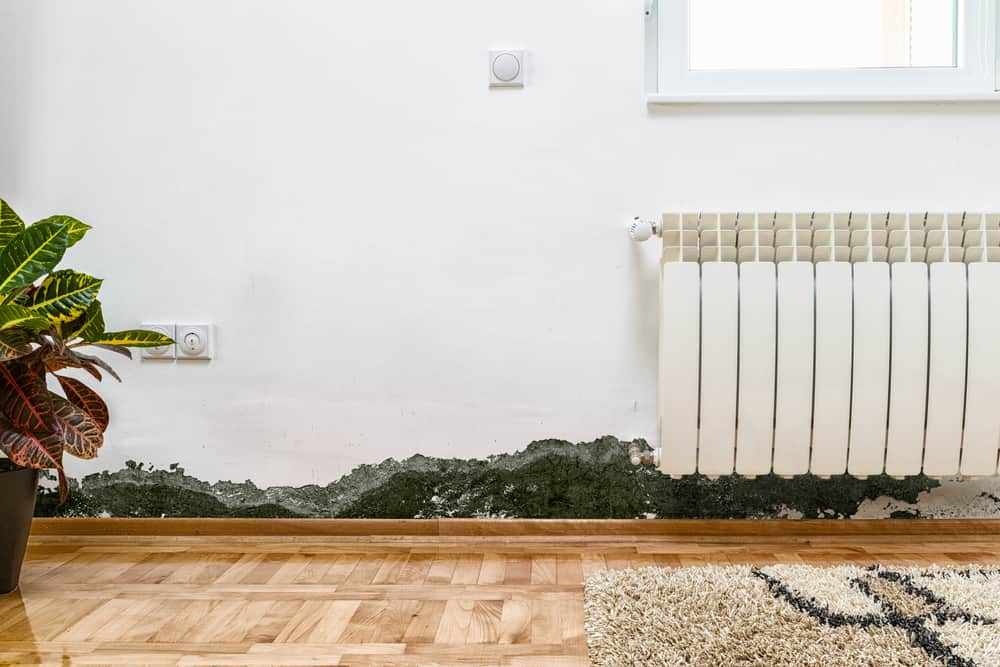
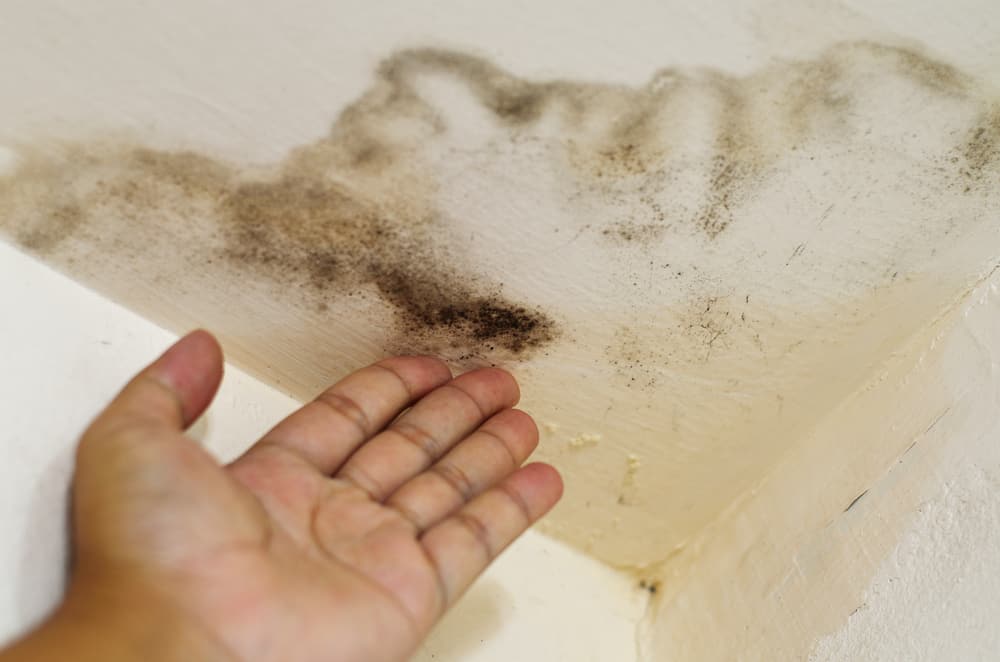
The visible stuff is rarely the whole story. In Garden City Park’s post-war housing stock Cape Cods, ranches, hi-ranches built in the late ’40s and ’50s moisture doesn’t just sit on a surface. It works its way into knee walls, crawl spaces, and insulation that was never designed to manage the kind of humidity Nassau County throws at it every summer. By the time you see it, it’s usually been there a while.
When remediation is done right, you’re not just clearing mold you’re removing the conditions that let it grow. That means your basement stops smelling like a problem. Your attic stops being a liability. Your family isn’t breathing air that’s been sitting in a compromised space for months. And if you’re thinking about your home’s value which, in a community where school district boundaries directly affect what a buyer will pay, most people are a documented, completed remediation protects that number in a way that ignoring the problem never will.
Garden City Park’s high water table makes basement moisture a recurring reality, not a one-time event. The right remediation addresses the source, not just the symptom. That’s the difference between a fix that lasts and one that has you calling someone again in six months.
Certified Mold Remediation Companies Garden City Park
We’ve been working in Garden City Park and the surrounding Nassau County area since the mid-’90s. That’s not a marketing number it means we’ve been inside hundreds of homes just like yours, from the crawl spaces under ranches along Herricks Road to the finished basements that back up to Atlantic Avenue during nor’easters. We know what Garden City Park’s housing stock looks like from the inside, and we know what goes wrong in it.
Every technician on our crew holds individual IICRC certification not just the company. That distinction matters because it means whoever shows up at your door has personally met the industry’s highest training standard, not just worked for a company that did.
We’re fully compliant with New York State’s Article 32 Mold Law and hold the Nassau County Fire Marshal licensing required for restoration work in this county. No shortcuts, no gray areas just a company that operates the way it’s supposed to and has done it long enough to prove it.
Professional Mold Remediation Process Garden City Park
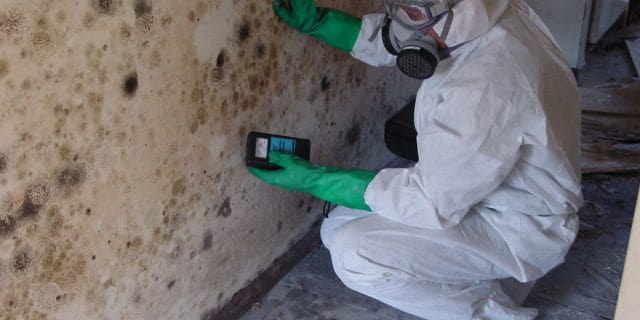
It starts with a 13-point inspection that goes well past a visual walkthrough. Air sampling, surface swabs, moisture readings, and infrared scanning to find what’s hiding behind walls and ceilings because in a 70-year-old home, what you can see is usually the smallest part of the problem. Lab results come back within 2 to 3 business days, along with a written report that tells you what was found, how serious it is, and what needs to happen next. No verbal estimates, no vague language.
Here’s something worth knowing about how New York State law works: under Article 32, the company that assesses your mold cannot be the same company that remediates it. That rule exists specifically to protect you from inflated scopes of work. We operate within that framework meaning the assessment and the remediation are handled by independent licensed parties, and you have a written remediation plan before any work begins.
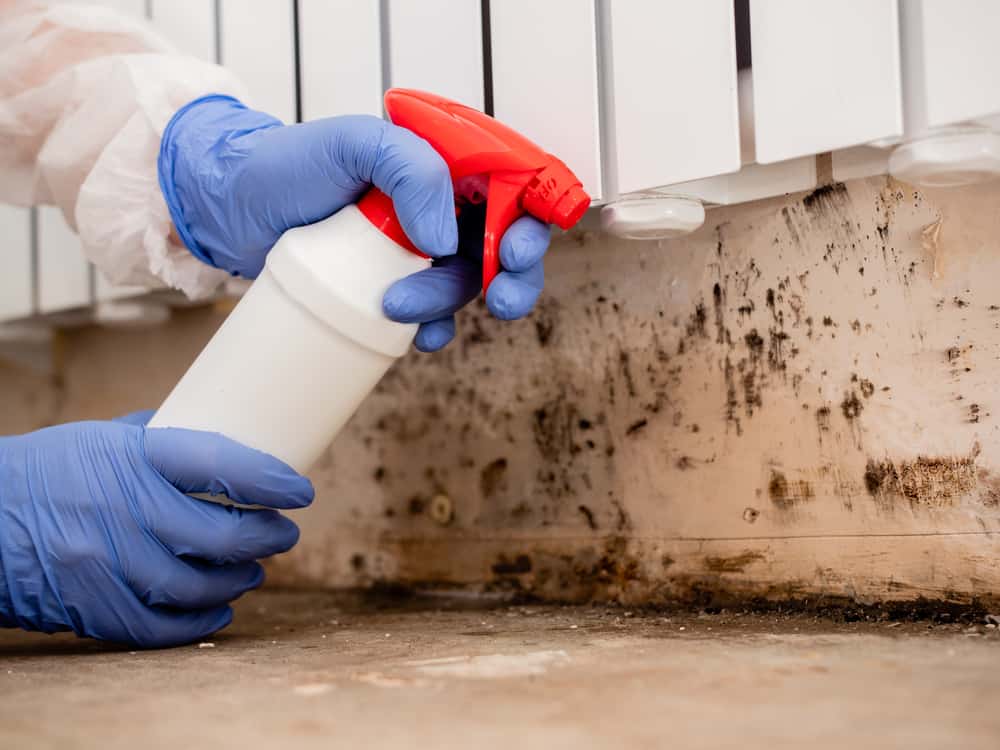
Once remediation starts, the process is built around containment, removal, treatment, and verification not just cleaning what’s visible and leaving. In Garden City Park, where summer humidity regularly climbs above 60% and groundwater sits close to the surface, that verification step matters. We identify the moisture source and address it. If building materials need to come out and be replaced, we handle the rebuild too, so you’re not left coordinating a separate contractor after the cleanup crew is gone.
Ready to get started?
Emergency Mold Remediation Services Garden City Park NY
The scope of mold remediation in Garden City Park isn’t one-size-fits-all and it shouldn’t be. A finished basement that flooded during a nor’easter is a different job than attic mold in a Cape Cod that’s been building up through years of condensation behind a knee wall. We assess the specific conditions in your home and work from a written plan, not a standard package that gets applied regardless of what’s actually there.
What you can expect across every job we do: full containment to prevent cross-contamination during removal, HEPA filtration and air scrubbing, antimicrobial treatment of affected surfaces, moisture source identification, and post-remediation verification to confirm the work is complete. Documentation is provided throughout inspection reports, lab results, photographic records which matters both for insurance purposes and for any future real estate disclosure. Given how closely Garden City Park home values track against school district boundaries, having a clean paper trail on a completed remediation is worth more than most homeowners realize until they’re sitting across from a buyer’s inspector.
We’re available 24 hours a day, seven days a week. When a basement floods at 2 a.m. and the mold clock starts ticking, every truck arrives fully equipped air movers, dehumidifiers, moisture monitors ready to work from the moment we pull up.
How does Garden City Park's high water table affect mold risk in my home?
It’s a real and documented factor. Garden City Park sits on ground where the water table is closer to the surface than in many other parts of Nassau County. During heavy rain events and this area sees its share of them, from summer deluges to nor’easters coming off Long Island Sound groundwater can push up through foundation slabs and walls faster than most homeowners expect. You don’t need a burst pipe to end up with a wet basement here. The ground itself can be the source.
That matters for mold because the EPA’s threshold is clear: mold growth can begin within 24 to 48 hours of moisture intrusion. A basement that takes on water during a storm and isn’t dried out quickly is a basement that’s already on its way to a mold problem. The high water table also means that even after a visible flood is cleaned up, residual moisture in concrete and block walls can persist for weeks which is why we include moisture monitoring in every inspection, not as an add-on.
What is the difference between mold remediation and mold removal?
Mold removal implies you can simply take the mold away and be done with it. Remediation is a more accurate description of what actually needs to happen and it’s the standard the industry and New York State law are built around. Remediation means bringing mold levels back to a normal, naturally occurring baseline, addressing the moisture conditions that allowed growth in the first place, and verifying through post-work testing that the space is genuinely clear. Removal without remediation is a surface fix. The mold comes back because the conditions that created it were never resolved.
In Garden City Park’s aging housing stock, that distinction is especially important. A 70-year-old home has materials original insulation, older framing, concrete block foundations that hold moisture differently than modern construction. Wiping down a surface doesn’t address what’s absorbed into the material behind it. Remediation means treating the space to a standard that holds, not just cleaning what’s visible and hoping for the best.
How much does mold remediation typically cost in Nassau County, NY?
The honest answer is that it depends on what’s actually there. A contained crawl space issue in a Garden City Park ranch is a very different scope than attic mold that’s spread across rafters in a Cape Cod, or a basement remediation following a flooding event. That said, national averages run around $2,300 for a standard job, with costs typically falling in the $15 to $30 per square foot range. Larger whole-house remediations can run between $10,000 and $30,000 when significant building material removal and reconstruction are involved.
What drives cost up is usually one of two things: the size of the affected area, or the discovery of hidden moisture damage that wasn’t visible in the initial walkthrough. That’s why a thorough inspection one that uses infrared scanning and air testing, not just a visual check is worth doing correctly upfront. Knowing the full scope before work begins means the estimate you get reflects the actual job, not a lowball number that grows once walls come open. We provide written estimates based on documented findings, not guesses.
Does New York State law affect how mold remediation works in Garden City Park?
Yes, and it’s worth understanding before you hire anyone. New York’s Article 32 Mold Law, which took effect in 2016, requires that mold assessment and mold remediation be performed by two separate, independently licensed entities. The same company cannot inspect your home for mold and then perform the cleanup that separation exists specifically to protect homeowners from a situation where the inspector has a financial incentive to exaggerate what they find.
For Garden City Park homeowners, this means you should expect a written remediation plan prepared by a licensed assessor before any remediation work begins, and a post-remediation assessment by an independent licensed party after the work is done. Any company that offers to do both assess and remediate under the same license is operating outside the law. We work within this framework and can walk you through exactly how the process is structured so there are no surprises about who does what and why.
What parts of a home are most commonly affected by mold in Garden City Park?
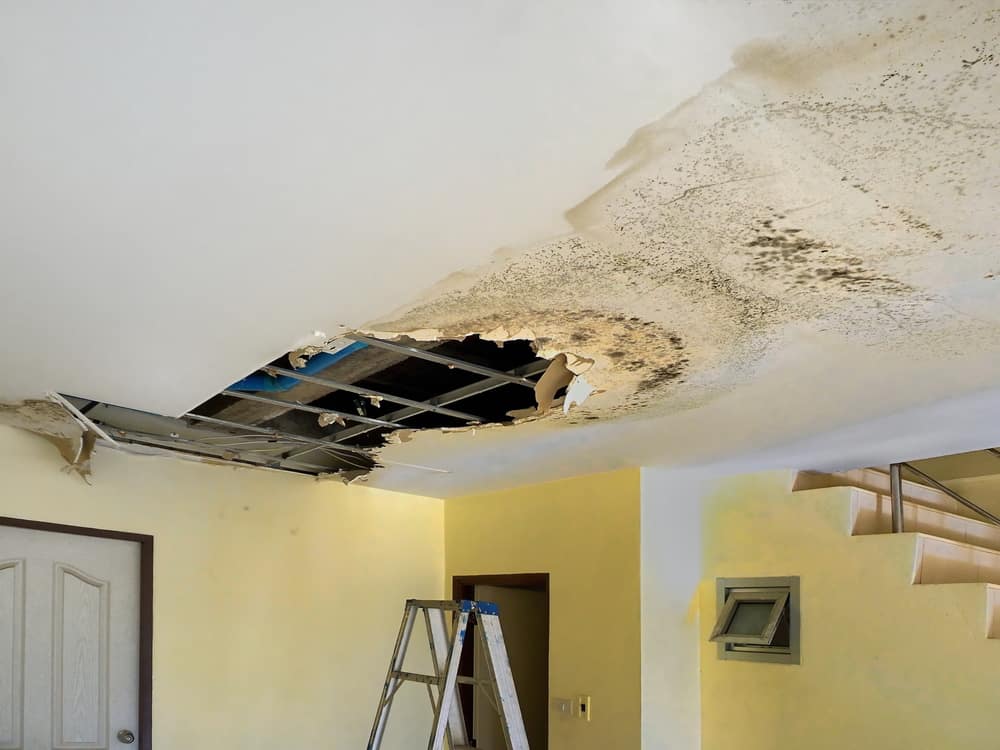
Basements are the most common call, and the high water table explains a lot of that. But the second most frequent location in Garden City Park’s housing stock is the attic specifically in Cape Cod–style homes, which are the dominant housing type in this hamlet. Cape Cods have knee walls and low-pitch roof sections that trap warm, humid air, and when attic ventilation hasn’t been updated since original construction in the late ’40s or ’50s, condensation builds up seasonally. By the time it’s visible as mold on the rafters or sheathing, it’s usually been accumulating for more than one season.
Crawl spaces are the third common location, particularly in ranch-style homes where original vapor barriers have degraded or were never adequate to begin with. Nassau County’s summer humidity regularly above 60% means that any unconditioned space with poor airflow is a candidate for mold growth, regardless of whether there’s been a visible water event. An inspection that covers all three areas, not just the one you called about, is the only way to know what you’re actually dealing with.
Will mold in my home affect its resale value in Garden City Park?
It can, significantly. Research consistently puts mold-related home value reductions in the range of 20% to 37%, and roughly half of prospective buyers walk away from a home with a known mold history when it surfaces during inspection. In a market like Garden City Park where the school district your home falls in directly affects what buyers will pay, and where three overlapping districts mean every dollar of value is scrutinized a mold issue that shows up on a buyer’s inspection report is a serious negotiating liability.
The good news is that a properly documented, completed remediation changes the conversation. When you can show a buyer a written inspection report, lab results, a completed remediation plan, and a post-remediation clearance test, the mold history becomes a resolved issue rather than an open question. That documentation is part of what we provide on every job not because it’s a selling point, but because it’s the correct way to close out a remediation and the most practical thing you can have in hand when it’s time to sell.
Useful Links
Other Services we provide in Garden City Park