
Hear from Our Customers
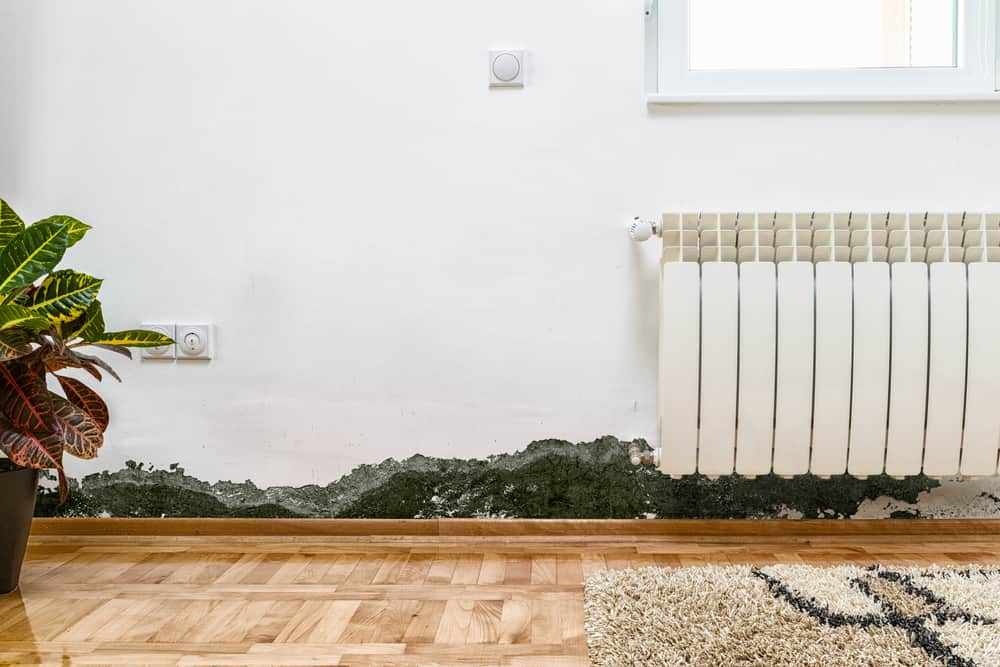
Living on the Great Neck Peninsula means living with moisture that doesn’t quit. The ambient humidity off Little Neck Bay, the nor’easters that push water into basements overnight, the older brick and stucco construction that traps it inside wall cavities — all of it creates conditions where mold doesn’t just appear, it settles in. When remediation is done right, that changes. You get your home back without the musty odor that’s been nagging you for months, without the worry every time it rains hard, and without the guessing game of whether the problem is really gone or just out of sight.
For Harbor Hills homeowners, there’s also a financial reality that’s hard to ignore. A confirmed mold problem can reduce your home’s resale value by 20% to 37%. On a property worth over a million dollars — which describes most homes in this community — that’s a loss that dwarfs the cost of professional remediation by a wide margin. Buyers walk away from mold. Inspectors flag it. And in a market where a single inspection report can make or break a sale, getting ahead of it with documented, certified remediation is protective.
The difference between a remediation that holds and one that doesn’t comes down to one thing: whether the moisture source was found and fixed. Mold treated without addressing the source comes back. Every time. That’s just how it works.
We’ve been serving Nassau and Suffolk County homeowners for nearly 30 years. That’s not a marketing number — it means we’ve worked through hurricane seasons, post-storm flooding, and the specific moisture patterns that come with North Shore living. We know what older Colonial and Tudor homes in Harbor Hills look like from the inside, and we know where mold hides in them.
We’re based on Long Island, reachable at a local Nassau County number (516-698-1776), and accountable to the community we’ve been working in for decades. Every technician who walks into your Harbor Hills home is individually IICRC certified — not just the company as a whole, but every single person doing the work.
We also carry full reconstruction capability, meaning once the mold is gone, we can handle the rebuild too. One company, one standard, from first call to finished job.
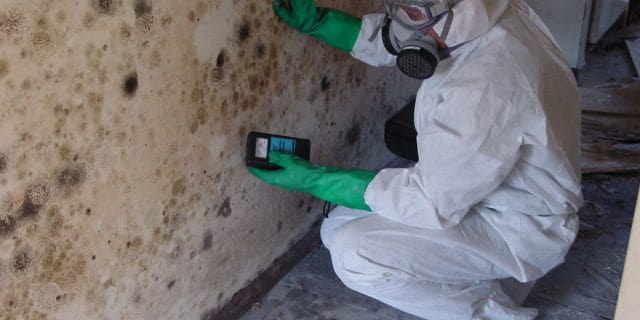
It starts with a 13-point mold inspection — not a walkthrough with a flashlight, but a structured assessment that includes air testing, swab sampling, infrared imaging, and moisture level measurement. Written lab results come back in 2 to 3 business days. That documentation matters, especially if you’re navigating an insurance claim or preparing to sell a home in Harbor Hills where buyers and their inspectors are thorough.
Under New York State’s 2016 mold law, the company that inspects your property cannot be the same company that remediates it on the same job. We operate in full compliance with this — our inspection and remediation services are independent. This law exists specifically to protect you from inflated findings, and working with a company that follows it is a baseline requirement.
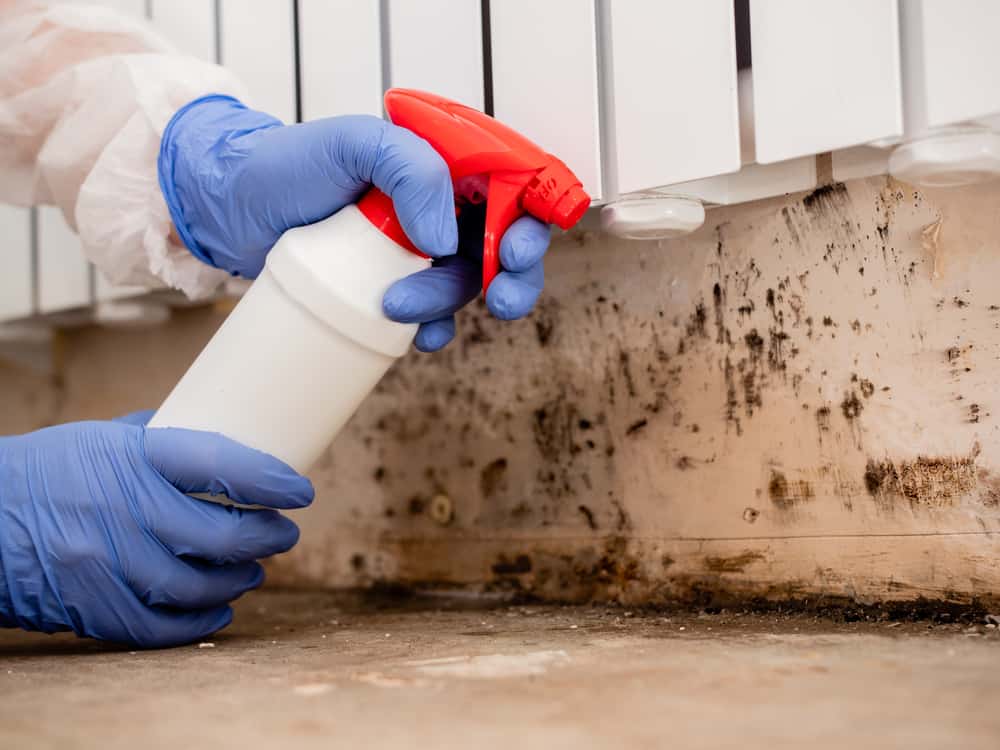
Once remediation begins, we address the moisture source first. That might mean a foundation crack, a slow plumbing leak, aging HVAC condensation, or inadequate attic ventilation in an older North Shore home. The mold itself is then treated and removed using containment protocols that prevent cross-contamination. If drywall, insulation, or structural materials need to come out and be rebuilt, we handle that too. You’re not handed off to a separate contractor mid-job.
Ready to get started?
The homes in Harbor Hills aren’t generic, and neither are their mold problems. Brick and stucco exteriors common to Colonial, Tudor, and Mediterranean-style construction on the Great Neck Peninsula can trap moisture at mortar joints and behind cladding in ways that vinyl-sided homes in other parts of Nassau County simply don’t. Basements and crawl spaces in this area sit in ground that’s heavily influenced by proximity to Little Neck Bay. Attics in older homes often have ventilation systems that weren’t designed for the coastal humidity levels Long Island’s North Shore delivers in summer.
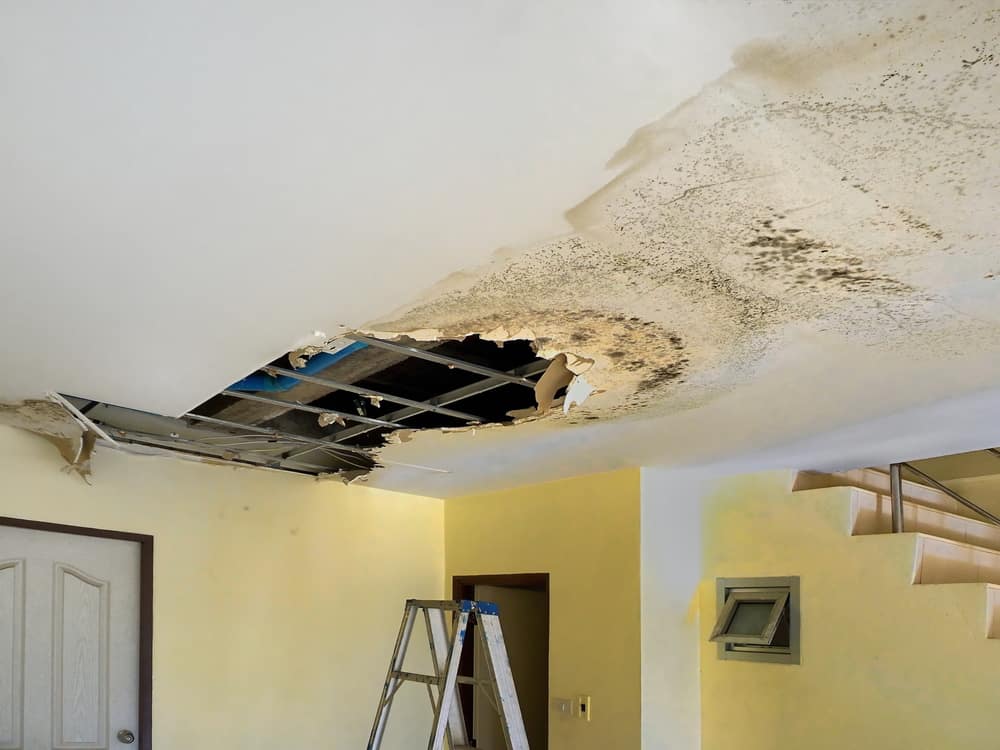
Our mold remediation in Harbor Hills, NY covers all of it. Basement mold remediation, crawl space mold remediation, attic mold remediation, and black mold remediation are all within scope. The inspection identifies where the problem is and how far it’s spread — including behind walls and above ceilings where nothing is visible yet. Air testing compares indoor and outdoor mold particle counts so you have actual data, not just someone’s opinion.
Emergency mold remediation is available 24 hours a day, 7 days a week. Mold begins growing within 48 hours of water intrusion — so when a nor’easter pushes water into your basement at midnight, waiting until morning isn’t a real option. Every truck arrives fully equipped: air movers, dehumidifiers, moisture monitors. The work starts when we arrive.
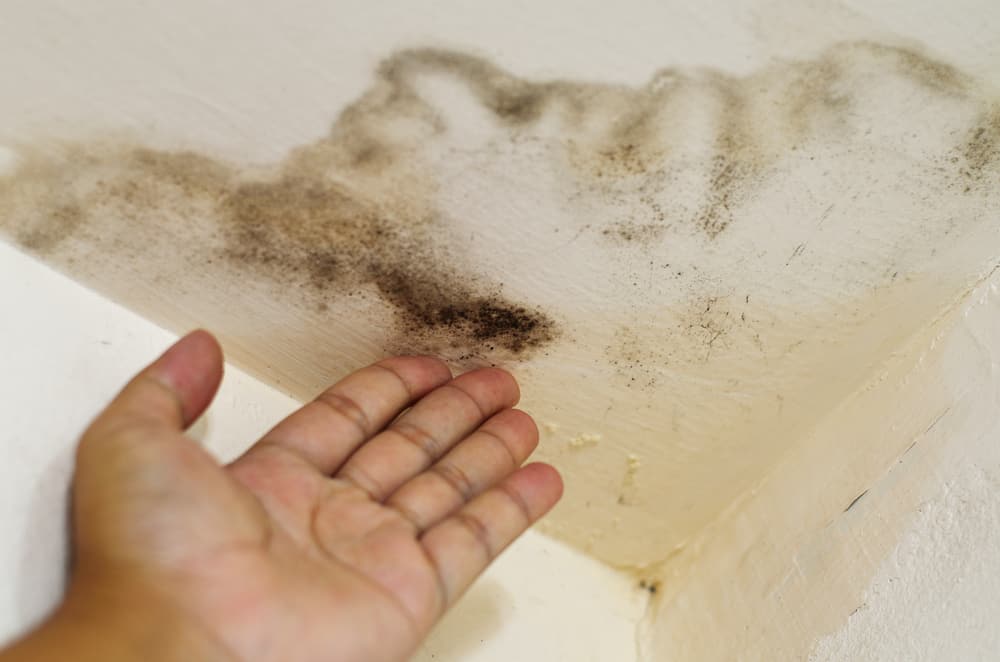
Yes, meaningfully so. Coastal and waterfront-proximate homes experience consistently higher ambient humidity than inland properties — and in Nassau County, summer humidity regularly exceeds 60%, which is the threshold at which mold growth becomes highly favorable. For homes on the Great Neck Peninsula, that baseline moisture load is compounded by ground saturation near the water, salt air that can accelerate deterioration of building materials, and storm exposure that inland communities don’t face the same way.
In practical terms, this means your Harbor Hills basement, crawl space, and attic are under more persistent moisture pressure than a comparable home in Plainview or Bethpage. Older construction — which describes most of Harbor Hills’ housing stock — adds another layer of vulnerability, since aging foundations, older plumbing, and pre-modern vapor barrier standards weren’t built to handle what the North Shore delivers. That combination is exactly why professional mold remediation in Harbor Hills, NY isn’t an overreaction. It’s appropriate to the actual conditions of the area.
The national average for mold remediation runs around $2,300, with most jobs landing somewhere between $1,200 and $3,800 depending on the size of the affected area, where the mold is located, and whether any structural materials need to be removed and rebuilt. In a home valued at over $1,000,000 — which is the norm in Harbor Hills — that cost needs to be understood in context. A mold problem that reduces your resale value by even 20% represents a loss of $200,000 or more. The remediation cost isn’t the risk. The untreated mold is.
Factors that affect the final number include whether the mold is in an accessible area like a visible basement wall or in a harder-to-reach space like inside wall cavities, under flooring, or in attic insulation. Crawl space mold remediation and attic mold remediation tend to be more involved than surface-level basement work. Post-remediation reconstruction — replacing drywall, flooring, or structural elements that couldn’t be saved — is a separate cost that some companies don’t include in their initial scope. We handle reconstruction in-house, so there’s no gap between what gets removed and what gets rebuilt.
Mold removal typically refers to physically cleaning or removing visible mold from a surface. Remediation is the broader, more complete process — it includes identifying the source of moisture, containing the affected area to prevent spread, removing contaminated materials that can’t be salvaged, treating surfaces, and verifying through post-remediation testing that the mold levels are back to normal. Removal without remediation is a short-term fix. If the moisture source isn’t addressed, the mold returns.
This distinction matters especially in a waterfront community like Harbor Hills. If your basement mold is being fed by ground moisture from proximity to Little Neck Bay or a foundation crack that opens up every wet season, cleaning the surface does nothing. The underlying condition hasn’t changed. Professional mold remediation finds the source, fixes it, removes the contaminated material, and confirms through testing that the problem is resolved — not just less visible. That’s the standard you should hold any company to before you agree to work with them.
It depends on the scope of the job and where the mold is located. For smaller, contained remediation — a section of a basement wall, for example — staying in the home is often possible, provided the work area is properly sealed off with containment barriers and negative air pressure is maintained to prevent spores from moving into other parts of the house. For larger jobs involving significant portions of the home, or situations where mold is present in HVAC systems and could spread through ductwork, temporary relocation is usually the safer call.
We walk you through this before work begins, not after. We assess the scope during the inspection phase and give you a clear picture of what to expect so you can make an informed decision. If you have family members with respiratory sensitivities — something that matters in a community with a significant retiree population like Harbor Hills — that’s a factor worth discussing explicitly, because the threshold for recommending temporary relocation may be lower in those cases.
Post-remediation verification testing is the answer. After the work is complete, air sampling and surface testing are conducted to confirm that mold levels in the treated area have returned to normal — meaning they’re comparable to or lower than outdoor baseline levels. This isn’t just a formality. It’s documented proof that the remediation was successful, and it’s something you should have in writing, especially if you’re planning to sell your Harbor Hills home and need to demonstrate to a buyer’s inspector that the problem was professionally resolved.
The longer-term answer to “will it come back” is entirely about whether the moisture source was found and fixed. Mold is a symptom. Moisture is the cause. A remediation that removes the mold but leaves the underlying moisture condition intact — a slow plumbing leak, inadequate attic ventilation, a foundation crack that lets groundwater in during heavy rain — is a remediation that’s already set up to fail. On the Great Neck Peninsula, where ambient moisture levels are persistently elevated, this isn’t a theoretical concern. It’s the most common reason mold returns after a remediation that seemed to go fine at the time.
Yes, and it’s worth understanding before you hire anyone. New York State’s 2016 mold law prohibits the same company from both assessing (inspecting and testing) and remediating mold on the same property. The law was put in place because of a documented pattern of unscrupulous operators using “free inspections” to exaggerate or fabricate findings and then sell unnecessary remediation work. By requiring that assessment and remediation be handled separately, the law removes that financial conflict of interest.
What this means practically for a Harbor Hills homeowner is that you should be cautious of any company offering to inspect your home and immediately quote you for remediation in the same visit. That’s not how a compliant operation works in New York. Our inspection services are independent of our remediation work — structured exactly the way the law intends. The state also requires that mold contractors working on projects of 10 square feet or more hold a state-issued mold contractor license. Asking for that license before work begins is a reasonable and smart step. In a community where homes are worth well over a million dollars and word travels fast among 562 households, hiring a company that cuts corners on compliance isn’t a risk worth taking.
Useful Links
Other Services we provide in Harbor Hills