
Hear from Our Customers
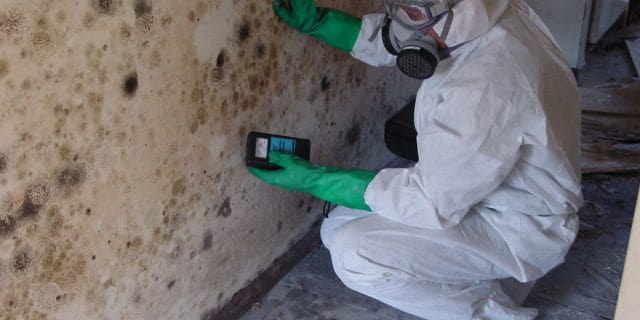
When mold remediation is done right, the first thing most people notice isn’t visual — it’s the air. The musty smell that’s been hanging around your basement or attic is gone. Your family stops waking up with congestion they couldn’t explain. The crawl space that made every contractor wince is clean, dry, and documented. That’s what a completed job actually delivers.
For Huntington homeowners specifically, the stakes are higher than most. With median home values approaching $800,000 and a real estate market where mold findings during inspections can derail a sale entirely, professional remediation isn’t just about health — it’s about protecting a significant financial asset. A properly remediated and cleared home doesn’t just feel better to live in; it holds its value, passes inspections, and doesn’t hand the next buyer’s attorney a reason to renegotiate.
Huntington’s geography makes moisture management a recurring reality, not a one-time event. The clay-heavy soils in many neighborhoods drain poorly. The Long Island Sound sits right along the town’s northern border. Coastal humidity from communities like Eatons Neck, Northport, and Centerport accelerates mold growth faster than most people expect — what takes three days in a drier climate can happen in under 36 hours here. Getting the remediation right the first time means you’re not back in the same conversation six months later.
We’ve been operating on Long Island for approximately 31 years. That’s not a marketing number — it means our team has worked through every major storm cycle this region has thrown at homeowners, including the post-Sandy surge that reshaped how New York State regulates mold remediation entirely. We’ve remediated homes throughout Huntington Village, Dix Hills, Melville, Greenlawn, East Northport, and along Huntington Bay.
Our owner, Richard Peterson, holds personal New York State licenses in both mold assessment and mold remediation under Article 32 of the Labor Law. That’s his name on the license, not a company umbrella. Every technician on our team carries individual IICRC certification — the industry’s recognized standard for professional mold remediation work. You’re not getting a franchise playbook. You’re getting a licensed owner and a trained crew who’ve worked in homes from historic Huntington Village to the finished basements of Dix Hills and the waterfront properties along Huntington Bay.
We also handle post-remediation cleaning in-house — something most remediation companies don’t offer. That means one company, one point of contact, and one job that actually gets finished.
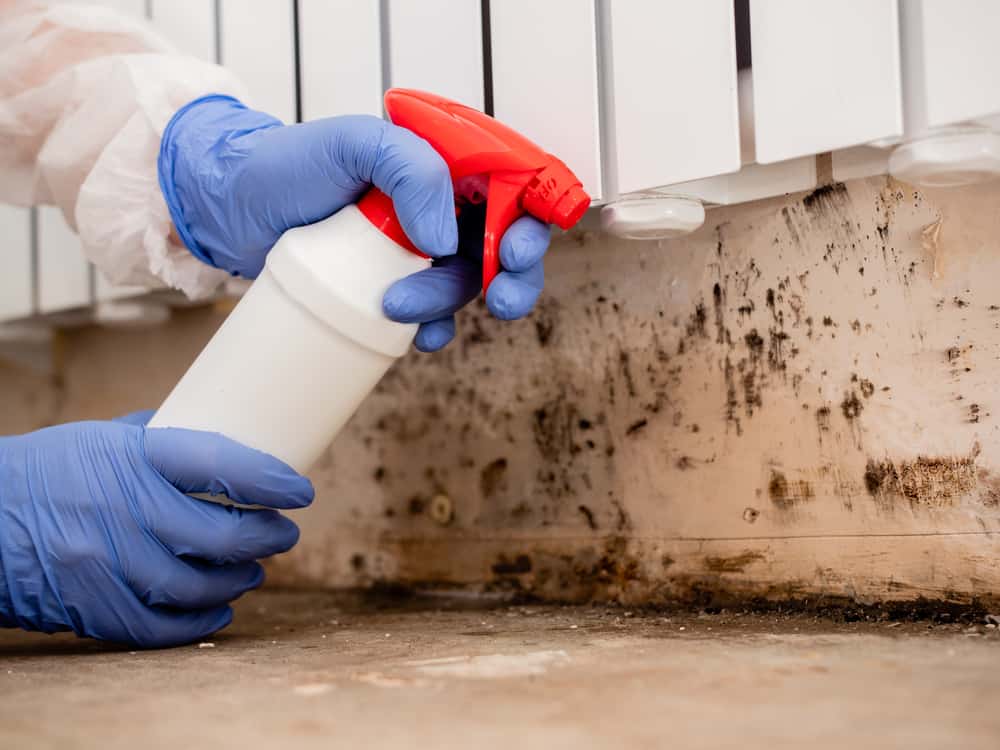
It starts with a thorough assessment — not just identifying where mold is visible, but locating the moisture source driving it. In Huntington homes, that source is often a foundation crack letting in groundwater, inadequate attic ventilation creating summer condensation, or a drainage grade issue pushing water toward the foundation after heavy rain. Finding the source isn’t optional. It’s the difference between a permanent fix and a recurring problem.
Once the assessment is complete, we set up containment before any removal begins. This keeps spores from spreading to unaffected areas of your home during the work. We remove contaminated materials, treat affected surfaces with professional-grade antimicrobial agents, and dry the area to documented moisture levels. Under New York State’s Article 32, a licensed mold assessor — separate from the remediation contractor — must conduct a post-remediation assessment before the job is considered complete. We coordinate this process and provide you with the clearance documentation you’ll need for insurance, real estate transactions, or simply your own peace of mind.
Because we include cleaning services alongside remediation, the final step covers surfaces, contents, and any residual debris — so you’re not left coordinating a second contractor after the structural work is done. From the first call to the clearance report, the process is documented, compliant, and complete.
Ready to get started?
Mold doesn’t pick one spot and stay there. In Huntington homes, it shows up in basements after the water table rises near the harbor communities, in attics after summer humidity from the Sound drives condensation against under-ventilated roof decking, and in crawl spaces beneath the mid-century ranch homes throughout Greenlawn and East Northport that were never built with modern moisture barriers. Each of those locations requires a different approach, and we handle all of them.
Basement mold remediation in Huntington typically runs between $500 and $3,000 for surface-level contamination, and can reach $10,000 or more when structural materials like framing or drywall are involved — which is common in the finished basements found throughout Dix Hills and Melville. Attic mold remediation generally falls between $1,500 and $9,000 depending on attic size and how far the growth has spread. Crawl space remediation ranges from $500 to $4,000 for standard projects, with encapsulation pushing costs higher when long-term moisture control is needed.
Black mold remediation follows enhanced containment protocols given the health risks involved — and it’s worth noting that not every dark-colored mold is Stachybotrys, but all mold warrants professional attention regardless. We offer emergency mold remediation around the clock because in a town with Huntington’s flooding risk profile, waiting until Monday morning isn’t always an option. If your situation involves an insurance claim, we help you document the damage in the format your insurer needs — something most remediation companies in this market don’t offer.
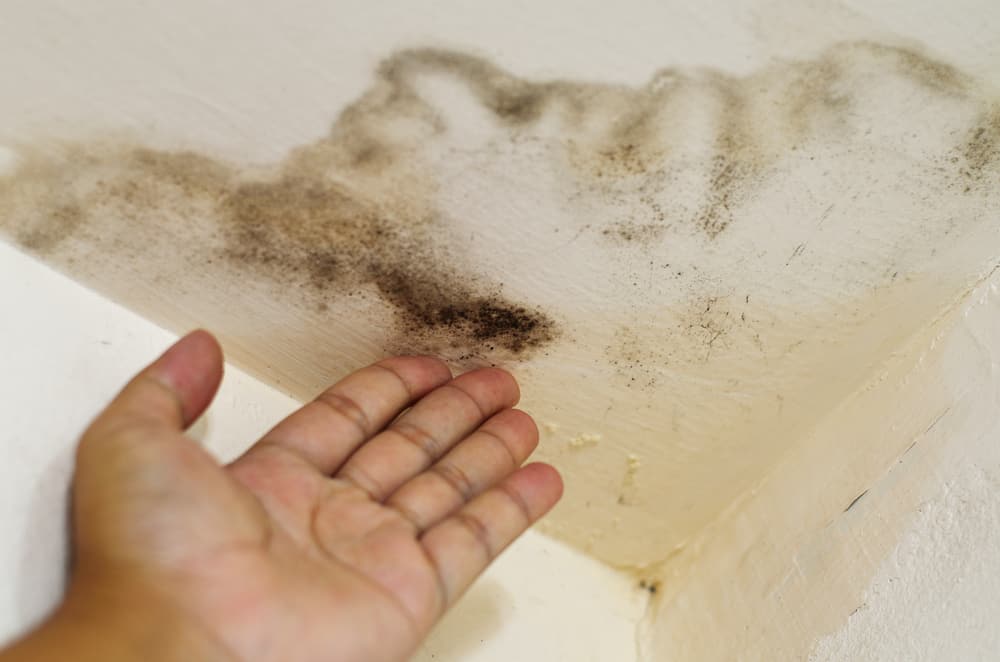
It depends on what caused the mold — and that distinction matters a lot. Most standard homeowner’s insurance policies in New York will cover mold remediation if it resulted from a sudden and accidental event, like a burst pipe, an appliance failure, or storm-related flooding. What they typically won’t cover is mold that developed gradually due to ongoing moisture issues or deferred maintenance.
For Huntington homeowners near the water — in communities like Northport, Huntington Bay, or Eatons Neck — storm-related flooding is a real and recurring risk, and those events can create covered claims when documented properly. The key word is documented. Insurance companies need to see the damage recorded in a specific format, with photos, moisture readings, and a clear timeline. We help customers put that documentation together, which is one of the reasons our clients consistently get through the claims process more smoothly than those who try to navigate it alone.
New York State requires mold remediation contractors to hold a license under Article 32 of the Labor Law — and this isn’t a formality. The law was enacted specifically because of the widespread improper remediation that followed Superstorm Sandy in 2012, which hit Huntington’s north shore communities hard and exposed just how dangerous unlicensed work can be. Hiring an unlicensed contractor isn’t just a quality risk; it can result in your insurance claim being denied and leave you with a remediation that spreads spores rather than containing them.
You can verify any contractor’s license through the New York State Department of Labor’s online license lookup. Ask any company you’re considering for their license number before work begins — a legitimate contractor will give it to you without hesitation. Richard Peterson holds personal NYS licenses in both mold assessment and mold remediation, which means the accountability is tied to a named individual, not just a company entity.
The most common reason mold returns after remediation is that the moisture source was never actually fixed. The visible mold gets removed, but if the underlying cause — a foundation crack, a drainage problem, inadequate attic ventilation, or a persistently high water table — isn’t addressed, the conditions that created the mold in the first place are still there. It’s only a matter of time before it comes back.
This is especially relevant in Huntington, where the combination of clay-heavy soils, elevated groundwater near harbor communities, and persistent coastal humidity from the Long Island Sound creates a moisture environment that doesn’t go away on its own. A proper remediation process starts with identifying and correcting the source before any removal begins. If a contractor skips that step — or doesn’t have the diagnostic capability to find it — you’ll likely be having the same conversation again within a year or two.
Cost varies based on where the mold is, how far it’s spread, and whether structural materials need to be removed. For most residential projects in Huntington, you’re looking at a range of roughly $1,200 to $3,800 for a standard remediation scope. Basement mold remediation runs $500 to $3,000 for surface contamination and can exceed $10,000 when framing or drywall is involved — which is common in the finished basements throughout Dix Hills and Melville. Attic mold remediation typically falls between $1,500 and $9,000. Crawl space work generally runs $500 to $4,000, with encapsulation adding to that when long-term moisture control is part of the plan.
What you want from any contractor is a written estimate before work begins, with every line item explained. Scope creep and surprise invoices are the most common complaints homeowners have about remediation companies — and on a home worth $800,000 or more, that kind of ambiguity is unacceptable. We provide written estimates upfront and don’t expand scope without your approval.
In many cases, yes — but it depends on the size of the affected area, where it’s located in the home, and what type of mold is involved. For smaller, contained projects like a section of a basement wall or a bathroom ceiling, it’s often possible to remain in the home while work is being done in the contained area. For larger projects — particularly those involving black mold remediation, significant attic contamination, or multiple rooms — temporary relocation is usually the safer and more practical choice.
The containment barriers and negative air pressure systems we use during remediation are designed to prevent spores from spreading to unaffected living areas. But in a household with young children, elderly family members, or anyone with asthma or respiratory sensitivities, the conservative approach is almost always worth considering. We’ll give you a straight answer about what’s appropriate for your specific situation — not a blanket policy that ignores the actual scope of the job.
The first thing to do is stop trying to clean it yourself. Disturbing mold without proper containment — even with household cleaners — can release spores into the air and spread contamination to parts of your home that weren’t affected. That’s a common mistake that ends up making the remediation more extensive and more expensive.
Next, try to identify and stop the moisture source if it’s obvious and safe to do so — shutting off a leaking pipe, for example. Then call a licensed mold remediation contractor. In Huntington, where mold can establish itself in under 36 hours during humid summer months or after a flooding event, time genuinely matters. Don’t wait to see if it gets worse. Document what you see with photos before anyone touches anything, especially if you think an insurance claim might be involved. That documentation becomes important later, and it’s much easier to capture before remediation begins than after.
Useful Links
Other Services we provide in Huntington