
Mold Remediation in Jamesport, NY
Your North Fork Home Sat Empty All Winter Here's What That Means
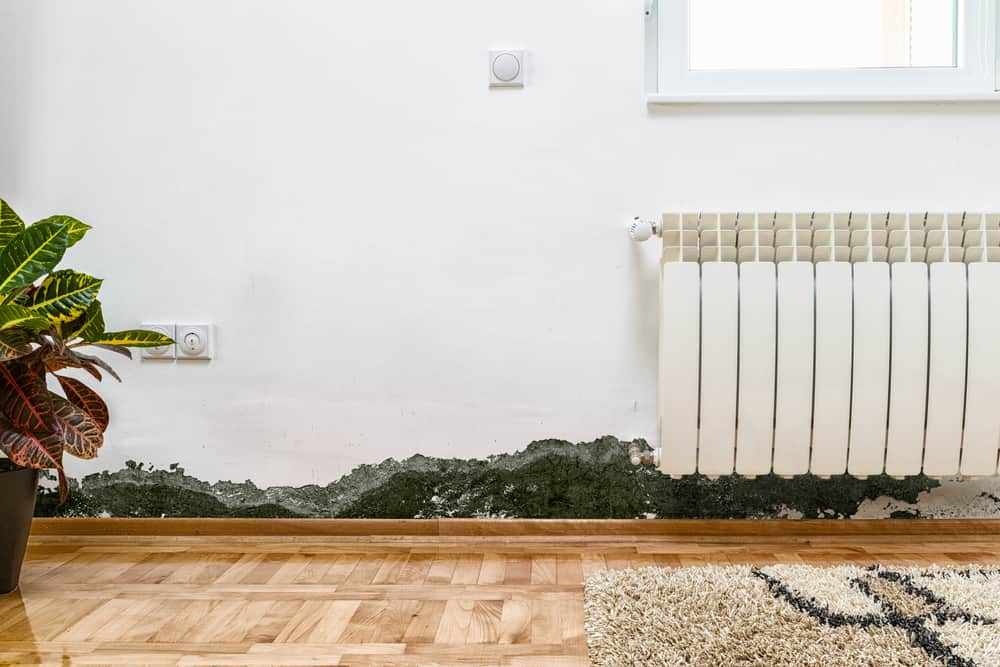
Hear from Our Customers
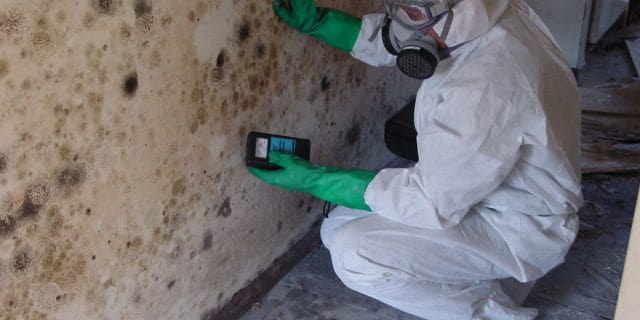
Certified Mold Remediation Jamesport, NY
There’s a difference between a home that looks fine and one that actually is fine. Our mold remediation means you’re not just covering a problem you’re eliminating it at the source, with documentation to prove it. That distinction matters whether you’re protecting your family’s health, holding your property value, or trying to get a real estate deal across the finish line.
In Jamesport, the conditions that create mold problems are pretty specific. You’ve got Peconic Bay humidity pressing in from the south, Long Island Sound air from the north, and a housing stock full of older crawl spaces, farmhouse attics, and mid-century beach cottages that weren’t built with modern moisture management in mind. Add a winter’s worth of vacancy with no one monitoring the interior, and you have the exact recipe for mold that’s been growing quietly for months before you even knew it was there.
When we complete remediation correctly, you get your home back not a version of it with a coat of paint over the problem. Air quality improves. The structural materials underneath are dry and treated. And you have a clearance report in hand that holds up to scrutiny from inspectors, lenders, and attorneys. That’s what a real outcome looks like.
Licensed Mold Remediation Company Jamesport, NY
We’ve been working on Long Island for approximately 31 years. That’s not a corporate timeline it’s the kind of tenure that only comes from doing the work right, repeatedly, in the same market. The North Fork is part of that market, and the specific challenges of coastal properties, older construction, and seasonal homes along Route 25 in Jamesport are not new to us.
Owner Richard Peterson holds personal New York State licenses in both mold assessment and mold remediation. That’s his name on the license not a silent partner’s, not a compliance officer’s. Every technician on our team is IICRC-certified, which means the people entering your home have been formally trained and tested to the industry’s highest standard. New York’s Article 32 mold licensing law makes it illegal to perform this work without a valid state license, and not every company you’ll find in a search result can say they’re actually compliant.
From South Jamesport’s bay-front properties to the farmhouses and cottages tucked off the Main Road, we know what we’re walking into before we arrive.
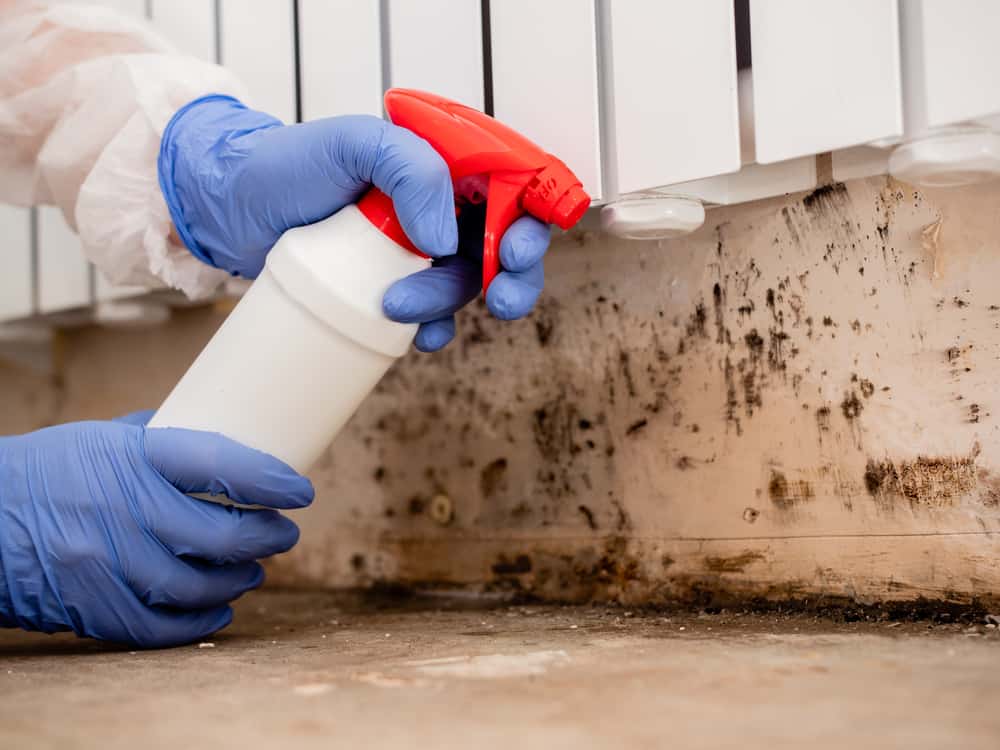
Mold Remediation Process Jamesport, NY
It starts with assessment. Before anything is removed or treated, we identify where the moisture is coming from. In Jamesport’s older homes crawl spaces sitting on agricultural-grade soil, attics in farmhouse construction with inadequate ridge ventilation, basements in South Jamesport properties that have a Sandy-era moisture history this step isn’t optional. Skipping it is exactly why mold comes back after a remediation that looked complete.
Once the source is mapped, we put containment in place to prevent spores from spreading to unaffected areas of your home. Then the actual remediation begins: removal of contaminated materials, structural drying, and antimicrobial treatment of affected surfaces. Because we also operate a cleaning division, the work doesn’t stop at the structural level surfaces and contents are cleaned as part of the same job, by the same team.
The final step is post-remediation verification. Independent air quality testing confirms that spore counts have returned to normal and the work holds up. You get that clearance documentation in writing which matters if you’re dealing with an insurance claim, a real estate transaction, or simply want to know your family is walking into a genuinely clean home when the season starts.
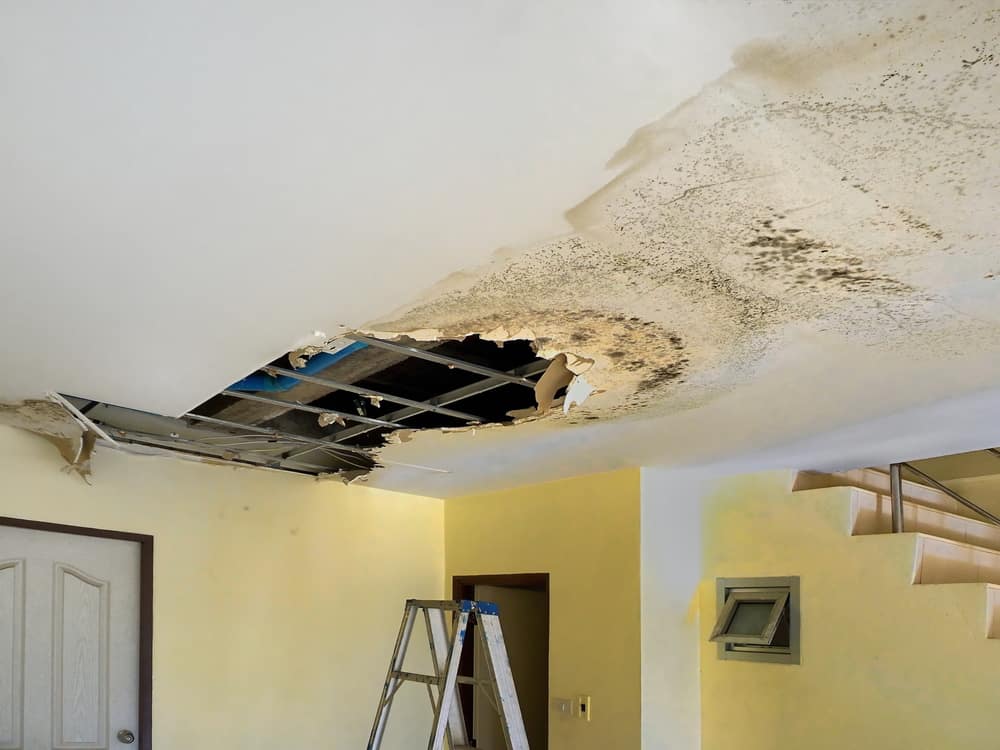
Ready to get started?
Black Mold and Crawl Space Remediation Jamesport, NY
Mold remediation in Jamesport isn’t one-size-fits-all, because the properties here aren’t. A crawl space in a mid-century ranch off the Main Road has different exposure than a basement in a South Jamesport bay-front home, which is different again from an attic in a converted farmhouse near Jamesport Vineyards. We build the scope of work around what’s actually there not a standard package applied to every job regardless of what the moisture mapping shows.
For crawl spaces, that typically means addressing ground moisture intrusion, removing contaminated insulation or framing materials, applying antimicrobial treatment, and evaluating whether encapsulation is appropriate given the soil and humidity conditions common to this part of Suffolk County. Attic remediation in older construction often involves correcting the ventilation failure that allowed mold to develop in the first place because treating the mold without fixing the airflow just sets up the next growth cycle. Basement and structural remediation in flood-zone properties along the Peconic Bay may involve coordination with insurance documentation, particularly for homes with a pre-existing moisture history.
All work is performed in compliance with New York State Article 32, and we can assist with insurance documentation for homeowners navigating coverage questions a real consideration for Jamesport’s waterfront properties and seasonal homes where the line between covered and non-covered events isn’t always obvious.
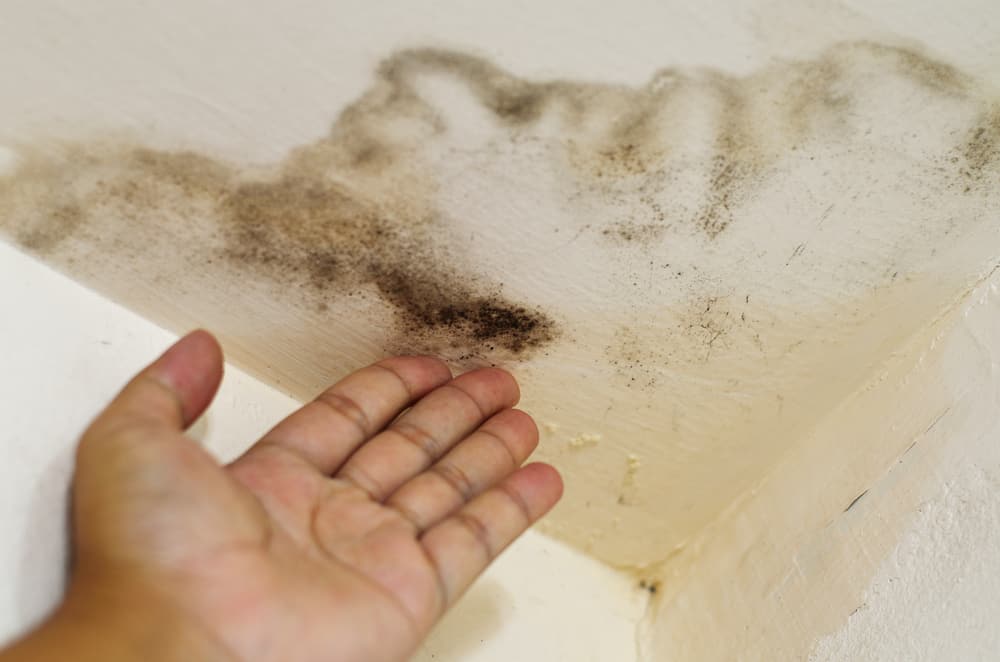
Can mold really grow in my Jamesport vacation home while it's closed for winter?
Yes and it’s one of the most common scenarios we see on the North Fork. Mold begins growing within 24 to 48 hours of moisture reaching a surface, and a home that’s been closed since October doesn’t need a dramatic water event to develop a problem. Normal humidity levels especially in Jamesport, which sits between the Peconic Bay and the Long Island Sound are enough to create condensation on cold surfaces, accumulate moisture in crawl spaces, and push humidity into unventilated attics over the course of a long winter.
Without climate control running and no one present to notice a small leak, a dripping pipe fitting, or the early musty smell that signals growth, mold can establish itself extensively before you return in May. By that point, what might have been a contained surface issue in November can become a structural remediation project by Memorial Day weekend. If your Jamesport property sits vacant for months at a time, a professional inspection at the start of the season before your family arrives is worth the call.
What's the difference between mold remediation and mold removal?
Mold removal typically refers to cleaning visible mold off a surface wiping it down, spraying it with a product, and calling it done. Mold remediation is a more complete process: it includes identifying the moisture source, containing the affected area to prevent spore spread, removing contaminated materials where necessary, treating structural surfaces, drying the environment, and verifying through air quality testing that the job was actually successful.
The distinction matters because mold that gets wiped off a surface without addressing the moisture source will come back. In Jamesport’s older housing stock crawl spaces, farmhouse attics, mid-century beach cottages the conditions that allow mold to grow don’t disappear on their own. Remediation fixes the environment, not just the visible symptom. That’s why post-remediation verification through independent air testing is a standard part of the process, not an add-on. You want documented proof that the air quality is back to normal, not just a surface that looks clean.
How much does mold remediation cost in Jamesport, NY?
For most residential projects, professional mold remediation runs between roughly $1,200 and $3,800, with a national average around $2,300. That said, the actual cost depends heavily on where the mold is, how far it’s spread, and what the underlying moisture conditions look like. Crawl space remediation in Jamesport especially in older ranch-style homes where ground moisture from agricultural soil has been accumulating can run $500 to $4,000 or more if encapsulation is part of the scope. Attic remediation in farmhouse-style construction ranges from around $1,500 to $9,000 depending on the extent of contamination and whether ventilation corrections are needed. Basement and structural remediation in South Jamesport properties with a flooding history can go higher if the moisture has reached framing.
The more important cost to think about is what happens if it’s not addressed. Mold issues can reduce a home’s resale value by 20 to 37 percent, and in a market where Jamesport properties are valued well above $700,000, that’s a significant exposure. A thorough remediation now protects the asset and avoids the compounding cost of a problem that was treated once but never actually solved.
Does homeowner insurance cover mold remediation for a seasonal property in Jamesport?
It depends on what caused the mold and how your policy is written. Most homeowner insurance policies cover mold remediation when it results from a sudden, accidental event like a pipe that burst during a January freeze while your Jamesport home was unoccupied, or storm surge damage from a nor’easter that pushed water into a South Jamesport bay-front property. What’s typically not covered is mold that developed gradually from ongoing moisture accumulation, deferred maintenance, or the kind of slow humidity buildup that happens in a seasonal home over a long winter.
For properties in flood zones along the Peconic Bay, flood insurance through the National Flood Insurance Program may be a separate and relevant policy depending on the cause. The documentation you submit matters insurance companies want to see the scope of damage, the moisture source, and the remediation methodology clearly laid out. We can help you structure that documentation properly, which makes a real difference in how a claim gets processed and whether coverage applies.
How do I know if the mold remediation in my home was actually successful?
The honest answer is that you can’t know for certain just by looking. Mold that’s been removed from surfaces can still leave elevated spore counts in the air, and contamination that wasn’t fully contained during the remediation process can spread to areas that appeared unaffected. Visual inspection alone doesn’t tell the full story which is why post-remediation verification through independent air quality testing is the only reliable way to confirm the job was done correctly.
After remediation is complete, air samples are collected and sent to a laboratory for analysis. The results show whether mold spore counts have returned to normal levels and whether any species of concern are still present in the air. You receive that clearance report in writing. For Jamesport homeowners dealing with a real estate transaction where a buyer’s attorney or lender may require documented proof of successful remediation this report is not optional. It’s the deliverable that keeps the deal moving and protects you from liability down the road.
Is black mold more dangerous than other types of mold found in Long Island homes?
Black mold typically referring to Stachybotrys chartarum gets a lot of attention, and the concern isn’t entirely without basis. It produces mycotoxins that can cause respiratory issues, headaches, and other symptoms, particularly in people who are already sensitive to mold or have underlying conditions. That said, any mold present in significant quantities in a living space is a problem worth taking seriously. The CDC estimates one in three people has some sensitivity to mold, and the WHO has found that addressing indoor mold environments can reduce asthma-related symptoms by 25 to 45 percent.
In Jamesport’s older housing stock particularly in homes that have experienced moisture intrusion from coastal storms, seasonal vacancy, or aging crawl space and attic systems multiple species of mold often develop together. The remediation approach doesn’t change based on which species is present: containment, source correction, removal, treatment, and verification are the steps regardless of color. What matters is that the work is done by a licensed contractor under New York’s Article 32 framework, because improper removal of any mold black or otherwise can spread spores through the home and make the problem significantly worse.
Useful Links
Other Services we provide in Jamesport