
Hear from Our Customers
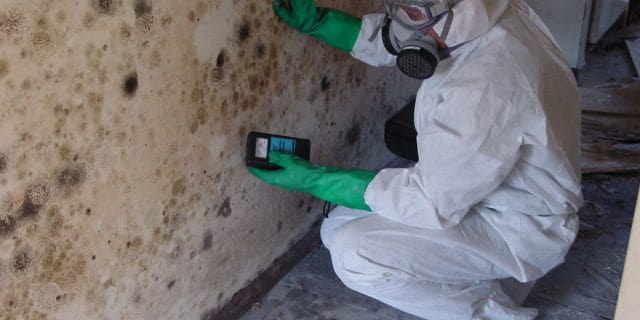
Mold in a Laurel Hollow home is not a minor inconvenience. These are large, wooded properties sitting on hilly terrain adjacent to Cold Spring Harbor — and that combination of shade, coastal humidity, and substantial below-grade square footage creates conditions that mold thrives in. When it’s handled correctly, you stop managing a slow-growing problem and start protecting a significant asset.
The difference between a real remediation and a surface treatment shows up fast. A proper job identifies where the moisture is coming from — whether that’s a foundation drainage issue on a sloped lot, condensation building in an oversized crawl space, or an attic that never dries out under a dense tree canopy. Fix the source, and the mold doesn’t come back. Skip it, and you’re calling someone again in two years.
For a home valued anywhere from $1.25 million to well above $7 million, the financial case for doing this right is straightforward. Mold discovered during a pre-sale inspection can kill a deal or reduce your negotiating position by hundreds of thousands of dollars. A documented, certified remediation — with lab results and a written report — protects your equity and gives buyers nothing to question.
We’ve been serving Long Island homeowners for nearly three decades. That’s not a marketing line — it’s a track record that covers Nassau County’s North Shore, including the estate communities along Route 25A from Cold Spring Harbor through Oyster Bay and into Laurel Hollow. We know these properties: the older construction, the large basements, the complex attic systems, and the moisture patterns that come with living in a heavily wooded, waterfront-adjacent village.
What sets us apart from the national franchises and out-of-state operators that show up in local search results is straightforward: every technician on our team is individually IICRC certified. Not our company as a whole — every person who walks through your door. That matters when the job involves a 5,000-square-foot estate with multiple problem areas and a homeowner who expects the work to be done right the first time.
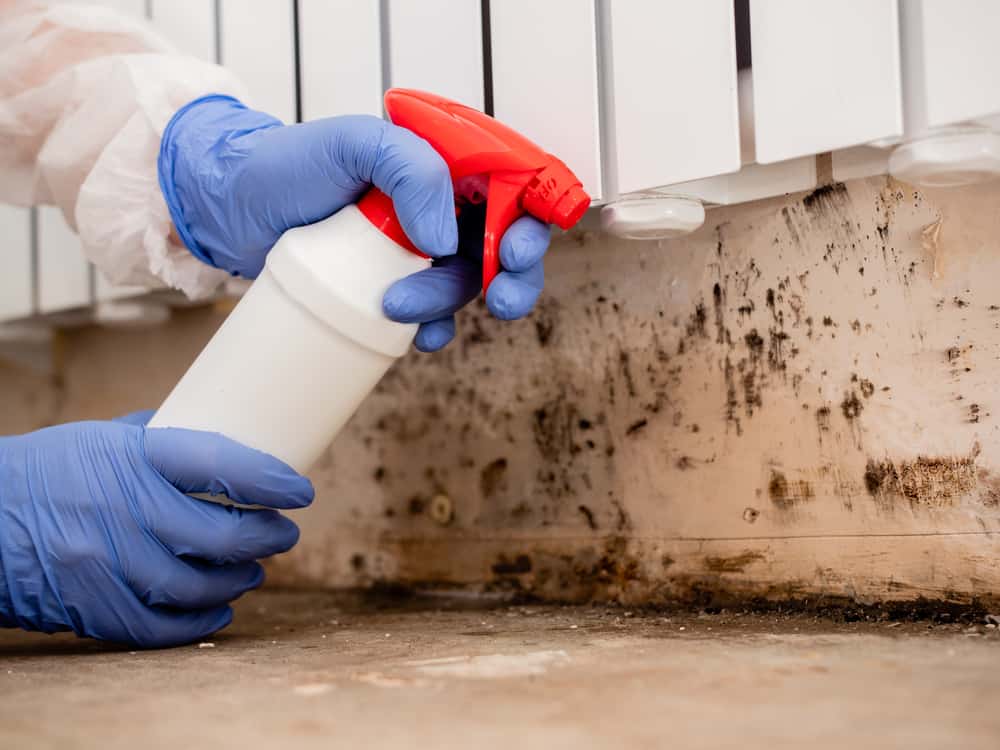
It starts with a thorough inspection — not a quick walkthrough. We use a 13-point process that includes air testing, swab sampling, moisture level measurement, and infrared imaging to find mold that isn’t visible to the naked eye. In a Laurel Hollow home with finished basements, crawl spaces, and large attic sections, that level of inspection isn’t optional — it’s the only way to know what you’re actually dealing with. Lab results and a written report come back within two to three business days.
Once the scope is confirmed, remediation begins with containment. Affected areas are isolated to prevent spores from spreading to clean parts of your home during the removal process. HEPA filtration runs throughout. Contaminated materials — drywall, insulation, framing if necessary — are removed and disposed of properly. The moisture source gets addressed at the same time, because treating the mold without fixing what caused it is just postponing the next call.
After the remediation is complete, clearance testing confirms the job is done. If structural materials were removed, we can handle the rebuild — drywall, insulation, finishing — so you’re not left coordinating a separate contractor to close out the job. One company, start to finish, with documentation at every stage.
Ready to get started?
Mold remediation in Laurel Hollow looks different than it does in a standard suburban home. The properties here are larger, older in many cases, and surrounded by conditions — shade, coastal air from Cold Spring Harbor, hilly drainage patterns — that create persistent moisture challenges. Our service is built to match that scope, not a one-size-fits-all checklist designed for a 1,500-square-foot ranch.
Basement mold remediation addresses the below-grade moisture that accumulates in large foundation spaces on sloped, wooded lots. Crawl space mold remediation covers the vapor barrier failures and ground moisture intrusion that are common in estate-scale homes throughout Nassau County’s North Shore. Attic mold remediation targets the condensation and ventilation failures that develop in homes shaded by dense tree canopy — a specific and frequently overlooked problem in a village like Laurel Hollow where direct sunlight on rooflines is limited. Emergency mold remediation is available around the clock, because a burst pipe or storm event at 2 a.m. doesn’t wait for business hours.
New York State law prohibits the same company from both assessing and remediating mold on the same property — a consumer protection we comply with fully. Your inspection report is objective. What you do with it is your decision. If remediation is needed, the full scope of work — from initial containment through structural repair and restoration — is handled by individually certified technicians with the experience to do it correctly.
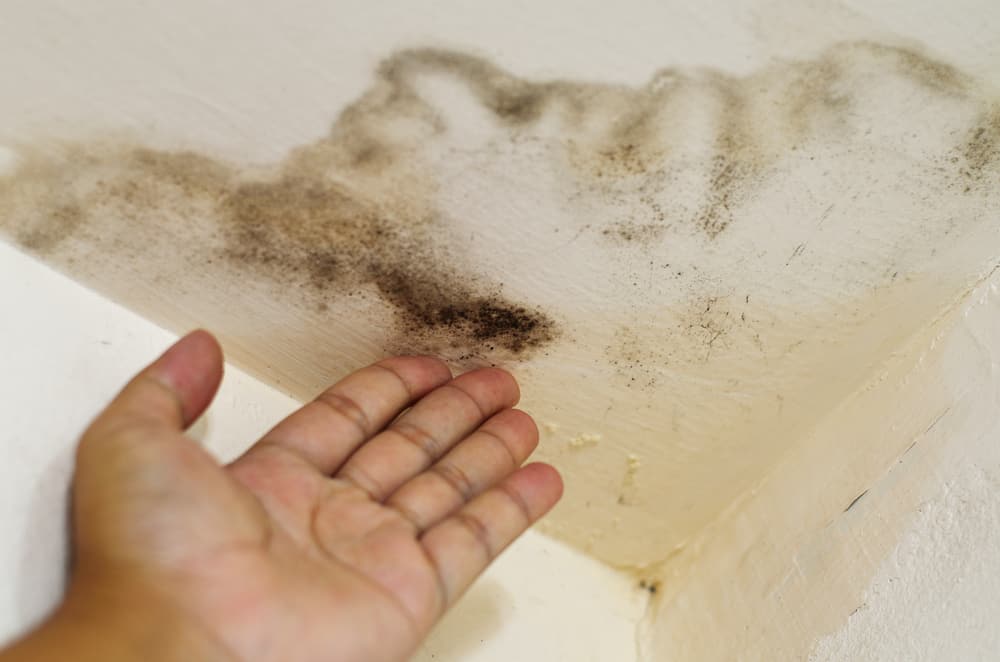
Laurel Hollow’s geography creates a specific set of conditions that make mold more likely than in most Long Island communities. The village sits adjacent to Cold Spring Harbor, a deep tidal inlet that keeps ambient humidity elevated throughout the year — regularly pushing past the 60% relative humidity threshold where mold growth accelerates. Add dense tree canopy that limits sunlight on rooflines and foundation walls, hilly terrain that directs water toward home foundations, and the large below-grade square footage of estate-scale homes, and you have an environment where moisture accumulates and lingers.
Most of the mold problems in homes like these aren’t caused by a single dramatic event. They develop gradually — a slow roof leak, a vapor barrier that’s degraded in a crawl space, an attic that never fully dries out after a wet winter. By the time it’s visible, it’s usually been growing for a while. That’s why a thorough inspection with infrared imaging and air testing matters more here than in a smaller, more straightforward property.
Cost depends heavily on scope, and scope in a Laurel Hollow home can vary significantly. A contained basement or crawl space issue might fall in the $1,500 to $4,000 range. A more significant infestation involving structural materials — drywall removal, insulation replacement, framing — can run $8,000 to $15,000 or more. Whole-house remediation in a large estate home can reach $20,000 to $30,000 depending on the extent of the contamination.
The inspection report is what determines the real number. Without air testing, swab samples, and a proper moisture assessment, any estimate is a guess. We provide a written report with lab results within two to three business days of the inspection, so you have a clear, documented picture of what you’re dealing with before any remediation work begins. That documentation also matters for insurance purposes — homeowners policies may cover mold remediation when it results from a sudden, covered event like a burst pipe or storm damage, and a properly documented inspection supports that claim.
The honest answer is that you often can’t tell without testing. A musty smell in a basement or a finished lower level is one of the most common indicators, but mold can be actively growing behind drywall, inside wall cavities, or across attic sheathing with no visible signs at all. In a large estate home with multiple zones, complex HVAC systems, and significant attic and crawl space area, there are simply more places for it to hide.
Infrared thermal imaging is one of the most effective tools for finding hidden moisture — and therefore hidden mold — without tearing into walls unnecessarily. We use infrared technology as part of our 13-point inspection process specifically because estate-scale homes in communities like Laurel Hollow require more than a visual walkthrough. Air sampling also captures mold spore concentrations that indicate active growth even when nothing is visible. If you’ve had any water intrusion — from a storm, a plumbing leak, or ice dam meltwater — and you’re not certain it was fully dried within 48 hours, that’s reason enough to have the space tested.
It depends on what caused the mold. Most standard homeowners policies cover mold remediation when it’s a direct result of a sudden, accidental covered event — a burst pipe, an appliance failure, storm-driven water intrusion. If the mold developed gradually from a slow leak, chronic humidity, or a maintenance issue the insurer considers preventable, coverage is typically denied or significantly limited.
For Laurel Hollow homeowners, the most common covered scenarios involve winter pipe failures, ice dam damage, and storm water intrusion — all of which are real and recurring risks on the North Shore. The key is documentation. An inspection report with lab results, photographs, and a clear timeline connecting the mold to a covered event gives you the strongest possible basis for a claim. Our written inspection report is structured to provide exactly that kind of documentation. If you’re filing a claim, having a certified remediation company with a formal report behind you makes a meaningful difference in how the claim is received.
Mold removal typically refers to physically cleaning or treating visible mold on a surface — wiping it down, applying a biocide, and moving on. It addresses what you can see. Mold remediation is a broader process that includes identifying the source of the moisture that caused the mold, containing the affected area to prevent spread during the work, removing contaminated materials that can’t be cleaned, treating and clearing the space, and verifying through post-remediation testing that the mold has been successfully addressed.
The distinction matters because mold that is cleaned without addressing the underlying moisture source will return. In a Laurel Hollow home where the contributing factors — coastal humidity, shaded terrain, large below-grade spaces — are ongoing and environmental, surface treatment alone is not a solution. Professional mold remediation following the IICRC S520 standard is the only approach that produces a documented, verifiable result. The EPA recommends professional remediation for any contamination exceeding 10 square feet, and in most estate-home scenarios, the real scope is larger than what’s initially visible.
For a contained area — a section of basement, a crawl space, a portion of an attic — remediation typically takes one to three days once the inspection is complete and the scope is confirmed. Larger infestations involving multiple areas, structural material removal, or whole-house contamination can take a week or more depending on the extent of the work and whether reconstruction is needed after materials are removed.
In Laurel Hollow specifically, the size and complexity of estate homes means that jobs here tend to run longer than average. A property with a large finished basement, an extensive crawl space, and a multi-section attic requires more time to assess, contain, and clear properly than a standard suburban home. The timeline also depends on whether structural repairs are needed after remediation — if drywall or insulation was removed, that work happens after clearance testing confirms the space is clean. We handle both the remediation and the rebuild, which eliminates the scheduling gap that often delays completion when two separate companies are involved.
Useful Links
Other Services we provide in Laurel Hollow