
Hear from Our Customers
Mold remediation done correctly means one thing: it doesn’t come back. Not in six months, not after the next nor’easter rolls through Lloyd Harbor and pushes moisture into your basement or crawl space again. The difference between a real fix and a temporary one starts with identifying where the moisture is actually coming from — and addressing that before anything else gets touched.
Lloyd Harbor’s geography creates conditions that most remediation companies aren’t thinking about when they show up. You’re on a peninsula surrounded on three sides by water — Huntington Bay, Lloyd Harbor itself, and Long Island Sound. That means ambient humidity here runs consistently higher than it does inland, especially from late spring through September. Large estate homes with unconditioned attic spaces and crawl spaces under significant square footage are particularly vulnerable. When those spaces aren’t actively managed, mold finds them.
After proper remediation, you get your home back — not just visually, but verifiably. Air quality returns to normal, documented by post-remediation testing that produces a clearance report. That report matters whether you’re staying put, refinancing, or in the middle of a transaction. In a market where Lloyd Harbor homes trade at a median above $2 million, having that documentation isn’t optional — it’s protection.
We are owner-operated by Richard Peterson, who holds personal New York State licenses in both mold assessment and mold remediation — credentials issued under Article 32 of the NYS Labor Law that you can look up and verify yourself through the Department of Labor. That’s not a company-level certificate on a wall. That’s the owner’s name on the license, which means direct accountability on every job we do in Lloyd Harbor and across the North Shore.
Our team has been working Long Island’s North Shore for over three decades. That includes the post-storm remediation work that follows the kind of wind and water events that have specifically impacted Lloyd Harbor — the village was named among the hardest-hit North Shore communities when Ida’s remnants came through in September 2021. This isn’t a crew learning your area on your dime.
Every technician is IICRC-certified and follows the S520 Standard for Professional Mold Remediation. From the first assessment to the final clearance, the work is thorough, documented, and done by people who are credentialed to do it.
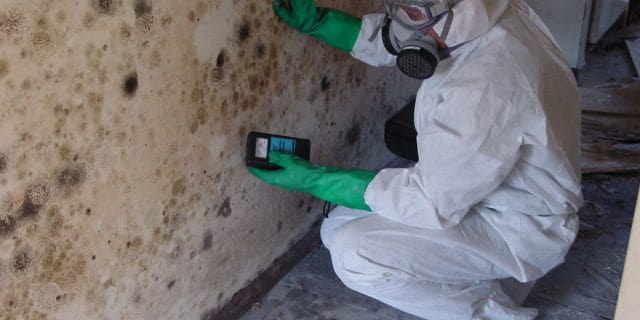
It starts with a thorough assessment — not a quick visual scan, but a moisture mapping evaluation that identifies where water is entering, where it’s accumulating, and what it’s already affected. In Lloyd Harbor homes, that often means looking carefully at crawl spaces, basement walls near the harbor side, and attic decking under large roof systems that have taken wind-driven rain. The source has to be identified before remediation begins, or you’re just cleaning up a problem that will return.
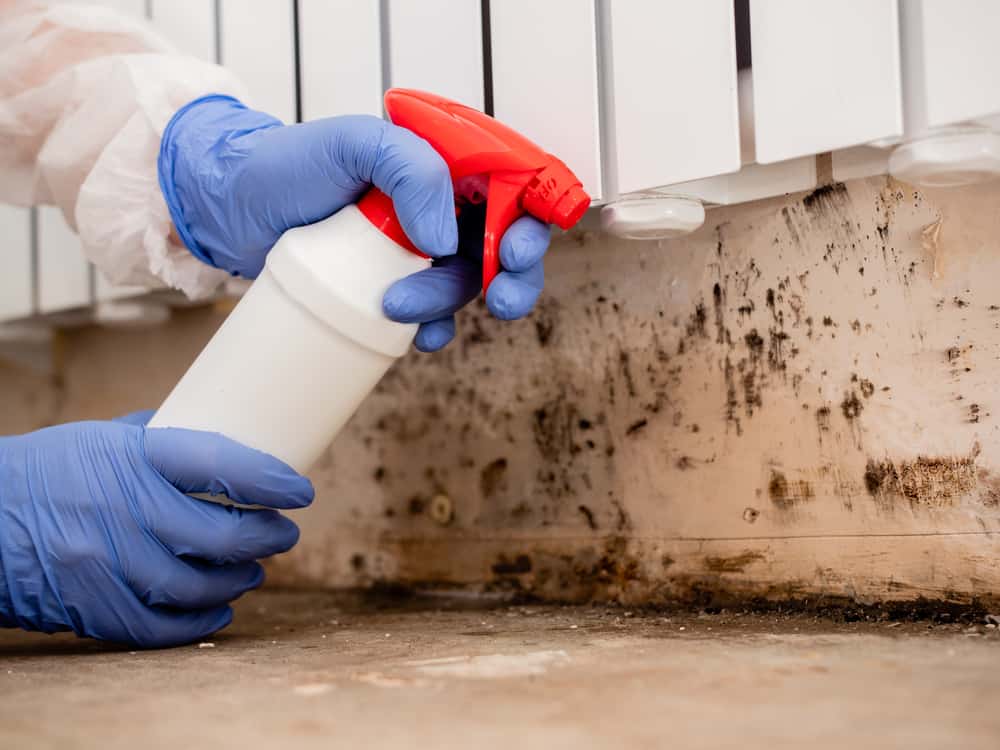
Once the scope is clear, we set up containment to isolate affected areas from the rest of the home. Negative air pressure keeps spores from migrating during removal. Contaminated materials are removed and disposed of properly. Affected surfaces are treated with EPA-registered antimicrobial agents. Structural drying follows where needed. Because we operate both a restoration and a cleaning division, the entire cycle — from containment through final post-remediation cleaning — is handled by one team under one scope of work.
After the work is done, independent air quality testing confirms that mold spore levels have returned to normal. You receive a written clearance report. Given Lloyd Harbor’s village code requirements around building permits and the level of documentation that estate transactions in this area require, having that clearance report in hand is something your attorney or insurance adjuster will likely ask for anyway.
Ready to get started?
Mold remediation in Lloyd Harbor isn’t a one-size scope. A 4,000-square-foot colonial on West Neck Road with a finished basement, multiple HVAC zones, and a crawl space under a rear addition has a different set of challenges than a smaller property. We assess the full picture before quoting anything — attic mold remediation, basement mold remediation, crawl space mold remediation, and affected living areas are each evaluated separately and addressed based on what’s actually present.
Our work includes containment setup, safe removal of contaminated materials, antimicrobial treatment of all affected surfaces, structural drying where moisture remains, and a full post-remediation cleaning of impacted areas. We offer emergency mold remediation around the clock for situations where a storm event or sudden water intrusion requires immediate response — which matters in a village that sits at the intersection of three bodies of water and has documented storm vulnerability.
Documentation is built into every job we do. That includes a written scope before work begins, progress records during remediation, and a post-remediation clearance report at the end. For Lloyd Harbor homeowners navigating insurance claims on high-value properties, or managing the documentation requirements of a real estate transaction, that paper trail is part of what you’re paying for — and it’s standard, not an add-on.
Yes — and this is not a technicality worth overlooking. Under Article 32 of the New York State Labor Law, anyone performing mold remediation on a property in New York must hold a valid NYS mold remediation contractor license issued by the Department of Labor. The same law requires that mold assessment be performed by a separately licensed mold assessor. These are distinct licenses, and both must be held by the individuals performing that work — not just the company name on the invoice.
This matters practically for Lloyd Harbor homeowners for a few reasons. First, your insurance company may deny a claim if the remediation was performed by an unlicensed contractor. Second, if you’re selling the property, a buyer’s attorney will ask for documentation — and work performed by an unlicensed operator creates a liability gap that can stall or kill a transaction. Third, Lloyd Harbor’s village code already requires permits for a wide range of residential work, and the expectation of full compliance with state licensing is consistent with how this community operates. Verify any contractor’s license number through the NYS Department of Labor before work begins.
The honest answer is that cost depends heavily on scope, and scope in Lloyd Harbor homes tends to be larger than average. Nationally, most residential mold remediation projects fall between $1,200 and $3,800. But estate-scale homes — the kind that make up the majority of Lloyd Harbor’s housing stock, with large attic footprints, finished basements, crawl spaces under multi-wing additions, and multiple HVAC zones — can run $5,000 to $15,000 or more depending on how much area is affected and how extensive the structural work needs to be.
Attic mold remediation, which is one of the most common issues in large Long Island Sound-area homes due to summer condensation, typically runs $1,500 to $9,000. Crawl space remediation averages $500 to $4,000 depending on size and severity. What’s worth keeping in perspective: in a market where Lloyd Harbor homes sell at a median above $2 million, the cost of proper remediation is a small fraction of what an undisclosed or poorly handled mold problem can cost you in a transaction — or in recurring remediation if the source was never addressed.
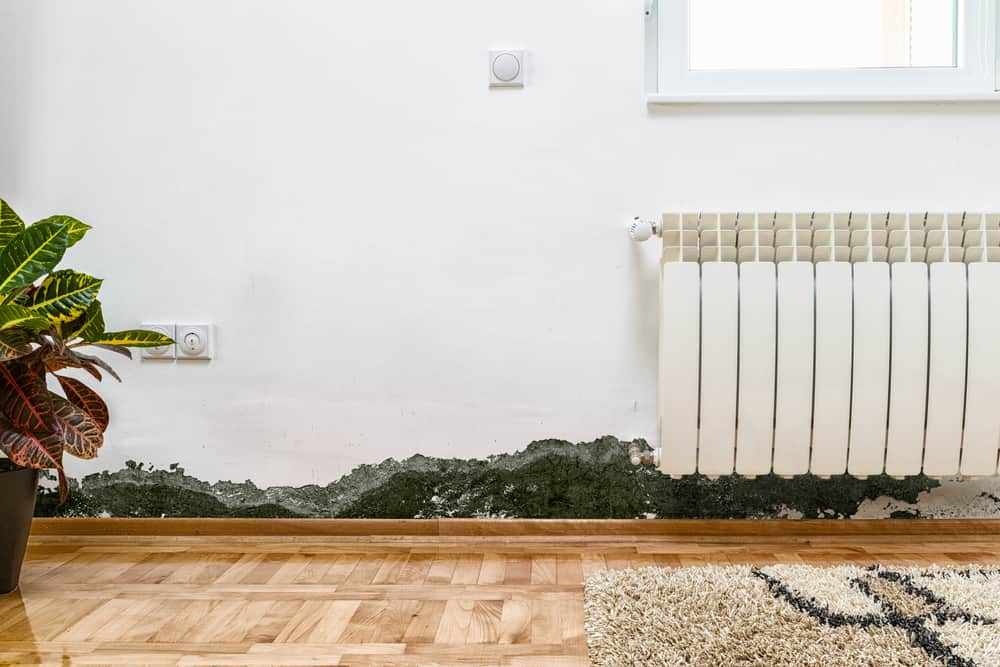
The short answer is moisture — but the specific sources in Lloyd Harbor are worth understanding because they’re different from what drives mold in inland Long Island communities. The village sits on a peninsula surrounded on three sides by water. That geography sustains ambient humidity levels that are consistently higher than you’d find even 10 miles south, especially from May through September. Any unconditioned space in your home — an attic, a crawl space, a basement that isn’t actively dehumidified — is absorbing that moisture continuously during warm months.
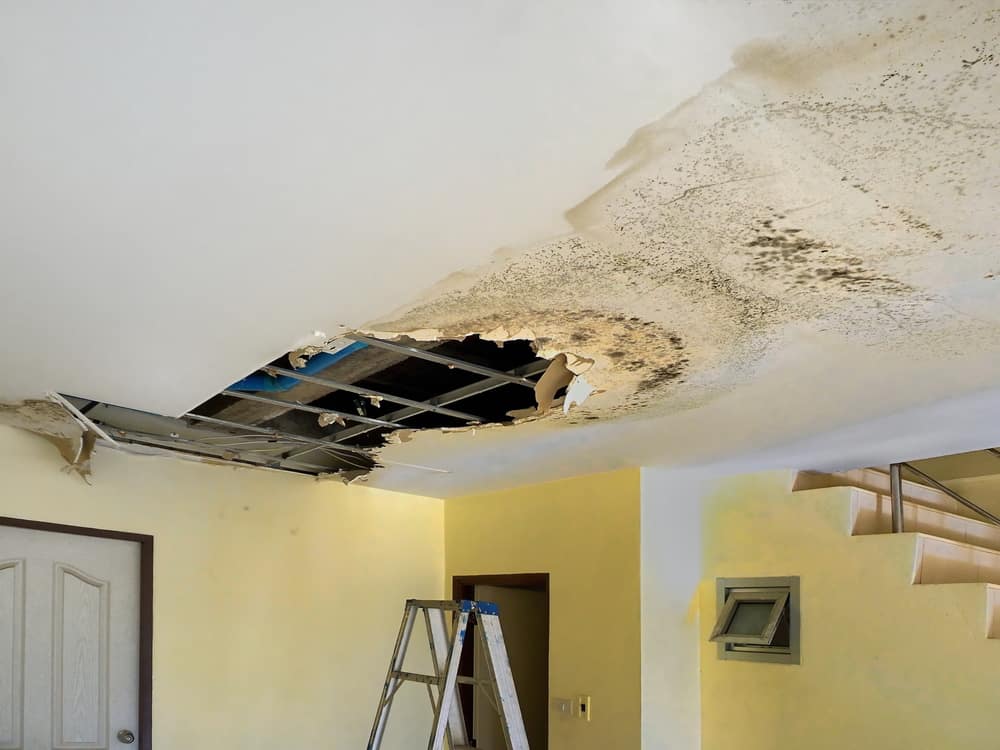
Beyond ambient humidity, the other major driver is storm intrusion. Lloyd Harbor was specifically named among the hardest-hit North Shore communities after Hurricane Ida’s remnants came through in September 2021. Wind-driven rain penetrating roof systems, water pushing through basement walls near the harbor, and groundwater infiltration in properties near wetland areas are all documented local risk factors. The wooded character of the village — with Caumsett State Historic Park adjacent and dense tree canopy across most properties — also slows drying after rain events, which extends the window during which mold can establish. Mold begins growing within 24 to 48 hours of any water intrusion event, so the conditions here don’t leave much margin.
This is a distinction that matters, and it comes up often. “Mold removal” implies that mold can simply be taken out completely and permanently — which isn’t accurate. Mold spores are present in virtually every environment, including outdoor air. The goal of professional remediation isn’t to eliminate every spore; it’s to return mold levels inside your home to the same normal range that exists outside, and to remove the conditions that allowed mold to grow in the first place.
In New York, the term “mold remediation” is the legally defined standard under Article 32, and licensed contractors are required to follow protocols that include containment, proper removal of contaminated materials, antimicrobial treatment, and post-remediation verification. A company offering simple “mold removal” without those steps — containment, source correction, post-testing — is not meeting the legal or professional standard. For Lloyd Harbor homeowners, the distinction is also financial: a remediation that doesn’t include post-remediation air quality testing leaves you without the clearance documentation that insurance adjusters and real estate attorneys will request.
It depends on where the mold is located and how extensive the remediation scope is. For isolated issues — a section of attic decking, a small area of crawl space — it’s often possible to remain in the home while work is contained to that area. Proper containment with negative air pressure prevents spores from migrating into living spaces during the remediation process, which is a key part of why the protocol exists.
For larger-scale remediation involving finished basement areas, multiple zones, or HVAC-connected spaces, temporary relocation may be the safer and more practical choice. This is particularly relevant in Lloyd Harbor’s larger estate homes, where a mold issue in one wing of a multi-section home may still require containment measures that affect HVAC airflow throughout. The assessment phase will clarify the scope, and at that point you’ll have a clear picture of what’s realistic. The answer should always come from what the actual conditions require — not from a blanket policy in either direction.
The honest answer is that remediation alone doesn’t guarantee mold won’t return — source correction does. If the underlying moisture problem isn’t identified and fixed, mold will grow back in the same location regardless of how thorough the initial cleanup was. That’s why the assessment phase isn’t just about finding mold — it’s about finding why the mold is there.
In Lloyd Harbor specifically, that often means looking at drainage patterns around the foundation, the condition of crawl space vapor barriers, attic ventilation relative to the home’s HVAC load, and roof system integrity after storm exposure. Once the source is corrected and remediation is complete, post-remediation air quality testing provides an independent confirmation that spore levels have returned to normal. That test produces a written clearance report — which is the closest thing to a guarantee the industry offers, because it’s not the remediation company grading their own work. It’s a measured result. For a home in Lloyd Harbor, that documentation also has lasting value: it stays with the property record and answers the question definitively if it ever comes up in a future transaction.
Useful Links
Other Services we provide in Lloyd Harbor