
Hear from Our Customers
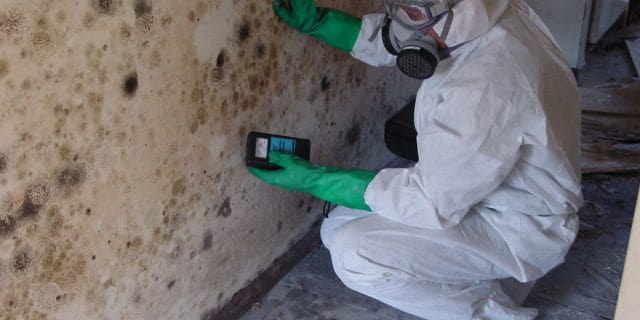
When mold shows up in a North Hills home, the stakes are real. These aren’t starter homes — they’re custom estates, finished basements, and luxury units in communities like The Chatham or The Links, where a mold problem left unresolved can quietly cut six figures off your property’s value. Our goal isn’t just to clear the mold. It’s to restore the home to a condition you can document, insure, and sell.
North Hills’s heavily wooded lots and hilly terrain hold moisture differently than the flat communities further south on the island. Shade slows evaporation, hillside drainage pushes water against foundation walls, and Long Island’s summer humidity — regularly above 60% — means any wet surface in a crawl space, attic, or finished basement can become a mold problem within 36 to 48 hours. That window is shorter than most homeowners realize.
What changes after a proper remediation isn’t just the absence of mold. It’s the written lab results, the clearance report, the documented scope of work — the kind of paperwork your HOA, your insurance company, or a prospective buyer’s inspector will actually accept. That’s what a complete remediation looks like for a North Hills property.
We’ve been serving Nassau County homeowners since the late 1990s — nearly three decades of showing up for North Hills families through hurricanes, nor’easters, ice dam seasons, and everything in between. The North Shore has its own set of conditions, and we’ve worked in them long enough to know exactly what we’re dealing with before we walk through your door.
Every technician on our team carries individual IICRC certification — not just the company. That matters when you live in a managed community like Hamlet Estates or Spruce Pond and your HOA requires documented proof of licensed professional work. It also matters when you’re filing an insurance claim and need someone who can back up every step with paperwork.
We handle the full project — from the initial inspection through mold removal and full reconstruction. One call, one accountable team, from discovery to finished walls.
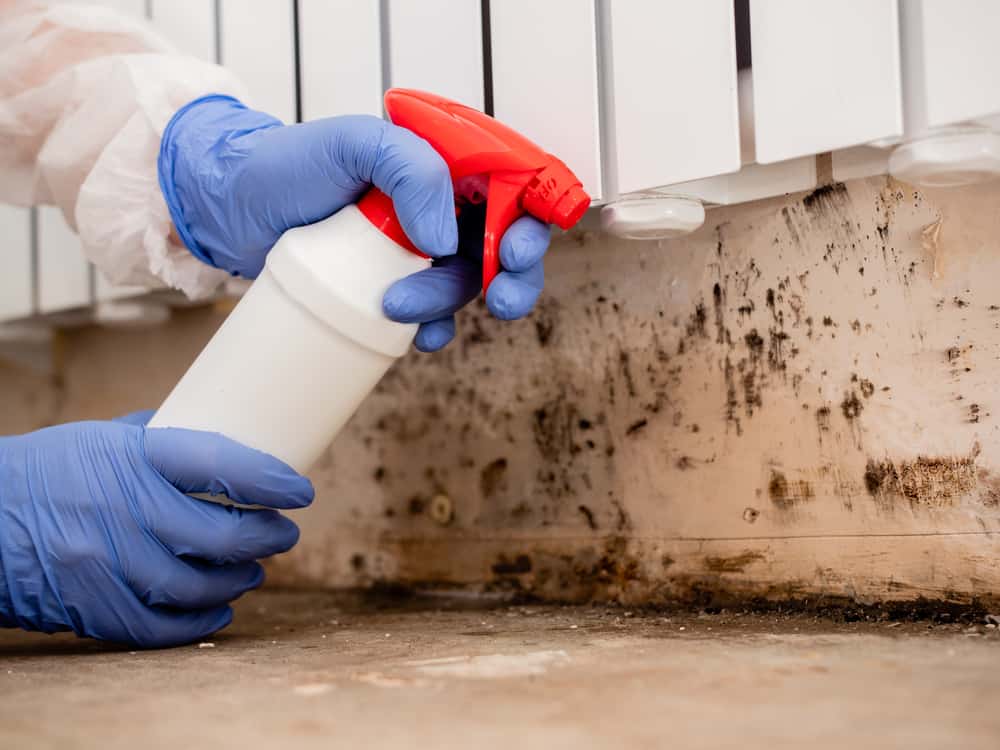
It starts with a thorough mold inspection — and under New York State’s Article 32 mold law, that assessment must be performed by a separately licensed professional, not the same company doing the remediation. This law exists to protect you from inflated scopes and unnecessary work. We operate in full compliance, which means you get an honest, independent assessment before any remediation plan is built.
Once the inspection is complete and lab results come back — typically within two to three business days — a clear scope of work is established based on what the testing actually shows. In North Hills homes, that often means looking beyond the visible surface: checking crawl spaces in older estate properties, inspecting attic ventilation in large custom homes where bathroom exhaust fans sometimes vent inward rather than out, and assessing HVAC systems that may have distributed spores across multiple zones of a large house.
Remediation itself follows IICRC protocols — containment, removal, treatment, and air quality verification. The moisture source gets addressed in the same process, not as an afterthought, because mold that comes back is a sign the underlying problem was never fixed. When structural materials need to be replaced, we handle the reconstruction too, so you’re not left coordinating a separate contractor to finish the job.
Ready to get started?
Our inspection covers air testing, surface swab sampling, moisture level measurements, infrared scanning for hidden mold behind walls and ceilings, and a full written report with lab results. It’s not a visual walkthrough with a verbal opinion — it’s a documented assessment that holds up with an insurance adjuster, an HOA board, or a real estate attorney.
We cover the full range of locations where mold shows up in North Hills homes specifically: finished basements that took on water during a storm event, attics in large homes with inadequate ventilation, crawl spaces in older estate properties along Shelter Rock Road, and shared building systems in the gated condo communities throughout the village. Black mold remediation, crawl space mold remediation, and emergency mold remediation are all within scope — and because Nassau County has seen more than 30 declared natural disasters, post-storm emergency calls are something we’re well-practiced at handling quickly.
For homeowners in managed communities — The Chatham, The Links, Spruce Pond, The Fairways — we provide the full documentation package your HOA will require: scope of work, photographic and infrared evidence, lab results, and a post-remediation clearance report. And when the mold removal is done and walls need to come back together, the reconstruction work stays under the same roof. No handoff, no gap in accountability.
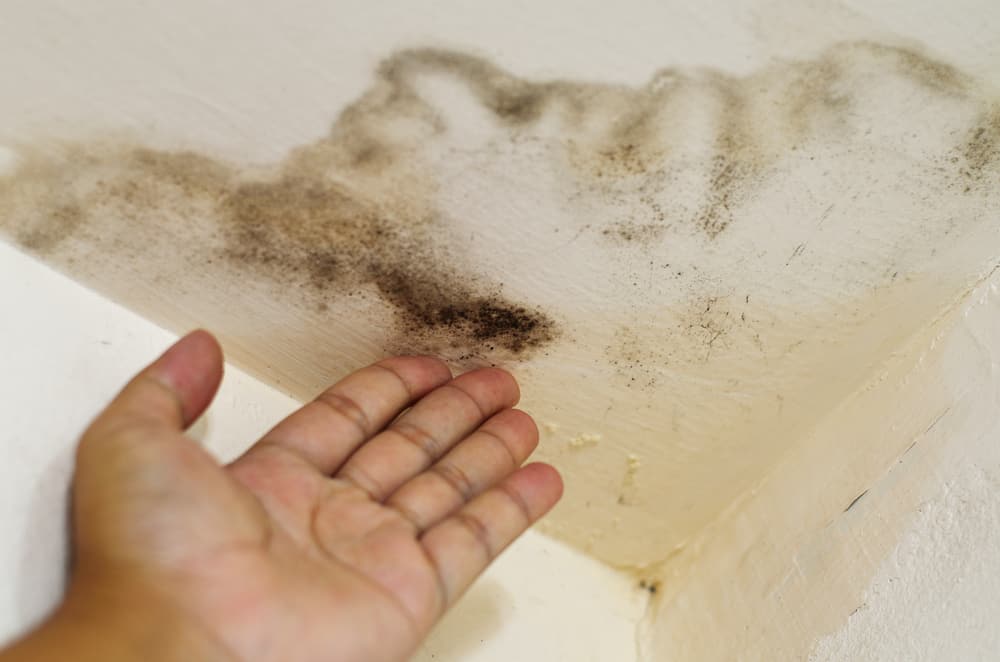
Yes, and it’s worth understanding before you call anyone. New York State’s Article 32 mold law, which took effect in January 2016, requires that mold assessment and mold remediation be performed by separately licensed professionals. The company inspecting your home cannot legally be the same company remediating it. This law was put in place specifically to prevent the scenario where a contractor exaggerates or fabricates a mold problem to sell you a remediation you don’t need.
What this means practically is that you should expect two separate licensed parties involved in your project — one for the assessment, one for the work. Any company that offers to do both in-house, under the same license, is not operating within the law. We work in full compliance with Article 32, and we’ll walk you through what that looks like for your specific situation before anything starts. In a community like North Hills where residents are accustomed to holding service providers to a high standard, knowing this law exists is one of the most important things you can do before picking up the phone.
The range is wide because the scope varies significantly depending on where the mold is, how far it’s spread, and what materials are affected. A contained basement mold situation in a smaller area might come in around $1,500 to $3,500. A larger infestation — say, an attic with extensive coverage in one of North Hills’s larger custom homes, or mold that’s spread behind finished walls in a multi-room basement — can run anywhere from $10,000 to $30,000 or more once structural materials need to be replaced.
For North Hills homeowners specifically, the size and complexity of the homes matters. A 5,000-square-foot estate with a finished basement, multi-zone HVAC, and a large attic has more potential surface area and more systems to evaluate than a smaller home. The inspection report is what actually defines the scope — and that’s why getting a thorough, lab-confirmed assessment upfront matters. It prevents surprises mid-project and gives you a documented basis for an insurance claim if the mold is connected to a covered water damage event.
This is a common and completely reasonable requirement for residents of North Hills’s managed communities — The Chatham, The Links, Hamlet Estates, Spruce Pond, The Fairways, and others. HOAs typically need to see proof that the work was performed by licensed, certified professionals before they’ll sign off on the project, and in some cases before they’ll allow work to begin at all.
We provide a full documentation package at every stage: the initial inspection report with lab results, the written scope of work, photographic and infrared documentation of the affected areas, and a post-remediation clearance report confirming the space has been cleared. Every technician on our team carries individual IICRC certification, not just a company-level credential, which means the documentation reflects the actual qualifications of the people who did the work. If your HOA has a specific form or format they require, bring that to the conversation early — it’s easier to align documentation requirements at the start than to reconstruct them after the job is done.
Mold removal typically refers to physically cleaning or eliminating visible mold from a surface. Mold remediation is a broader process — it includes removal, but it also addresses the moisture source that caused the mold, treats affected materials to prevent regrowth, verifies air quality after the work is done, and produces documentation of the entire process. Remediation is the standard that insurance companies, HOAs, and real estate transactions require. Removal alone often isn’t enough.
In a North Hills context, this distinction matters because the homes here are large and complex. A visible mold spot in a finished basement might be the surface indicator of a deeper moisture problem — a slow foundation seep, a plumbing leak inside a wall, or inadequate drainage on a sloped lot pushing water against the house. Treating the surface without addressing what caused it means the mold comes back, often in a few weeks. Remediation done correctly identifies and resolves the source, removes and treats the affected materials, and confirms through post-work testing that the air quality has returned to an acceptable level.
Faster than most people expect. Under the right conditions — and Long Island’s humid summers create exactly those conditions — mold can begin colonizing a wet surface in as little as 36 to 48 hours. That’s not a worst-case scenario. That’s a realistic timeline for a wet basement, a water-damaged attic, or a crawl space that took on moisture during a nor’easter or a sump pump failure.
North Hills’s wooded, shaded lots slow down the natural evaporation process that might dry out a wet area in a more open environment. When shade keeps moisture in the soil and against foundation walls longer than usual, the risk window extends. Nassau County has experienced more than 30 declared natural disasters — well above the national average — and the North Shore’s storm patterns mean heavy rainfall events are not rare. If your home has experienced any kind of water intrusion, the clock starts immediately. Waiting a few days to assess the situation is often the difference between a contained remediation and a significantly larger project.
It can, and in North Hills’s gated condo communities this is a legitimate concern worth taking seriously. In townhouse and condominium buildings — like those in The Chatham or Spruce Pond — units share walls, rooflines, plumbing systems, and in some cases HVAC infrastructure. A water intrusion event in one unit doesn’t always stay contained to that unit. Moisture can travel through shared framing, insulation, and building cavities before it becomes visible anywhere.
This is one of the reasons that documentation matters so much in a managed community setting. If mold is found in your unit and there’s reason to believe it originated from a shared building system or an adjacent unit, you’ll need a professional assessment that clearly identifies the source — not just the location of the visible growth. Our inspection process uses infrared scanning and moisture measurement alongside air and surface sampling, which helps establish where moisture is actually moving through a structure. That kind of documented evidence is often what’s needed to determine HOA versus individual unit responsibility — and to make sure the right party addresses the right problem.
Useful Links
Other Services we provide in North Hills