
Mold Remediation in North Lynbrook, NY
Pre-War Homes Hide Mold. Here's What to Do About It.
Hear from Our Customers
Basement Mold Remediation North Lynbrook
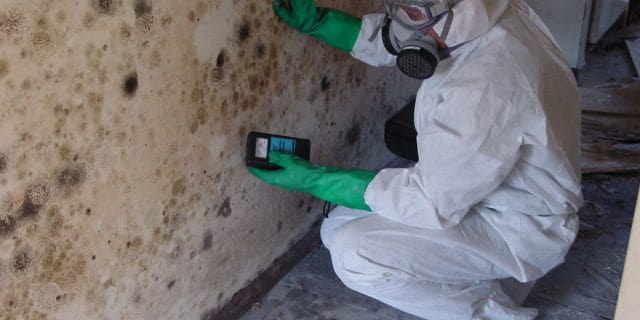
The musty smell in the basement stops being something you explain away. The dark patch behind the utility shelving stops being something you’ll “get to eventually.” When mold is properly remediated not just wiped down, but fully addressed at the source your home stops working against you and starts feeling like a safe place again.
That matters more in North Lynbrook than people realize. The majority of homes here were built before modern moisture management even existed as a concept. Stone foundations, older plumbing, crawl spaces without vapor barriers these aren’t rare exceptions in this neighborhood. They’re the norm. And when you add the South Shore’s summer humidity, which regularly pushes past 60% from June through September, you have conditions that quietly feed mold growth year after year, often in spaces you don’t check regularly.
Getting ahead of it doesn’t just protect your family’s health. It protects the value of your home. A mold problem that surfaces during a sale can reduce your property’s value by 20% to 37% and half of interested buyers walk away entirely when mold is disclosed. In a community where the median home value sits around $480,600, that’s not a small number. Professional mold remediation in North Lynbrook, NY is one of the most straightforward ways to protect what you’ve built here.
Certified Mold Remediation Companies North Lynbrook
We’ve been working in Nassau County homes since the late 1990s. That’s not a marketing line it means we’ve been inside hundreds of pre-war homes across the South Shore, including the kind of older construction that defines neighborhoods like North Lynbrook. We know where moisture hides in homes of this era because we’ve seen it firsthand, over and over.
Every technician we send to your North Lynbrook home holds individual IICRC certification not just our company as a whole, but each person on the crew. We’re also fully compliant with New York State Article 32, which has required separate licensing for mold assessment and mold remediation since 2016. That law exists specifically to protect Nassau County homeowners, and we’ll walk you through exactly what it means for your situation before anything starts.
You reach us through our Nassau County line at 516-541-0500. When you call, you reach someone who knows this area not a national call center.

Professional Mold Remediation Process North Lynbrook
It starts with a 13-point mold inspection. That includes air testing, swab sampling, infrared imaging, moisture level readings, and a comparison of indoor and outdoor mold particle counts. Everything goes to a lab, and you get a written report with results within 2 to 3 business days. Not a verbal summary a documented scope you can share with your insurance company, your real estate agent, or anyone else who needs to see it.
Under New York State Article 32, the assessment and the remediation must be handled by separate licensed parties. That’s the law, and it’s there to protect you. Once a licensed assessor has defined the scope, our remediation team gets to work. Every truck arrives fully equipped air movers, dehumidifiers, moisture monitors, and everything needed to start immediately. There’s no waiting on a second equipment run.
What makes the difference in an older North Lynbrook home is addressing the moisture source, not just the visible mold. A stone foundation letting in groundwater, a slow pipe leak inside a wall, an attic that’s been condensing moisture onto the roof deck every winter for decades if that’s not resolved, the mold comes back. We identify it, we address it, and if building materials need to come out and be rebuilt, we handle that too. You don’t need to coordinate a separate contractor for repairs.
Ready to get started?
Black Mold Remediation Services North Lynbrook NY
Mold remediation in North Lynbrook, NY isn’t one-size-fits-all, and it shouldn’t be treated that way. Homes built before 1939 which describes most of the housing stock here have specific vulnerabilities that newer construction doesn’t. Crawl spaces with earthen floors and no vapor barrier. Attics with inadequate soffit and ridge ventilation that allow condensation to build on the underside of the roof deck every winter. Basements with original waterproofing that’s decades past its useful life. These aren’t edge cases. They’re what we see regularly in this neighborhood.
Our mold cleanup and remediation scope covers the full range: basement mold remediation, crawl space mold remediation, attic mold remediation, black mold remediation, and mold damage repair when structural materials need to be removed and rebuilt. We also carry liability insurance well above the $50,000 minimum required under Article 32, and we’re licensed with the Nassau County Fire Marshall as required under the county’s Fire Prevention Ordinance for restoration service providers.
If your situation involves an insurance claim, we help with documentation. If it’s an active emergency a sump pump failure, a burst pipe in the middle of a nor’easter we’re available 24 hours a day, 7 days a week at 516-541-0500. Mold growth begins within 24 to 48 hours of water intrusion. Response time is not a small thing.
Can the same company do the mold testing and the mold removal in North Lynbrook?
No and this is one of the most important things to understand before you hire anyone. Under New York State Article 32, which became law on January 1, 2016, mold assessment and mold remediation must be performed by separate, independently licensed parties. A company that offers to test your home and then immediately remediate it themselves is operating outside the law and more importantly, outside your interests.
The reason this law exists is straightforward. When the same company finds the problem and fixes it, there’s a financial incentive to find more of it than may actually be there. Separating the two roles removes that conflict. A licensed mold assessor defines the scope of work in writing. We execute that scope as a licensed remediation contractor. After remediation, a licensed assessor returns for clearance testing to confirm the job is done. That’s the process, and it’s the only compliant one in New York State.
How much does mold remediation cost for a home in North Lynbrook?
The national average for mold remediation runs around $2,300, but the actual cost for your North Lynbrook home depends on where the mold is, how far it’s spread, and what materials need to come out. A contained basement wall situation is a very different job than mold that’s worked its way into wall cavities, subfloor, or attic sheathing which is more common in pre-war construction than most homeowners expect.
What drives cost up in older North Lynbrook homes is usually the extent of hidden growth. Mold in a stone foundation basement or behind plaster walls doesn’t always announce itself until it’s had time to spread. That’s why the written lab report from the assessment phase matters it tells you exactly what you’re dealing with before any remediation work begins, so there are no surprises mid-project. If your situation involves an insurance claim, the documentation from a proper licensed assessment is also what your insurer will want to see.
What is the difference between mold remediation and mold removal?
Mold removal is a surface-level term. It implies that mold can simply be wiped away and the problem is solved. Mold remediation is the more accurate description of what professional work actually involves identifying the source of moisture, containing the affected area, removing contaminated materials where necessary, treating surfaces, and verifying through post-remediation testing that the environment has returned to normal mold levels.
In a North Lynbrook home built before 1939, the distinction matters practically. Surface treatment of visible mold without addressing the underlying moisture source whether that’s a failing foundation, a slow plumbing leak, or an attic with inadequate ventilation will result in mold returning within months. Remediation means solving the actual problem, not just cleaning up what you can see. That’s why the process includes moisture readings, infrared imaging, and a lab-verified clearance test at the end. It’s not done until the numbers confirm it’s done.
Does homeowners insurance cover mold remediation in North Lynbrook, NY?
It depends on the source of the moisture. Most homeowners insurance policies in Nassau County will cover mold remediation if the mold resulted from a sudden, accidental event a burst pipe, an appliance malfunction, or storm-related water intrusion that was promptly reported and addressed. What they typically won’t cover is mold that developed from long-term seepage, gradual leaks, or deferred maintenance the kind of slow moisture accumulation that’s common in the older homes of North Lynbrook.
The documentation from a proper mold assessment is what your insurer will use to evaluate the claim. A written lab report that identifies the mold type, the affected area, and the probable moisture source gives your insurance company something concrete to work with. If you’re dealing with a sudden event a sump pump failure during a storm, for instance calling quickly and documenting everything from the start puts you in the strongest position for a claim. We can walk you through what your insurer will likely need.
How do I know if there's mold in my crawl space or attic if I can't see it?
The honest answer is that you often can’t tell without testing. Crawl spaces in pre-war North Lynbrook homes frequently have earthen floors with no vapor barrier, which means ground moisture has been evaporating into that space for decades. Mold can colonize the wood framing above it without producing any visible sign from inside the living area. The first clue is usually a persistent musty smell, or a family member with unexplained respiratory symptoms that improve when they’re away from home.
Attic mold follows a similar pattern. Warm, moist air from the living space rises into an under-ventilated attic and condenses on the underside of the roof deck during winter. Over time, that condensation cycle produces mold colonies that are invisible from below until the problem is significant. Infrared imaging and air sampling are the tools that find it. A 13-point inspection that includes both will give you a clear picture of what’s actually happening in spaces you don’t regularly access and a written lab report to back it up.
Is mold common in older North Lynbrook homes, and how serious is it?
It’s more common than most homeowners here realize, and that’s not meant to alarm you it’s just the reality of living in a community where the majority of homes were built before 1939. Homes of that era were constructed before vapor barriers, modern insulation standards, and moisture-managed building practices existed. Stone foundations, original plumbing, and attic ventilation designed for a different era of construction all create conditions where moisture accumulates quietly over time.
That doesn’t mean every older home in North Lynbrook has an active mold problem. It means the risk factors are genuinely elevated compared to newer construction, and that periodic inspection particularly after any water intrusion event is worth taking seriously. As for severity, mold becomes a health concern when it’s producing spores in an enclosed living environment over an extended period. The EPA recommends professional remediation for any mold coverage exceeding 10 square feet. Beyond the health question, a mold problem that surfaces during a home sale in this area can cost you far more in lost value than the remediation itself would have.
Useful Links
Other Services we provide in North Lynbrook