
Hear from Our Customers
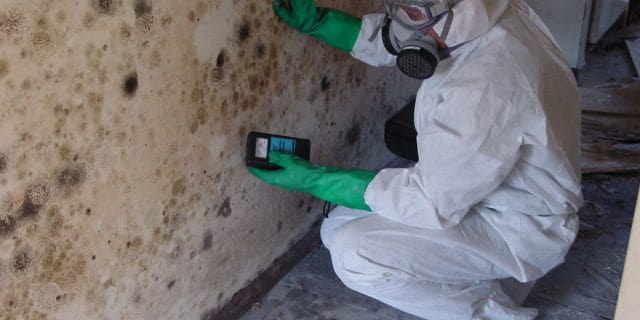
When mold is properly remediated — not just wiped down, not just painted over — the air in your home changes. The smell goes away. The discoloration doesn’t come back six months later. And if you’re preparing to sell a home on The Hemlocks or anywhere else in Roslyn Estates, you have the documentation to prove the work was done right: lab results, a written scope, clearance testing, and a report that holds up in front of a buyer’s attorney.
That matters here more than most places. Roslyn Estates homes regularly list between $1.3 million and $4 million. A mold finding during a buyer’s inspection doesn’t just delay a sale — it can cost you six figures in negotiated price reductions or kill the deal entirely. Certified mold remediation with a paper trail is asset protection, not just home maintenance.
The older housing stock in Roslyn Estates also means the moisture sources are rarely obvious. Stone and early concrete foundations, original galvanized plumbing, attics with inadequate ventilation, crawl spaces in those mid-century ranch and split-level homes — these are the conditions that hide moisture intrusion for months before mold becomes visible. The outcome you actually want isn’t just mold removal. It’s knowing the source has been found and fixed so it doesn’t come back.
We’ve been serving Nassau and Suffolk County homeowners since the mid-to-late 1990s. That kind of longevity on Long Island means something in this industry — companies that cut corners don’t last three decades. Every technician who shows up at your door holds individual IICRC certification, not just a company-level credential. That distinction matters when someone is working inside a $2 million home in Roslyn Estates.
We serve the entire North Shore corridor — Roslyn Estates, Roslyn Harbor, Roslyn Heights, Flower Hill, and the surrounding Nassau County communities. We know the housing types here, the drainage patterns on these hilly lots, and what a nor’easter does to a 1930s Colonial’s foundation walls. That’s not something we learn from a training manual. It comes from doing the work here, for years, for homeowners who live in Roslyn Estates and the surrounding area.
We’re also locally based — Nassau County (516) and Suffolk County (631) phone lines, not a national 1-800 routing number. When you call, you’re reaching Long Island.
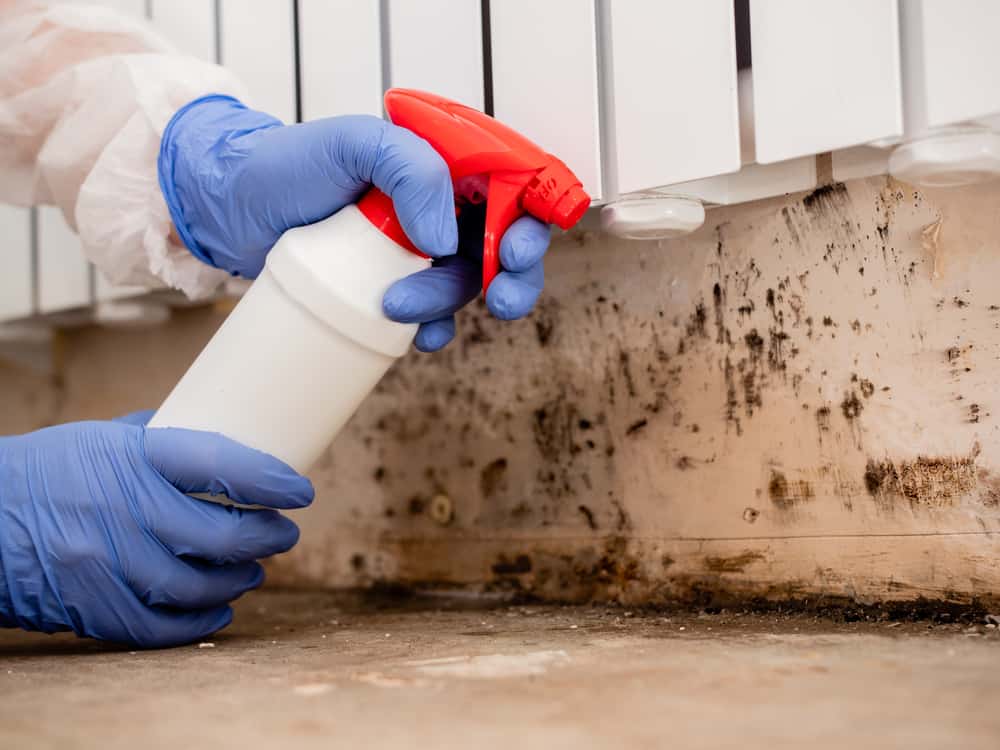
It starts with a 13-point inspection — not a visual walk-through and a verbal estimate. We conduct air testing, swab sampling, infrared imaging to find moisture hiding behind walls, and moisture level readings throughout the affected space. Lab results come back in writing within 2–3 business days. That report tells you what you’re dealing with, where it’s coming from, and what remediation actually needs to happen.
Before any remediation begins, we identify and address the moisture source. In Roslyn Estates, that might be a slow seep from aging galvanized pipes inside a wall cavity, groundwater pushing through a porous stone foundation during spring thaw, or ice dam damage in an attic above a dormer — all common in the village’s older housing stock. Skipping this step is why mold comes back. We don’t skip it.
Once the source is controlled, the remediation follows a documented scope of work: containment, removal of affected materials, antimicrobial treatment, and air clearance testing when the job is complete. Because Roslyn Estates is an incorporated village with its own code enforcement, any work involving structural material removal is handled with awareness of local permitting requirements. And if the remediation requires removing drywall, insulation, or subfloor framing, we can handle the full reconstruction — one company, start to finish.
Ready to get started?
Our inspection scope covers what most companies skip: infrared imaging to detect moisture behind finished walls, internal and external air particle comparison, and lab-analyzed swab samples — not just a visual assessment. You get a written report with results, not a verbal rundown and a handshake. For a pre-sale situation, an insurance claim, or simply a home you’ve invested heavily in, that documentation is the whole point.
We handle basement mold remediation, attic mold remediation, and crawl space mold remediation — and each of those spaces has a distinct risk profile in Roslyn Estates. The crawl spaces under the 1950s ranch and split-level homes in the “Homes in Roslyn Estates” development are particularly prone to ground moisture infiltration without proper vapor barriers. Attics in the older Colonials and Dutch Colonials often lack the ridge-and-soffit ventilation combination required by modern building codes, making them warm and humid enough to grow mold on roof sheathing after a single season of inadequate airflow.
New York State’s 2016 mold law is also worth understanding: the same company and its employees are legally prohibited from performing both the mold assessment and the mold remediation on the same property. This law exists to protect you from a conflict of interest that was common in this industry. We comply fully — and will explain exactly how before any work begins.
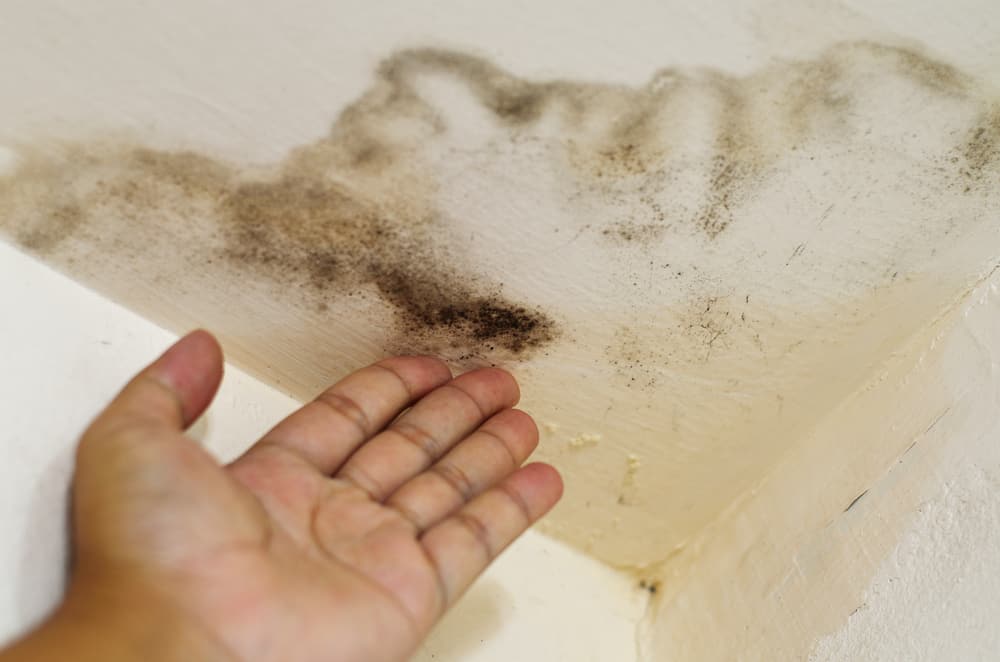
The national average for mold remediation runs around $2,300, but that number doesn’t account for the size, age, or complexity of homes in Roslyn Estates. A finished basement in a 1930s Colonial, an attic above a multi-dormer roofline, or a crawl space in one of the mid-century ranch homes off The Birches — each of those is a different scope of work with different material removal and containment requirements.
What actually drives cost is the size of the affected area, how many building materials need to come out, how accessible the space is, and whether reconstruction is needed after remediation. Lab testing, air clearance testing, and written documentation are part of our process here — not optional add-ons. On a home worth $1.5 million or more, the remediation cost is a fraction of what a failed sale or a price reduction from a mold disclosure would cost. The right question isn’t what it costs — it’s what it costs you if it’s not done correctly.
The only way to confirm mold has been successfully remediated is post-remediation air clearance testing — not a visual check, not a technician’s word. Clearance testing compares the air quality inside the treated space to an outdoor baseline sample. If indoor mold spore counts are at or below outdoor levels, the remediation is confirmed complete. We provide this testing as part of our process and deliver the results in writing.
This is especially important if you’re planning to sell. A buyer’s home inspector or their attorney may ask for documentation of remediation and clearance. A written clearance report from a certified company is what closes that loop — verbal assurances don’t hold up in a real estate transaction, particularly in a market like Roslyn Estates where buyers are sophisticated and deals are high-stakes.
Roslyn Estates has a specific set of conditions that make mold a recurring issue for homeowners who aren’t watching for it. The village sits near Hempstead Harbor, which means summer humidity on the North Shore regularly exceeds 60% — the threshold where mold becomes self-sustaining in enclosed spaces without proper ventilation. That alone puts attics, crawl spaces, and basements at elevated risk every July and August.
The housing stock compounds it. Homes built before 1960 — which represent a significant portion of Roslyn Estates — were constructed without the vapor barriers, modern plumbing materials, and attic ventilation standards that exist today. Galvanized steel pipes corrode and seep slowly inside wall cavities. Stone and early block foundations absorb groundwater. Complex rooflines with dormers and valleys collect ice dams in winter, forcing water under shingles and into attic framing. Spring snowmelt raises the water table and pushes moisture through foundation walls. These aren’t rare events — they’re seasonal patterns in this specific community.
It depends on the cause. Homeowners insurance in New York typically covers mold remediation when it’s a direct result of a covered peril — a burst pipe, storm-driven water intrusion, or a roof leak caused by a nor’easter. What it generally doesn’t cover is mold that developed from long-term neglect, a slow drip that went unaddressed, or general humidity buildup over time.
For Roslyn Estates homeowners, the most common insurance-eligible scenarios involve post-storm water intrusion through aging window frames or rooflines, and sudden pipe failures in older plumbing systems. The key is documentation: your insurer will need evidence of the moisture source, the extent of the mold, and the scope of remediation. Our written inspection report, lab results, and photographic documentation give you exactly what an insurance adjuster needs to process the claim. Getting that documentation right from the start is what prevents the claim from being disputed or denied.
Mold removal is a term that gets used loosely — and sometimes misleadingly. The idea that mold can simply be “removed” implies it can be fully eliminated from a space, which isn’t how mold biology works. Mold spores are present in virtually every indoor environment. The goal of professional mold remediation isn’t to create a zero-spore environment — it’s to bring indoor spore counts down to normal, safe levels and eliminate the conditions that allowed mold to grow in the first place.
Remediation is the correct term for what actually works: containing the affected area, removing mold-damaged materials, treating surfaces with antimicrobial agents, and then verifying through air testing that the space is back within acceptable limits. The moisture source — the actual reason mold grew there — also has to be addressed or the mold will return. In older Roslyn Estates homes with multiple potential moisture entry points, finding that source is often the most important part of the entire process.
Yes. New York State requires that companies performing mold assessment or mold remediation hold a state-issued license for each activity. Beyond licensing, New York’s 2016 mold law specifically prohibits the same company — or any of its employees — from performing both the assessment and the remediation on the same property. This law was passed because the conflict of interest was real: a company that profits from remediation has a financial incentive to exaggerate what it finds during the assessment.
In Roslyn Estates, where remediation projects on high-value homes can run into significant costs, this protection matters. Before you hire anyone, ask directly: are you licensed under New York State’s mold contractor requirements, and how do you handle the assessment-versus-remediation separation the law requires? A legitimate company will answer that question clearly and without hesitation. We comply fully with both the licensing requirements and the separation rule — and will walk you through exactly how before any work begins.
Useful Links
Other Services we provide in Roslyn Estates