
Mold Remediation near Stony Brook University, NY
When Campus-Area Flooding Leaves Mold Behind, We Find What Caused It Not Just What You Can See
Hear from Our Customers
Professional Mold Remediation near Stony Brook University
There’s a difference between mold that’s been wiped down and mold that’s been genuinely eliminated. Most people don’t find out which one they got until it comes back and in the Stony Brook University area, it almost always does if the moisture source wasn’t corrected the first time. The North Shore’s coastal humidity off the Long Island Sound, combined with the flash flooding history this area has documented, creates conditions where mold doesn’t just appear it returns. The August 2024 flooding that breached the Stony Brook Mill Pond dam and flooded multiple residence halls on campus was a visible crisis. The mold that followed in homes, basements, and rental units throughout the Three Village area was the quieter one.
What proper mold remediation near Stony Brook University actually gives you is a home where the air quality has been verified, the moisture source has been corrected, and you have documentation to prove it. That matters whether you’re protecting your family’s health, preparing for a real estate transaction, or dealing with a landlord who’s been slow to respond. The older housing stock throughout Stony Brook and East Setauket much of it built before modern moisture management standards existed makes this kind of thorough, source-first approach especially important. You’re not just clearing a surface. You’re protecting a property that took real investment to own.
Certified Mold Remediation Companies near Stony Brook University
First Response Restoration and Cleaning Inc. is a Suffolk County-based, owner-operated restoration company with over three decades of experience on Long Island. Richard Peterson, our owner, personally holds New York State licenses in both mold assessment and mold remediation contracting not a hired qualifier on paper, but the actual person running the company. In a community built around Stony Brook University Hospital, Brookhaven National Laboratory, and one of the most academically rigorous school districts on the Island, that kind of verifiable accountability isn’t optional. It’s what this area expects.
Every technician on our team is individually IICRC-certified, which means the people physically doing the work in your home have been formally trained and tested not just supervised by someone who is. We operate around the clock, because flooding near the Mill Pond or along Nicolls Road doesn’t wait for Monday morning. We’re a local company, not a franchise with a local phone number. That distinction matters when you need someone who actually knows this area.
Mold Damage Repair Process near Stony Brook University, NY
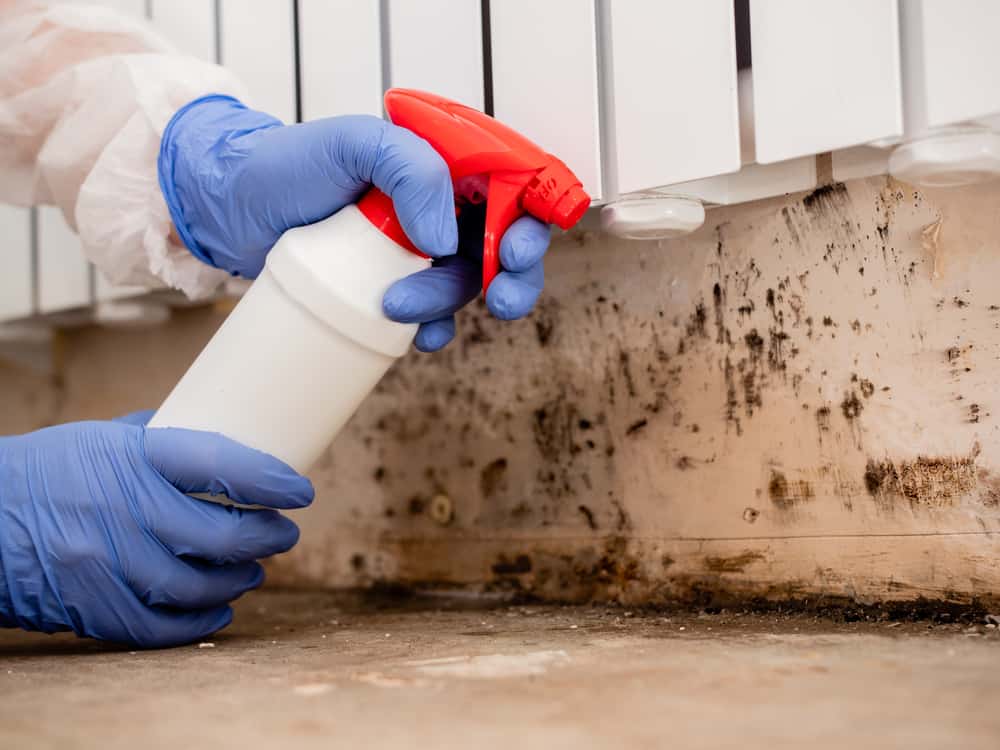
The process starts before anything is removed. We begin every job with moisture mapping and source identification because if the moisture source isn’t corrected, the mold will come back regardless of how thorough the remediation was. In the Stony Brook University area, that source is often tied to the region’s specific conditions: coastal humidity from the Long Island Sound driving attic and crawl space moisture, post-flooding saturation in basements throughout the Three Village community, or water intrusion from aging foundation seals in homes built decades before current standards. Finding the source isn’t optional it’s the first step.
Once the source is identified, we set up containment to isolate the affected area and prevent spore spread throughout the rest of your home. HEPA air filtration runs throughout the entire process. We remove contaminated materials, treat affected surfaces with EPA-registered antimicrobials, and dry and stabilize the space. Because we also have an integrated cleaning division, the job doesn’t stop at remediation we clean and restore the affected areas as part of the same process, not handed off to a separate crew.
After the work is complete, post-remediation verification through independent air quality testing confirms that spore counts have returned to acceptable levels. You receive a clearance report documentation that satisfies insurance adjusters, real estate attorneys, and your own peace of mind. Under New York State Article 32, all mold remediation work in this state must be performed by a licensed contractor, and every step of our process is fully compliant with that requirement.
Ready to get started?
Basement and Attic Mold Remediation near Stony Brook University
Mold doesn’t limit itself to one spot, and in the older housing stock surrounding Stony Brook University homes built throughout the 1950s, 60s, and 70s in East Setauket, Setauket, and Stony Brook proper it tends to show up in predictable places. Basements are the most common starting point, especially after heavy rain events or flooding. Attic mold is the second most frequent call, usually traced back to inadequate ventilation during a past insulation upgrade. Crawl spaces hold humidity all summer long given the coastal air off the Sound, and that moisture has to go somewhere. We handle all of it basement mold remediation, attic mold remediation, crawl space mold remediation, and black mold remediation under one roof, with the same licensed team from start to finish.
For homeowners dealing with mold following the 2024 flooding or any subsequent water damage event, we also assist with insurance documentation helping you understand what your policy covers, how to document the damage correctly, and how to present it to an adjuster. This is something most mold remediation companies in the Stony Brook University area don’t offer, and it makes a significant difference when you’re navigating a claim after a declared disaster event. Whether your situation is a slow crawl space moisture problem or an emergency following storm damage, the scope of service is the same: find the source, contain and remediate properly, verify the result, and leave you with documentation that holds up.
Does the August 2024 flooding near Stony Brook University still pose a mold risk to nearby homes?
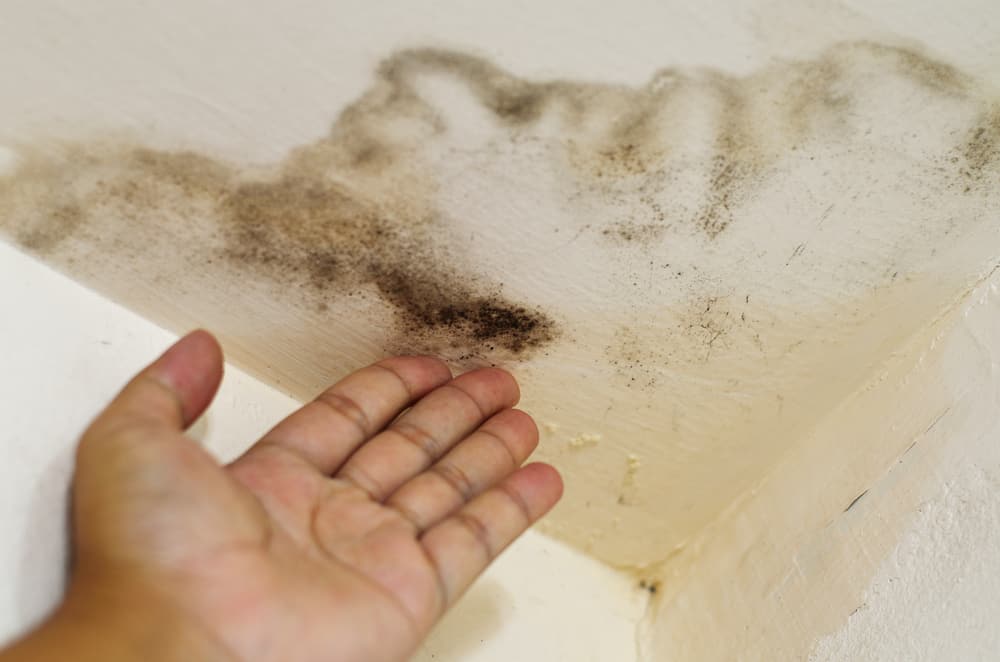
Yes and it’s a risk that doesn’t announce itself. Mold begins growing within 24 to 48 hours of water intrusion, which means any property in the Stony Brook University area that experienced flooding during that event and wasn’t professionally dried and remediated within that window could still have active mold growth today. The problem is that mold in basements, crawl spaces, and wall cavities isn’t always visible from the surface. You might notice a persistent musty odor, increased allergy symptoms, or moisture staining on walls all of which are indicators worth taking seriously.
The August 2024 event was significant enough to trigger a Governor-declared Disaster Emergency for Suffolk County. More than 2,000 residents and business owners experienced flood damage, and two local dams including the Mill Pond dam in Stony Brook were breached. If your home or rental property took on water during that event and hasn’t had a professional mold assessment since, that’s a gap worth closing. Mold doesn’t resolve on its own. It compounds.
What does mold remediation actually cost near Stony Brook University, NY?
For most residential projects, professional mold remediation runs between $1,223 and $3,754, with a national average around $2,347. That said, the actual cost depends on where the mold is, how far it’s spread, and whether the moisture source requires correction which it always should. Attic mold remediation typically ranges from $1,500 to $9,000 depending on attic size and contamination extent. Basement and crawl space mold remediation generally falls between $500 and $4,000 for surface-level problems, though costs can climb significantly if structural materials have been affected.
In the Stony Brook University area, the surrounding residential community includes a lot of older homes with unfinished basements and crawl spaces that have been accumulating moisture pressure for decades. That can affect scope and scope affects cost. Any company that gives you a firm price before assessing the actual conditions is either guessing or cutting corners. We provide written estimates after a thorough assessment, so you know exactly what you’re looking at before any work begins.
What is the difference between mold remediation and mold removal near Stony Brook University, NY?
Mold removal implies that all the mold is physically taken out which sounds complete, but it’s not an accurate description of how mold actually works. Mold spores are microscopic and exist naturally in the air and environment. The goal of professional remediation isn’t to eliminate every spore it’s to bring mold levels back to a normal, non-harmful range and eliminate the conditions that allowed it to grow out of control in the first place. That’s why the term “mold remediation” is the industry-standard and legally recognized term under New York State Article 32.
In practical terms, mold remediation near Stony Brook University involves containment of the affected area, HEPA filtration, removal of contaminated materials, antimicrobial treatment of affected surfaces, moisture source correction, and post-remediation air quality testing to verify the result. A company that only removes what’s visible and doesn’t address the underlying moisture problem isn’t remediating they’re setting you up for a repeat call. The distinction matters especially in the Three Village area, where coastal humidity and older building stock create persistent moisture pressure that needs to be corrected, not just cleaned around.
How do I know if a mold remediation contractor in Suffolk County is actually licensed?
New York State’s Article 32 of the Labor Law requires anyone performing mold assessment or remediation work to hold a valid state-issued license. This law has been in effect since January 1, 2016, and it applies to every mold remediation job in Suffolk County including the Stony Brook University area. The license is individual, not company-wide, which means the specific person performing or overseeing the work needs to be licensed not just the business entity.
You can verify any contractor’s license through the New York State Department of Labor’s online license lookup tool. It’s free, it takes about 30 seconds, and it’s the single most reliable way to confirm that the person entering your home is legally authorized to do the work. Hiring an unlicensed contractor for mold remediation in New York can expose you to legal liability and may result in your insurance claim being denied. At First Response Restoration and Cleaning Inc., Richard Peterson our owner personally holds both a mold assessor license and a mold remediation contractor license under Article 32. Those are verifiable. You don’t have to take anyone’s word for it.
Can mold in my basement spread to the rest of my home near Stony Brook University?
It can, and it often does especially in the kinds of homes that make up most of the residential stock in Stony Brook, East Setauket, and Setauket. Older homes with unfinished basements and limited airflow between floors create conditions where mold spores generated in a damp basement can migrate upward through gaps in flooring, HVAC returns, and utility penetrations. Once spores are airborne and find another moisture source elsewhere in the home, they can establish a secondary growth site.
The risk is compounded in this area by the fact that more than 70% of Suffolk County relies on cesspools and septics rather than municipal sewers a condition that creates additional moisture and contamination risk for properties, particularly after heavy rainfall. If you’re seeing mold in your basement and dismissing it as a cosmetic issue, it’s worth having a professional assess whether it’s already spread or whether the conditions are in place for it to do so. Containment during remediation exists precisely to prevent spore spread during the removal process it’s not a precaution, it’s a requirement.
Should I get a mold inspection before buying a home near Stony Brook University, NY?
If you’re buying a home in the Three Village area Stony Brook, East Setauket, Setauket, or the surrounding communities a mold inspection before closing is a reasonable step, not an overreaction. The area’s housing stock includes a significant number of homes built in the 1950s through 1970s, before modern moisture management standards were common. Basements, crawl spaces, and attics in these homes have had decades to accumulate moisture problems, and a standard home inspection doesn’t always catch what’s behind walls or under insulation.
From a financial standpoint, the stakes are real. Home resale values can drop 20 to 37 percent due to mold issues, and roughly half of potential buyers back out of a transaction when they discover a mold history even if the mold has already been addressed. A pre-purchase mold inspection gives you clear information before you’re committed: what’s there, what caused it, and what it would take to fix it. If mold is found and properly remediated with a clearance report, that documentation protects both the buyer and the seller. In a market where Three Village area home values are among the highest on Long Island’s North Shore, that kind of due diligence is worth the investment.
Useful Links
Other Services we provide in Stony Brook University
For complete mold removal in Stony Brook, NY, our NYS-licensed crew is available around the clock.