
Mold Remediation in West Hills, NY
West Hills Homes Hide Mold in Places Most Companies Never Check
Hear from Our Customers
Certified Mold Remediation West Hills NY
There’s a difference between a company that wipes down visible mold and one that traces it back to where the moisture is coming from. The first approach buys you a few months. The second one actually solves the problem. That’s the difference you’ll feel when the job is done right.
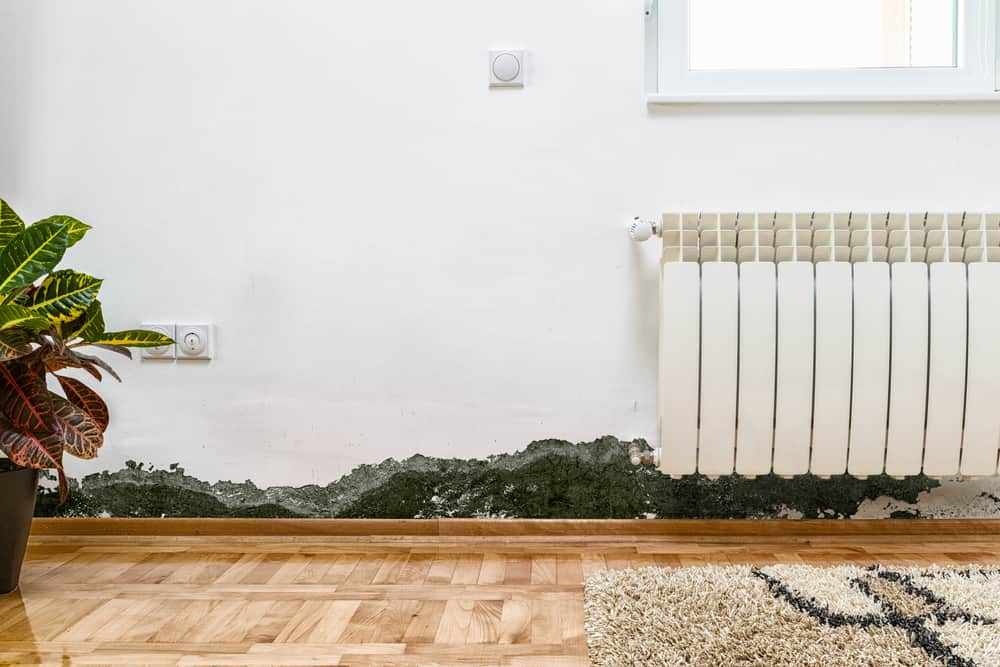
West Hills has a specific set of conditions that make mold more persistent than in flatter, more open communities. The rolling, glacially-shaped terrain around Jayne’s Hill creates drainage patterns that push groundwater toward foundations in ways that aren’t always obvious. The dense tree canopy limits how much sunlight reaches the soil and siding which keeps everything wetter, longer. In a home built in the 1950s or 1960s, which describes most of West Hills’s housing stock, that chronic moisture has decades of opportunity to work its way into crawl spaces, attic framing, and basement walls.
When remediation is done correctly, you get more than mold-free surfaces. You get documented air quality confirmation, a clear record for your insurance company or real estate attorney, and the confidence that the moisture source driving the problem has been identified and addressed. For a West Hills home where property values are high and the stakes of getting this wrong are real that outcome is worth doing it right the first time.
Mold Remediation Companies West Hills NY
We’ve been working on Long Island for approximately 31 years. That’s not a number pulled from a marketing deck it means we’ve been operating in North Shore communities like West Hills since before most of our competitors existed. We know the housing stock, the terrain, and the seasonal moisture patterns that drive mold growth in this part of Suffolk County.
What sets us apart in a market full of options is straightforward: our owner, Richard Peterson, holds personal New York State licenses in both mold assessment and mold remediation contracting. That’s his individual license on the line not a company registration, not a franchise umbrella. Every technician on our crew holds individual IICRC certification, which means the people actually doing the work in your West Hills home have been formally trained and tested, not just supervised by someone who was.
If you’re in the Half Hollow Hills school district area or anywhere along the Route 110 corridor in West Hills, you’re in territory we know well. We’re available 24 hours a day, 7 days a week, and we handle the full job from initial assessment through final cleaning without handing you off to a subcontractor.
Professional Mold Remediation Process West Hills NY
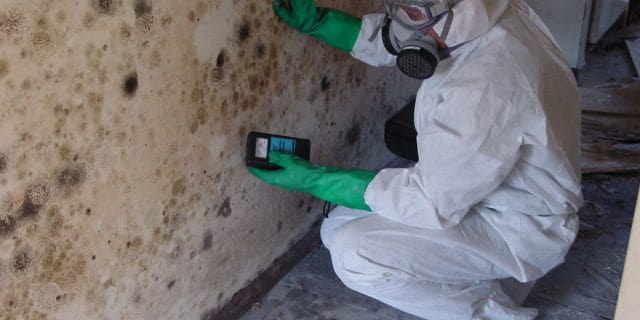
The first thing that happens is an assessment not a sales visit. A licensed mold assessor evaluates the affected areas, identifies the moisture source, and determines the actual scope of the problem. In West Hills, that often means checking crawl spaces under older homes where soil moisture has been evaporating into unencapsulated floor framing for years, or inspecting attic sheathing in mid-century rooflines where ventilation was never designed to handle modern humidity loads. Under New York State’s Article 32 mold licensing law, the assessor and the remediation contractor must be separate we operate in full compliance with this requirement.
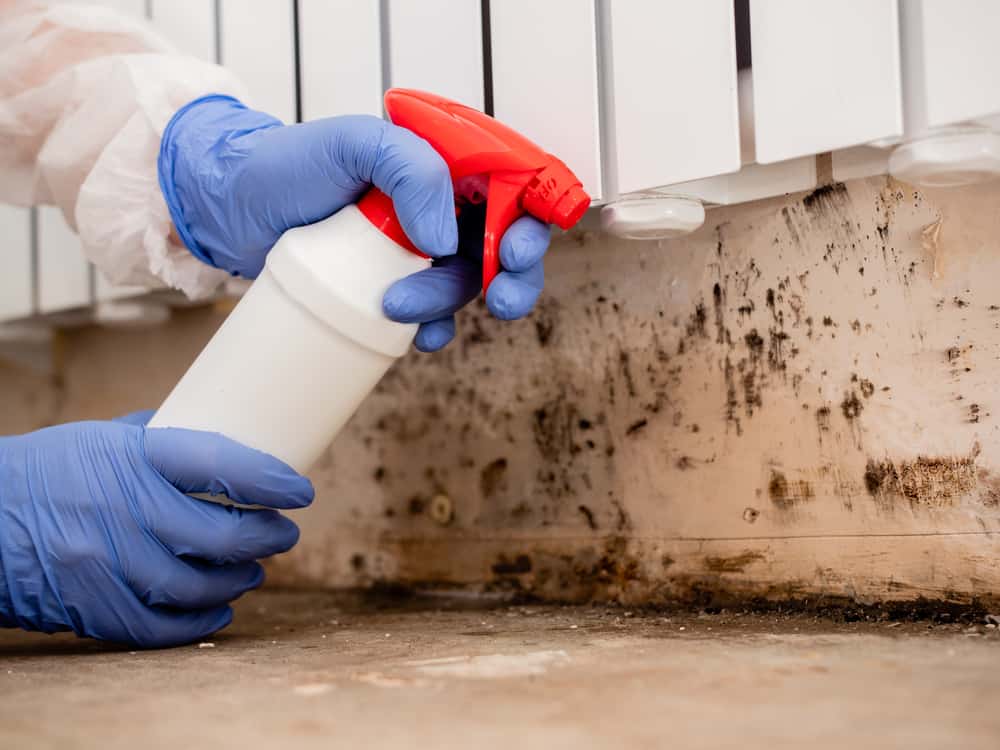
Once the assessment is complete and a remediation plan is in place, the work begins with containment. Affected areas are sealed off using physical barriers and negative air pressure to prevent mold spores from migrating to clean parts of your home during removal. Contaminated materials are removed, treated surfaces receive EPA-registered antimicrobial application, and structural drying brings moisture levels down to a range where mold cannot re-establish.
The final step is post-remediation verification independent air quality testing that confirms spore counts have returned to normal. You receive a written clearance report. That document matters whether you’re filing an insurance claim, preparing for a real estate transaction, or simply want confirmation that the job was done. Our integrated cleaning division handles the final clean-up, so there’s no second contractor to coordinate.
Ready to get started?
Black Mold Remediation West Hills NY
Mold remediation in West Hills covers more ground than most homeowners expect and that’s a good thing. The service isn’t limited to what’s visible. It accounts for the full moisture environment of your home, which in a wooded, hilly community like West Hills often means looking beyond the obvious. Basement mold remediation addresses the seepage and hydrostatic pressure that older concrete block and poured concrete foundations in this area are prone to. Crawl space mold remediation includes evaluation for encapsulation needs, because an unencapsulated crawl space under a 1960s-era home is essentially an open door for ground moisture. Attic mold remediation focuses on ventilation conditions a common issue in mid-century homes throughout the Huntington Town area where soffit and ridge ventilation was undersized from the start.
Emergency mold remediation is available around the clock, which matters after the kind of nor’easters and heavy spring rain events that regularly push water into West Hills homes through aging drainage systems and sloped terrain. We also assist with insurance documentation organizing the damage record in the format adjusters require, so you’re not navigating that process alone.
Every job includes post-remediation air quality verification and a final professional cleaning of all affected areas. This is a single-company process from start to finish one point of contact, one accountable team, no subcontractors managing the part of the job you care about most.
Does mold remediation in West Hills, NY require a licensed contractor by law?
Yes and this is one of the most important things to confirm before hiring anyone. Under Article 32 of New York State Labor Law, which took effect January 1, 2016, it is unlawful for any person or company to perform mold remediation in New York without a valid state-issued mold remediation contractor license. The law also requires that the mold assessor the person who inspects the property and writes the remediation plan hold a separate individual license, and that the same company cannot perform both the assessment and the remediation on the same project.
For West Hills homeowners, this matters practically. Hiring an unlicensed contractor can result in your insurance company denying the claim, and there’s no guarantee the work was performed to any recognized standard. You can verify any contractor’s license directly through the New York State Department of Labor’s online database. Richard Peterson, our owner, holds personal NYS licenses in both mold assessment and mold remediation contracting verifiable by name, not just by company.
How much does mold remediation typically cost for a home in West Hills?
Cost depends heavily on where the mold is, how far it’s spread, and what materials are affected. For most residential projects, professional mold remediation runs between $1,223 and $3,754, with a national average around $2,347. Attic mold remediation one of the more common issues in West Hills’s mid-century homes due to inadequate ventilation in older rooflines typically ranges from $1,500 to $9,000 depending on the size of the attic and how extensively the sheathing and framing are affected. Crawl space remediation generally falls between $500 and $6,000, and can increase if encapsulation is needed to address the underlying moisture issue.
In West Hills, where home values are well above the Long Island average and property taxes routinely exceed $10,000 annually, the cost of remediation needs to be weighed against what an unresolved mold problem does to resale value which research puts at a 20–37% reduction in some cases. The more useful question isn’t “how cheap can I get this done” but “what does a properly documented, fully resolved remediation actually cost?” We provide written estimates before any work begins.
What's the difference between mold remediation and mold removal and does it matter?
It matters more than most people realize. “Mold removal” implies that mold can be completely eliminated from a home which isn’t accurate. Mold spores are naturally present in the air and on surfaces everywhere. The goal of professional mold remediation isn’t to achieve a zero-spore environment; it’s to bring indoor mold levels back to normal, naturally occurring concentrations and to eliminate the active growth that’s causing a problem. Remediation also addresses the moisture source the reason the mold grew in the first place.
A company that offers “mold removal” without identifying and correcting the moisture source is doing cosmetic work. In a West Hills home where the issue might be foundation seepage from the sloped terrain near Jayne’s Hill, or condensation forming on attic sheathing due to poor ventilation, treating the visible mold without fixing the underlying condition means you’ll be dealing with the same problem again within a year or two. True mold remediation the kind governed by the IICRC S520 standard treats the environment, not just the surface.
Can I stay in my home during mold remediation in West Hills, NY?
In many cases, yes but it depends on the location and scope of the affected area. When mold is confined to a crawl space, a section of the basement, or a single room, proper containment with physical barriers and negative air pressure equipment allows the rest of your home to remain occupied safely during the remediation process. The containment setup is specifically designed to prevent mold spores from migrating into clean areas of your home while work is underway.
If the mold is more widespread affecting multiple rooms, an entire attic, or HVAC systems that circulate air throughout your home temporary relocation may be the safer choice, particularly for household members with respiratory conditions, asthma, or compromised immune systems. Given the median age of West Hills residents and the likelihood of older adults or young grandchildren in the home, this is worth discussing directly with our remediation team before work begins. We walk through the occupancy question during the initial assessment so you can make an informed decision before anything is scheduled.
Why is attic mold so common in older West Hills homes, and how is it treated?
Attic mold is one of the most frequently discovered issues in West Hills, and the reason comes down to how homes from the 1950s and 1960s were built. Ventilation standards at the time didn’t account for the level of indoor humidity that modern homes generate from cooking, bathing, and HVAC systems and the soffit and ridge venting in many of these rooflines is simply undersized for the job. During summer months, warm, humid air rises into the attic and has nowhere to go. It contacts the cooler roof sheathing, condenses, and over time creates the sustained moisture environment that mold needs to establish itself.
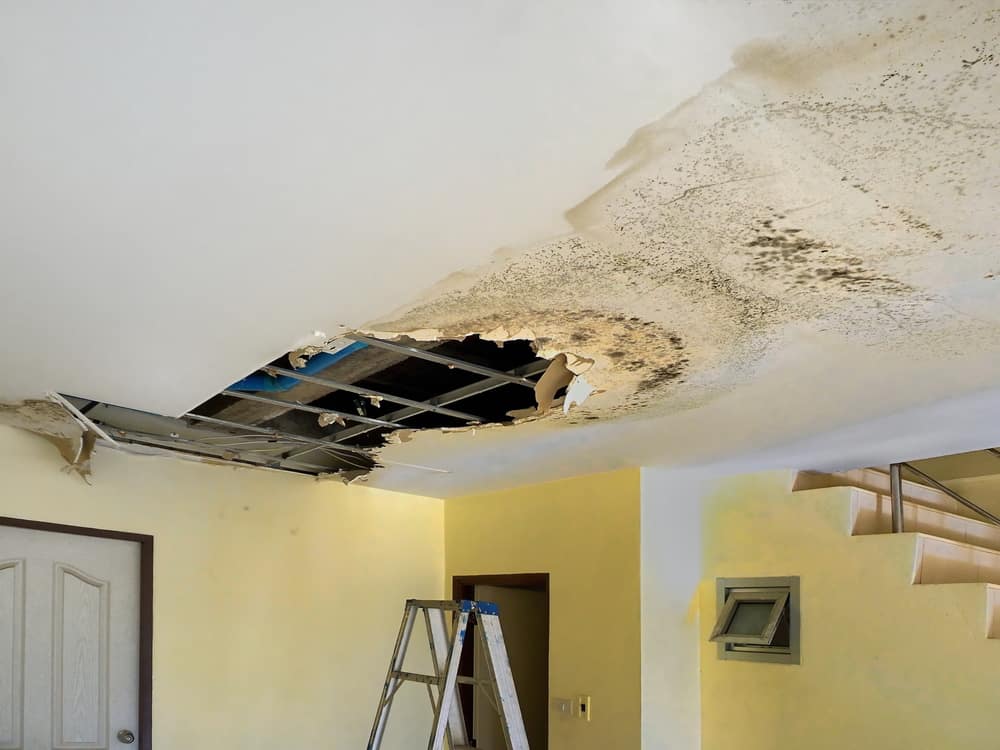
The treatment process involves containing the attic space, removing any insulation that has been compromised, treating the sheathing and framing with EPA-registered antimicrobial product, and addressing the ventilation deficiency so the conditions that caused the mold don’t repeat. In some cases, mechanical ventilation or baffling improvements are part of the solution. Post-remediation air quality testing confirms the attic is clear before the space is re-insulated. For homes in the wooded sections of West Hills where the tree canopy further limits natural drying, getting the ventilation right is especially important.
How do I know mold remediation was actually successful is there a way to verify it?
Post-remediation verification is the answer, and it should be a standard part of any professional remediation job not an optional add-on. After the remediation work is complete, an independent air quality test measures mold spore concentrations in the treated areas and compares them to baseline outdoor levels. If indoor counts have returned to normal range, a written clearance report is issued. That report is your documented confirmation that the job was done correctly.
This matters for several reasons specific to West Hills. If you’re preparing to sell a home in this market where buyers at this price point conduct thorough inspections and their attorneys ask detailed questions a clearance report is a concrete piece of documentation that the property is clean. If you filed an insurance claim, the report supports the claim file. And if you simply want to know that your family is living in a safe environment, the clearance report gives you something more reliable than a contractor’s word. We include post-remediation verification as a standard step in every job, not because it’s required, but because it’s the only honest way to close out the work.
Useful Links
Other Services we provide in West Hills