
Hear from Our Customers
The air in your home feels different when mold isn’t in it. No musty smell creeping up from the basement, no mystery headaches, no wondering whether the remediation someone did after Sandy actually finished the job. That’s what professional mold removal in Island Park, NY is supposed to deliver — and it’s what lab-confirmed clearance testing actually proves.
Island Park’s housing stock is working against most homeowners before they even know it. These are 1920s and 1930s Cape Cods and converted summer bungalows — built without vapor barriers, without modern insulation, and with decades of tidal moisture already absorbed into the framing. Mold doesn’t just sit on the surface in homes like these. It gets into the wood, behind the plaster, under the floor. Surface-level treatment doesn’t reach it.
When the remediation is done right, you’re not just clearing a smell or passing a visual inspection. You have documented proof — independent lab results — that the air quality in your home meets safe standards. For Island Park homeowners protecting a property in a flood zone with a real estate market that’s acutely aware of Sandy’s aftermath, that documentation isn’t optional. It’s what makes your home sellable, livable, and worth protecting.
We’ve been operating on Long Island for over three decades — through Hurricane Sandy, through Irene, through every nor’easter that pushed Reynolds Channel water into Island Park basements and crawl spaces. We’re not a national franchise routing calls through a call center. We’re a Long Island-based team that has worked in Island Park homes through the exact flood cycles your neighborhood has lived through.
Every technician who walks into your home is IICRC-certified — not just the owner, not just the senior crew member, but every person on the job. We’re also licensed by New York State for mold remediation, which matters more than most homeowners realize. A lot of contractors operating in Island Park aren’t. And we carry a deductible coverage program offering up to $500 toward your out-of-pocket costs — something no other mold remediation company in this market offers.
When the problem involves both water damage and mold — which in Island Park it almost always does — you don’t need two separate contractors. We handle both sides, start to finish.
It starts with a 5-point mold inspection that goes well beyond what you can see. That means boroscopic examination of wall cavities — looking inside the walls without tearing them apart — along with air sampling, surface swab sampling, moisture level measurement, and identification of where water is actually entering the structure. In Island Park’s older homes, where moisture has had decades to work through original plaster and wood framing, this step isn’t optional. It’s where the real picture comes from.
Samples go to an independent laboratory with a chain-of-custody document that meets legal evidence standards. Results come back in 2 to 3 business days. You’ll know exactly what’s in your home’s air — not a contractor’s opinion, not a visual guess, but lab data. From there, remediation is scoped based on what the inspection actually found: HEPA vacuuming, containment, antimicrobial treatment, and physical removal of contaminated materials where needed. No encapsulation, no painting over the problem.
Because Island Park sits in a FEMA flood zone and many remediation projects here involve insurance claims, we handle documentation carefully from day one. After remediation, post-clearance testing runs the same lab process again. If the samples don’t pass, the work isn’t done. It’s that straightforward.
Ready to get started?
Mold removal in Island Park, NY covers the full range of where moisture finds its way in — and in a barrier island community, that’s a longer list than most. Basement mold removal addresses the seepage that comes through aging foundation walls, especially in homes along the lower-lying sections near Hog Island Channel. Crawl space mold removal targets the moisture that accumulates under original flooring in homes that were never designed with adequate ground-level vapor control. Attic mold removal handles the condensation that builds in older, poorly ventilated roof spaces throughout the winter months. Bathroom mold removal and HVAC-related mold cleanup round out the residential scope.
For black mold removal specifically — the kind of toxic mold cleanup that requires containment, full protective protocols, and lab-confirmed clearance — we follow strict remediation standards, not treating it like a surface cleaning job. New York State law requires that the company performing mold testing and the company performing remediation be separate licensed entities. We operate within that legal framework, which protects you and ensures your documentation holds up with insurance adjusters and real estate attorneys.
We also provide commercial mold removal for Island Park businesses along Long Beach Road and throughout Nassau County. Whether it’s a residential Cape Cod off Austin Boulevard or a commercial space dealing with post-storm water intrusion, the scope of work is built around what the inspection actually finds — not a flat package sold before anyone looks at the property.
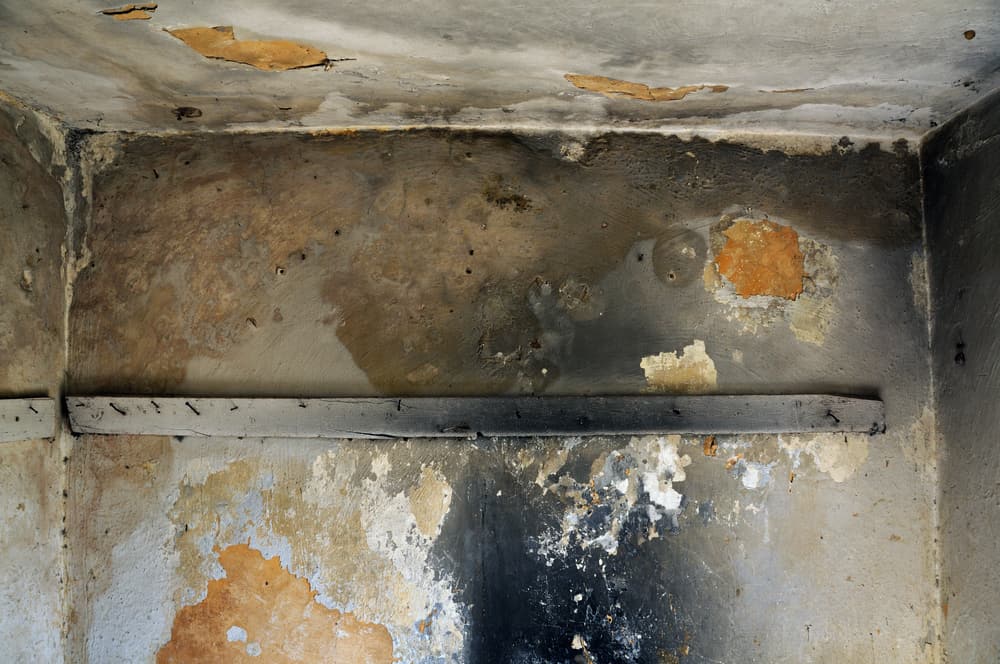
Faster than most people expect — and faster in Island Park than in most inland communities. Mold can begin colonizing wet surfaces within 24 to 48 hours of water intrusion under normal conditions. In Island Park, where ambient humidity is already elevated from Reynolds Channel and the surrounding tidal waterways, that window can compress further. Salt air doesn’t just corrode metal — it permeates building materials and contributes to moisture retention that accelerates mold growth.
After a storm surge event or a basement backup, the first 24 hours matter more than anything else. Getting water extracted and drying started immediately is the single most effective thing you can do to limit mold colonization. If that window has already passed and you’re seeing or smelling signs of mold, the priority shifts to inspection and containment — not waiting to see if it gets worse.
It depends on the cause and how it’s documented — and this is where a lot of Island Park homeowners run into problems. Standard homeowners insurance typically covers mold removal when the mold is a direct result of a covered water event, like a burst pipe or sudden water damage. Flood-related mold, which is the more common scenario in Island Park, falls under flood insurance — a separate policy that many homeowners here carry because of their FEMA flood zone designation.
The critical factor is documentation. Insurance adjusters need to see clear evidence connecting the mold to a covered event, and they need remediation work performed by a licensed contractor with proper before-and-after lab results. Poorly documented claims get denied or reduced. We handle documentation from the first inspection through post-clearance testing specifically to support the claims process — not as an afterthought, but as a built-in part of how the job is managed.
Black mold removal — technically the remediation of Stachybotrys chartarum and similar toxic mold species — requires a different level of protocol than standard surface mold cleanup. That means full containment of the affected area using negative air pressure, personal protective equipment for all technicians, HEPA filtration to prevent spore spread during removal, and physical extraction of all contaminated materials. It is not a bleach-and-scrub job.
Whether you can stay in the home during remediation depends on the location and extent of the contamination. For localized mold in a basement or crawl space with proper containment in place, staying home is often manageable. For larger infestations or mold in living areas, HVAC systems, or areas without effective containment, temporary relocation is the safer choice — especially for households with children, elderly residents, or anyone with respiratory conditions or compromised immunity. Your inspection results and the remediation scope will determine what’s appropriate for your specific situation.
This is one of the most common and legitimate concerns for Island Park homeowners, and the honest answer is: you probably don’t know unless you have lab documentation from a post-remediation clearance test. A lot of homes in Island Park were dried out and repaired after Sandy — but emergency restoration and proper mold remediation are not the same thing. In the rush to restore habitability, some homes were patched without full assessment of what was growing inside the wall cavities, under flooring, or in insulation that never fully dried.
Mold that was encapsulated rather than removed, or that was in areas not reached during emergency work, doesn’t disappear over time — it continues to grow in concealed spaces. If your Island Park home was flooded in 2012 and you’ve never had a mold inspection with air sampling and lab results, that’s the starting point. A boroscopic wall cavity examination can identify hidden growth without requiring demolition, and air sampling will tell you what’s actually present in your home’s air regardless of what you can see.
The national average for mold remediation runs around $2,300, with a range of roughly $373 to $7,000 depending on the scope, location, and extent of contamination. Per-square-foot pricing for professional mold removal typically falls between $10 and $25, rising to $15 to $30 for areas with limited access — like the crawl spaces and tight attic spaces common in Island Park’s 1920s-era bungalows and Cape Cods.
In Island Park specifically, costs tend to run toward the higher end of that range when the remediation involves structural material removal — drywall, insulation, or original wood framing that has been saturated and colonized. Homes with post-Sandy damage history often have more concealed contamination than the initial visual suggests, which is why the inspection phase matters so much before any scope or price is committed to. We also offer up to $500 toward your deductible through our deductible coverage program, which can meaningfully offset out-of-pocket costs when the project is tied to an insurance claim.
Yes — significantly. Research consistently shows that a documented mold problem can reduce a home’s resale value by 20% to 37%, and roughly half of prospective buyers walk away entirely once they learn a home has a mold history. In Island Park’s real estate market, where buyers and their inspectors are already attuned to flood zone designations, Sandy history, and coastal moisture risk, a mold issue without documentation of proper remediation is a serious transaction obstacle.
The way you prove it’s been resolved is through post-remediation clearance testing — the same independent lab process used during the inspection, run again after remediation is complete. The results show that airborne mold spore counts in your home are within acceptable ranges and that the specific species identified during inspection are no longer present at problematic levels. That lab report, combined with the chain-of-custody inspection documentation, is what a buyer’s attorney or home inspector will want to see. It’s also what protects you from liability if a buyer later claims they weren’t informed. We provide that documentation as a standard part of the remediation process — not an add-on.
Useful Links
Other Services we provide in Island Park