
Hear from Our Customers
The air in your home feels different when mold is truly removed — not painted over, not sprayed with something that masks the smell for a few weeks. You stop second-guessing every cough. You stop wondering what’s happening inside the walls. That shift from uncertainty to confidence is what professional mold remediation is supposed to deliver, and it’s what most homeowners in South Hempstead never get from a rushed or uncertified job.
South Hempstead’s housing stock — most of it built between 1940 and 1969 — was never designed with modern moisture management in mind. No vapor barriers, aging waterproofing, original sump systems that are decades past their prime. When those systems fail during a nor’easter or a heavy summer storm, basements flood fast and mold follows within 24 to 48 hours. A remediation that only addresses what’s visible leaves the rest of the problem sitting inside your walls, waiting.
With median home values pushing $609,000 in South Hempstead, the financial stakes are real. Mold can drop a home’s resale value by 20 to 37 percent, and half of prospective buyers will walk away from a property with a known mold history. A properly documented, lab-confirmed remediation protects your home’s value and gives you something concrete to show a buyer, an insurance adjuster, or anyone else who needs proof.
We’ve been working in Nassau County for 31 years. That means our team has been inside hundreds of homes built in the same era as yours, in South Hempstead, Rockville Centre, Lakeview, and Oceanside. We know what mid-century construction looks like from the inside, where it holds moisture, and what it takes to remediate mold the right way in a home that’s been standing since 1955.
Every technician who comes to your door holds IICRC certification — not just the crew lead, not just the owner. Every single one. We’re also fully licensed under New York State Department of Labor mold regulations, which matters more than most homeowners realize. New York State law bars the same company from performing both the mold assessment and the remediation on the same property — a consumer protection rule that unlicensed operators quietly ignore.
We operate 24 hours a day, seven days a week, because a sump pump failure at midnight doesn’t wait for business hours.
It starts with a five-point inspection that goes well beyond a visual walkthrough. A certified technician examines the space, takes air samples to detect elevated spore counts even where there’s no visible growth, collects surface swabs for lab identification, uses a boroscope to look inside wall cavities without tearing them open, and measures moisture levels throughout the affected area. In South Hempstead’s older homes, that last step matters — moisture has a way of traveling far from where the original intrusion happened, especially in basements with aging block foundations.
Once we know the full scope, we contain the affected area to prevent cross-contamination, remove the mold using physical extraction — not heat, not encapsulant — and treat surfaces with EPA-registered antimicrobial agents. HEPA air scrubbers run throughout the process. If the mold was caused by a water intrusion event, we address the moisture source directly, because remediation without drying the structure is just delaying the next outbreak.
The job isn’t done when the visible mold is gone. Post-remediation clearance testing — air and surface samples sent to an independent lab — confirms that spore counts are back to normal. You receive written results within two to three business days. That documentation satisfies insurance adjusters, real estate buyers, and the Rockville Centre school district families who need to know their home is genuinely safe before the next school year starts.
Ready to get started?
Mold doesn’t pick one spot in a South Hempstead home. Basement mold is the most common call we get — usually following a sump pump failure or a heavy storm that pushed water through an aging foundation. Attic mold is just as prevalent in homes of this era, where original insulation and inadequate ventilation create the exact humidity conditions mold needs to grow through a Long Island winter. Crawl space mold, bathroom mold from deteriorating tile grout, and wall cavity mold from slow plumbing leaks are all part of what we handle regularly in this area.
For residential properties, our service covers the full remediation cycle: inspection, containment, physical removal, antimicrobial treatment, structural drying if water damage is involved, and post-remediation clearance testing with chain-of-custody lab documentation. That documentation is legally admissible — which is exactly what you need if you’re filing an insurance claim, preparing to sell your home, or dealing with a landlord-tenant situation.
We also serve commercial properties — any business operating along Merrick Road or Long Beach Road that’s dealing with mold after water intrusion gets the same certified process and the same documented results. For any job involving an insurance claim, ask about our deductible coverage program — we offer up to $500 toward your out-of-pocket deductible, something no other mold remediation company in the South Hempstead market currently provides.
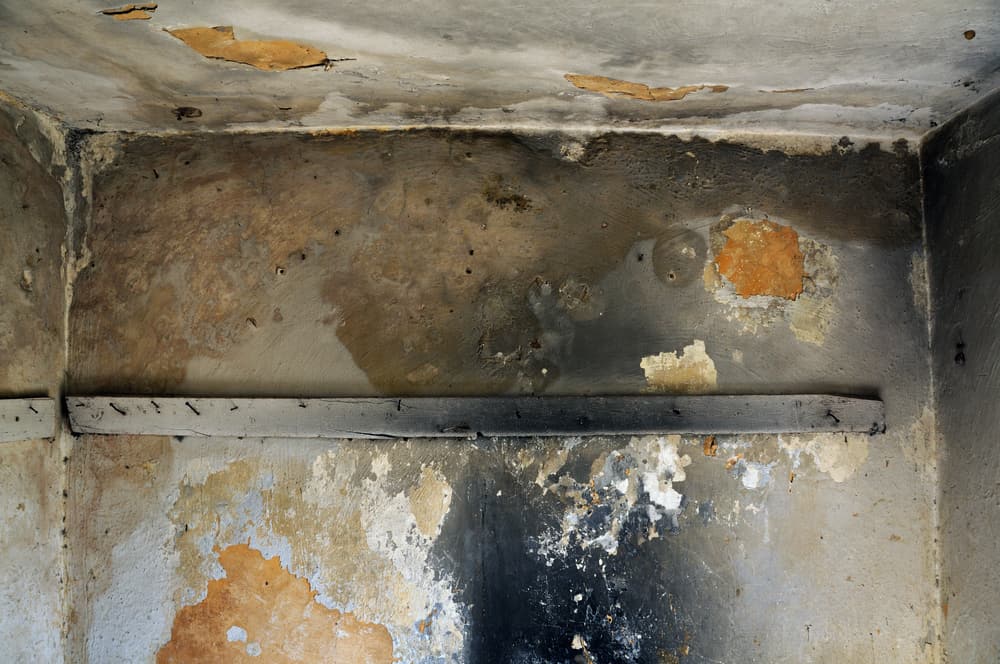
Faster than most people expect. Mold can begin colonizing damp surfaces within 24 to 48 hours of water exposure — and in South Hempstead’s basement-heavy housing stock, where sump pump failures during nor’easters can introduce significant water quickly, that window closes fast. By the time the water is gone and the floor looks dry, mold may already be establishing itself behind drywall, under flooring, or inside insulation.
The humidity on Long Island’s South Shore accelerates this. Even after visible water is removed, elevated ambient moisture in an unventilated basement creates the conditions mold needs to keep spreading. That’s why extraction and structural drying aren’t optional steps — they’re what determines whether the remediation actually holds or whether you’re calling someone again in six months. If your basement flooded, don’t wait to see if mold appears. By the time it’s visible, it’s already been growing for days.
It depends on the cause. In New York, most homeowners insurance policies will cover mold remediation if the mold resulted from a covered peril — a burst pipe, storm-related water intrusion, or an appliance failure, for example. If the mold is the result of long-term neglect or a maintenance issue the insurer considers preventable, coverage is less likely. The distinction matters, and the documentation you submit with your claim matters even more.
That’s where chain-of-custody lab reports become critical. A properly documented remediation — with pre-treatment air and surface samples, a written scope of work, and post-remediation clearance results — gives your adjuster exactly what they need to process the claim. Verbal reports and informal assessments don’t carry the same weight. Our documentation meets legal evidence standards, which means it holds up whether you’re dealing with an insurance claim, a real estate disclosure, or anything else that requires proof. We also offer up to $500 toward your deductible for qualifying jobs, which takes some of the immediate financial pressure off while the claim is being processed.
It matters a lot. Encapsulation means coating over the mold with a sealant — the mold is still there, it’s just covered. Some companies use this approach because it’s faster and cheaper, but it doesn’t eliminate the problem. The mold remains biologically active underneath the coating, and if moisture returns — which it will in an older South Hempstead home with aging waterproofing — it can break through and spread again.
Physical mold removal means actually extracting the mold from the surface, treating the area with EPA-registered antimicrobials, and in cases where mold has penetrated porous materials like drywall or insulation, removing and disposing of those materials entirely. It takes longer. It costs more. But it’s the only approach that actually resolves the problem rather than delaying it. When you see a company advertising fast, low-cost mold treatment, it’s worth asking specifically whether they’re removing the mold or encapsulating it — those are two very different outcomes for your home.
The range is wide because the scope varies significantly. A small, contained bathroom mold issue might fall in the $500 to $1,500 range. A basement remediation in one of South Hempstead’s mid-century homes — where mold has spread across block walls, penetrated insulation, and potentially gotten into wall cavities — can run $3,000 to $7,000 or more depending on the square footage affected and whether structural drying and material removal are involved.
What drives cost up in this area specifically is the age of the housing stock. Homes built between 1940 and 1969 often have construction materials — older drywall, original wood framing, decades-old insulation — that absorb moisture more readily and require more extensive removal when mold takes hold. A proper assessment is the only way to know where your job falls in that range. We provide written estimates after the inspection, so you know exactly what you’re paying for before any work begins. With median home values in South Hempstead near $609,000, the cost of a thorough remediation is almost always less than the cost of a failed one.
For small, isolated mold issues — a bathroom, a small section of a basement wall — staying in the home is often manageable as long as the affected area is properly contained. For larger remediation projects involving significant square footage, basement-wide contamination, or toxic black mold, temporary relocation is usually the safer and more practical choice. Containment barriers and negative air pressure systems limit cross-contamination, but they’re not a perfect seal, and mold spore counts in the air can remain elevated during active removal.
The honest answer is that it depends on the scope of your specific job, the health of the people in your household, and how the affected area relates to your living spaces. Households with young children, elderly residents, or anyone with asthma or respiratory sensitivities should take this question seriously — research has linked early mold exposure in infants to significantly elevated asthma risk. We’ll give you a straightforward recommendation after the inspection, not a one-size-fits-all answer, because the right call genuinely depends on what we find in your home.
You’re not legally required to have one, but in South Hempstead’s real estate market, it’s one of the smarter pre-listing decisions you can make. Buyers purchasing homes in this price range — median values near $609,000 — are doing thorough due diligence, and their inspectors will flag any visible mold or moisture indicators. If mold is discovered during the buyer’s inspection, you’re negotiating from a weak position: either dropping the price, covering remediation costs as a condition of sale, or watching the deal fall apart entirely.
A pre-listing mold inspection gives you control over the situation. If there’s an issue, you can remediate it on your timeline, with documentation that proves to the buyer it was handled properly by a certified company. That documentation — lab-confirmed clearance results with chain-of-custody records — carries real weight in a transaction. It’s the difference between a buyer taking your word for it and a buyer having actual evidence. Given that South Hempstead’s desirability is tied closely to the Rockville Centre school district, buyers here are motivated and informed. Coming to the table with a clean bill of health from a licensed, IICRC-certified remediator is exactly the kind of detail that keeps a deal on track.
Useful Links
Other Services we provide in South Hempstead