Best Flood Remediation Company: What to Look For
Not all flood remediation companies are created equalespecially in Nassau County where mold starts growing in 24 hours and NY State law requires specific licensing most homeowners don't know about.
Share:
Summary:
Your basement just flooded. Or a pipe burst while you were at work. Maybe it’s the aftermath of a storm that dumped inches of rain in hours across Nassau County.
Right now, you need help fast. But here’s what most Long Island homeowners don’t realize until it’s too late: the company you call in the next few hours will either save you from a mold nightmare and insurance headache, or create problems that cost tens of thousands to fix.
The difference isn’t obvious from a Google search or a truck with a logo. It comes down to certifications you’ve never heard of, NY State laws most companies ignore, and knowing what questions to ask when you’re stressed and the water’s still rising.
Let’s walk through what actually matters when you’re choosing someone to handle your flood damage.
Best Water Restoration Companies Have These Certifications
You’ll see a lot of companies claim they’re “certified” or “licensed.” That word doesn’t mean much on its own. What matters is which certifications they hold and whether those credentials are actually verified.
The IICRC certification is the industry standard for water damage restoration. It’s not a government requirement in New York, but insurance companies recognize it as proof that technicians know how to dry a structure properly, not just run some fans and hope for the best. In Nassau County, where approximately 53,000 residents live in flood zones, this expertise makes the difference between proper restoration and recurring problems.
You also need to know about NY State mold licensing. Since 2016, state law requires separate licensed professionals for mold assessment and mold remediation. A company legally cannot do both on the same project. If someone shows up and offers to “test for mold and fix it,” they’re either breaking the law or they don’t understand itand either way, you’re the one who’ll pay for it later.
Why IICRC Certification Actually Matters for Water Damage
IICRC stands for Institute of Inspection, Cleaning and Restoration Certification. It’s a nonprofit that sets standards for how restoration work should be done.
When a technician has IICRC Water Restoration Technician (WRT) certification, they’ve been trained on moisture science, water categories (clean water vs. sewage), proper drying techniques, and how to document everything for your insurance claim. They know how to use moisture meters correctly. They understand psychrometricsthe relationship between air temperature, humidity, and how materials dry.
This matters because water doesn’t just sit on your floor. It wicks up into drywall. It travels behind baseboards. It seeps under flooring and into wall cavities where you can’t see it. An uncertified crew might dry what’s visible and call it done, leaving trapped moisture that turns into mold two weeks later.
Insurance companies know this. They prefer working with IICRC-certified companies because the work follows documented standards. If your claim gets disputed, having a certified company handle the restoration makes a difference. If an uncertified company cuts corners, your insurer might argue the damage was preventable and deny parts of your claim.
The certification also includes training on the S500 standardthe professional water damage restoration protocol. This covers everything from how to classify the severity of damage to which materials can be saved versus which need removal. It’s the difference between someone guessing and someone following a proven process that holds up under insurance scrutiny.
You can verify IICRC certification online. Don’t just take their word for it. Ask for the technician’s certification number and look it up on the IICRC website. If they hesitate or can’t provide it, that tells you something.
NY State Mold Licensing Requirements Most Companies Ignore
Here’s where it gets specific to New York, and where a lot of restoration companies either don’t know the law or choose to ignore it.
Under NY State Labor Law Article 32, anyone performing mold assessment or remediation for pay must hold an active license from the Department of Labor. There are different license types: mold assessor, mold remediation contractor, mold supervisor, and mold abatement worker.
The critical rule: a company cannot perform both the mold assessment and the mold remediation on the same property. The law specifically prohibits this to prevent fraud. You need an independent licensed assessor to inspect and write the protocol, then a separate licensed remediation contractor to do the actual work.
Why does this matter for flood damage in Nassau County? Because mold starts growing within 24 to 48 hours after water exposure. Every flood remediation job has potential mold implications. If your restoration company doesn’t understand or follow the licensing law, you could end up with remediation work that doesn’t meet state standards, fails inspection, and has to be redone at your expense.
The penalties are real. The state has issued thousands of violations since 2016. Fines can hit $10,000 per violation. But more importantly for you as the homeowner, if unlicensed work is discovered, you might have to pay to have everything torn out and redone properly.
When you’re vetting a flood remediation company, ask directly: Are you licensed for mold remediation in New York State? Can I see your license number? Who will handle the mold assessment if one is needed? If they say they’ll “take care of everything,” that’s a red flag. Legitimate companies will explain the separation between assessment and remediation, and they’ll have the proper licenses posted at the worksite as required by law.
Also ask about their liability insurance. NY State requires mold remediation contractors to carry at least $50,000 in liability coverage specifically for mold-related work. If they can’t provide proof, walk away.
Best Water Damage Restoration Company Responds Within Hours, Not Days
Speed isn’t just about convenience. It’s about preventing secondary damage that costs exponentially more to fix.
Mold colonies can begin growing on damp surfaces within 24 to 48 hours. That’s not a scare tacticit’s confirmed by the EPA, CDC, and every industry standard. In Nassau County’s humid climate, especially during summer months or after the heavy rainfall events that have become more frequent, you’re often closer to the 24-hour mark than 48.
The best water damage restoration companies understand this timeline and structure their operations around it. We offer true 24/7 emergency response, not just an answering service that takes messages. When you call at 2 AM because a pipe burst, someone should be dispatching a crew immediately, not telling you they’ll get back to you during business hours.
What Happens in the First 24-48 Hours After Flooding
The first two days after water intrusion determine whether you’re dealing with a cleanup job or a full-scale mold remediation project.
Hour 1-12: Water is actively spreading. It’s soaking into porous materials like drywall, insulation, carpet, and wood. The longer it sits, the deeper it penetrates. During this window, the priority is stopping the water source and beginning extraction. Industrial pumps and wet vacuums pull out standing water. Technicians should be documenting everything with photos and moisture readings for your insurance claim.
Hour 12-24: Materials are saturated. Mold spores, which are always present in the air, are landing on wet surfaces and beginning to activate. You might not see anything yet, but the biological process has started. This is when air movers and commercial dehumidifiers need to be running. Not household fanscommercial equipment designed to move thousands of cubic feet of air per minute and pull moisture out of the environment.
Hour 24-48: This is the critical window. If materials haven’t been dried by now, mold growth is likely. The CDC guidance is clear: if wet items cannot be cleaned and dried within 24 to 48 hours, assume mold growth has started. At this point, you’re shifting from water damage restoration to mold remediation, which is more expensive, more invasive, and requires those NY State licenses we talked about.
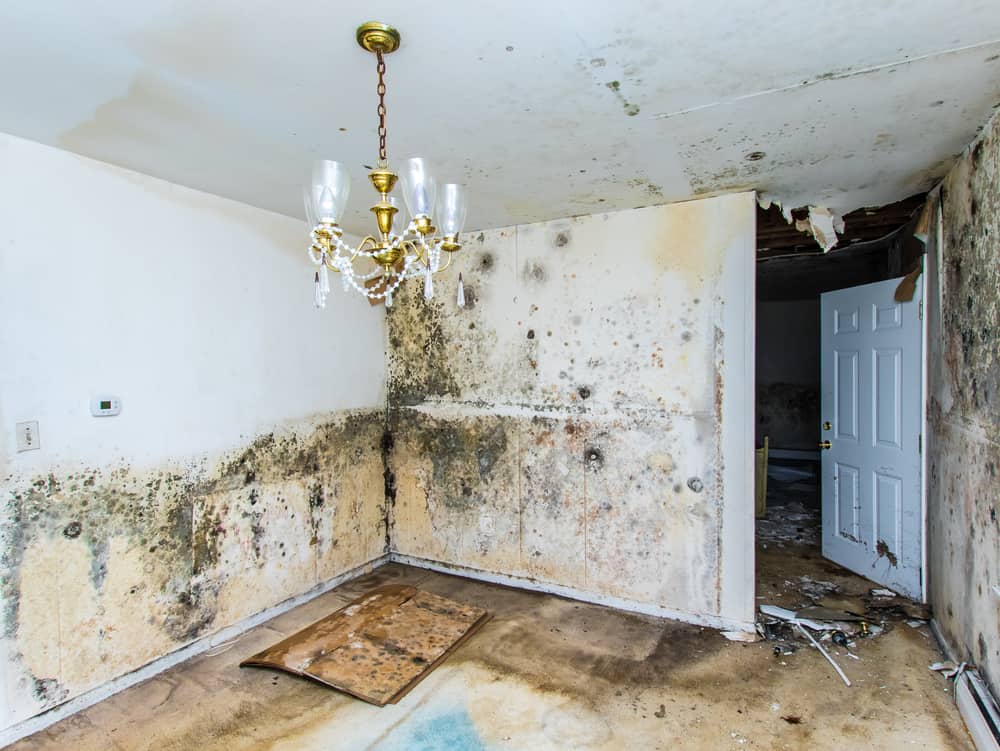
Day 3-7: Visible mold colonies appear. You’ll see discoloration on walls, smell musty odors, notice fuzzy patches. The damage is now obvious, but it started days earlier when moisture was trapped inside wall cavities or under flooring that wasn’t properly dried.
This timeline is why response time matters so much. A company that can’t get to you within a few hours isn’t set up for emergency work. You need crews on standby, trucks pre-loaded with equipment, and a dispatch system that treats every call as urgent. Ask potential companies directly: What’s your average response time? Do you have crews available right now? Can you be here within two hours?
If they hedge or say they’ll “fit you in tomorrow,” keep calling. The best water damage restoration companies in Nassau County know the 24-48 hour window and build their entire operation around meeting it.
Best Restoration Company Red Flags You Need to Recognize
Not every company with a truck and some equipment knows what they’re doing. Some are inexperienced. Others are outright predatory, targeting desperate homeowners during emergencies.
Watch for these warning signs:
Pressure to sign an Assignment of Benefits (AOB) immediately. An AOB transfers your insurance claim rights to the restoration company. Legitimate companies might offer this option, but they shouldn’t pressure you to sign before you understand what you’re agreeing to. In Florida, AOB abuse became so widespread it drove up insurance costs statewide. New York has been cracking down on similar practices. If someone shows up and the first thing they want is your signature on an AOB, slow down. Read it carefully. Consider consulting with your insurance agent first.
No mention of licensing or certifications. If a company can’t or won’t provide IICRC certification numbers, NY State mold license numbers, and proof of insurance, they’re not legitimate. This information should be readily availableon their website, on their truck, on business cards. If you have to ask three times, that’s your answer.
Offering to do both mold assessment and remediation. We covered this already, but it’s worth repeating because it’s such a common violation in Nassau County. NY State law prohibits it. Period. If a company says they’ll “test and fix everything,” they’re either ignorant of the law or deliberately breaking it. Either way, you don’t want them in your house.
Vague pricing or reluctance to document the scope of work. Emergency restoration is complex and costs vary, but a professional company will walk you through what needs to happen, provide a detailed estimate, and document everything in writing. If someone gives you a verbal quote and wants to start work immediately without paperwork, stop. You need documentation for your insurance claim, and you need protection if the work isn’t done properly.
No physical business address or local presence. Fly-by-night operators set up after major storms, do substandard work, and disappear when problems arise. Check that the company has an actual office, not just a P.O. box. Look for how long they’ve been in business. A company with 35 years of history serving Nassau County isn’t going anywhere. A company that registered its LLC three months ago might not be around when you discover mold growing behind your walls.
Extremely low bids that seem too good to be true. Water damage restoration requires expensive equipment, trained technicians, proper insurance, and compliance with regulations. All of that costs money. If one bid is dramatically lower than others, ask why. They might be cutting corners, using inadequate equipment, or planning to hit you with change orders once work starts.
Local Restoration Companies You Can Trust Make All the Difference
Choosing a flood remediation company when water is actively damaging your property feels overwhelming. You want someone there now, and it’s hard to think clearly when you’re stressed.
But taking an extra hour to verify certifications, check licensing, and ask the right questions can save you from mold problems, insurance disputes, and having to pay twice to get the job done right.
Look for IICRC certification that you can verify online. Confirm NY State mold licensing if there’s any possibility of mold involvement. Ask about response times and make sure they can be on-site within hours, not days. Watch for red flags like AOB pressure, vague pricing, or companies offering to do both assessment and remediation.
The best flood remediation companies in Nassau County have been doing this work for decades. We understand local building codes, work directly with insurance companies, and know that speed and proper technique are what prevent a water emergency from becoming a mold disaster. If you’re dealing with flood damage right now, we’ve been handling these exact situations since 1991, with certified technicians, proper NY State licensing, and the equipment to respond immediately to both Nassau County and Suffolk County emergencies.
Article details:
- Published by:
- First Response Restoration
- Published to:
- Last modified:
- August 6, 2026
Share:
Continue learning: